

Florida’s unique climate of sun, humidity, and storms demands more than just a grill on a patio. It requires a thoughtfully designed outdoor kitchen. The right design not only extends your living space but also becomes the heart of your home for entertaining, relaxing, and enjoying the Sunshine State’s year-round outdoor lifestyle. Whether you're in Miami, Orlando, or the Panhandle, the perfect outdoor setup must balance durability against the elements with a style that complements your home and way of life.
This guide explores seven distinct outdoor kitchen ideas Florida homeowners can implement, offering actionable insights into materials, layouts, and features that withstand the weather and elevate your property. We'll delve into everything from hurricane-resistant pavilions to sleek, modern concrete setups, providing the inspiration you need to build a functional and beautiful outdoor culinary space. Beyond just grills, many homeowners opt for additional cooking elements, such as incorporating outdoor ovens, to expand their culinary possibilities.
From waterfront marine-grade materials to eco-friendly designs, each concept is broken down to help you visualize and plan your project. We’ll cover the specific considerations that matter most in this climate, ensuring your investment is both beautiful and built to last.
1. Hurricane-Resistant Covered Pavilion Kitchen
Florida's unique climate demands more than just style; it requires resilience. A hurricane-resistant covered pavilion kitchen is the ultimate solution for homeowners who want a permanent, year-round outdoor entertaining space without worrying about seasonal storms. This design involves a robust, permanent roof structure, often with partial or fully enclosed walls, engineered to withstand high winds and heavy rain. Unlike a simple pergola or canopy, a covered pavilion is an integrated architectural feature of your home, providing superior protection for your high-end appliances and cabinetry.
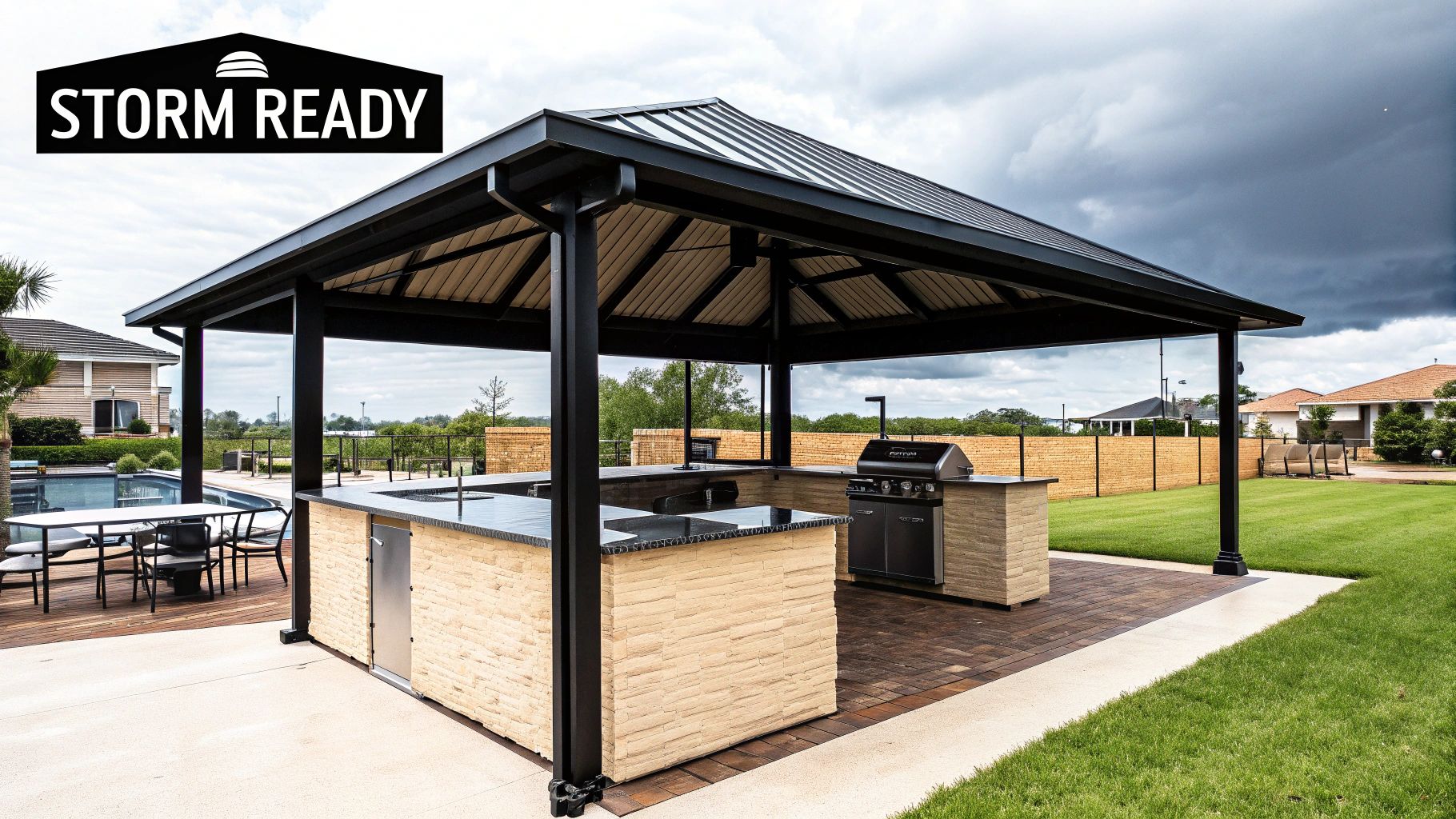
This concept moves beyond a simple grilling station and creates a true outdoor room. It’s an investment in both lifestyle and property protection, a popular choice in luxury coastal communities from Naples to Miami Beach. The goal is to build a structure that not only survives extreme weather but also enhances comfort during Florida's hot, humid months with integrated shade and ventilation. When considering the structural framework for such a significant addition, understanding material strength is crucial. For those exploring different options, it's beneficial to research the safety of steel buildings in storms to appreciate its durability.
Key Implementation Strategies
To ensure your pavilion kitchen is both beautiful and storm-ready, focus on these critical details:
- Reinforced Structure: Use materials like reinforced concrete, structural steel, or pressure-treated heavy timber that meet or exceed Florida's stringent building codes. The roof should be securely anchored to the foundation.
- Wind-Resistant Features: Consider installing retractable storm shutters or high-impact glass panels. These can be deployed before a storm to fully enclose the space, protecting everything inside.
- Strategic Ventilation: An open-sided or vaulted-ceiling design is not just an aesthetic choice; it allows wind to pass through rather than build up pressure. High-powered, wet-rated ceiling fans are essential for maintaining airflow and comfort.
- Weatherproof Finishes: Select materials that resist moisture, salt, and sun. Marine-grade stainless steel appliances (316 grade), powder-coated aluminum cabinets, and non-porous stone countertops like granite or quartzite are excellent choices. Exploring cabinetry options is a vital step in any kitchen project, and homeowners can learn more about creating a resilient kitchen in Cape Coral for further inspiration.
2. Pool-Integrated Tiki Bar Kitchen
Embracing Florida's quintessential island paradise aesthetic, the pool-integrated tiki bar kitchen transforms a backyard into a private resort. This design merges the social hub of a kitchen with the refreshing allure of a swimming pool, often featuring swim-up bar access. It's characterized by tropical materials like bamboo accents and thatched roofing, creating an immersive, vacation-like atmosphere perfect for entertaining.
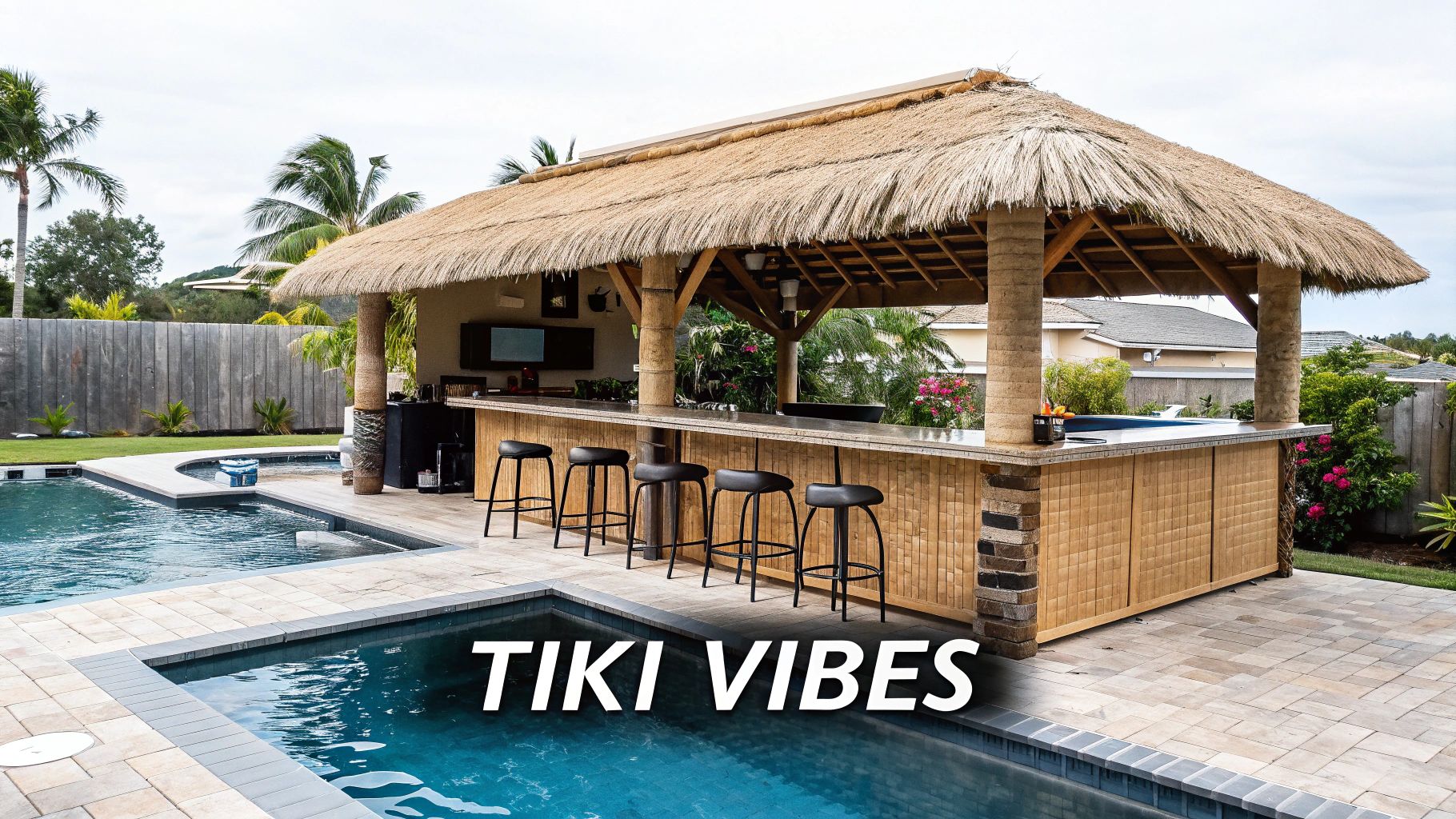
This concept is more than a simple grill by the pool; it’s a fully functional culinary and entertainment space. Popular in waterfront homes in Fort Lauderdale and resort-style backyards in Orlando, it provides a seamless transition from swimming to dining and socializing. The goal is to build a fun, yet practical, outdoor kitchen that maximizes the enjoyment of Florida's year-round pool season. Many homeowners turn to specialists like Tiki Hut Company of Florida to achieve an authentic and durable structure.
Key Implementation Strategies
To create a tiki bar kitchen that is both stunning and long-lasting, concentrate on these specific details:
- Durable Tropical Materials: Opt for synthetic thatch roofing, which resists mold, mildew, and insect damage far better than natural thatch in Florida's humidity. Use pressure-treated bamboo and hardwoods for structural and decorative elements to prevent rot and decay.
- Pool-Safe Design: Proximity to chlorinated water requires specific material choices. Install marine-grade (316) stainless steel appliances and fixtures to resist corrosion from pool chemicals and salt air. Countertops should be non-porous and easy to clean.
- Integrated Comfort Systems: Combat the summer heat by installing commercial-grade misting systems along the roofline of the tiki hut. Incorporate ample, low-voltage LED lighting under the bar and within the roof structure to create a festive ambiance for evening pool parties.
- Functional Layout: For swim-up functionality, design a multi-level countertop with a lower tier for in-pool guests and a higher tier for the cooking and prep area. Ensure there is adequate drainage around the bar to manage water splashes and keep the kitchen area safe.
3. Minimalist Modern Concrete Kitchen
Embracing the sleek, contemporary aesthetic seen in Florida's modern architecture, a minimalist modern concrete kitchen offers unparalleled durability and a sophisticated, raw-material look. This design centers on poured-in-place or precast concrete countertops and structures, creating clean lines and a monolithic appearance. It’s an ideal choice for homeowners who value a low-maintenance, high-impact style that stands up to intense sun, salt spray, and humidity with grace.
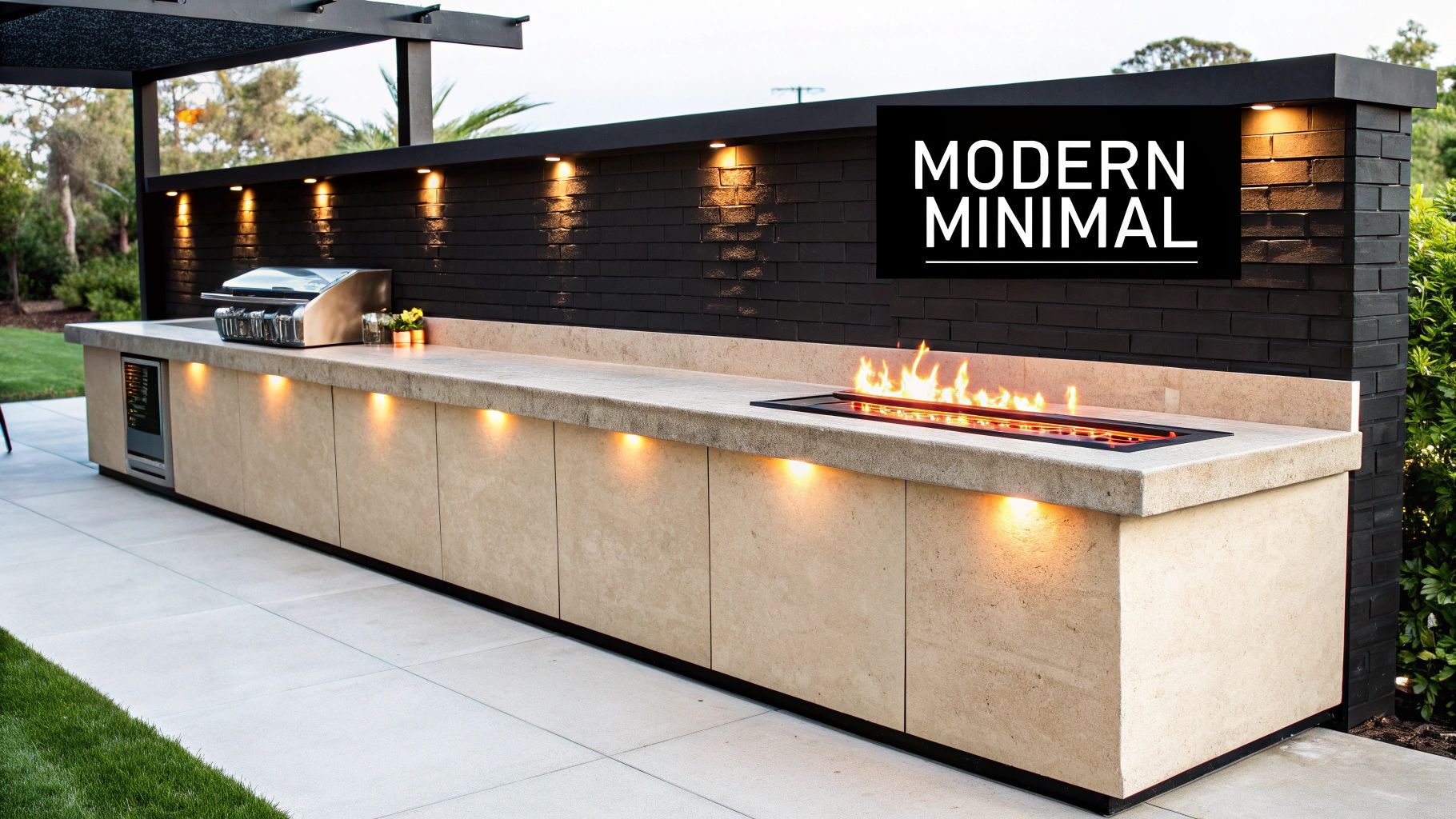
This concept is less about ornate details and more about form, function, and the inherent beauty of the material itself. It’s a popular feature in South Beach rooftop lounges, Sarasota contemporary homes, and new construction across the Tampa Bay area where integrated, architectural outdoor living spaces are key. The goal is to create a seamless, sculptural kitchen that feels like a natural extension of a modern home's design, providing a solid, enduring surface for both cooking and entertaining. When done correctly, concrete becomes a versatile canvas for a truly unique outdoor space.
Key Implementation Strategies
To achieve a flawless and long-lasting modern concrete kitchen, precise planning and execution are essential.
- Plan Utilities Before the Pour: A critical step is to map out and install all necessary electrical conduits, plumbing lines, and gas hookups before the concrete is poured. Retrofitting these elements later is extremely difficult and costly.
- Use a Penetrating Sealer: Florida's high humidity and frequent rain demand superior protection. Instead of a topical sealer that can peel, use a high-quality penetrating sealer that soaks into the concrete to repel water, oil, and stains from within.
- Incorporate Expansion Joints: Concrete expands and contracts with Florida's temperature fluctuations. Strategically placing expansion or control joints within the design is crucial to prevent unsightly cracks from developing over time.
- Add Integral Color and Warming Accents: To avoid a cold, industrial feel, add pigment directly into the concrete mix for a permanent, fade-resistant color. Soften the minimalist look by incorporating warm wood accents for cabinet doors, adding plush textiles, or integrating ambient landscape lighting.
4. Traditional Southern Brick and Stone Kitchen
For those who appreciate classic Southern charm and enduring style, a traditional brick and stone outdoor kitchen offers a timeless aesthetic that feels deeply rooted in Florida's architectural history. This design choice moves away from modern, sleek lines and instead embraces craftsmanship, texture, and a sense of permanence. Using natural materials like brick and stone creates an outdoor space that blends seamlessly with established landscaping and traditional home exteriors, from historic St. Augustine estates to stately homes in Winter Park.
This approach is about more than just looks; it’s about building a durable, solid structure that can withstand Florida’s humid, rainy climate for decades. The substantial nature of masonry provides a sturdy foundation for heavy-duty grills, pizza ovens, and extensive countertop space, creating a truly functional and elegant outdoor culinary hub. The rich colors and textures of brick and stone add a layer of warmth and sophistication that complements the lush, green backdrop of a classic Florida garden, making it a standout among outdoor kitchen ideas Florida homeowners love.
Key Implementation Strategies
To achieve an authentic and long-lasting Southern brick and stone kitchen, precise material selection and construction techniques are paramount:
- Choose Climate-Appropriate Masonry: Opt for hard-fired or "severe weather" grade bricks, which are less porous and better suited to resist moisture penetration and mildew growth in Florida's humid environment. For stone accents, consider durable options like Florida fieldstone or coquina.
- Prioritize Proper Drainage: A common mistake with masonry is trapping moisture. Ensure your contractor integrates a proper drainage plane and weep holes behind the brick or stone walls to allow any water that gets in to escape, preventing long-term structural damage.
- Incorporate Reclaimed Materials: For added character and a nod to sustainability, consider using reclaimed brick from historic demolitions. This not only adds an authentic, aged patina but also tells a unique story.
- Plan for Ventilation and Utilities: Solid masonry construction requires careful planning for utility lines (gas, water, electric) and essential ventilation for grills. Ensure all openings and pathways are framed out correctly before construction begins to avoid costly post-build alterations.
5. Modular Island Kitchen System
For Floridians seeking flexibility and adaptability, the modular island kitchen system offers a brilliant alternative to permanent, built-in structures. This design utilizes a series of independent, prefabricated modules, such as a grill cabinet, a sink unit, a refrigerator base, and storage drawers, that can be arranged in various configurations. This "plug-and-play" approach allows homeowners to create a custom outdoor kitchen that can be easily expanded, reconfigured for different events, or even taken with them if they move. It’s an ideal solution for dynamic outdoor living spaces.
This concept is particularly popular in settings where permanent construction is difficult or undesirable, such as in Jacksonville townhomes with limited patios or Orlando vacation rentals that need to adapt to different guest needs. It gives homeowners professional-grade cooking capabilities without the commitment of a fixed installation. The ability to rearrange or add components over time makes it a future-proof investment for a wide range of outdoor kitchen ideas in Florida, from a simple grilling station to a full-service culinary hub. For those wanting to dive deeper into the potential layouts, you can explore various kitchen island cabinet ideas to find inspiration for your modular setup.
Key Implementation Strategies
To maximize the benefits of a modular kitchen, thoughtful planning and selection are key:
- Brand Consistency: Choose modules from the same manufacturer, like NewAge Products or Challenger Designs, to ensure a perfect fit, consistent finish, and seamless integration. This guarantees that height, depth, and connection points align correctly.
- Utility Planning: Plan your utility connections (gas, water, electric) to be accessible in multiple locations. Installing quick-connect fittings for gas lines and a flexible hose for the water supply will allow for maximum repositioning freedom.
- Enhanced Mobility: Opt for modules with heavy-duty, locking casters or wheels. This makes rearranging the kitchen for a party or moving it for seasonal storage a simple task for one or two people.
- Weather Preparedness: A major advantage of a modular system is the ability to move it. Before a hurricane, individual modules can be wheeled into a garage or shed for complete protection from high winds and flying debris.
- Phased Expansion: Start with essential modules like a grill and some counter space. As your needs and budget grow, you can easily add a sink, refrigerator, or specialized storage, building out your dream kitchen over time.
6. Waterfront Marine-Grade Kitchen
For Florida's extensive waterfront properties, a standard outdoor kitchen is simply not enough. A Waterfront Marine-Grade Kitchen is an absolute necessity for homes lining Biscayne Bay, the canals of Marco Island, or the beaches of Sanibel Island. This design philosophy centers on using materials and construction techniques borrowed from the marine and yachting industries to combat the relentless assault of salt air, high humidity, and intense sun exposure that defines coastal living.
This approach goes beyond just durable materials; it's a comprehensive strategy for longevity and performance in a corrosive environment. Luxury waterfront developers and marine construction specialists champion this method because it preserves both the aesthetic appeal and functional integrity of a significant home investment. The goal is to build a stunning, high-performance cooking space that thrives in conditions that would quickly degrade lesser materials, ensuring your outdoor kitchen remains a pristine oasis for years.
The following infographic summarizes the key considerations when investing in marine-grade durability for your coastal kitchen.
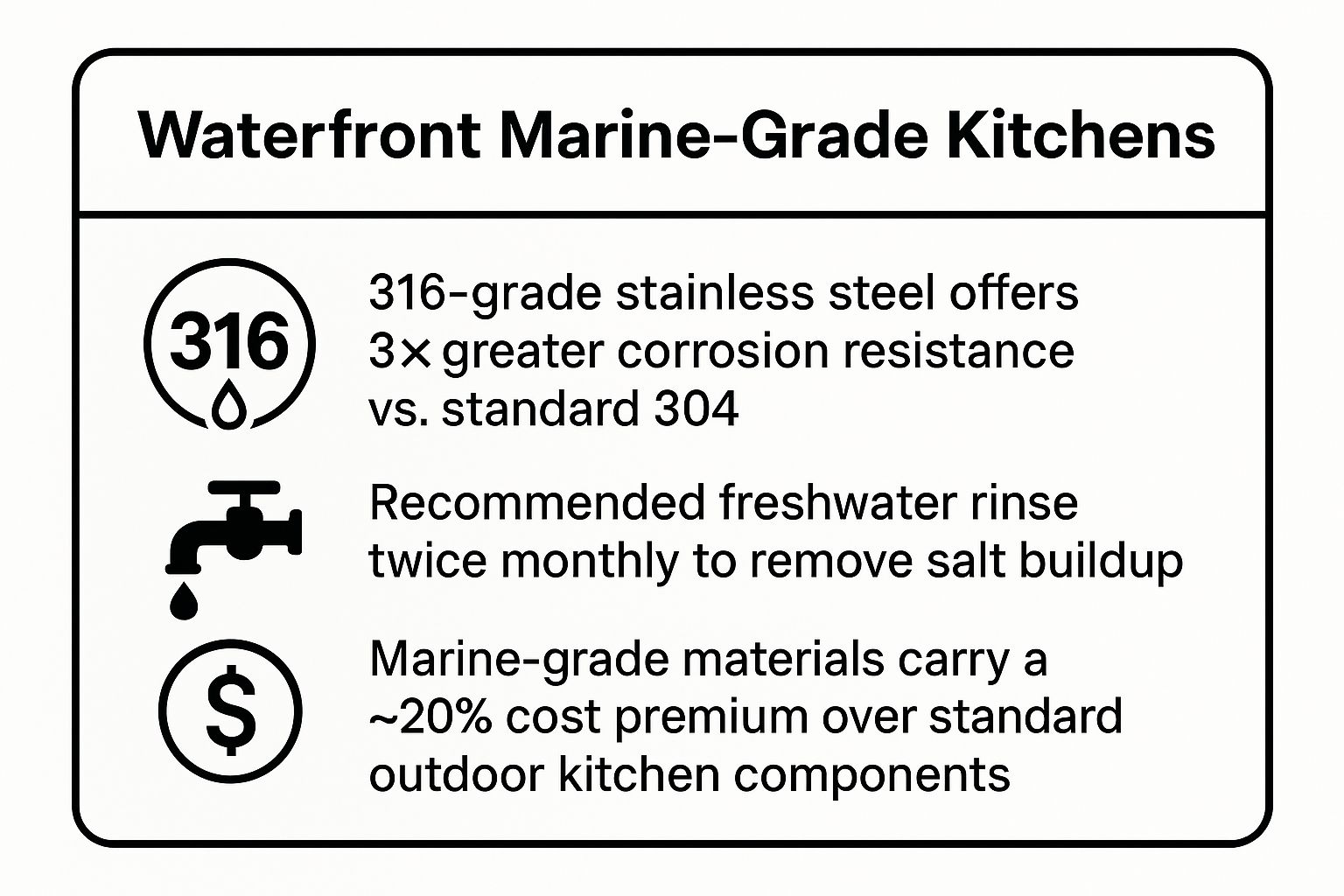
This data highlights that while marine-grade materials require a higher initial investment, their superior corrosion resistance and simple maintenance routines deliver unmatched long-term value in harsh coastal settings.
Key Implementation Strategies
To create a truly resilient waterfront kitchen, prioritize these marine-specific details:
- Specify 316-Grade Stainless Steel: This is non-negotiable for any metal component near saltwater, including grills, cabinet hardware, fasteners, and sinks. Its molybdenum content provides superior resistance to chloride corrosion from salt spray.
- Choose UV-Resistant Cabinetry: Opt for materials like marine-grade polymers (e.g., StarBoard) or certain powder-coated metals that are specifically formulated to resist fading and structural damage from constant, intense sun exposure.
- Integrate a Rinse-Down System: A dedicated freshwater spigot and hose are essential. A quick rinse of all surfaces after use or exposure to salt spray is the single most effective maintenance task to prevent salt buildup and corrosion.
- Plan for Storm Surge Drainage: The kitchen's foundation and layout should facilitate rapid drainage. This includes using permeable pavers, installing channel drains, and elevating appliances and cabinetry off the ground to protect them from potential coastal flooding.
7. Eco-Friendly Sustainable Kitchen
An eco-friendly sustainable kitchen design goes beyond aesthetics, focusing on minimizing environmental impact while maximizing efficiency and long-term value. For Florida homeowners, this approach involves integrating renewable energy, using reclaimed or sustainable materials, conserving water, and incorporating native landscaping. It’s a holistic design philosophy that reduces the home’s carbon footprint and lowers utility costs, creating a beautiful and responsible outdoor living space.
This concept is gaining traction across the state, from Gainesville's LEED-certified homes to sustainable communities in Central Florida. The goal is to build an outdoor kitchen that works in harmony with Florida's unique ecosystem. This means choosing materials that are not only durable in the humid, sunny climate but also sourced responsibly, and implementing systems that conserve precious resources like water and energy. It's a forward-thinking investment that aligns a luxury lifestyle with environmental stewardship.
Key Implementation Strategies
To create a truly sustainable outdoor kitchen, focus on these eco-conscious elements:
- Sustainable Materials: Opt for countertops made from recycled glass or locally sourced stone to reduce transportation emissions. For cabinetry, choose materials like bamboo, reclaimed wood, or products certified by the Forest Stewardship Council (FSC). Homeowners interested in these options can explore a variety of sustainable kitchen cabinets to find the perfect fit.
- Energy Efficiency: Power your kitchen with solar panels installed on the roof of your home or a covering pavilion; Florida’s abundant sunshine makes this highly effective. Install energy-efficient, ENERGY STAR-rated appliances and use low-voltage LED lighting for all task and ambient illumination to significantly cut down on electricity consumption.
- Water Conservation: Implement a rainwater harvesting system by collecting runoff from the roof to use for cleaning and irrigating surrounding plants. Install low-flow faucets and consider a greywater system to recycle water from sinks. Surround the kitchen with permeable pavers that allow rainwater to return naturally to the aquifer.
- Native Landscaping: Design the area around your kitchen with native, drought-tolerant Florida plants. These species are adapted to the local climate, requiring minimal irrigation and maintenance while providing a natural habitat for local wildlife and pollinators.
Outdoor Kitchen Designs Comparison: Top 7 Florida Ideas
| Outdoor Kitchen Type | Implementation Complexity 🔄 | Resource Requirements ⚡ | Expected Outcomes 📊 | Ideal Use Cases 💡 | Key Advantages ⭐ |
|---|---|---|---|---|---|
| Hurricane-Resistant Covered Pavilion Kitchen | High: Professional installation, permits | High: Reinforced materials, specialized roofing | High: Year-round usability, storm protection | Coastal hurricane-prone regions needing durability | Storm-ready, protects appliances, adds value |
| Pool-Integrated Tiki Bar Kitchen | Medium: Specialized materials, seasonal upkeep | Medium: Natural/synthetic thatch, pool equipment | Medium: Resort-style atmosphere, social hub | Pool areas, tropical/resort-themed backyards | Great for entertaining, tropical aesthetic |
| Minimalist Modern Concrete Kitchen | Medium: Skilled concrete work, sealing needed | Medium: Concrete, modern fixtures, lighting | High: Durable, low maintenance, sleek look | Modern homes wanting contemporary, durable design | Durable, customizable, low upkeep |
| Traditional Southern Brick and Stone Kitchen | High: Skilled masonry, permits required | High: Brick, stone, craftsmanship | High: Timeless appeal, long-lasting | Historic neighborhoods, classic design lovers | Timeless style, excellent insulation |
| Modular Island Kitchen System | Low to Medium: Modular setup, flexible | Medium: Modular components, storage space | Medium: Adaptable, expandable | Renters, seasonal users, flexible layouts | High adaptability, easy reconfiguration |
| Waterfront Marine-Grade Kitchen | High: Specialized marine-grade materials | High: Corrosion-resistant, marine components | High: Long-lasting in salt air, luxury feel | Waterfront homes within saltwater proximity | Corrosion resistance, minimal maintenance |
| Eco-Friendly Sustainable Kitchen | Medium to High: Sustainable tech and materials | Medium to High: Solar, reclaimed materials | Medium to High: Lower costs, eco-friendly | Environmentally conscious homeowners | Reduced footprint, tax incentives, native integration |
Ready to Build Your Florida Outdoor Dream Kitchen?
Bringing your ideal outdoor kitchen to life in the Sunshine State is an exciting journey that blends personal style with practical, climate-resilient design. We have explored a range of concepts, from the robust security of a Hurricane-Resistant Covered Pavilion to the laid-back, social atmosphere of a Pool-Integrated Tiki Bar. Each of these unique outdoor kitchen ideas for Florida homes offers a distinct way to embrace the alfresco lifestyle.
Whether you are drawn to the sleek, durable lines of a Minimalist Modern Concrete Kitchen or the timeless charm of a Traditional Southern Brick and Stone Kitchen, the core principle remains the same: durability is paramount. Your design must be more than just visually appealing; it must be engineered to withstand intense UV rays, high humidity, and the potential for severe weather. This means selecting materials like marine-grade polymers for waterfront properties, sustainable composites for eco-friendly builds, or versatile modular systems that can adapt to your space.
Key Takeaways for Your Florida Project
The foundation of a successful and long-lasting outdoor kitchen rests on three critical pillars:
- Climate-Proof Materials: Prioritize materials specifically rated for outdoor use in coastal or humid environments. This includes everything from the countertops and appliances to the structural elements and, most importantly, the cabinetry.
- Strategic Layout and Functionality: Consider your primary use. Will this be a social hub for entertaining, a functional space for complex cooking, or a simple grilling station? The layout should optimize workflow and seamlessly connect to your existing outdoor living areas.
- Aesthetic Cohesion: Your outdoor kitchen should feel like a natural extension of your home's architecture and your personal taste. Harmonize colors, textures, and styles to create a unified and inviting atmosphere that enhances your property's value.
Ultimately, mastering these concepts ensures your investment is not just for a season, but for a lifetime of memories made under the Florida sun. The right design transforms your backyard from a simple space into your home’s new favorite destination for dining, relaxing, and entertaining. The most crucial element tying this vision together is the cabinetry, which provides the structure, storage, and style for the entire setup. Choosing cabinetry built to resist moisture, heat, and pests is non-negotiable for a lasting installation.
Ready to take the next step and invest in cabinetry that will anchor your dream outdoor kitchen? At Sinclair Cabinetry inc, we have over 35 years of experience crafting custom, real wood cabinets in Cape Coral, designed specifically to endure the demanding Florida climate. Visit our website at Sinclair Cabinetry inc to explore our portfolio and schedule a consultation to build a beautiful, durable outdoor kitchen that lasts.