

When you think of luxury kitchen cabinets, "storage" is the last word that should come to mind. These pieces are far more than just boxes on a wall—they're a true fusion of bespoke craftsmanship, superior materials, and intelligent functionality. They become the architectural soul of your kitchen, turning a purely utilitarian space into a personal statement of style and quality.
Think of them less like products you buy off a shelf and more like foundational investments you commission for your home.
What Defines Luxury in Kitchen Cabinet Design
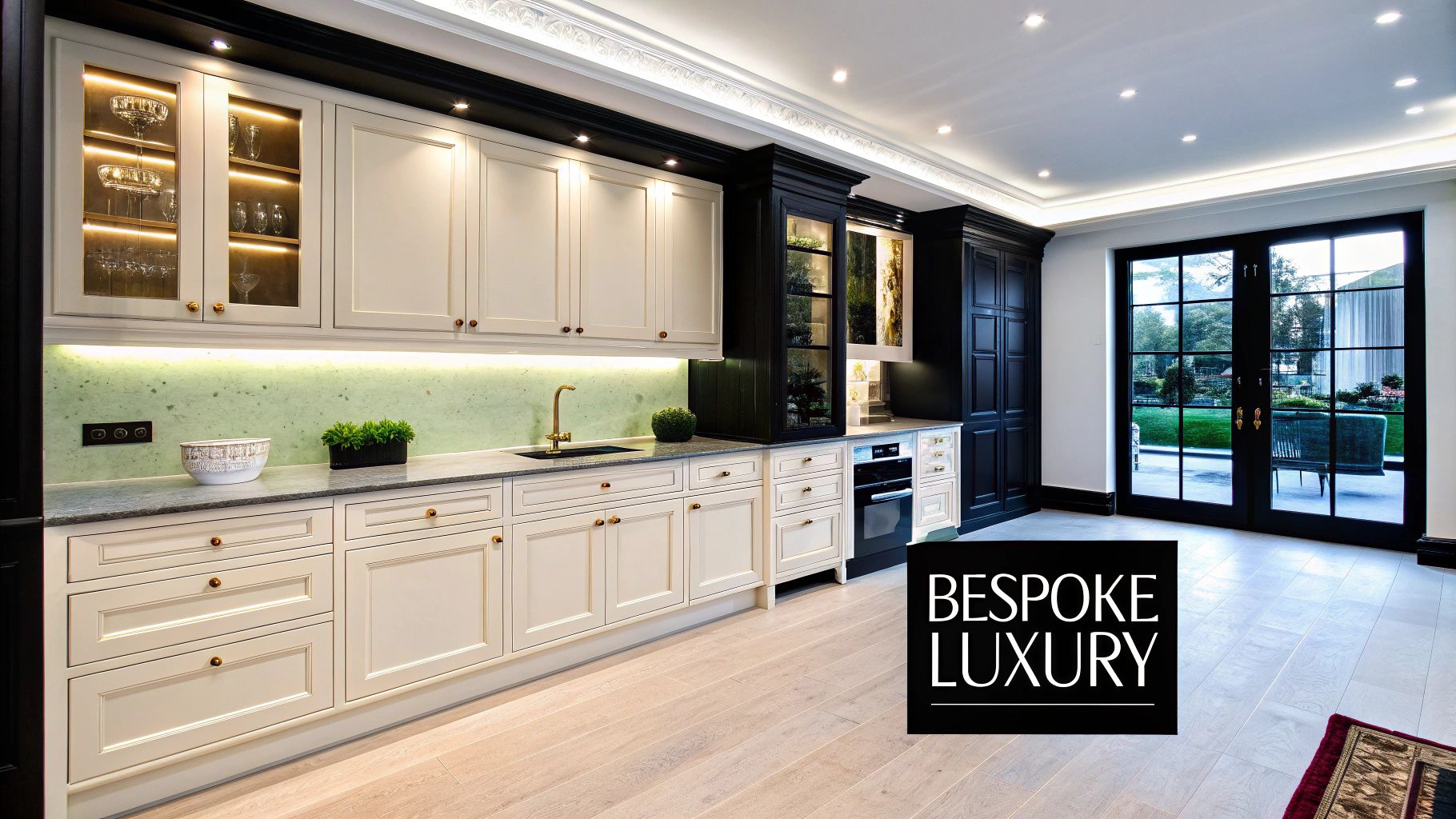
When we start talking about genuine luxury in kitchen cabinetry, the conversation shifts away from just looks. It’s an immersive experience, one that’s built on three core pillars: artistry, materials, and personalization. Unlike the standard, mass-produced cabinets designed to simply fill a space, luxury cabinetry is designed to perfect it.
This level of quality is a direct response to a growing desire for high-end, tailored home solutions. The global kitchen cabinets market hit USD 100.79 billion in 2024 and is on track to reach a staggering USD 183.53 billion by 2032. This isn't just a small jump; it’s a clear signal that homeowners are prioritizing bespoke designs that deliver both unique beauty and next-level functionality. You can dig into more of the data behind this trend in the full research from Fortune Business Insights.
To really grasp what sets these cabinets apart, let's break down those three pillars.
The Three Pillars of Luxury Cabinetry
Here’s a quick look at the core elements that elevate cabinetry from standard to truly luxurious.
| Pillar | Description | Key Features |
|---|---|---|
| Artistry & Craftsmanship | The human touch and meticulous skill involved in construction. It's about how the piece is built, not just what it's built from. | Dovetail joinery, hand-sanded finishes, perfect door alignment, seamless integration of components. |
| Superior Materials | The use of premium, often natural, materials chosen for their beauty, character, and longevity. | Select-grade solid woods (walnut, white oak), book-matched exotic veneers, multi-step conversion varnishes. |
| Deep Personalization | The ability to create a solution tailored precisely to an individual's lifestyle, workflow, and aesthetic vision. | Custom dimensions, tailored storage solutions (pantry pull-outs, appliance garages), unique design details. |
Each pillar works together to create a final product that is so much more than the sum of its parts.
The Foundation of Artistry and Craftsmanship
At its heart, luxury is about an obsession with the details. It’s the difference between a cabinet that is simply assembled and one that is masterfully crafted by a skilled artisan. This means using time-honored woodworking techniques, like dovetail joinery for drawers, which provides incredible strength and ensures they'll last a lifetime.
Every seam, joint, and finish is executed with a level of precision that results in a flawless final product—one that feels as good to touch as it does to look at. You can feel the human touch in the perfect, silent swing of a door and see it in the seamless integration of every custom feature.
A luxury cabinet isn’t just built; it's composed. Each element, from the grain of the wood to the weight of the hardware, is thoughtfully selected to create a cohesive and harmonious whole that elevates the entire kitchen.
The Commitment to Superior Materials
The materials used in luxury cabinetry are specifically chosen for their beauty, durability, and unique character. This goes light-years beyond the standard options you’ll find at a big-box store.
We're talking about premium, often hand-selected elements like:
- Select-Grade Solid Woods: Species like rift-cut white oak, rich black walnut, or timeless cherry are chosen not just for their strength, but for their stunning and consistent grain patterns.
- Exotic Veneers: For a truly one-of-a-kind design, veneers from rare woods can be book-matched, creating breathtaking, symmetrical patterns that flow across an entire bank of cabinets.
- Advanced Finishes: Instead of a simple coat of paint, luxury cabinets get multi-step finishes. Think durable conversion varnishes or hand-rubbed stains that provide a depth, clarity, and level of protection you just can't replicate.
The Essence of Personalization
Ultimately, the greatest luxury is having something created just for you, and nobody else. Luxury kitchen cabinet design isn't about picking options from a limited catalog; it's about co-creating a solution that fits your lifestyle, your workflow, and your vision perfectly.
This means every dimension is customized to your space, every storage solution is tailored to what you own, and every stylistic detail reflects your personal taste. Whether it's a hidden coffee station that reveals itself with a touch or an appliance garage that keeps your countertops pristine, personalization is what transforms a beautiful kitchen into your dream kitchen.
Exploring Timeless Luxury Cabinet Styles
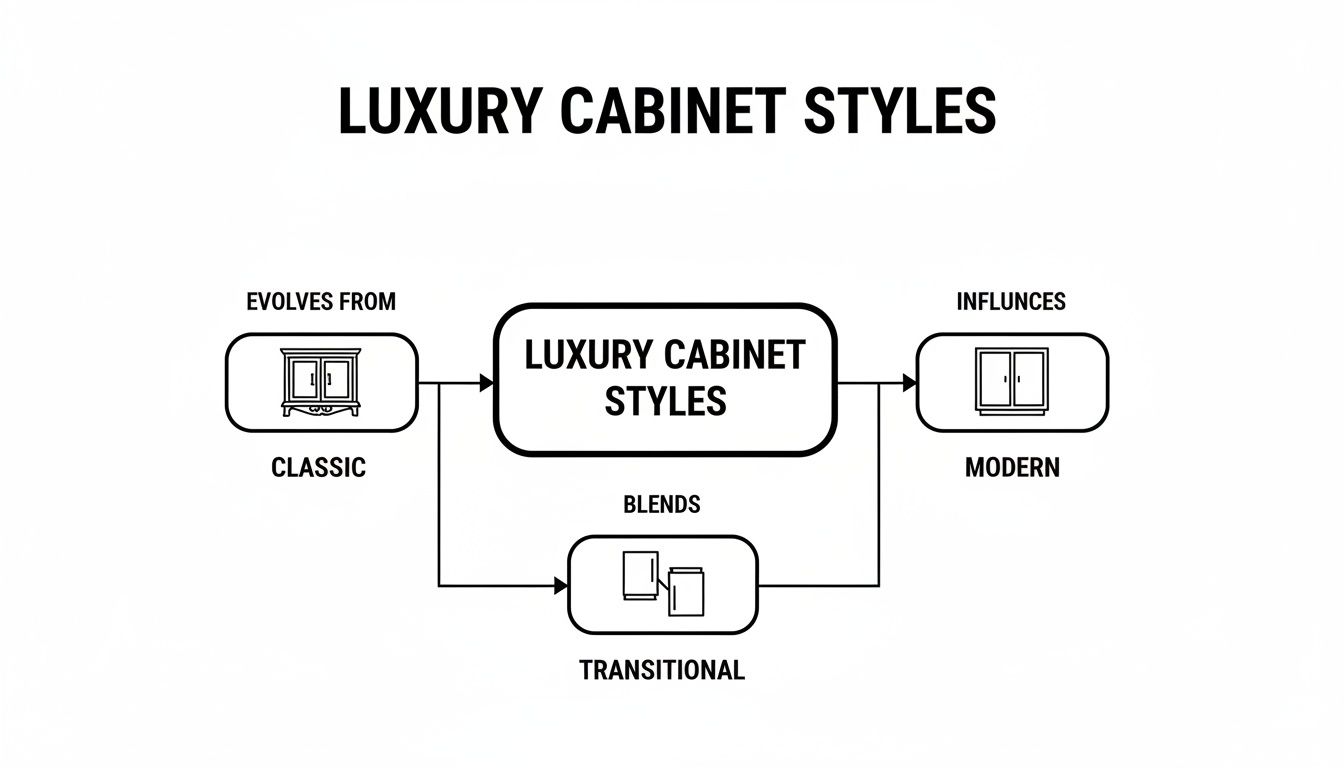
When you're designing a luxury kitchen, the cabinet style you land on is more than just a look—it's the personality of the room. It sets the tone for everything, telling a story that can be traditional and grand, sleek and futuristic, or a thoughtful blend of the two. Think of it as the blueprint that guides every other decision you'll make, from the wood you choose to the handles you touch every day.
Getting a handle on these core styles is the first step toward building a kitchen that feels like it truly belongs to you. While the beauty of custom is that you can create infinite variations, most high-end designs start from one of three timeless foundations. For a deeper dive into the basics, a practical guide to choosing kitchen cabinets offers some great foundational insights.
Homeowners are clearly craving this kind of personalized quality. While sales for mass-produced cabinets took a 5.7% dip year-over-year in April 2024, the custom luxury market is booming. Custom cabinets jumped from a 20% market share in 2022 to 25% by mid-2024, and custom unit sales have already climbed 7.2% year-to-date through May 2024. This isn't just a trend; it's a clear signal that people want bespoke designs that perfectly capture their vision.
Classic Elegance Rooted in Tradition
Classic cabinet design is all about enduring grace and masterful craftsmanship. Picture a historic European manor or a grand estate—that's the feeling this style evokes. It's built on a sense of permanence and sophisticated warmth, defined by its incredible attention to ornate detail and rich, substantial materials.
The hallmarks of classic luxury cabinets are unmistakable:
- Raised-Panel Doors: These doors feature a raised center panel that creates beautiful depth and shadow lines, adding a layer of architectural interest.
- Intricate Moldings: You'll always see detailed crown molding, light rails, and other decorative trim that frame the cabinetry and tie it into the room's architecture.
- Rich Wood Tones: Deep, warm woods like cherry, walnut, and mahogany are staples, often finished with dark, multi-step stains that make the natural grain pop.
This style isn't about being stuffy or old-fashioned; it's a celebration of artistry that has stood the test of time.
Classic design is a commitment to heritage. It’s for those who appreciate the weight of history and believe that true beauty is found in details that have been perfected over generations, creating a kitchen that feels both luxurious and welcoming.
Modern Minimalism The Art of Simplicity
On the complete opposite end of the spectrum, you'll find modern minimalism. This style finds its luxury in what isn't there. It's a champion of clean lines, uncluttered surfaces, and a flawless, almost seamless aesthetic. It has a quiet confidence, letting its perfect form and function do all the talking.
Modern luxury is built on absolute precision. The goal is to create a sleek, calm environment where every single element has a clear purpose.
Here’s what defines it:
- Flat-Panel (Slab) Doors: The doors are completely flat, creating the smooth, uninterrupted surface that is the signature of modern design.
- Handleless Design: To eliminate visual clutter, many modern cabinets use integrated channels, push-to-open mechanisms, or discreet edge pulls instead of traditional hardware.
- High-Tech Finishes: Expect to see stunning high-gloss lacquers, sophisticated matte laminates, and even metallic or glass finishes that create a polished, uniform look.
Transitional Harmony The Best of Both Worlds
Transitional design might just be the most popular style in luxury kitchens today, and for good reason—it offers incredible flexibility. It masterfully blends the warmth and elegance of classic design with the clean simplicity of modern aesthetics. The result is a look that feels both comfortable and incredibly chic.
This style acts as a perfect bridge, borrowing the best elements from both worlds to create a balanced, harmonious space. It's less about sticking to strict rules and more about curating a sophisticated, personal look.
A great example is pairing classic Shaker-style cabinet doors—known for their simple frame-and-panel construction—with sleek, modern hardware and a minimalist countertop. This fusion creates a timeless design that won't feel dated in a few years, giving you the perfect canvas for your own personal style.
Choosing Premium Materials and Finishes
The soul of any luxury kitchen isn't just the layout—it’s the very substance the cabinets are made from. Premium materials are the foundation of longevity, beauty, and that unmistakable feeling of quality you sense the moment you walk into the room.
Think of it this way: choosing the right wood and finish is like an artist selecting their canvas and paints. It dictates the entire mood and feel of the final masterpiece. This decision goes far beyond color; it’s about the unique character of different woods, the artistry of veneers, and the flawless finishes that tie it all together.
The Enduring Appeal of Solid Woods
There’s a reason solid wood is the gold standard in cabinetry. It offers a warmth, depth, and durability that manufactured materials just can't replicate. Each species brings its own distinct personality to the table, defined by its grain, color, and texture.
Here are a few of the most sought-after woods in high-end kitchen design:
- Walnut: Prized for its rich, deep chocolate tones and complex grain patterns, walnut delivers a sophisticated warmth with a touch of mid-century modern flair.
- Rift-Cut White Oak: This specific cut of oak creates a stunningly straight, linear grain, avoiding the more traditional "cathedral" look. It’s a favorite for clean, organic-feeling modern and transitional kitchens.
- Cherry: Famous for its smooth texture and rich reddish-brown hue that deepens beautifully with age, cherry is a timeless choice for classic and traditional designs.
For a deeper dive, our expert guide to the best materials for kitchen cabinets offers a wealth of information to help you weigh your options.
Luxury Cabinet Material Comparison
To help clarify the choices, here's a quick comparison of the most common high-end materials used in custom cabinetry today. Each has its own strengths, making it better suited for certain styles and applications.
| Material | Best For | Pros | Cons |
|---|---|---|---|
| Solid Wood | Classic, transitional, and shaker-style kitchens | Unmatched warmth, durability, can be refinished, timeless beauty | Can warp with humidity changes, higher cost, limits on door size |
| High-End Veneer | Modern, exotic, and large-format cabinet designs | Access to rare woods, perfect grain matching, dimensional stability | Can be difficult to repair if damaged, quality varies greatly |
| Painted MDF | Flawless painted finishes in any style | Perfectly smooth surface, no grain telegraphing, stable, endless colors | Susceptible to dents, can be damaged by excessive moisture |
| Metal/Glass | Accent cabinets, modern and industrial aesthetics | Adds texture and light, highly durable, easy to clean | Can be heavy, shows fingerprints, often requires a wood or metal frame |
Ultimately, the best material is the one that aligns with your design vision, lifestyle, and performance expectations. Many luxury kitchens even combine materials—like a solid wood island with sleek, painted perimeter cabinets—for a truly custom look.
The Artistry of High-End Veneers
Don't confuse luxury veneers with the cheap laminates of the past. In high-end design, veneers aren't a cost-cutting measure; they are a tool for artistry. A veneer is a paper-thin slice of real wood applied to a stable core like furniture-grade plywood.
This technique unlocks design possibilities that are impossible with solid lumber alone, such as:
- Exotic and Rare Woods: Veneers provide access to breathtaking wood species from around the world that may be too unstable or rare to use as solid planks.
- Stunning Grain Matching: It allows a craftsman to create perfect, symmetrical patterns across a bank of cabinet doors—a technique known as book-matching. This creates a continuous, flowing visual that is the hallmark of bespoke cabinetry.
Perfecting the Look with Flawless Finishes
The finish is the final touch—the protective shield and the source of aesthetic beauty. In luxury cabinetry, this isn't just a quick coat of paint; it's a multi-step process that takes days of skilled labor to perfect. Think of it like the clear coat on a Rolls-Royce; it provides a deep, flawless sheen while protecting what’s underneath.
Painted Versus Stained Finishes
Stained finishes are all about enhancing the natural beauty of the wood. The goal is to let the grain and character shine through. The process often involves multiple layers of stain and toner to achieve the perfect depth of color before sealing it with a durable topcoat.
Painted finishes, on the other hand, deliver a crisp, clean, and uniform look with endless color possibilities. In a luxury kitchen, this means applying multiple coats of high-quality pigmented lacquer, sanding meticulously between each layer to build up a perfectly smooth, durable surface.
High-Performance Topcoats
The final clear coat is arguably the most critical component for longevity. High-end cabinetmakers use superior products that offer incredible resistance to moisture, chemicals, and everyday wear and tear.
- Conversion Varnish: This is the undisputed champion in the world of custom cabinetry. It's a catalyzed varnish that cures into an extremely hard, chemical-resistant shell, offering unparalleled durability.
- High-Gloss Lacquer: Achieving a mirror-like, high-gloss finish is a true art form. It demands a dust-free environment and a painstaking process of spraying, sanding, and buffing to create that flawless, liquid-smooth surface that defines modern luxury.
- Textured and Metallic Finishes: For a truly custom statement, designers are incorporating finishes with tactile qualities. This includes textured lacquers that feel like linen or leather and metallic finishes that add a subtle, glamorous shimmer to the cabinetry.
Designing Intelligent Layouts and Custom Features
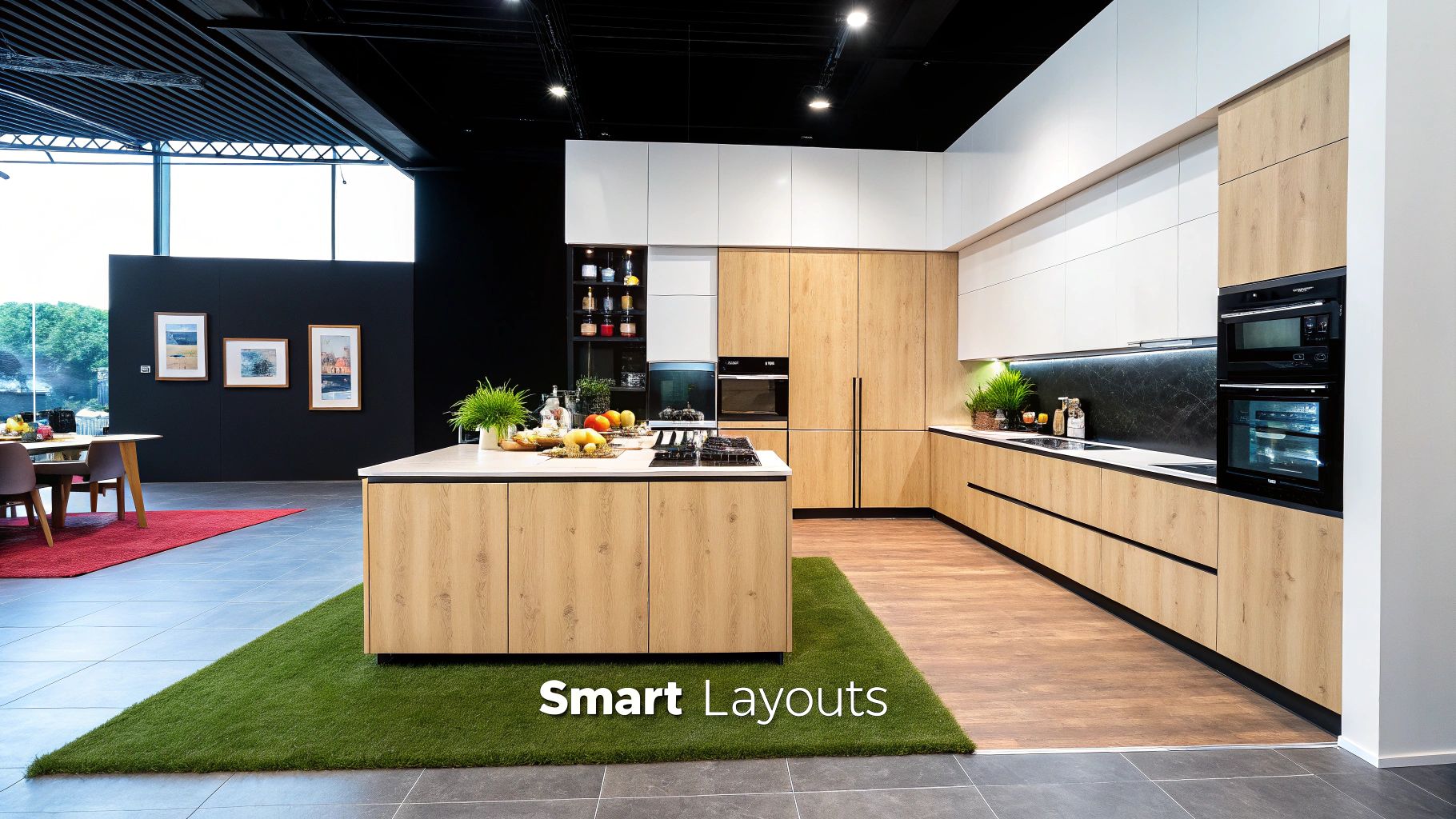
True luxury in a kitchen isn't just about what you see; it’s about how the space feels and functions. It's that seamless flow when you're cooking, the intuitive placement of every tool, and the quiet satisfaction of a room that works for you. This effortless experience is born from smart layout planning and deeply personal custom features.
Before a single piece of wood is ever cut, a high-end kitchen design starts with a deep dive into movement, ergonomics, and daily routines. The goal is to create a workflow so natural you never have to second-guess where to turn or what to reach for.
This obsession with intelligent design is a huge reason the luxury kitchen cabinet market is booming. In 2024, North America commands 40.5% of the global market share, a testament to how much homeowners value function. This demand is fueled by massive investments in home renovations—like the $522 billion spent in the U.S. in 2022—as people look to transform dated kitchens into highly efficient, beautiful spaces. You can discover more insights about cabinet market trends to see what's driving this growth.
The Power of Ergonomic Layouts
The foundation of any great kitchen is its layout. While classic ideas like the "kitchen work triangle"—the path between the sink, fridge, and stove—are still a good starting point, modern luxury design takes it much further. Today, we focus on creating dedicated work zones tailored to how you actually live and cook.
Think of your kitchen as a collection of specialized stations:
- Prep Zone: Generous counter space, usually near the sink and fridge, with built-in access to knives, cutting boards, and waste bins.
- Cooking Zone: The area surrounding the cooktop and ovens, with pots, pans, spices, and oils stored just a hand's reach away.
- Cleaning Zone: An efficient hub centered around the sink and dishwasher, often with integrated pull-outs for trash and recycling.
- Storage Zone: Dedicated pantries and cabinetry for dry goods, dishes, and those small appliances you don't use every single day.
When a kitchen is organized this way, multiple people can work together without bumping elbows, turning the space into a collaborative and enjoyable environment.
Elevating Function with Custom Features
This is where bespoke cabinetry really gets to show off. Custom features are the brilliant little details that solve everyday annoyances and introduce a level of convenience you'll never find in a big-box kitchen. They're designed around your specific habits, turning your cabinetry into a perfectly personalized organizational system.
True luxury is when the design anticipates your needs. A custom cabinet interior isn't just about storage; it's about creating a designated, perfect home for everything you own, making daily routines effortless and elegant.
These features go way beyond simple shelves and drawers, offering clever solutions that make the most of every last inch of your space. To see how these elements all fit together, dive into our guide on expert kitchen cabinet layout planning.
Must-Have Bespoke Cabinet Solutions
The real magic of custom luxury kitchen cabinet designs is their ability to integrate seamlessly into your life. These aren't just cool add-ons; they are fundamental components that define a high-end kitchen experience.
1. Fully Integrated Appliance Panels
For that flawless, uninterrupted look, appliances like refrigerators, dishwashers, and wine coolers are concealed behind custom cabinet panels. This creates a clean, cohesive aesthetic where the technology vanishes, letting the beauty of your cabinetry shine.
2. The Modern Walk-In Pantry
A walk-in or butler's pantry is the ultimate organizational game-changer. It pulls bulk storage out of the main kitchen, offering a dedicated spot for dry goods, countertop appliances, and even extra prep space. With custom shelving and drawers, everything stays visible and easy to grab.
3. The Multifunctional Island
The kitchen island has evolved from a simple prep surface into the true heart of the home. A luxury island can be designed with a second sink, a cooktop, under-counter refrigeration, a dining bar, and all sorts of specialized storage. It’s the natural gathering spot for family and friends, perfectly blending utility with social connection.
4. Bespoke Interior Fittings
Inside the cabinets, custom fittings make sure no space goes to waste. These thoughtful solutions include:
- Custom Drawer Dividers: Perfectly sized compartments for cutlery, utensils, spices, and odd-shaped tools.
- Pull-Out Corner Solutions: Brilliant systems like Lemans or Magic Corner units that bring the contents of those awkward corner cabinets right out to you.
- Appliance Garages: A dedicated cabinet with a lift-up or pocket door to neatly hide countertop clutter like mixers, blenders, and toasters.
- Vertical Dividers: The perfect way to store baking sheets, cutting boards, and serving platters upright so you can easily grab the one you need.
Perfecting the Details with Hardware and Lighting
Once you've settled on the perfect layout and materials, it’s the final details—the hardware and lighting—that truly take a luxury kitchen from beautiful to breathtaking. Think of these elements as the jewelry of your kitchen; they add personality, sophistication, and a surprising amount of function to the space.
Hardware is so much more than a way to open a drawer. It’s the primary way you physically interact with your cabinetry every single day. In a high-end kitchen, this means going beyond standard-issue knobs and pulls to select pieces that feel substantial and thoughtfully crafted.
Choosing Hardware with Substance
The hardware you choose has a huge say in the kitchen's final look and feel. For contemporary designs, the goal is often to let the cabinetry speak for itself, so minimalist hardware is key to reinforcing that clean, uncluttered aesthetic.
- Integrated Channel Pulls: These are clever channels routed right into the cabinet doors or drawers, creating a sleek, seamless, handle-free look.
- Minimalist Edge Pulls: These are discreet metal pulls that sit right on the top edge of a drawer or the side of a door. They give you something to grab without interrupting the visual flow.
In classic or transitional kitchens, hardware steps into the spotlight as a more prominent decorative feature. This is where premium materials like solid brass, polished nickel, and oil-rubbed bronze add a sense of weight and history. Designer collections offer unique shapes and finishes that feel like bespoke accents, perfectly complementing the craftsmanship of the cabinetry. For a deeper dive, check out our complete guide to cabinet hardware finishes.
Hardware is the handshake of your kitchen. It should feel as good as it looks, conveying a sense of quality and thoughtful design every time you open a door or drawer.
Creating Atmosphere with a Layered Lighting Strategy
In a luxury kitchen, lighting is never an afterthought. It's one of the most powerful design tools you have for creating mood, boosting functionality, and highlighting the beautiful features you’ve invested in. A great lighting plan isn't about one big light in the middle of the room; it’s about layering different types of light that all serve a specific purpose.
The idea is to move beyond a single, harsh overhead fixture and build a rich, inviting atmosphere. This usually involves three key layers:
- Ambient Lighting: This is your room's overall illumination. It sets the base level of light and is often provided by recessed ceiling fixtures or a stunning set of pendant lights over an island.
- Task Lighting: This is the focused, bright light you need aimed directly at your work surfaces. Under-cabinet LED strips are a must-have here, as they perfectly light up your countertops for chopping and prep work without casting annoying shadows.
- Accent Lighting: This is the "wow" factor. In-cabinet lighting behind glass-front doors can turn your everyday dishware into a stunning, curated display. Toe-kick lighting is another great touch, making base cabinets look like they're floating and adding a bit of modern drama.
When you layer these three types of lighting, your kitchen becomes both a highly functional workspace and a warm, welcoming heart of the home.
Framing the Design with Trim and Molding
The final touch that makes your cabinetry look truly integrated with your home's architecture is the decorative trim and molding. This is what gives custom cabinetry that high-end, "built-in" furniture quality, creating a seamless bridge between the cabinets, walls, and ceiling.
In classic kitchens, ornate crown molding is a game-changer. It draws the eye upward, giving the room a sense of grandeur and making the ceilings feel higher. For modern spaces, something simpler like a clean-lined light rail or a flush filler piece provides that crisp, finished edge. It’s this meticulous attention to detail that ensures your luxury kitchen feels like an intentional, integral part of your home’s character, completing the vision perfectly.
Getting Your Budget and Your Builder Right
Bringing a luxury kitchen from a mood board to reality really comes down to two things: a solid budget and the right hands to build it. It can feel like a huge task, but breaking it down makes all the difference. The first step is getting a real handle on what custom cabinetry actually costs.
Let's be clear: the price of luxury cabinets is a spectrum, not a single number. Everything from the wood you choose, to the intricacy of the finish, to how tricked-out the interiors are will shape the final cost. As a general rule of thumb, you can expect custom work to be a significant part of your kitchen budget, often running anywhere from $500 to over $1,500 per linear foot.
Partnering with a true custom cabinetmaker isn't just hiring a contractor; it's commissioning an artist. Your goal is to find a professional whose craftsmanship, communication, and vision align perfectly with your own to create a space that is both beautiful and deeply personal.
That price tag reflects the incredible amount of skill, time, and top-tier materials that go into creating something truly built for you. Nailing down your budget from the very beginning is key—it keeps the conversation grounded and ensures your final design is both inspiring and attainable.
Finding a Cabinetmaker You Can Trust
Once you have a budget in mind, the real search begins: finding the artisan who will bring your vision to life. This isn't a job for a quick Google search and the first name that pops up. You're looking for a craftsperson whose style connects with yours and who has a rock-solid reputation for quality.
Start by digging into the portfolios of local custom cabinetmakers. You're not just looking for pretty pictures; you're looking for consistency, precision, and an obsessive attention to detail that you can see even in photos. Don't just take their word for it—check reviews on third-party sites to get the full story.
Key Questions to Ask Any Potential Cabinetmaker
After you've narrowed down your list, it's time for interviews. A good cabinetmaker will be an open book, happy to talk you through their entire process. To make sure you find the perfect match, here are the non-negotiable questions you need to ask:
- Can I see your portfolio and talk to a few past clients? A cabinetmaker who is proud of their work will jump at the chance to show it off and let you speak with happy homeowners. This is the best way to get a feel for both the final product and the client experience.
- What does your process look like from start to finish? Have them walk you through everything, from the initial sketch to the final knob. You want to know what design software they use, how they handle changes, and where the magic actually happens—is it a local workshop or somewhere else?
- What materials and finishes are your specialty? Make sure their skills line up with what you want. If you're dreaming of a sleek, high-gloss European lacquer, the artisan who primarily builds rustic, stained oak cabinets probably isn't your guy.
- What’s a typical timeline, and how is payment structured? Getting a clear timeline from deposit to completion is absolutely critical for planning. A transparent payment schedule tied to specific project milestones is a sign of a professional and protects everyone involved.
By doing your homework and asking the right questions, you'll find more than just a cabinet builder. You'll find a partner who will make the entire journey a creative, collaborative, and genuinely exciting experience.
Got Questions About Luxury Kitchen Cabinets?
When you start exploring the world of luxury kitchen cabinets, it's natural to have questions. You're not just buying a product; you're making a significant investment in your home. From how long they'll last to how the process actually works, let's tackle some of the most common things homeowners want to know.
After all, these aren't your typical off-the-shelf boxes, so their lifespan and creation are in a league of their own.
How Long Do Luxury Custom Cabinets Really Last?
This is one of the biggest differences between true custom work and mass-produced options. High-quality custom cabinets are built to last a lifetime—we're talking 30-50 years or even more.
They’re crafted with superior techniques like dovetail joinery and use premium solid woods that won’t warp or wear down easily. The finish, usually a tough conversion varnish, gives them serious protection against moisture and scratches, so they stay looking beautiful for decades with just a little care.
What’s the Timeline for a Custom Luxury Cabinet Project?
Patience is key here, as true craftsmanship can't be rushed. The timeline can vary quite a bit depending on how complex your design is and the cabinetmaker's current schedule. Generally, you should plan for the entire process to take anywhere from 12 to 24 weeks.
That window covers everything from the first design chat and revisions to sourcing materials, workshop fabrication, finishing, and the final on-site installation.
It's so important to talk about timelines with your cabinetmaker right at the start. Getting on the same page early on helps you plan your renovation smoothly and avoids a lot of stress down the road.
If you're looking for more tips on making smart decisions, this article on How to Choose Kitchen Cabinets Like a Pro is a fantastic resource.
Are Frameless Cabinets Better Than Framed Cabinets?
One isn't "better" than the other; it really just boils down to the look you're going for and what you need from your kitchen.
- Frameless cabinets give you that sleek, modern European vibe. Because there's no face frame, you get full access to the interior and maximize every inch of storage space.
- Framed cabinets offer a more traditional, classic American look. They are known for being incredibly sturdy and having a timeless, substantial feel.
In the luxury space, both styles are built to incredibly high standards. The right choice is simply the one that fits the vision you have for your dream kitchen.
Ready to transform your home with bespoke cabinetry that lasts a lifetime? The artisans at Sinclair Cabinetry inc have over 35 years of experience crafting custom solutions that blend timeless quality with your personal style. Explore our portfolio and start your journey at https://sinclaircabinets.com.