
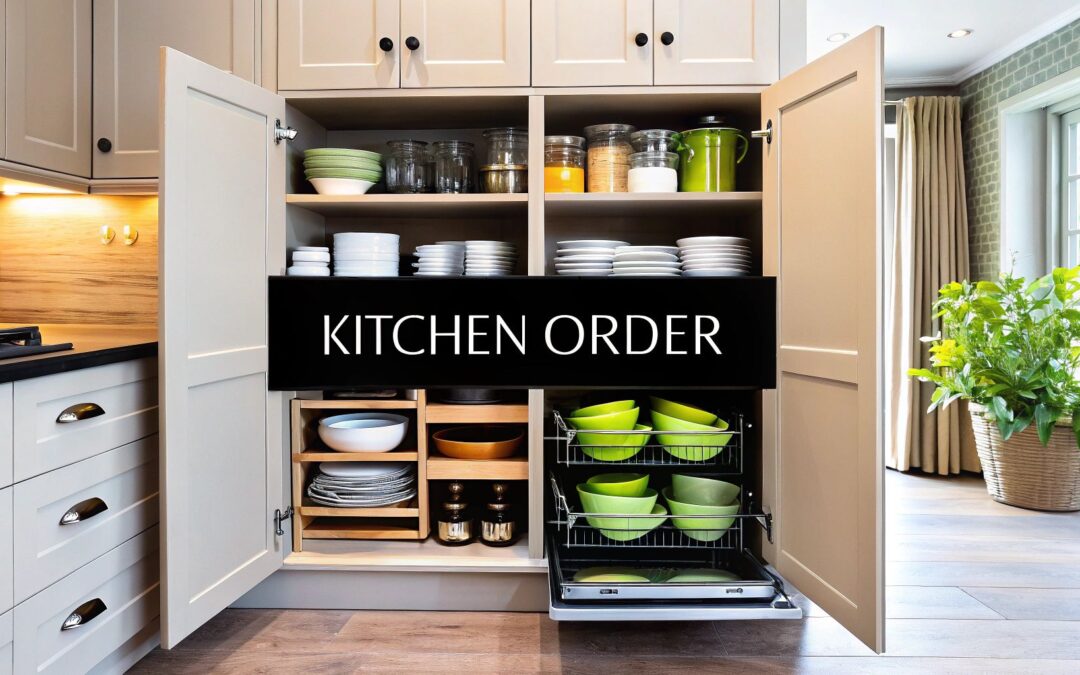
Before you can dream of beautifully organized shelves, you have to start with a clean slate. This is the single most important part of the entire process, and it begins with taking everything out of your cabinets.
Your Foundation for an Organized Kitchen
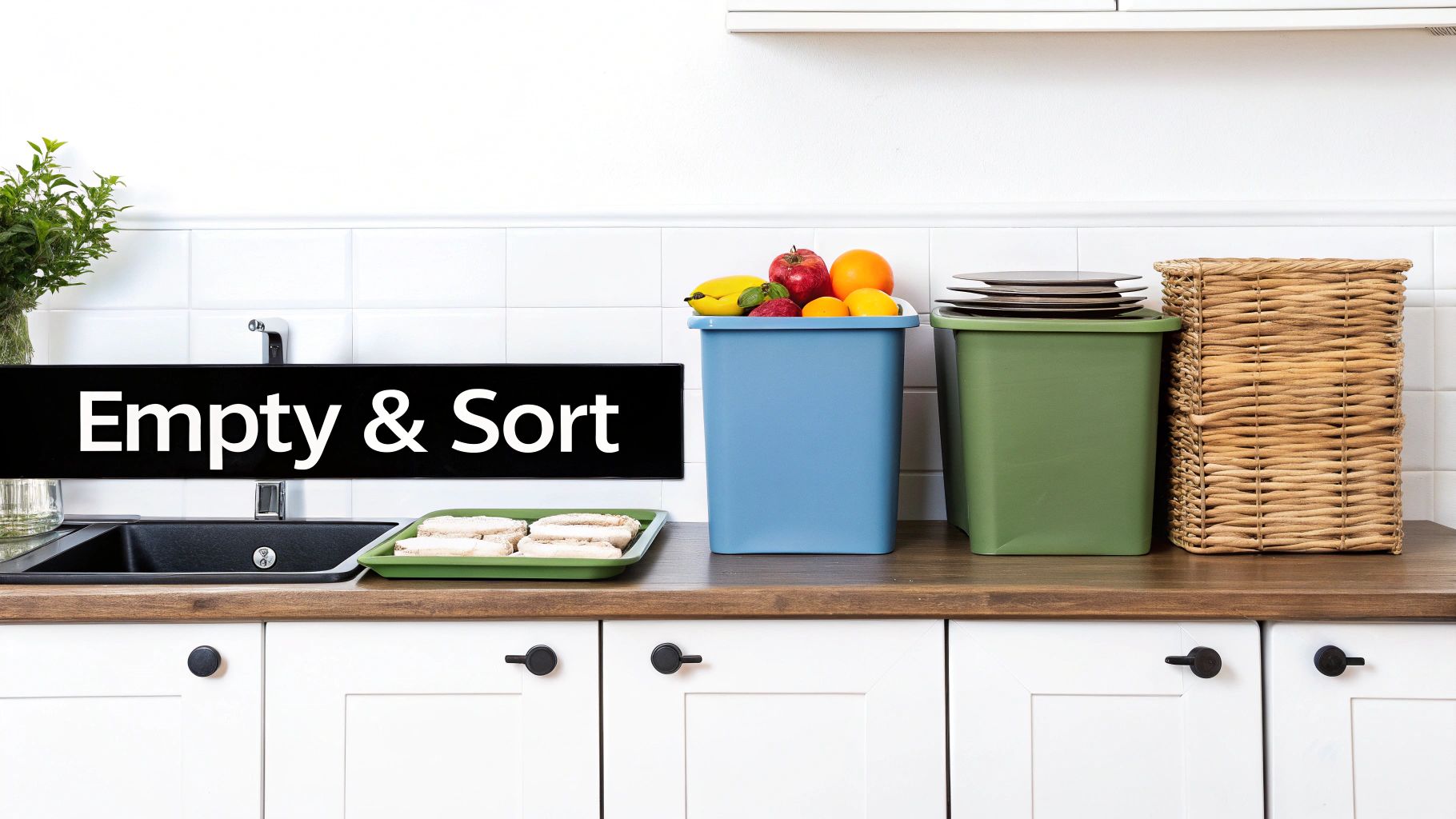
I know it’s tempting to just shuffle a few things around, but a true reset requires a completely empty space. So, roll up your sleeves and pull out every single plate, spice jar, and that weird gadget you forgot you even owned.
Find a large, clear area—your dining table or a section of the kitchen floor will work perfectly. As you empty each cabinet, you’re going to immediately sort everything into three distinct piles. This decisive, no-nonsense approach is the key to preventing decision fatigue from setting in.
The Three Essential Piles
- Keep: This is for the items you genuinely use and love. Think everyday dishes, essential cookware, and your go-to pantry staples. Be honest with yourself here—if you haven't used it in a year, it probably doesn't belong in this pile.
- Donate or Sell: Have functional items you just don't use anymore? This is their new home. That bread maker you used once, the duplicate set of measuring cups, or the serving platter that isn't quite your style all go here.
- Toss or Recycle: It's time to be ruthless. Get rid of anything that's broken, expired, or stained beyond recognition. Expired spices lose their potency after about a year, so check those dates. Chipped mugs and worn-out dish towels have to go.
Once your piles are made, act quickly. Bag up the trash right away and put the donation box in your car to avoid the temptation of second-guessing. Getting the clutter physically out of your house is psychologically freeing and sets a positive tone for the rest of the project.
With a clear space, you're not just organizing; you're redesigning your kitchen's workflow from the ground up. This preparation phase is where the real transformation begins, making every subsequent step more effective.
Cleaning and Measuring Your Space
Now for the satisfying part. With your cabinets completely empty, give them a deep clean. Wipe down every shelf, corner, and interior door with an all-purpose cleaner to get rid of crumbs, dust, and grime. So many people skip this step, but it makes a world of difference.
Finally, grab your tape measure. You need to meticulously measure the interior dimensions of every single cabinet and drawer—width, depth, and height. Jot these numbers down in a notebook or a note on your phone. These measurements are absolutely critical for buying organizers that actually fit, saving you the frustration of returning bins and dividers that are just a hair too big.
Understanding effective space planning principles is a huge advantage here, as it helps you visualize how to make the most of every square inch. This prep work might not feel glamorous, but it is the non-negotiable groundwork for a kitchen that is not just tidy, but truly functional.
Creating Smart Kitchen Zones for Daily Efficiency
Alright, your cabinets are officially a blank slate. Before you start reloading them, take a minute. The temptation is to just put things back where they were, but this is your chance to think like a chef and design a kitchen that actually works for you, not against you.
This is where kitchen zoning comes in. It’s a simple but powerful idea: group related items together and put them exactly where you'll need them. No more frantic searches or zigzagging across the kitchen just to make your morning coffee. Imagine all your coffee supplies—beans, grinder, mugs—living in one cabinet right next to the coffee maker. That’s the goal.
The Most Common Kitchen Zones
Mapping out your zones is the secret to getting organized and staying organized. While every kitchen is a bit different, most workflows are built around a few core areas.
- Cooking Zone: This is the area immediately surrounding your stove and oven. It’s prime real estate for pots, pans, cooking oils, and all those essential spices and utensils you grab mid-sauté.
- Prep Zone: Find your largest stretch of counter space—that’s your prep station. The cabinets here should hold mixing bowls, cutting boards, knives, and measuring cups. Everything you need to chop, mix, and assemble should be within arm's reach.
- Consumables Zone (Pantry): This is for all your dry goods, canned foods, pasta, and snacks. If you have a dedicated pantry cabinet, that's its natural home. If not, designate a large cabinet for this purpose.
- Cleaning Zone: Naturally, this area is centered around the sink. Use the cabinet below to store dish soap, sponges, trash bags, and cleaning supplies. An under-sink caddy can be a game-changer here.
- Everyday Zone: Keep this near the dishwasher or your dining table. It’s the home for daily-use plates, bowls, glasses, and silverware, which makes setting the table and unloading the dishwasher a breeze.
This strategic approach is a big reason why homeowners are investing more in their kitchens. The entire kitchen cabinet market was valued at an impressive USD 80.72 billion in 2023 and is projected to climb to USD 143.96 billion by 2030, largely because people want smarter, more efficient spaces. You can learn more about the growth of the kitchen cabinet market on strategicmarketresearch.com.
Pro Tip: Don't forget the classic "work triangle"—the path between your stove, sink, and refrigerator. Keep your most-used zones and items within this triangle to slash unnecessary steps and create a truly seamless cooking flow.
To help you visualize this, here’s a quick blueprint you can adapt for your own space.
Your Kitchen Zoning Blueprint
This table is a simple guide to help you match your items to the most logical cabinet locations, turning your kitchen into a model of efficiency.
| Zone (Location) | Best for Storing | Why It Works |
|---|---|---|
| Cooking Zone (Near Stove/Oven) | Pots, pans, baking sheets, cooking oils, spices, utensils (spatulas, whisks) | Everything you need is right there when the heat is on, preventing last-minute scrambles. |
| Prep Zone (Near Main Counter) | Mixing bowls, cutting boards, knives, measuring cups/spoons, small appliances (food processor) | Keeps your primary workspace clear and ensures prep tools are instantly accessible. |
| Cleaning Zone (Around Sink) | Dish soap, sponges, trash bags, dishwasher pods, cleaning sprays, paper towels | Consolidates all cleaning supplies in one spot for quick and easy tidying up. |
| Everyday Zone (Near Dishwasher/Table) | Plates, bowls, glasses, silverware, mugs | Makes unloading the dishwasher and setting the table incredibly fast and simple. |
| Consumables Zone (Pantry/Large Cabinet) | Dry goods (pasta, rice), canned goods, snacks, breakfast items, baking supplies | Groups all food items together, so you can see your inventory at a glance and simplify meal planning. |
By thinking in zones, you turn your cabinets from disconnected boxes into a cohesive system that supports how you actually live and cook.
Once you have your zones mapped out, putting everything away becomes second nature. And while we're focused on cabinets here, remember that your drawers are just as important. For a completely streamlined kitchen, check out our guide on how to organize kitchen drawers to apply these same principles below the counter.
Maximizing Every Inch of Cabinet Space
Once you’ve mapped out your kitchen zones, it's time to get into the nitty-gritty of each individual cabinet. Every kitchen has those awkward spots—the deep lower cabinets that feel like a black hole, the upper shelves you can’t quite reach, and of course, the infamous corner cabinet. But don't worry, with the right approach, you can transform these frustrating areas into some of your most efficient storage.
This isn't just about a weekend tidying project; it's a major focus for homeowners everywhere. In fact, home improvement spending in the United States soared to an incredible USD 522 billion in 2022. It’s no surprise that kitchen cabinets are a huge piece of that puzzle, commanding a 60.8% share of the total cabinet market in 2024. That tells you just how much people value smart storage that genuinely makes life easier. You can find more details about the booming cabinet market on marketdataforecast.com.
This decision tree gives you a great visual for assigning items to specific zones based on what you do there.

It’s a simple but incredibly effective way to think about placement, focusing on your daily activities instead of just cramming things in wherever they fit.
Conquering Lower Cabinets
Let’s be honest, lower cabinets are often deep, dark, and a recipe for chaos. It’s where items go to be forgotten. The single best way to fix this is by installing pull-out shelves or drawers. It’s a game-changer.
- Pots and Pans: A heavy-duty pull-out drawer means you can see all your cookware at a glance. No more noisy unstacking of five pans just to get to the one at the bottom.
- Small Appliances: Get that mixer, blender, or air fryer off your valuable counter space and onto a sliding shelf. This makes grabbing those heavy items completely effortless.
- Baking Sheets and Cutting Boards: Vertical dividers are your best friend here. Whether inside a deep drawer or in a narrow pull-out cabinet, they keep everything upright and easy to grab.
These kinds of modifications are the key to learning how to maximize cabinet space and turning those awkward voids into your most valuable storage real estate.
Taming Upper Cabinets
Upper cabinets are prime territory for your lighter, everyday items. The goal here is to use the vertical space wisely and keep your most-used things within easy reach.
Everyday dishes, glasses, and mugs belong on the lowest, most accessible shelves. Simple. Items you use less often, like that fancy serving platter or your holiday china, can live on the higher shelves. Keep a small, collapsible step stool tucked away in a nearby closet or pantry for those top-shelf items. Shelf risers are another fantastic trick—they instantly double your storage for shorter things like mugs, bowls, or stacks of saucers.
Here's a pro tip: Don’t be afraid to adjust your shelf heights. Most cabinet shelves are movable for a reason! Customizing the height to perfectly fit your items is a small tweak that makes a huge difference in efficiency.
Solving the Corner Cabinet Conundrum
Ah, the corner cabinet. It's notoriously difficult, but it also holds a ton of potential storage if you outfit it correctly. A Lazy Susan is the classic fix, letting you spin the shelves to bring everything from the back right to the front.
For a more modern solution, look into a blind corner pull-out system. These clever organizers have shelves that slide out and then pull over, giving you full access to every last inch of that awkward space.
While we're talking about kitchens, these principles of reclaiming tough spaces apply everywhere in the home. You can find similar inspiration in articles covering topics like attic storage ideas to reclaim space. By picking the right tool for each specific cabinet, you can ensure no inch ever goes to waste.
Choosing Cabinet Organizers That Actually Work

Alright, you’ve sorted, decluttered, and zoned your kitchen. Now for the fun part: picking the tools that will bring your vision to life. The right cabinet organizer is a total game-changer, making you feel like you’ve magically doubled your space. But the wrong one? It just becomes another piece of clutter. We're aiming for solutions that make your daily routine smoother, not just look pretty for a few days.
And this is a bigger deal than you might realize. The global market for kitchen storage solutions was valued at a staggering USD 131.43 billion in 2023 and is on track to hit over USD 182.08 billion by 2030. That's a lot of people trying to make their kitchens work better! You can read more about the growth of the kitchen organization market on grandviewresearch.com. It really shows that investing in the right tools is a smart move.
Key Organizers for Maximum Impact
Before you head out and buy every bin and basket in sight, take a minute. What specific problem are you trying to solve? Is it wasted vertical space between shelves? A chaotic jumble of pot lids? Let the problem guide you to the right solution.
Here are a few of the workhorses I recommend time and time again:
- Shelf Risers: These are incredibly simple wire or acrylic shelves that instantly create a second level inside a cabinet. They're perfect for doubling your storage for mugs, short glasses, or stacks of bowls and plates. No more wobbly towers.
- Drawer Dividers: An absolute must for utensils, cutlery, and that infamous "junk" drawer. I'm a big fan of the adjustable bamboo or acrylic dividers because they let you create a designated home for every little thing, stopping the mess before it starts.
- Clear Containers: When it comes to pantry staples like flour, pasta, and snacks, decanting into clear, airtight containers is a game-changer. You can see exactly what you have at a glance, which helps cut down on food waste and prevents you from buying that third bag of brown sugar you didn't know you had.
- Lazy Susans (Turntables): These are the undisputed champions for deep corner cabinets and shelves packed with spices or oils. With a quick spin, everything hidden in the back comes right to the front. No more forgotten bottles of soy sauce.
Here's a pro tip I've learned over the years: Don’t just look in the kitchen aisle! Sometimes the perfect slim container for your tea bags is hiding in the bathroom storage section, or an office organizer works wonders for small seasoning packets. Get creative and focus on function over what the label says.
To help you sift through the options, I've put together a quick comparison of some of the most popular organizers out there.
Cabinet Organizer Comparison
Finding the best tools for your kitchen can feel overwhelming, but this table breaks down the pros and cons of the most common solutions to help you make an informed choice based on your specific needs.
| Organizer Type | Best For | Pros | Cons |
|---|---|---|---|
| Pull-Out Shelves | Deep lower cabinets, heavy pots and pans, small appliances | Makes everything accessible; reduces bending and reaching | Can be expensive; installation can be tricky |
| Lazy Susans | Corner cabinets, pantry shelves for spices, oils, and cans | Brings items from the back to the front; utilizes awkward corners | Center pole can limit space; items can sometimes fall off |
| Drawer Dividers | Utensil drawers, spice drawers, "junk" drawers | Highly customizable; keeps small items from sliding around | May not fit non-standard drawers perfectly; can reduce capacity |
| Shelf Risers | Tall cabinets for stacking plates, bowls, mugs, and canned goods | Instantly doubles vertical space; affordable and easy to install | Limited weight capacity; may not be stable on uneven surfaces |
| Lid Organizers | Storing pot and pan lids vertically or on cabinet doors | Prevents lid avalanches; keeps lids easy to find and grab | Only works for lids; can take up valuable cabinet floor space |
| Clear Containers | Pantry goods like flour, sugar, pasta, cereal, and snacks | Keeps food fresh; allows you to see inventory at a glance | Requires decanting; can be an upfront investment to buy a set |
Ultimately, the best organizers are the ones that solve a specific problem you face every day. A mix-and-match approach is usually the most effective way to create a system that truly works for you.
Specialized Tools for Common Problems
Beyond the basics, some of the most satisfying solutions are those designed for very specific kitchen headaches. If you're ready to dig deeper, our guide on kitchen cabinet organizers has even more detailed recommendations and ideas.
Think about a vertical pot lid organizer—it can finally tame that clattering mess by storing lids neatly on their sides. Or consider an under-sink caddy with pull-out tiers, which makes grabbing cleaning supplies effortless instead of an archaeological dig. Investing in these targeted tools is how you really start to optimize every inch of your space, turning frustrating cabinets into your most functional assets.
Building Habits to Keep Your Cabinets Organized
https://www.youtube.com/embed/0rNSZScOfRE
You did it. You survived the Great Cabinet Cleanout. Everything has a home, the zones make sense, and for the first time in a long time, you can find the paprika without causing an avalanche.
But here’s the thing—the real victory isn’t getting your kitchen organized; it’s keeping it that way. The secret isn't about maintaining a showroom-perfect kitchen forever. It's about building a few simple, sustainable habits that stop clutter from creeping back in.
Think of it as a long-term insurance policy for all your hard work. By weaving a few tiny routines into your daily life, you can make sure that feeling of calm and control is here to stay.
The Power of Small, Consistent Actions
Most people fall into the trap of thinking organization is a one-time, all-day project. In reality, a tidy space is the result of small, consistent efforts. These don’t need to be massive undertakings. In fact, the simpler the habit, the more likely you are to stick with it.
One of the most powerful tools in your arsenal is the 'one in, one out' rule. It’s incredibly straightforward: every time a new kitchen item crosses your threshold, something similar has to leave.
- Got a new coffee mug? Time to say goodbye to that chipped one you never use.
- Bought a fancy new blender? The old one gets sold or donated.
- Grabbed a new bottle of soy sauce? Make sure you finish the nearly empty one first.
This single habit is your best defense against the slow, steady accumulation that leads to chaos. It forces you to be mindful about what you bring into your home and stops you from hoarding duplicates, keeping your well-planned space from becoming overstuffed.
A well-organized kitchen isn't the result of a massive overhaul. It's built on the small, daily decisions you make. These tiny habits are what keep the whole system from breaking down.
Your Weekly and Seasonal Maintenance Plan
To keep things running like a well-oiled machine, you don’t need to empty all your cabinets again for years. All it takes is a quick, scheduled check-in to put things right and handle minor messes before they escalate.
A simple 10-minute weekly reset can work wonders. Pick a time that works for you—say, Sunday evening—and do a quick scan of your cabinets and pantry. Put stray items back where they belong, wipe up any small spills, and quickly neaten any stacks of dishes or containers that have gotten a little unruly.
Then, about twice a year, set aside a little more time for a seasonal check-in. This is the perfect opportunity to:
- Purge the Pantry: Do a quick pass for any expired items or ingredients you bought for that one recipe and will realistically never use again.
- Assess Your System: Be honest—what’s working and what isn’t? Is there a particular cabinet that’s become a black hole for clutter again? Do you need to adjust a zone?
- Tweak as Needed: Life changes, and your kitchen should change with it. Maybe the kids are older and need easier access to healthy snacks, or you’ve gotten really into baking and need to rethink that entire zone.
This isn’t about starting over. It's about making small, smart adjustments to ensure your system continues to support your life, keeping your kitchen functional and stress-free for good.
Tackling Your Toughest Cabinet Questions
Even the best-laid plans can hit a snag. As you get into the nitty-gritty of reorganizing your kitchen cabinets, a few questions are bound to come up. That’s perfectly normal—in fact, it means you’re thinking through the details!
Consider this your quick-reference guide for those moments you feel stuck. A little expert advice can be all it takes to push through a challenge and get back on track to a beautifully organized kitchen.
What Goes in Upper vs. Lower Cabinets?
The old rule of thumb is still the best one: heavy on the bottom, light on top. Your lower cabinets are the perfect spot for bulky pots and pans, small appliances like that stand mixer or blender, and heavy stacks of dinner plates. Storing them down low is better for your back and just plain safer than trying to wrestle a cast iron skillet from above your head.
On the other hand, upper cabinets are ideal for lighter, everyday essentials. This is where your glasses, coffee mugs, spices, and individual bowls should live. Having these items at eye level makes grabbing your morning coffee mug or a drinking glass a total breeze.
How Should I Use Those Really High Shelves?
Ah, the "stratosphere" of the kitchen. Those top shelves can feel like a black hole where forgotten items go to collect dust. Don't let that valuable real estate go to waste! The key is to use it for things you know you won't need very often.
- Holiday & Seasonal Gear: Think Thanksgiving platters, Christmas cookie cutters, or that giant punch bowl you only pull out for parties.
- Bulk Overstock: This is a great place to stash extra paper towels, a backup jug of olive oil, or any other surplus pantry goods you've bought in bulk.
- Heirloom & Special Occasion Pieces: That fancy china from your wedding registry or the huge serving bowls for big family dinners can be stored safely up and out of the way.
Just be sure to keep a sturdy, foldable step stool tucked away in a nearby pantry or closet. It’s a small investment that makes that top-shelf space completely usable and safe to access.
Our Pro Tip: Treat your top shelves like your kitchen's personal storage unit. If you use an item less than once a month, it's a perfect candidate for this space, freeing up your prime, easy-to-reach shelves for daily use.
What's the Best Way to Organize Food Storage Containers?
The avalanche of plastic containers and their runaway lids is a battle we've all fought. The secret to winning is simple: separate the lids from the containers.
First, nest all your container bottoms together by shape and size—stack the squares with the squares, the rounds with the rounds. You'll be amazed at how much space this saves right off the bat. Then, corral all the lids. We love using a simple vertical file organizer or a narrow basket to store them on their sides, like records in a crate. This trick lets you flip through and find the exact lid you need in seconds, no more digging or mess. It’s one of the most satisfying organizational hacks out there.
Ready to transform your kitchen with cabinetry that’s as beautiful as it is functional? At Sinclair Cabinetry inc, we specialize in crafting custom wood cabinets designed to fit your life perfectly. Explore our custom cabinet solutions today!