
Embarking on a home remodel is an exciting journey, but without a clear plan, it can quickly become overwhelming. A detailed home remodel checklist is your most critical tool, acting as a roadmap that transforms a complex project into a series of manageable steps. This guide isn't just another list; it's a comprehensive blueprint designed to navigate you through every critical phase, from initial concept to the final, satisfying reveal. We will systematically break down the entire process into 10 essential stages.
This article provides actionable insights for every part of your renovation. You will learn how to:
- Establish a rock-solid budget and secure financing.
- Navigate the complex maze of building permits and legal requirements.
- Select the right contractor who aligns with your vision and budget.
- Plan for daily life and set up temporary living arrangements during construction.
By tackling each step methodically, you can minimize stress, avoid costly overruns, and prevent common pitfalls. This structured approach ensures that no detail is overlooked, empowering you to transform your space efficiently. Let's begin building the foundation for a successful and smooth renovation project.
1. Budget Planning and Financial Preparation
Before a single hammer swings, your most crucial tool is a comprehensive budget. This foundational step in any home remodel checklist involves more than just a ballpark figure; it requires a detailed financial plan that accounts for every potential expense. A well-structured budget ensures your project stays on track without causing financial strain, preventing costly surprises down the line.
Creating Your Remodel Budget
Start by creating a line-item spreadsheet that breaks down all anticipated costs. This should include materials, labor, permits, and fixtures. For example, a kitchen remodel budget might allocate specific funds for cabinetry, countertops, appliances, and flooring.
A critical component is the contingency fund, which should be 15-20% of your total estimated cost. This buffer covers unexpected issues, like discovering hidden water damage or needing to upgrade electrical wiring.
Actionable Budgeting Tips
- Get Multiple Quotes: Solicit bids from at least three different contractors to compare costs and services.
- Research Material Costs: Price out materials from various suppliers, from big-box stores to specialized local vendors.
- Secure Financing Early: Understand how you will fund the project. For flexible access to funds during your renovation, consider exploring options like a Line Of Credit Home Loan, which can be particularly useful for managing variable project costs.
- Track Expenses: Use a dedicated app or your spreadsheet to monitor spending in real-time against your budget. This allows for quick adjustments and prevents overspending.
2. Permits and Legal Requirements Research
Navigating the web of building permits and legal requirements is a non-negotiable step in any home remodel checklist. This critical phase ensures your project complies with local regulations, guaranteeing safety and structural integrity. Overlooking permits can lead to severe consequences, including hefty fines, project stoppages, and even being forced to demolish completed work, making this research essential for a smooth and lawful renovation.
The following timeline visualizes the key stages of a typical permit process, from initial application to final inspection.
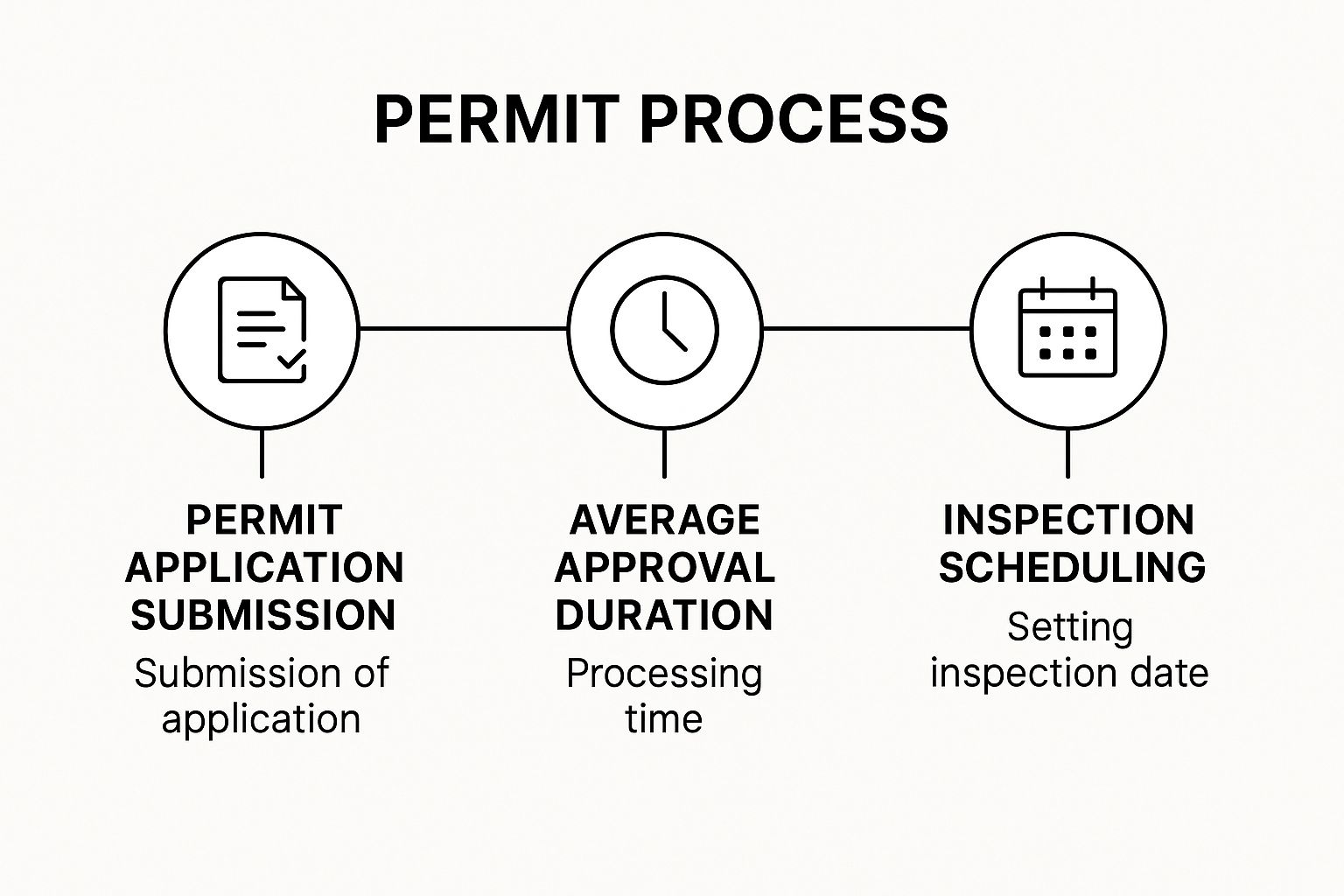
This visual highlights how proactive planning and scheduling are crucial, as the approval and inspection stages can introduce significant time into your project schedule.
Securing Your Project's Legitimacy
Start by contacting your local building department early in the planning process to understand exactly what your project requires. Many renovations, especially those involving structural, electrical, or plumbing changes, will need permits. For instance, a major kitchen remodel often requires both electrical and plumbing permits, while a new deck will need structural plans reviewed and approved.
A key factor is zoning compliance. Some projects, like a bathroom addition, might require a zoning variance if they alter the property's footprint or usage in a way not typically allowed by current regulations.
Actionable Permit Tips
- Consult Your Contractor: Hire professionals who are experienced with the local permitting process as they can often manage the applications for you.
- Organize Documentation: Keep all permit applications, approved plans, and inspection reports in a dedicated folder for easy access.
- Plan for Inspections: Schedule necessary inspections well in advance. Delays in getting an inspector on-site can halt progress and throw off your entire project timeline.
- Post Permits Publicly: Most jurisdictions require you to post the approved permit in a visible location on-site, such as a front window or door.
3. Timeline and Project Schedule Development
With your budget set and design finalized, the next essential item on your home remodel checklist is developing a detailed project schedule. A well-crafted timeline is your project's roadmap, outlining every phase from demolition to the final coat of paint. It ensures that tasks are sequenced logically, materials arrive on time, and everyone involved, from contractors to suppliers, is aligned.
Creating Your Remodel Timeline
Begin by listing all major tasks and breaking them down into smaller, manageable steps. Arrange these tasks in a logical order, considering dependencies. For instance, plumbing and electrical rough-ins must be completed before drywall can be installed. Assign realistic durations for each task, factoring in lead times for custom items like cabinets or special-order tiles.
A crucial element is building in a time buffer, typically 20-30% of the total project duration. This contingency accounts for unforeseen delays such as inclement weather, material backorders, or unexpected structural issues that can halt progress.
Actionable Scheduling Tips
- Use Project Management Tools: Utilize software or apps to create a Gantt chart. This visual tool helps track progress, manage dependencies, and adjust schedules easily.
- Coordinate with Contractors: Share the timeline with your general contractor and all subcontractors. Confirm their availability and ensure the schedule aligns with their workflow.
- Factor in Deliveries: Order long-lead-time materials well in advance and schedule their delivery to coincide with when they are needed on-site, not before.
- Plan for Milestones: Set key milestones, like the completion of demolition or the installation of cabinetry, to track progress. For a detailed guide on sequencing a specific project, you can explore this kitchen remodel timeline.
4. Contractor Selection and Vetting
Choosing the right contractor is one of the most consequential decisions in your home remodel checklist. This professional will transform your vision into reality, so a thorough vetting process is non-negotiable. Selecting a qualified, reliable, and communicative contractor ensures your project is completed to a high standard, on schedule, and within budget, preventing common renovation pitfalls like poor workmanship or project abandonment.
Researching and Interviewing Candidates
Begin by compiling a list of potential contractors from sources like the National Association of the Remodeling Industry (NARI) or referrals from trusted friends. Your goal is to find professionals with proven experience relevant to your project. For instance, look for a general contractor with a portfolio of home additions similar to yours or a specialized bathroom remodeler with certifications from fixture manufacturers.
The interview process is your opportunity to assess their professionalism, communication style, and expertise. Prepare a list of questions about their process, timeline, and how they handle unexpected challenges.
Actionable Vetting Tips
- Get Detailed Written Estimates: Solicit bids from at least three contractors. Ensure each estimate is a detailed, itemized document, not just a single number, allowing for an accurate comparison of labor, materials, and other costs.
- Verify Credentials and Insurance: Use state licensing board websites to confirm their license is active and in good standing. Request proof of both general liability insurance and workers' compensation coverage to protect yourself from liability.
- Check References and Past Work: Don't just rely on online reviews. Ask for recent references and speak directly with past clients about their experience. If possible, visit a recently completed job site.
- Trust Your Instincts: A successful partnership requires good rapport. To learn more about what makes a great partnership, see this guide on finding the right home renovation contractor.
5. Design Planning and Space Layout
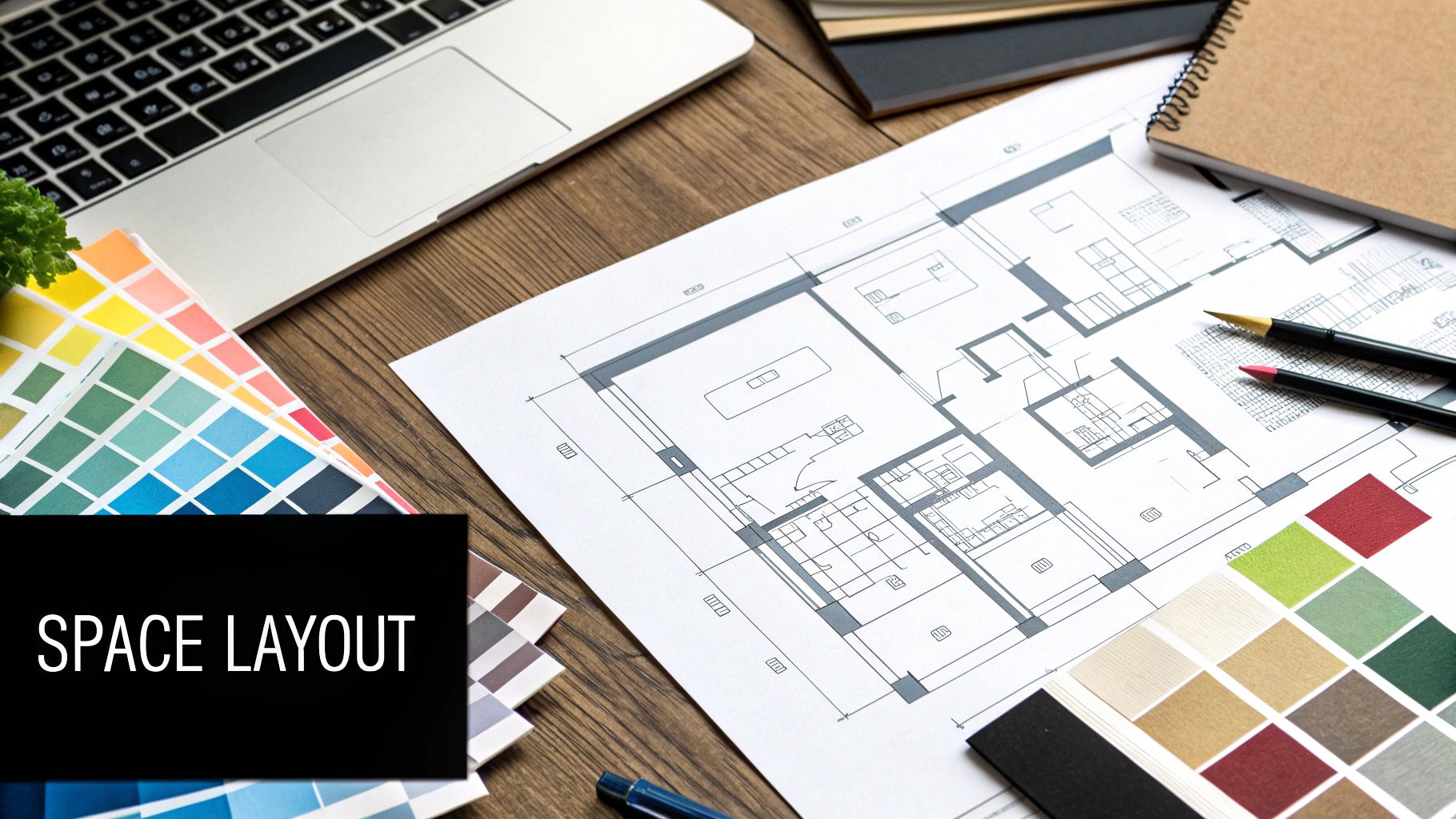
With your project's scope and budget defined, the next critical step in a home remodel checklist is detailed design planning. This phase translates your vision into a functional blueprint, ensuring the new space not only looks beautiful but also enhances your daily life. Effective space layout planning considers traffic flow, functionality, and your family's unique lifestyle to create a cohesive and practical environment.
Creating Your Design and Layout
Begin by developing detailed floor plans that optimize every square foot. This involves more than just placing furniture; it’s about creating zones for different activities and ensuring a logical flow between them. For instance, an open-concept kitchen design should prioritize an efficient work triangle, while a master bathroom might incorporate universal design principles for long-term accessibility. If your renovation includes compact areas, exploring smart ideas for a small bathroom remodel can help maximize both style and functionality.
Actionable Design Tips
- Analyze Daily Routines: Map out how your family moves through and uses the space daily to identify pain points and opportunities for improvement.
- Use Visualization Tools: Employ design software like SketchUp or simple graph paper to create 2D and 3D mockups of your layout. This helps you visualize the final result and make adjustments before construction begins.
- Plan for the Future: Consider long-term needs, such as aging in place or a growing family, by incorporating flexible design elements like wider doorways or multi-purpose rooms.
- Maintain a Cohesive Style: Ensure design choices, from color palettes to material selections, create a consistent aesthetic across connected spaces for a unified look.
6. Material Selection and Procurement
Once your design is finalized, the next critical step in your home remodel checklist is selecting and ordering all the necessary materials. This phase involves translating your design vision into tangible items like flooring, fixtures, paint, and appliances. Careful procurement is essential for balancing aesthetics, durability, and cost, ensuring that all components arrive on time and align with your project's scope and budget.
Organizing Your Material Orders
Create a detailed master list of every material required for the project, from large items like countertops and cabinets down to the small details like grout and light switches. For each item, note the supplier, cost, lead time, and expected delivery date. This document becomes a roadmap for your purchasing process and helps coordinate with your contractor.
For example, a bathroom remodel list would specify tile type, vanity dimensions, faucet model, and paint colors. When choosing cabinets for a kitchen, factors like material durability and style are paramount. You can explore a detailed comparison of options to find the best material for kitchen cabinets to inform your decision.
Actionable Procurement Tips
- Order with Overage: Purchase 10-15% extra for materials like tile and flooring to account for cuts, mistakes, or future repairs.
- Coordinate Deliveries: Schedule deliveries to coincide with the installation timeline. Storing materials on-site for too long can risk damage or clutter the workspace.
- Inspect Upon Arrival: Immediately check all delivered items for damage or defects. It's much easier to resolve issues with suppliers before the installation begins.
- Keep Samples and Swatches: Retain samples of your chosen finishes. These are invaluable for future touch-ups or when matching decor down the line.
7. Living Arrangements and Temporary Setup
A critical part of any home remodel checklist is planning how your household will function amidst the construction chaos. Addressing your living situation beforehand minimizes daily disruption, maintains a sense of normalcy, and ensures your family's safety and comfort. A well-thought-out temporary setup is essential for surviving a renovation with your sanity intact, especially during extensive projects like a kitchen or bathroom overhaul.
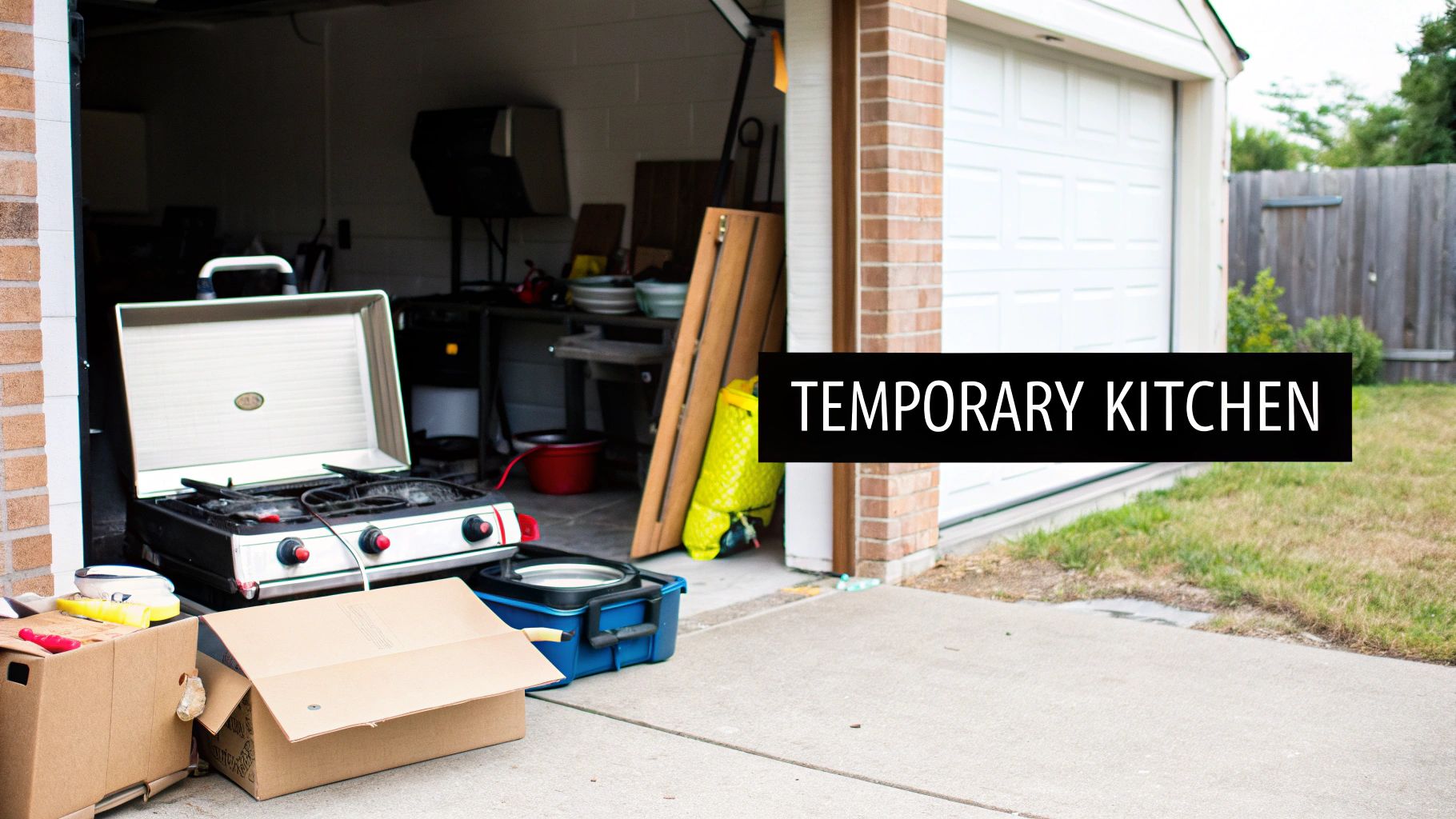
Establishing Your Temporary Home Base
Decide where you will live during the remodel. For a kitchen renovation, this might involve creating a temporary kitchen in the basement or dining room with a microwave, mini-fridge, and slow cooker. If your only bathroom is being remodeled, arranging a short-term rental or a hotel stay might be necessary to avoid major inconvenience.
The goal is to create a functional, separate zone away from the dust and debris. This keeps essential daily routines, like preparing simple meals or having a quiet space to work, as undisrupted as possible.
Actionable Tips for a Livable Remodel
- Create Dust Barriers: Use heavy-duty plastic sheeting and painter's tape to seal off the construction zone from the rest of your home.
- Set Up a Mini-Kitchen: Equip a temporary space with essentials like a coffee maker, toaster oven, paper plates, and utensils.
- Establish Quiet Hours: Coordinate with your contractor to define specific times for loud work, allowing for predictable periods of peace.
- Plan Escapes: Schedule activities outside the home, especially on days planned for demolition or other noisy tasks, to give your family a break.
8. Utility and Infrastructure Planning
Beneath the visible surfaces of your remodel lies a complex network of utilities that are foundational to modern living. Utility and infrastructure planning involves a thorough assessment of your home's electrical, plumbing, and HVAC systems to ensure they can support your renovation goals. This critical step in your home remodel checklist prevents system overloads, ensures safety, and future-proofs your home for new technologies and appliances.
Assessing Your Home's Core Systems
Before finalizing your design, work with licensed electricians, plumbers, and HVAC technicians to evaluate your current infrastructure. For instance, a new kitchen with high-powered appliances and an island may require a significant electrical upgrade. Similarly, reconfiguring a bathroom layout will necessitate rerouting plumbing lines, and a new home addition will demand extending HVAC ductwork for proper climate control.
For significant electrical upgrades, such as adding a home office or an EV charger, you may need to consider expanding your electrical panel to handle the increased load safely and efficiently.
Actionable Infrastructure Tips
- Map Before You Dig: Always have utility companies mark underground lines before any excavation begins to prevent dangerous and costly accidents.
- Upgrade to Code: A remodel is the perfect opportunity to bring outdated wiring, plumbing, and HVAC components up to current building codes for enhanced safety and efficiency.
- Plan for the Future: Install extra outlets, run ethernet cables, or add conduits for future smart home technology while the walls are open.
- Prioritize Energy Efficiency: Consider high-efficiency HVAC systems, tankless water heaters, or LED lighting to reduce long-term utility costs and environmental impact.
9. Safety and Protection Measures
A successful home remodel checklist prioritizes the well-being of everyone involved and the protection of your property. Implementing comprehensive safety protocols is not just a formality; it is an essential step to prevent injuries, mitigate risks, and protect existing home features from damage during construction. This proactive approach ensures a smoother, more secure renovation process from start to finish.
Establishing a Safe Work Environment
Your remodel site is a temporary construction zone and must be treated as such. Start by identifying potential hazards and establishing clear safety rules with your contractor. This includes creating dust and debris barriers, such as plastic sheeting, to contain the mess and protect air quality in the rest of your home.
For older homes, it is critical to test for hazardous materials like lead paint and asbestos before any demolition begins. Professional abatement may be necessary to ensure these materials are handled and disposed of safely, in compliance with regulations set by bodies like the Occupational Safety and Health Administration (OSHA).
Actionable Safety Tips
- Protect Existing Structures: Cover floors with durable ram board or heavy-duty paper and wrap furniture and fixtures in plastic to prevent scratches, dust, and damage.
- Insist on Protective Gear: Ensure all workers on-site wear appropriate personal protective equipment (PPE), including hard hats, safety glasses, and steel-toed boots.
- Ensure Proper Ventilation: Use fans and open windows to maintain airflow, especially during activities like painting, staining, or when using adhesives with strong fumes.
- Create Clear Pathways: Keep walkways and work areas free of tools, materials, and debris to prevent trips and falls, a common source of on-site injuries.
10. Quality Control and Inspection Planning
Maintaining high standards throughout your project is essential for a successful outcome. This crucial step in your home remodel checklist involves establishing a system for actively monitoring workmanship, conducting regular inspections, and ensuring every detail aligns with your contract specifications. Proactive quality control prevents minor issues from escalating into major, costly problems and guarantees the final result meets your expectations.
Establishing Your Inspection System
A formal quality control process should be established before construction begins. This system outlines how and when you will review the work. It can include daily check-ins, weekly walkthroughs with your contractor, and key milestone inspections, for example, after framing is complete or before drywall goes up.
The goal is to catch deviations from the plan early. This includes checking that the correct materials are being used, installation techniques are proper, and the work quality is consistent. A final, comprehensive walkthrough is non-negotiable before making the last payment.
Actionable Quality Control Tips
- Document Everything: Take daily photos and detailed notes of the progress. This creates a visual record that can be invaluable for resolving any disputes.
- Address Issues Immediately: If you spot something that doesn’t seem right, bring it to your contractor’s attention right away. It's much easier to fix a misplaced outlet before the drywall is installed.
- Know Your Contract: Understand the exact specifications for materials and installation methods outlined in your contract. This document is your ultimate guide for what to expect.
- Withhold Final Payment: Never release the final payment until every item on your punch list is completed to your satisfaction and all required lien waivers have been provided.
Home Remodel Checklist Comparison Table
| Aspect | Budget Planning and Financial Preparation | Permits and Legal Requirements Research | Timeline and Project Schedule Development | Contractor Selection and Vetting | Design Planning and Space Layout | Material Selection and Procurement | Living Arrangements and Temporary Setup | Utility and Infrastructure Planning | Safety and Protection Measures | Quality Control and Inspection Planning |
|---|---|---|---|---|---|---|---|---|---|---|
| Implementation Complexity 🔄 | Medium 🔄🔄 | High 🔄🔄🔄 | Medium-High 🔄🔄🔄 | High 🔄🔄🔄 | Medium 🔄🔄 | Medium 🔄🔄 | Low-Medium 🔄🔄 | High 🔄🔄🔄 | Medium-High 🔄🔄🔄 | Medium 🔄🔄 |
| Resource Requirements ⚡ | Moderate ⚡⚡ | Moderate-High ⚡⚡⚡ | Moderate ⚡⚡ | High ⚡⚡⚡ | Moderate ⚡⚡ | Moderate ⚡⚡ | Low ⚡ | Moderate-High ⚡⚡⚡ | Moderate ⚡⚡ | Moderate ⚡⚡ |
| Expected Outcomes 📊 | Financial control and prioritization 📊📊📊 | Legal compliance and safety 📊📊📊📊 | On-time project completion and coordination 📊📊📊 | Quality workmanship and accountability 📊📊📊 | Optimized space and design clarity 📊📊📊 | Quality materials and on-time delivery 📊📊📊 | Minimized lifestyle disruption 📊📊 | Reliable utility infrastructure 📊📊📊 | Injury prevention and damage protection 📊📊📊 | Maintained work quality and defect resolution 📊📊📊 |
| Ideal Use Cases 💡 | Early project phase, budget setup 💡💡 | Mandatory for regulatory compliance 💡💡💡 | Complex projects with multiple phases 💡💡💡 | Selecting trusted contractors 💡💡💡 | Design-driven remodels 💡💡 | Projects sensitive to material quality 💡💡 | Renovations impacting daily living 💡 | Remodels altering utilities 💡💡💡 | Any project requiring safety protocols 💡💡 | Ensuring final quality and standards 💡💡 |
| Key Advantages ⭐ | Prevents overruns, prioritizes spending ⭐⭐ | Avoids fines, ensures safety and value ⭐⭐⭐ | Keeps schedule on track, prevents delays ⭐⭐⭐ | Ensures professionalism and reduces risk ⭐⭐⭐ | Visualizes design, prevents costly rework ⭐⭐ | Controls cost, ensures material readiness ⭐⭐ | Maintains comfort, reduces stress ⭐ | Avoids costly utility errors, upgrades system ⭐⭐⭐ | Enhances safety, protects home assets ⭐⭐ | Detects defects early, maintains quality ⭐⭐ |
Bringing Your Vision to Life
Embarking on a home remodel is a journey of transformation, turning the space you have into the home you've always envisioned. By now, you've navigated the critical stages outlined in our comprehensive home remodel checklist, from establishing a realistic budget to planning for those final, satisfying quality checks. This detailed roadmap isn't just a list of tasks; it's a strategic framework designed to empower you, minimize stress, and maximize your return on investment, both financially and emotionally.
The power of this checklist lies in its proactive approach. Instead of reacting to problems as they arise, you are now equipped to anticipate them. You understand the necessity of securing permits before demolition begins, the value of vetting contractors thoroughly to find a true partner, and the importance of creating a detailed project timeline that keeps everyone accountable. These steps prevent costly delays and miscommunications, ensuring a smoother, more predictable process from start to finish.
Key Takeaways for a Successful Remodel
Mastering this process is about more than just project management; it's about gaining control and confidence. Remember these core principles as you move forward:
- Preparation is Paramount: The most successful remodels are won in the planning phase. Thorough financial preparation, meticulous design planning, and diligent contractor vetting form the bedrock of your project. Rushing this stage is the most common and costly mistake.
- Communication is Non-Negotiable: A clear and consistent line of communication with your contractor and vendors is your most valuable tool. Document everything, schedule regular check-ins, and never assume something is understood.
- Quality is a Conscious Choice: From the structural materials hidden behind the walls to the visible finishes like cabinetry and fixtures, every choice contributes to the longevity and enjoyment of your home. Prioritize quality where it counts most to ensure your new space stands the test of time.
Ultimately, the goal of any home remodel is to enhance your daily life. It’s about creating a kitchen that inspires culinary creativity, a bathroom that serves as a personal sanctuary, or a living area that brings your family closer together. By diligently following a structured home remodel checklist, you are not just managing a construction project; you are thoughtfully curating your future environment. You have laid the groundwork for a space that is not only beautiful and functional but also a true reflection of your vision and lifestyle. Now, all that's left is to take that final, exciting step and begin.
As you finalize your plans, remember that high-quality cabinetry is often the centerpiece of a stunning kitchen or bathroom renovation. For bespoke, real wood cabinetry that combines timeless elegance with superior craftsmanship, trust the experts at Sinclair Cabinetry inc. Let our 35 years of experience help you select the perfect foundation for your new space.