

A high-end kitchen renovation isn't just about spending more money on an upgrade. It’s a deep dive into creating a truly personal space where premium materials, expert craftsmanship, and smart design all come together. Think of it less like a standard remodel and more like commissioning a bespoke piece of furniture—it’s built from the ground up to fit your life perfectly, blending beauty with day-to-day function.
What Defines a High End Kitchen Renovation

Starting a high-end kitchen renovation is a lot like commissioning a piece of fine art. The process doesn't begin with picking out paint swatches or browsing appliances. It starts with a clear, personal vision for how you want to live in the space.
The real goal is to build an environment that not only looks incredible but actually makes your daily routines better—from that first cup of coffee in the morning to hosting a big holiday dinner. It’s a true investment in your quality of life.
This journey is defined by a few key things that really set it apart from your average kitchen refresh. These elements are the building blocks of a space that feels both luxurious and genuinely useful.
The Core Pillars of a Luxury Kitchen
At its heart, a high-end project is all about personalization and untouchable quality. This isn't about picking options from a catalog; it's about creating something that is uniquely yours. The main differences really boil down to a few key areas:
- Bespoke Craftsmanship: We’re talking about custom cabinetry designed to your exact needs, appliances fitted so perfectly they look like they were born there, and unique architectural details that you just don't find off the shelf.
- Premium Materials: This means sourcing top-tier materials like natural stone countertops, solid wood for cabinetry, and professional-grade appliances that are known for their performance and how long they last.
- Integrated Design: This is where the magic happens. The layout, the lighting, and the technology all work in perfect harmony. Think panel-ready appliances that completely disappear into the cabinetry or a lighting plan that sets the mood while also being perfectly functional for cooking tasks.
To get a feel for the entire journey from start to finish, this complete kitchen renovation guide is a great resource that covers everything from design to the final touches.
A true luxury kitchen is a space where every single detail feels intentional. It’s the satisfying weight of the cabinet hardware in your hand. It’s the seamless flow between the cooking zone and the area where your friends gather. It feels personal, thoughtful, and effortlessly elegant.
The Four Phases of Transformation
To get through a high-end kitchen renovation successfully, you need a solid plan. You can find tons of inspiration by exploring these luxury kitchen design ideas to help shape your initial thoughts. The whole project really breaks down into four clear phases:
- Defining Your Vision: This is where you translate your lifestyle and needs into an actual design concept.
- Meticulous Planning: Now it's time to finalize layouts, choose all your materials, and lock in a realistic budget.
- Expert Execution: The hammers start swinging. This is the construction and installation phase, all managed by skilled pros.
- The Final Reveal: The best part—stepping into and enjoying a space that is a perfect reflection of you.
Crafting Your Vision and Assembling Your Team
Every truly stunning kitchen starts long before the first hammer swings. It begins with a clear, compelling vision—the foundational phase where your daydreams and practical needs finally merge into a tangible concept. Think of yourself as the director of a film; you have to know the story you want to tell before you can even think about hiring the actors and crew.
The first step is a gut check on your lifestyle. How do you actually use your kitchen? Are you a passionate home chef who dreams of a professional-grade range and sprawling prep surfaces? Or maybe you're the consummate host, needing a social island where guests can gather and a seamless flow into your living areas. For many, the kitchen is simply the family hub—a place for homework, morning coffee, and late-night chats.
Getting honest about these questions helps you move past generic ideas from magazines and toward a design that genuinely makes your daily life better. The goal here isn't just to create a beautiful space, but one that feels deeply functional and intuitive for you and your family.
Translating Lifestyle into a Design Wish List
Once you have a handle on your core needs, it's time to build a detailed wish list. This isn't just a scrapbook of pretty pictures; it's a strategic document that will steer every single decision you make from here on out. I always tell clients to break it down into two simple categories: "must-haves" and "nice-to-haves."
- Must-Haves: These are your non-negotiables. It might be a six-burner gas range, a second sink dedicated to food prep, or the custom pantry storage that will finally get all your small appliances off the counter.
- Nice-to-Haves: These are the features you'd absolutely love if the budget and design allow. Think a built-in coffee station, a sleek wine refrigerator, or a dedicated baking zone with a cool marble countertop.
This simple exercise forces you to prioritize what really matters. For instance, if you rarely bake but host dinner parties every weekend, a warming drawer (must-have) is going to win out over a double oven (nice-to-have). Having this clarity before you start talking to professionals is absolutely essential.
Building Your Renovation Dream Team
With your vision taking shape, the next move is to assemble the right team of experts. A high-end kitchen renovation is a seriously complex project, and the quality of the final result is directly tied to the skill of the professionals you hire. Trying to manage a project of this scale on your own is like trying to conduct an orchestra without a conductor—it almost always leads to chaos.
A successful project is a collaboration between a homeowner with a clear vision and a team of professionals who can translate that vision into a beautifully executed reality. Your team is your most important investment.
Each professional on that team plays a distinct, vital role. Understanding who does what ensures you hire the right people for the right jobs and, just as importantly, that they all work together smoothly. Let's demystify the key players.
Key Professionals and Their Roles
For a project of this magnitude, you're going to need a combination of the following experts. While some design-build firms might have these roles under one roof, their core functions are different.
1. The Interior Designer
An interior designer is focused on the aesthetic and functional flow of your kitchen. They are the ones who will help you refine your vision, select materials that work together, create sophisticated lighting plans, and ensure every last finish—from the cabinet hardware to the backsplash tile—feels cohesive and harmonious. They're your aesthetic guide and a true expert in space planning.
2. The Architect
If your renovation involves changing the actual structure of your home—like moving load-bearing walls, adding windows, or making significant alterations to plumbing and electrical systems—you’ll need an architect. They create the highly detailed technical drawings and blueprints required for permits and construction, ensuring the entire design is safe, structurally sound, and compliant with local building codes.
3. The General Contractor (GC)
The general contractor is the on-the-ground project manager who brings all the plans to life. They’re responsible for hiring and coordinating all the subcontractors (plumbers, electricians, cabinet installers), managing the construction schedule, and overseeing the day-to-day work on site. A great GC is the key to keeping the project on time and on budget.
When you start vetting professionals, always review their portfolios to see if their style lines up with yours. Ask for references from past clients who’ve completed a similar high-end kitchen renovation. Most importantly, make sure you have a good rapport; clear communication and mutual trust are the bedrock of any successful project.
Budgeting for a Luxury Kitchen Remodel
Stepping into a high-end kitchen renovation means you’ll need a solid financial roadmap. Thinking through the numbers isn't just about the final sticker price; it's about understanding where your money is going and setting yourself up for a process that’s smooth and free of nasty surprises. A luxury remodel is a different beast than a simple cosmetic facelift, with costs driven by top-tier materials, bespoke craftsmanship, and the expertise of your entire team.
The initial figures can feel big, but they directly reflect the level of quality and customization you're getting. For instance, the average high-end kitchen renovation typically falls somewhere between $65,000 and $125,000. Labor alone often eats up 30% to 35% of that total—a figure that can jump by another 30% in major cities. There's a lot to unpack when it comes to renovation costs, with factors like your location and material choices (think stone countertops running $40 to $200 per square foot) playing a huge role in the final investment.
Key Factors Driving Your Budget
A few key elements will have a major impact on your project's bottom line. Knowing what they are from the get-go helps you plan more accurately and put your money where it matters most to you. While custom cabinetry and pro-grade appliances are usually the biggest ticket items, plenty of other factors come into play.
Here are the primary cost drivers to keep on your radar:
- Geographic Location: The cost of labor and materials can swing wildly depending on what city you're in.
- Scope of Work: Are you just swapping out fixtures, or are you moving walls, rerouting plumbing, and adding windows? Structural changes will always push the budget higher.
- Material Selection: The difference between natural stone, engineered quartz, custom tile, and solid wood cabinetry creates a huge range of price points.
- Appliance Package: We’re talking professional-grade ranges, panel-ready refrigerators, and specialty items like steam ovens or wine coolers. This is a major investment category.
- Finishing Details: Don't underestimate the little things. High-end hardware, custom light fixtures, and that perfect tile backsplash all add up.
To get a better feel for your potential expenses, it's a good idea to play around with different scenarios using our interactive kitchen remodel cost calculator.
The Importance of a Contingency Fund
No matter how perfectly you plan, renovations have a knack for throwing curveballs. This is especially true in older homes where tearing down a wall might reveal outdated wiring, hidden plumbing issues, or some quirky structural surprises. That's precisely why a contingency fund isn't just a nice-to-have—it's an absolute must.
A contingency fund is your project's financial safety net. It gives you the breathing room to handle unexpected challenges without having to compromise on the quality or vision of your dream kitchen.
Both financial experts and seasoned contractors will tell you to set aside 15% to 20% of your total project budget just for this. So, if your renovation is estimated at $100,000, your contingency fund should be between $15,000 and $20,000. This buffer is what keeps a surprise discovery from derailing your project or forcing you to cut corners on the design elements you were most excited about.
High End Kitchen Renovation Budget Allocation
So, where does all that money go? This table breaks down the typical percentages for a high-end remodel. It’s a great starting point for understanding how a luxury kitchen budget is allocated across different components.
| Component | Average Budget Percentage |
|---|---|
| Custom Cabinetry & Hardware | 30% – 35% |
| Professional Appliances | 15% – 20% |
| Countertops & Backsplash | 10% – 15% |
| Labor & Installation | 20% – 25% |
| Flooring, Lighting & Fixtures | 10% – 15% |
| Design Fees & Permits | 5% – 10% |
Keep in mind these are averages. If you fall in love with a rare slab of marble or a state-of-the-art appliance package, these numbers will shift. The key is to know your priorities from the start.
Understanding the Return on Your Investment
While the upfront cost is a big number, a high-end kitchen renovation pays you back in ways that go far beyond just property value. Of course, a stunning kitchen is a huge selling point and can seriously boost your home's appeal on the market. But the real ROI? That’s something you measure in your daily quality of life.
This image breaks down how a well-designed lighting plan—a critical feature in any luxury kitchen—is typically layered.

As you can see, ambient lighting sets the mood, task lighting makes the space functional, and accent lighting adds that final touch of drama and personality. Having a space that’s designed specifically for how you live—whether that’s cooking up a storm, entertaining friends, or just gathering with family—improves your home experience every single day. That daily joy, combined with the long-term financial value, is the ultimate win of a well-budgeted and thoughtfully designed luxury kitchen.
Picking Materials That Scream Luxury and Last a Lifetime
If a great layout is the skeleton of a high-end kitchen, then the materials are its heart and soul. These are the surfaces you see, touch, and live with every single day. From the cool, solid feel of the countertops to the satisfying weight of the cabinet pulls, these choices give your kitchen its unique character and ensure it looks just as stunning a decade from now as it does the day it’s finished.
Think of this process less like shopping and more like curating a personal collection. Each material has to stand on its own, but it also needs to play well with others, creating a cohesive look that feels both intentional and timeless. We’re focusing on authentic, high-quality materials that can stand up to the rigors of a busy kitchen without losing their charm.
It all comes down to finding the right balance. You'll be weighing the organic, one-of-a-kind beauty of natural stone against the flawless consistency of engineered surfaces, and the bespoke artistry of true custom cabinetry against more common options.
The Great Countertop Debate: Quartzite vs. Engineered Quartz
Countertops are the visual workhorse of any kitchen, and in the luxury space, two contenders consistently come out on top: natural quartzite and high-end engineered quartz. They might sound alike, but they're worlds apart in what they offer.
Natural quartzite is nature's artwork. It’s quarried directly from the earth, meaning every single slab is completely unique, with intricate veining and a depth that simply can't be manufactured. It’s also incredibly hard—even harder than granite—which makes it highly resistant to scratches. Being a natural stone, however, it does need to be sealed to keep it from staining.
On the other side of the ring, high-end engineered quartz is like a perfect, lab-grown diamond. It’s made from about 90-95% crushed natural quartz mixed with polymer resins. This process creates a bulletproof, non-porous surface that never needs sealing and delivers perfect consistency in its color and pattern. If you want a pristine, uniform look without any of the maintenance headaches, engineered quartz is a fantastic choice.
So, what's it going to be? The decision really boils down to a philosophy: Do you crave the unique, organic story that only a natural stone can tell, or do you prefer the predictable, zero-maintenance perfection that comes from modern engineering?
Why Custom Cabinetry Is King
In a high-end kitchen, cabinets aren't just boxes for storing your stuff; they're the main architectural feature of the room. This is where the gap between custom and semi-custom becomes a chasm.
- Semi-Custom Cabinets: Think of these as off-the-rack with some tailoring. They’re built in standard sizes, and you get a limited menu of modifications. You have more choices than stock, but you’re still confined to the manufacturer’s system.
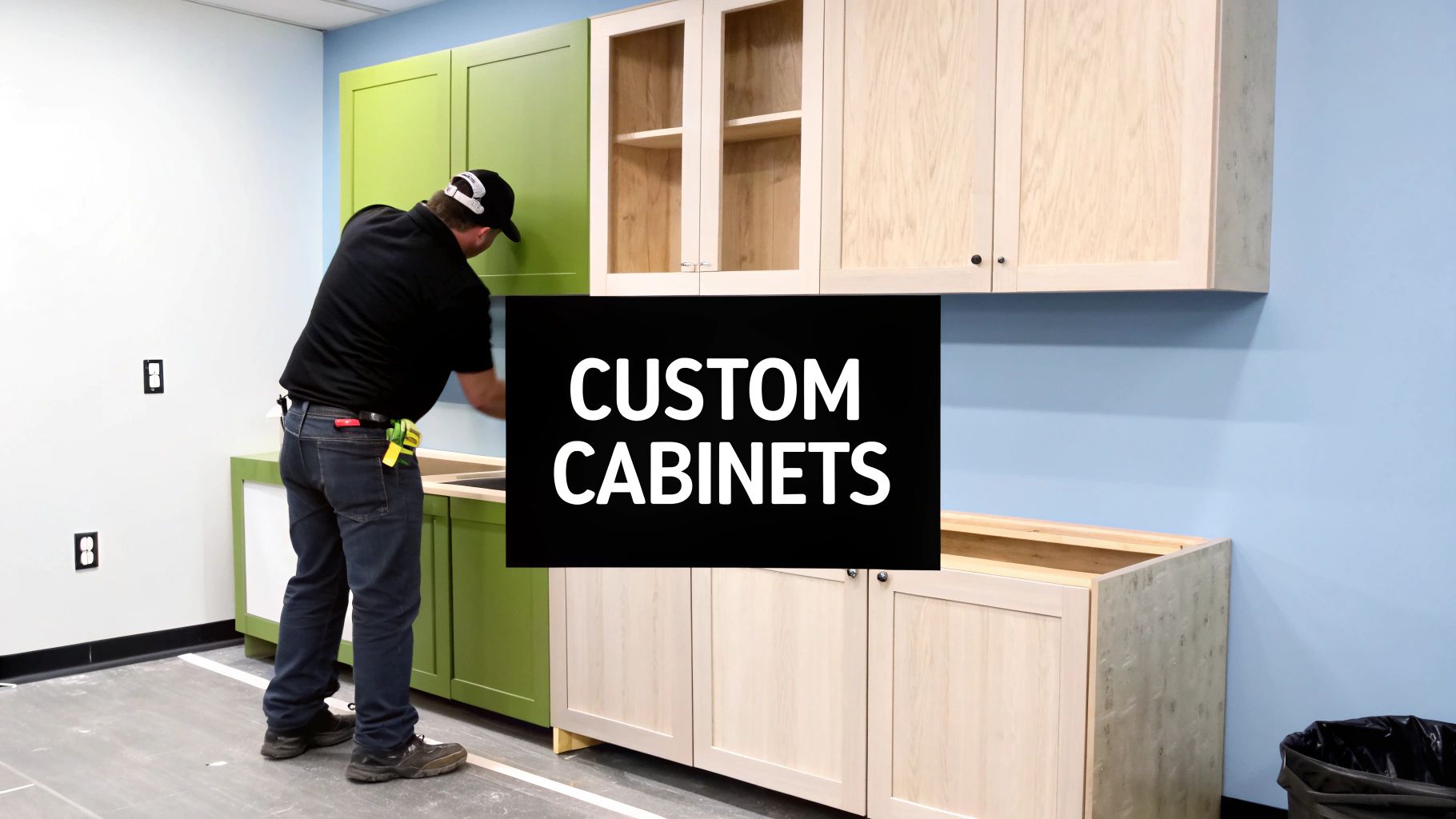
- Custom Cabinets: This is true, bespoke furniture for your kitchen. Built from scratch to your exact measurements, custom cabinetry unlocks endless possibilities in size, style, material, and finish. It means a flawless fit that maximizes every last inch and allows for unique designs you just can't get otherwise.
When you go custom, every drawer and door is crafted with precision joinery and top-tier materials like solid wood. That level of craftsmanship isn't just about looks—it’s about longevity and a substantial feel that screams quality. It’s the difference between buying a suit off the rack and having one expertly tailored to fit you perfectly.
Finishing Touches: Flooring, Backsplashes, and Hardware
While countertops and cabinets get most of the attention, it’s the supporting cast that truly completes the look. These details are what turn a nice kitchen into a thoughtfully designed, layered space.
Flooring That Blends Style and Strength
Hardwood is a classic for a reason, bringing warmth and a seamless flow from the rest of the home. For a kitchen that sees a lot of action, engineered hardwood or luxury vinyl tile (LVT) are brilliant alternatives, mimicking the look of natural wood or stone beautifully without the upkeep. Natural stone tiles, like slate or travertine, are another great option for grounding the room with an earthy, sophisticated vibe.
The Backsplash: Where Personality Shines
Here’s your chance to make a statement. Running a single slab of the same marble or quartzite from your countertops up the wall creates a bold, seamless effect that’s pure drama. For a more artisanal feel, handmade ceramic or glass tiles can introduce texture and a pop of color. The trick is to choose something that complements the main surfaces, rather than fighting them for attention.
Hardware: The Jewelry of the Kitchen
Finally, there's the hardware. It might seem like a small detail, but the right pulls and knobs can elevate the entire design. Solid brass, polished nickel, or matte black hardware adds a sense of weight and quality that you can feel every time you open a drawer. Whether you go for something sleek and modern or more traditional and ornate, the hardware is the final flourish that ties the whole look together.
Designing a Functional and Elegant Kitchen Layout
A truly exceptional kitchen isn't just about beautiful materials and finishes; it’s built on the back of an intelligent, intuitive layout. This is the invisible blueprint that shapes how the space feels and functions, turning everyday chores into genuinely effortless moments. While the old-school "work triangle" was a decent starting point, today’s high-end kitchens call for something a bit more sophisticated.
We've moved beyond a simple path between the sink, stove, and fridge. The real goal now is to create distinct, highly efficient work zones. Picture how a professional chef organizes their station. There’s a dedicated area for prep, a high-powered cooking zone, a separate cleanup station, and often, another spot just for enjoying a morning coffee or chatting with guests.
This zoned approach is the key to preventing traffic jams and making the kitchen a dream to use, whether you’re whipping up a huge holiday meal or just grabbing a late-night snack. Every zone gets the right tools, storage, and counter space it needs, creating a workflow that just makes sense. This intentional design is what separates a pretty kitchen from one that truly elevates your home.
The Art of Concealment with Panel-Ready Appliances
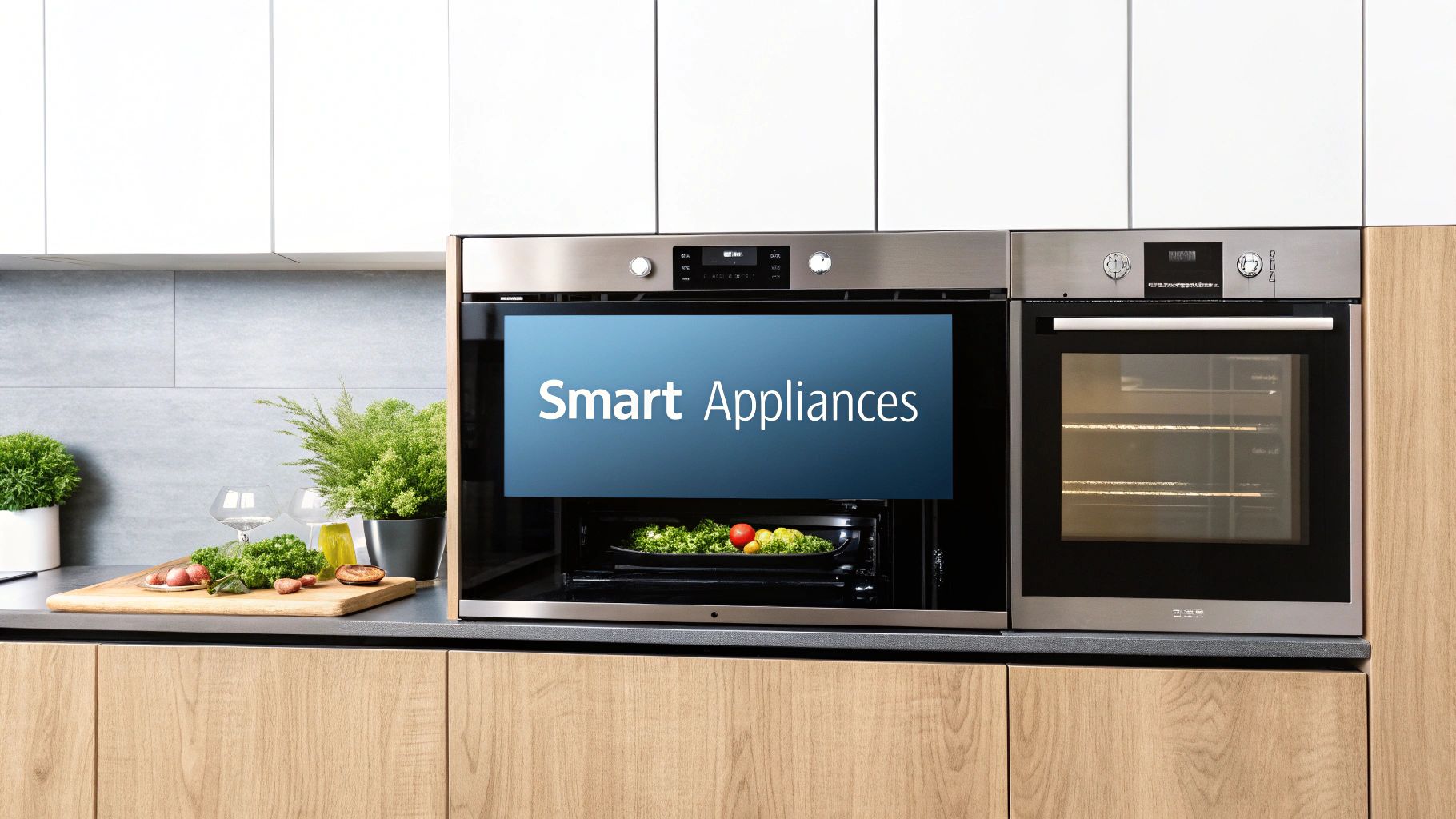
One of the defining features of modern luxury design is the seamless integration of technology. This is where panel-ready appliances come into play, allowing your refrigerator, dishwasher, and wine cooler to disappear behind custom panels that perfectly match your cabinetry.
The result is a clean, uninterrupted wall of beautiful millwork. It’s the very essence of "quiet luxury"—all the powerful functionality is hidden in plain sight, creating a calm, cohesive look. Instead of a room dominated by stainless steel, you get a warm, furniture-like atmosphere that flows naturally with the rest of your home.
The ultimate goal is to create a space that doesn’t scream “kitchen” at first glance. It should feel like a beautifully appointed room where cooking happens, not just a utilitarian workspace filled with appliances.
Smart storage is, of course, a huge part of achieving this streamlined look. A high-end renovation isn't complete without meticulously planned solutions baked right into the design:
- Deep drawers with custom dividers for easy access to every pot and pan.
- Pull-out pantries that bring every item into clear view.
- Appliance garages to keep toasters and blenders off the countertops.
Perfecting Sightlines and Social Flow
Beyond the individual work zones, a great layout considers the kitchen’s role as the social hub of the home. This means we have to carefully plan the sightlines—what you see from different spots, both inside the kitchen and from adjoining rooms. A well-designed layout makes sure the view highlights gorgeous features, like a statement range hood or a stunning backsplash, while keeping messy prep areas tucked away.
If you want to dig deeper into creating an efficient space, our guide on how to layout a functional kitchen is a great place to start.
This focus on open, expansive layouts reflects a major trend in what homeowners are investing in. Recent data shows that larger kitchen renovations (over 250 square feet) have seen a 9% increase in average spending. And for the top 10% of those projects, the investment jumped by 20%, hitting a minimum of $180,000. People are more willing than ever to expand their kitchen's footprint, often borrowing space from adjacent rooms to create more luxurious and social culinary hubs.
At the end of the day, a successful layout does more than just organize a room—it transforms it into a dynamic living area. It's a space that encourages connection, supports your cooking ambitions, and brings an effortless elegance to your daily life.
Bringing Your Kitchen to Life: Navigating Construction
Alright, the designs are signed off and the materials are on their way. Now we move from paper plans to the real world—the construction phase. Let's be honest, this is the most disruptive part of any renovation. Success from here on out isn't about design anymore; it’s all about clear communication, solid project management, and keeping expectations grounded in reality.
Think of your general contractor as the conductor of a very complicated orchestra. They're in charge of coordinating a whole cast of characters—demolition crews, plumbers, electricians, installers—who all need to do their jobs in a very specific order. It’s a process that starts with a bit of chaos and ends with a finely tuned space.
Knowing how this process unfolds helps you understand what’s happening and why. It’s a carefully choreographed dance that will transform a messy construction site back into the heart of your home.
The Typical Construction Sequence
While every project has its own unique twists and turns, most high-end kitchen renovations follow a pretty logical path. Understanding the general order of things will help you feel in control and ask the right questions when you're on site.
- Demolition and Site Prep: This is where the old kitchen gets torn out completely. The space is stripped down to a blank slate, ready for its new layout.
- Structural and Mechanical Rough-Ins: If walls are moving, this is when it happens. Electricians and plumbers come in to run all the new wiring and pipes while the walls are still open. It’s all the foundational stuff you’ll never see, but it’s absolutely critical.
- Insulation and Drywall: Once the city inspectors give the thumbs-up on the rough-ins, the walls get closed up. Suddenly, you have a room again.
- Flooring and Cabinetry Installation: With the basic structure complete, the first big visual elements start going in. The new floor is laid down first, followed by your beautiful custom cabinets. This is when the space really starts to take shape.
- Countertop Templating and Installation: After the cabinets are perfectly in place, precise laser measurements are taken for your countertops. They’re then custom-fabricated and installed.
- Finishing Touches: This is the final sprint to the finish line. Your backsplash, appliances, sinks, faucets, light fixtures, and all the hardware get installed.
Stay in the Loop: Communication and Site Visits
Keeping an open line of communication with your contractor is the single most important thing you can do to ensure a smooth construction phase. Don't be a stranger to your own project, but make your visits count. Schedule a regular check-in, maybe once a week, to walk through the site, see the progress, and address any little issues before they snowball.
Bring your plans with you on these visits. It lets you double-check that outlets are ending up in the right spot, light fixtures are centered perfectly, and the cabinet layout is exactly what you signed off on. Catching a small mistake early is an easy fix; catching it after the drywall is up is a whole different story.
Your role here isn't to micromanage—it's to be an engaged, informed partner. A great contractor actually welcomes this because it ensures everyone stays on the same page and avoids expensive misunderstandings down the road.
You also have to be prepared for a little flexibility. Sometimes, a change order—which is just a formal document to change the original plan—is unavoidable. It could be a small tweak you decide on or an unexpected surprise hiding behind a wall. Handle these changes quickly and always, always get them in writing. A clear paper trail confirming the scope and cost change protects both you and your contractor, keeping everything transparent and on-budget. This phase is all about managing the organized chaos with a cool head and clear communication.
Answering Your Top Questions About a High-End Kitchen Renovation
Stepping into a high-end kitchen renovation is exciting, but it naturally comes with a lot of questions. From wondering how long your kitchen will be out of commission to figuring out if custom work is really worth the price tag, getting straight answers is the first step toward building your dream space with confidence. Let's tackle some of the most common questions we hear from homeowners.
How Long Will This Actually Take?
This is usually the first thing everyone wants to know. While a quick cosmetic refresh might be done in a few weeks, a full-scale, high-end remodel is a different beast entirely. You should plan for a timeline of anywhere from three to six months from the first day of construction to the final walkthrough.
Why so long? This isn't just a simple swap-out. This timeline covers everything from demolition and potential structural work to the painstaking installation of intricate details. Plus, bespoke elements like custom cabinetry or hand-fired tiles aren’t just sitting on a shelf somewhere—they're being crafted specifically for you, and that level of artistry takes time.
What's a Realistic Budget for a Luxury Kitchen?
Budgeting is where things can get murky, as the final cost depends heavily on the kitchen's size, your location, and of course, the materials you choose. For kitchens over 250 square feet, it's not uncommon to see budgets ranging from $50,000 to well over $100,000.
What’s driving that number? Generally, you can expect cabinetry and countertops to account for about 40% of the total cost. The other big piece is labor, which can run between 50% to 60% of the budget because you’re paying for true masters of their craft. A good rule of thumb is to plan on investing about 5% to 15% of your home's total value into your kitchen to see a solid return on that investment. You can always find more detailed cost breakdowns to help you map out your specific project expenses.
But remember, it's not just about the final number on an invoice. The real investment is in creating a space that makes your daily life better and serves your family perfectly for decades.
Is Custom Cabinetry Really Worth the Splurge?
In a word: absolutely. It might be one of the biggest line items in your budget, but custom cabinetry is what truly defines a high-end kitchen. Unlike stock or even semi-custom options, these cabinets are designed and built from scratch to your exact needs, making sure every single inch of your kitchen works for you.
This tailored approach gives you benefits you just can't get otherwise:
- A Perfect Fit, Guaranteed: Your cabinetry will be built to the unique dimensions of your room. That means no awkward filler pieces or wasted corner space—just seamless, wall-to-wall function.
- Your Style, Unlimited: You get total control over the wood, the finish, the color, and the hardware. The final look is 100% yours, not something picked from a limited catalog.
- Quality That Lasts a Lifetime: Custom work means higher-grade materials and time-honored construction techniques. These aren't just cabinets; they're handcrafted pieces of furniture built to endure.
Ultimately, when you invest in custom cabinetry, you're investing in the very heart and soul of your kitchen. It delivers a level of quality and personalization that off-the-shelf products simply can't match, making it the undeniable cornerstone of any true luxury renovation.
Ready to bring your vision to life with craftsmanship that speaks for itself? Sinclair Cabinetry inc specializes in creating bespoke, real wood cabinetry that forms the heart of a truly high end kitchen renovation. Explore our custom cabinetry solutions and start your project today.