

Before you even think about picking a gorgeous slab of quartz or the perfect cabinet style, you have to nail down one crucial detail: what is this island for?
Is it going to be a bustling prep station for your culinary adventures? A casual spot for the kids to do homework while you cook? Or maybe it's the social hub of your home, where friends gather with a glass of wine. Figuring this out first makes every other decision easier and more intentional.
What's Your Island's Main Job?
A custom kitchen island is so much more than just a piece of furniture—it’s the functional heart of your kitchen. I've seen it happen too many times: people get excited and jump straight to picking colors and materials without a clear vision. The result? An island that looks nice but doesn't actually make their life any easier.
The real goal is to create a central feature that solves problems and improves how you move and work in the kitchen, not just something that fills an empty space. A great design always starts with a serious look at your daily routines and what you really want from your kitchen.
For instance, a family with young kids might need a super durable, easy-to-clean countertop and some built-in seating for afternoon snacks. But if you're a passionate home chef, your priorities will be totally different. You'll probably get more value from a second prep sink, deep drawers for pots and pans, and a dedicated spot for your stand mixer.
From Vague Idea to Clear Vision
To get from a general idea to a concrete plan, start by walking through your daily kitchen activities. Be honest with yourself and ask some pointed questions to uncover what you truly need:
- Meal Prep: Will this be your primary chopping and mixing zone? If so, you'll need plenty of counter space and smart access to trash and compost bins. No one wants to drip across the floor just to throw something away.
- Cooking and Baking: Do you dream of rolling out dough or need a built-in cooktop? This decision has a huge impact on your surface material and where the electricians need to work.
- Dining and Socializing: How many people do you realistically want to seat? This will determine the size of the countertop overhang and the island's overall length.
- Storage Needs: Are you trying to hide away small appliances, stash bulky pots, or keep everyday dishes within reach? This choice dictates your cabinetry, from airy open shelving to deep, practical pull-out drawers.
The best custom kitchen islands act like a command center for your life. They anticipate what you need before you even realize it, making everyday tasks feel smoother and less cluttered.
To help you get crystal clear on your priorities, I put together a little checklist. Think through each function and decide how important it is for your household.
Kitchen Island Functionality Checklist
Use this table to rank what matters most for your island. This simple exercise can bring a ton of clarity and help guide your design conversations.
| Function | Consideration | Priority (High/Medium/Low) |
|---|---|---|
| Food Preparation | Ample counter space, proximity to the fridge and sink, integrated cutting boards, easy-access compost bin. | |
| Cooking Station | Integrated cooktop or range, heat-resistant countertop, ventilation needs, nearby spice and oil storage. | |
| Casual Dining/Seating | Number of seats required, counter height (bar vs. table), comfortable legroom, durable surface for spills. | |
| Storage Hub | Deep drawers for pots/pans, cabinets for small appliances, shelving for cookbooks, pull-out trash/recycling. | |
| Social/Entertaining | Space for guests to gather, wine fridge, beverage station, open design that encourages conversation. | |
| Cleaning Zone | Integrated primary or secondary sink, dishwasher placement, storage for cleaning supplies. | |
| Homework/Work Station | Power outlets with USB ports, durable and smooth writing surface, adequate lighting. |
Once you've filled this out, you'll have a much stronger vision for your island's design.
The Rise of the Multitasking Island
Modern kitchens have to be versatile, and the trend toward multifunctional islands is a direct reflection of that. More and more, homeowners want a single, cohesive unit that seamlessly blends cooking, dining, storage, and socializing.
The data backs this up. According to Google Trends, searches for 'kitchen island with seating' consistently hit high interest scores, peaking at 88 out of 100 in 2025. This shows a sustained, year-round demand for islands that are more than just workspaces—they're social hubs. For more on current trends, Accio.com has some great insights.
As you picture your island's role, don't forget to consider the bigger picture. How will it fit with your surrounding cabinets, appliances, and traffic flow? A holistic view is key. For a deeper dive into overall kitchen planning, this guide offers some fantastic expert kitchen remodeling advice. This ensures your island isn't just an afterthought but the true centerpiece of a well-designed kitchen.
Getting the Layout and Dimensions Right
A beautiful island in the wrong spot can instantly create a major kitchen bottleneck. Proper layout and dimensions are the invisible framework of a great custom kitchen island design, making sure your space is a joy to use, not a frustrating obstacle course. It's all about mastering the flow.
First things first, you have to nail the non-negotiable clearances. You absolutely need a minimum of 36 inches of clear walkway on all sides of the island. If it’s a main thoroughfare—say, the path from the family room to the fridge—I always push for 42 inches. This simple rule prevents traffic jams when someone is working at the island and another person needs to get by.
Think of it as creating comfortable driving lanes in your kitchen. Anything less, and you'll constantly be bumping into open dishwasher doors or squeezing past family members. We break down all these crucial numbers in our guide to essential kitchen design measurements.
This mindset of planning for real-life movement is becoming more critical than ever. Kitchens are expanding to become true multi-functional hubs, even as overall home sizes are shrinking. In fact, a recent report showed 76% of professionals expect kitchen footprints to actually grow over the next three years to better support this central role.
Visualizing Your Island's Footprint
Here's one of the most effective tricks I share with every client, and it's brilliantly simple. Once you settle on your ideal dimensions, grab a roll of painter's tape and physically outline the island's proposed footprint right on your kitchen floor. This isn't just about seeing the size—it's about feeling the space.
Live with that tape outline for a few days. Walk around it. Open your oven and dishwasher doors. Pretend to pull dishes from your perimeter cabinets.
- Can you move easily from the sink to the stove to the fridge? This keeps the classic "work triangle" intact.
- Is there enough room to pull out a barstool and still have someone walk behind it without turning sideways?
- Does the placement feel natural, or does it force you to take weird, long routes to get things done?
This simple visualization exercise is the single best way to catch potential layout problems before a single piece of wood is cut. It moves your custom kitchen island design from an abstract drawing to a real-world test.
This process forces you to think about how the island will impact your daily workflow. The infographic below really drives this home, showing how different functions need to flow together seamlessly.
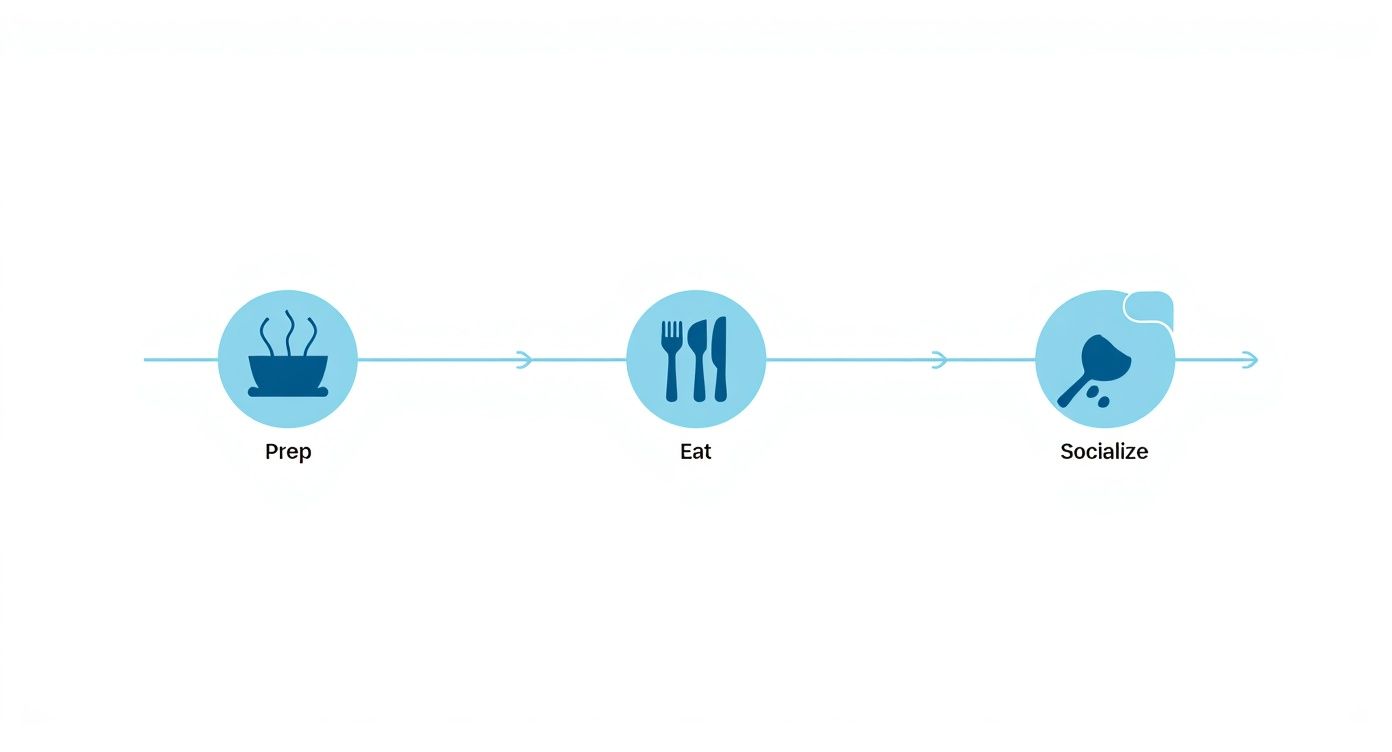
It clarifies that an island isn't just one thing; it's a series of connected zones for prepping, cooking, cleaning, and socializing. Getting the dimensions right ensures these activities can happen at the same time without creating chaos. Interestingly, many of the same efficiency principles can be found in commercial kitchen layout design strategies, which is all about optimizing workflow in a high-pressure environment.
Choosing Materials for Your Countertop and Base
This is where your island’s personality really starts to shine. Selecting the materials for the countertop and base is so much more than an aesthetic choice—it’s a practical decision that has to mesh with your daily life. A gorgeous material that can’t stand up to your family's routine will quickly become a point of frustration, and that’s the last thing you want from your custom kitchen island design.
Think of it as a balancing act between the look you want and the durability you need. Is the classic, veined elegance of marble worth the constant worry about spills and stains? For some, its timeless beauty is a must-have. For a busy family with kids doing homework at the counter, a tougher, less porous material is probably the smarter, more stress-free choice.

Countertop Materials: More Than Just a Pretty Surface
Let's get real about countertop choices. Every material brings its own character and set of demands to the table.
-
Quartz: This engineered stone is the undisputed champion of durability. It's non-porous, which means it won’t bat an eye at coffee, wine, or oil spills, and it’s incredibly resistant to scratches. If your island is the hub for homework, messy art projects, and quick weeknight meals, quartz gives you total peace of mind. It’s a set-it-and-forget-it option that keeps its polish with very little effort. We have a great guide on how quartz countertops can spice up your custom cabinets if you want to dive deeper.
-
Natural Stone (Granite & Marble): Granite is famously tough and heat-resistant, a fantastic choice for anyone who loves to cook. Marble, on the other hand, is much softer and can etch or stain more easily. Over time, it develops a unique patina that many people love—it tells the story of a well-used kitchen. Choosing marble means you're okay with its natural evolution and are ready to be diligent about sealing it and cleaning up messes right away.
-
Butcher Block: Nothing brings warmth to a kitchen quite like wood. A butcher block countertop feels inviting and is a bit more forgiving than stone. It’s a perfect fit for a farmhouse or rustic look and is naturally antibacterial. The trade-off? It needs regular oiling to keep it from drying out and can get dented by heavy pots. It's a living surface that demands a little care but pays you back with rich character.
To make the decision a bit easier, here’s a quick rundown of the most popular options.
Countertop Material Comparison
| Material | Durability | Maintenance | Average Cost | Best For |
|---|---|---|---|---|
| Quartz | Excellent (Scratch & stain-resistant) | Low (No sealing needed) | $$$ | Busy families, low-maintenance lifestyles |
| Granite | Very Good (Heat & scratch-resistant) | Medium (Requires periodic sealing) | $$$ | Avid cooks, high-traffic kitchens |
| Marble | Fair (Prone to staining & etching) | High (Frequent sealing & careful cleaning) | $$$$ | Homeowners who love its classic patina and don't mind the upkeep |
| Butcher Block | Good (Can be sanded and refinished) | High (Requires regular oiling) | $$ | Rustic or farmhouse styles, bakers who love the surface |
Ultimately, your countertop choice comes down to one thing: being honest with yourself about how much maintenance you're willing to handle for the look you love.
The Foundation: Your Island Base
The base of your island is just as critical as its top. It sets the tone for your kitchen's style and determines just how much storage you’ll gain.
The go-to choice for most people is Traditional Cabinetry, and for good reason—it’s the king of storage. You can deck it out with deep drawers for pots and pans, pull-out spice racks, or even hidden trash and recycling centers. Using a beautiful stained wood like rift-cut white oak for the base can add incredible warmth and texture, creating a beautiful contrast with a light, sleek countertop.
If you want to elevate a standard cabinet base, think about adding Paneling and Trimwork. Simple additions like decorative box moulding or vertical shiplap can give a basic island a high-end, custom-built feel. This is a great way to lean into a traditional or transitional style, making the island feel less like a block of cabinets and more like a deliberate piece of furniture.
For a bold, contemporary look, nothing makes a statement quite like a waterfall edge. This is where the countertop material flows right down the sides of the island to the floor. It’s a dramatic way to show off a stunning slab of stone and works beautifully in modern, open-concept homes. A waterfall edge is less about maximizing storage and all about making a powerful visual impact.
Integrating Smart Storage and Appliances
A truly custom kitchen island is a master of disguise. It should hide the clutter while keeping everything you need right where you need it. This is where your island stops being a simple block of cabinets and becomes a high-functioning workhorse for your kitchen.
Forget those standard, cavernous cabinets where things go to get lost. The real magic is in clever, integrated solutions that make cooking and living easier.
Think beyond basic shelving. We’re talking about a pull-out spice rack right next to your main prep area, or vertical dividers that finally give your baking sheets and cutting boards a proper home. For a clean workflow, dual bins for trash and recycling seamlessly integrated into the island are non-negotiable—no more trekking across the kitchen with dripping vegetable scraps.
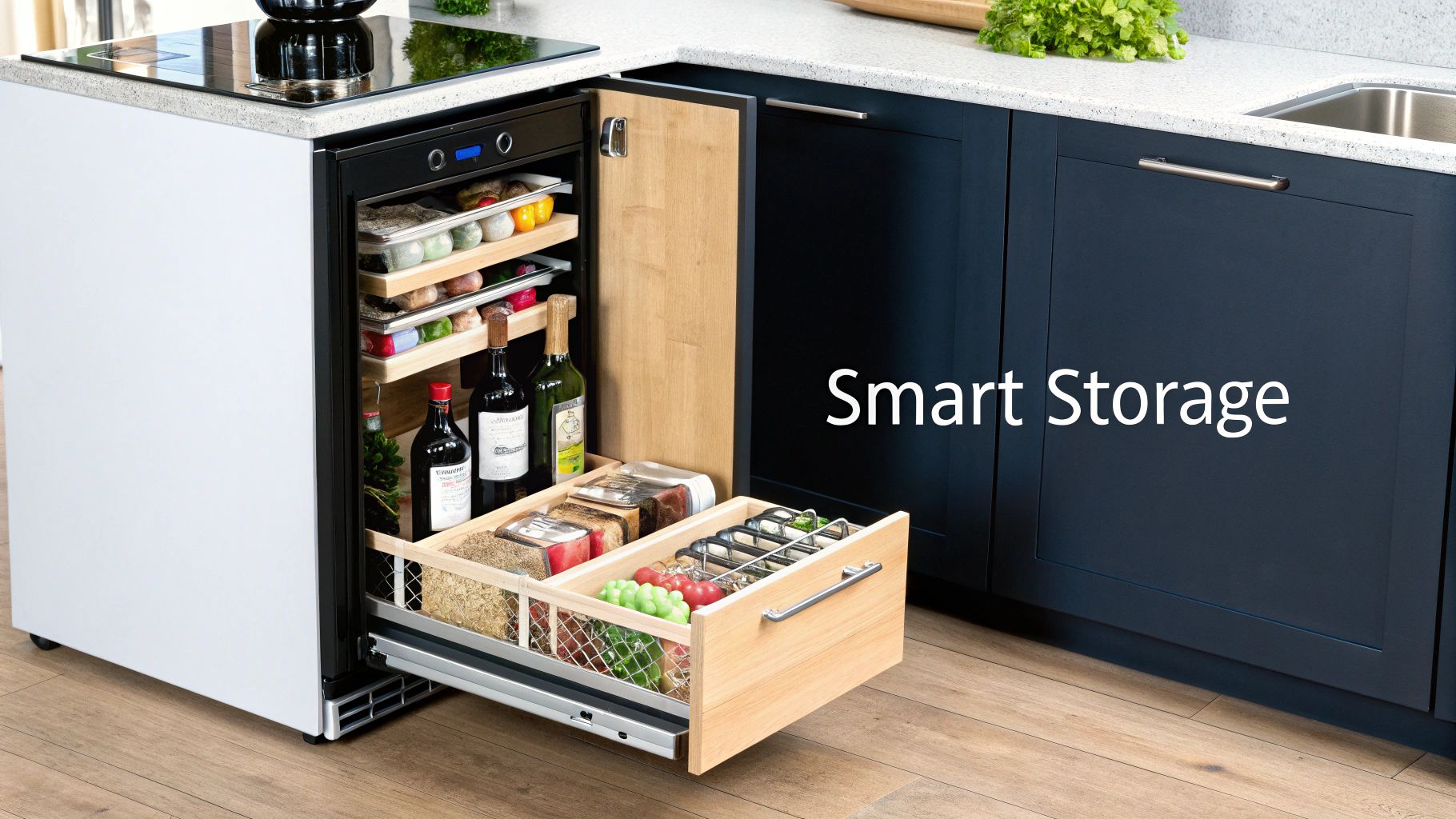
These aren’t just add-ons; they are the core of a thoughtful custom kitchen island design.
Smart Storage Solutions That Make a Difference
The best storage feels intuitive. It anticipates what you need before you even realize you need it by putting things exactly where you use them most.
- Appliance Garage: A dedicated cabinet with a lift-up or pocket door is the perfect spot to hide bulky items like your stand mixer or blender. Your countertops stay clear, but your appliances are always ready to go.
- Deep Drawers for Cookware: Instead of a standard cabinet, opt for two or three deep drawers. They are far more efficient for storing heavy pots and pans, letting you see everything from above without digging through a dark cupboard.
- Custom Knife Block Drawer: An integrated knife block keeps sharp blades safely tucked away and off the counter, but right at your fingertips for chopping.
The real goal here is to create designated zones within your island. A baking zone might have deep drawers for flour and sugar bins, while a prep zone would have integrated compost and trash receptacles right below the cutting board.
This level of organization is honestly transformative. For more inspiration, exploring various smart kitchen storage ideas can uncover solutions you might not have even thought of, helping you squeeze function out of every last inch.
Planning for Appliance Integration
Integrating appliances into your island requires some serious foresight, especially when it comes to utilities. Are you dreaming of a microwave drawer, a small prep sink, or a built-in wine fridge? These decisions have to be locked in early.
Mapping out your plumbing and electrical from day one is absolutely crucial. You don’t want to be tearing up finished work later—that’s where budgets get blown. A prep sink needs both a water supply and a drain line. A microwave drawer, beverage cooler, or under-counter ice maker all require their own dedicated electrical outlets.
Bring these ideas up with your designer and contractor right at the start. They’ll figure out how to route all the necessary wiring and plumbing through the floor and into the island discreetly and safely. Getting this foundational planning right ensures your custom island isn't just beautiful, but fully equipped for everything you want to do.
Selecting Lighting and Seating That Works
Your island is built, the countertop is gleaming, but the job isn't done. The right lighting and seating are what truly turn a functional workspace into the magnetic heart of your home. These final touches are all about creating comfort and an inviting atmosphere, making people want to pull up a stool and stay awhile.
It's about layering different types of light and choosing seating that says, "welcome."
Great island lighting is a blend of both function and style. You absolutely need focused task lighting for chopping vegetables or helping with homework, but you also want warm ambient lighting to set the mood. Pendant lights are a fantastic way to accomplish both, acting as a stunning focal point while perfectly illuminating your work surface.
Finding the Right Light Fixtures
When you're picking out pendants for your custom kitchen island design, think about their size and how many you'll need to fill the space properly. One of the most common mistakes I see is choosing fixtures that are just too small for the island. They end up looking lost and out of scale.
A good rule of thumb is to hang your pendants 30-36 inches above the countertop. This height gives you plenty of light for tasks without blocking the view across the kitchen. For spacing, aim for about 30 inches between each fixture. This ensures you get balanced, even light across the entire island.
Think of your lighting as the jewelry for your kitchen. A trio of oversized, sculptural pendants can define the entire room, while a single, sleek linear fixture offers a more modern vibe that keeps sightlines open and clean.
Choosing Comfortable and Stylish Seating
Seating is the other half of the comfort equation, and getting the height right is the first step. You'll generally find two main sizes for stools, and picking the right one is non-negotiable for comfort.
- Counter-Height Stools: These are made for standard 36-inch high countertops. Their seat height is usually around 24-26 inches, giving most adults plenty of legroom.
- Bar-Height Stools: Got a raised bar area on your island? If it’s around 42 inches high, you'll need taller bar-height stools. Look for a seat height of about 28-30 inches.
Once you've nailed down the height, think about how many people you want to seat and how comfortable you want them to be. Stools with even a low back and a footrest make a world of difference for longer conversations over coffee or a glass of wine.
To figure out how many stools will fit without feeling like a crowded bus, plan on leaving 24-30 inches of space per person. This gives everyone enough elbow room and makes it easy to slide in and out, guaranteeing your island is the favorite spot for everything from breakfast to evening cocktails.
Designing an Island That Lasts
A custom kitchen island is a huge investment, not just in your home's value, but in how you live your day-to-day life. The real goal is to create a centerpiece that feels just as right ten years from now as it does the day it's installed. That means making smart, forward-thinking choices that favor timeless appeal over chasing short-lived fads.
Designing for longevity isn't about playing it safe or being boring—it’s about being intentional. It means picking a classic shape that flows with your home's architecture and choosing materials that actually get better with age. Think materials that develop a rich patina over time instead of just looking tired and worn out. A simple, well-proportioned island will always outlast one that’s tied to a very specific, of-the-moment trend.
This focus on durable, functional design is a big deal in the industry right now. The global kitchen island market was valued at around USD 11.41 billion in 2024 and is expected to climb to over USD 16.86 billion by 2032. You can dig into what's driving that demand in recent market research, but it all comes down to homeowners wanting quality that endures.
Balancing Timeless Materials and Modern Needs
To build an island that really lasts, start with a foundation of classic, hardworking materials. Natural woods, like a beautiful rift-cut white oak, bring a warmth and texture that simply never goes out of style. When you pair that with a tough countertop—like a simple, elegant quartz or a hardy granite—you create a sophisticated, neutral base that can easily adapt as your tastes change down the road.
From there, you can layer in the modern touches that are easy to switch out when you're ready for a refresh. For instance:
- Hardware: Think of cabinet pulls and knobs as the jewelry for your island. They're a relatively simple and inexpensive swap that can give the entire piece a fresh personality every few years.
- Pendant Lighting: Nothing dates a kitchen faster than the light fixtures hanging over the island. Choosing a timeless style from the start, or at least one that’s easy to replace, lets you keep up with new looks without a major renovation.
- Stools: Seating is another element that’s a breeze to update. A new set of stools can introduce a different color, texture, or silhouette to the room instantly.
A truly timeless custom kitchen island design works as a beautiful, neutral backdrop. It gives you the freedom to show off your personality through the smaller, less permanent details that can evolve right along with your style.
Designing for Future Flexibility
Your life isn't going to stand still, so your kitchen island shouldn't be designed like it will. When you're planning, think about how your family's needs might shift over the years. What works perfectly for a couple with toddlers is very different from what a family with teenagers needs for homework and hosting friends.
Try to build in subtle, forward-thinking features that add long-term utility without screaming "this was built in 2024." Instead of installing a trendy pop-up charging station that might be obsolete in five years, you could opt for outlets with integrated USB-C ports, tucked discreetly under the countertop overhang. It’s a small detail that provides modern convenience while keeping the look clean and classic.
By focusing on a strong, timeless foundation and adding in adaptable features, you're creating an island that doesn't just add value today—it will continue to serve your family beautifully for years to come.
Ready to create a custom kitchen island that stands the test of time? The expert craftsmen at Sinclair Cabinetry inc have over 35 years of experience building bespoke, real wood cabinetry designed for lasting beauty and function. Let us help you turn your vision into a reality.
Design your dream kitchen with us today at sinclaircabinets.com