
So, you're trying to nail down the cost of custom cabinets. You've probably heard the term "per linear foot," and while it's a good starting point, it's not the whole story. The typical range for custom cabinet price per linear foot is between $500 and $1,200, but that number can swing wildly based on your choices.
Think of it like buying a car. Asking for the price "per foot" is like asking for the price of a sedan without mentioning if you want the base model or the one with all the luxury upgrades. The final price tag depends on what's under the hood and inside the cabin.
Decoding The Price Per Linear Foot
When a cabinet maker gives you a price "per linear foot," they're giving you a baseline measurement. It's the cost for a one-foot-wide slice of cabinetry, from the floor all the way up to the top of the wall cabinets. But what really drives that number is a mix of the materials you choose, the skill of the person building them, and just how fancy you want to get with the design.
Recent industry figures from late 2024 to early 2025 really highlight this. Custom cabinetry is landing between $500 and $1,200 per linear foot. To give you some context, semi-custom options are a bit lower, from $300 to $1,100, and your basic off-the-shelf stock cabinets can be as cheap as $60 to $200 per linear foot.
To give you a clearer picture, here's a quick comparison of what you can expect from each cabinet tier.
Cabinet Cost Comparison Per Linear Foot
| Cabinet Type | Typical Price Range (Per Linear Foot) | Best For |
|---|---|---|
| Stock | $60 – $200 | Quick remodels, rental properties, and tight budgets where standard sizes work. |
| Semi-Custom | $300 – $1,100 | Homeowners who want more style options and better quality without the full custom price tag. |
| Fully Custom | $500 – $1,200 | Unique layouts, specific design visions, and homeowners looking for top-tier quality and a perfect fit. |
This table shows that while custom is the priciest, it offers a level of personalization that the others simply can't match. Your project's specific needs will ultimately determine which path is right for you.
Setting Realistic Expectations
Once you understand that range, you can start making decisions that will place your project somewhere on that spectrum. It really boils down to a few key things:
- Materials: This is a huge one. Beautiful hardwoods like cherry or white oak will naturally cost more than practical choices like MDF or maple.
- Labor and Craftsmanship: You're not just buying boxes of wood; you're paying for an artisan's expertise. Intricate joinery, flawless finishes, and perfect installation all require a skilled hand, and that craftsmanship is a major part of your investment.
- Design Complexity: A simple, clean Shaker-style door is going to be far more budget-friendly than an ornate design with detailed moldings, corbels, and glass-front panels.
Since cabinets are one of the biggest line items in a kitchen remodel, it's smart to look at resources that break down accurate kitchen renovation costs to see how everything fits together.
This visual gives a great snapshot of how material choice directly influences the cost per linear foot.
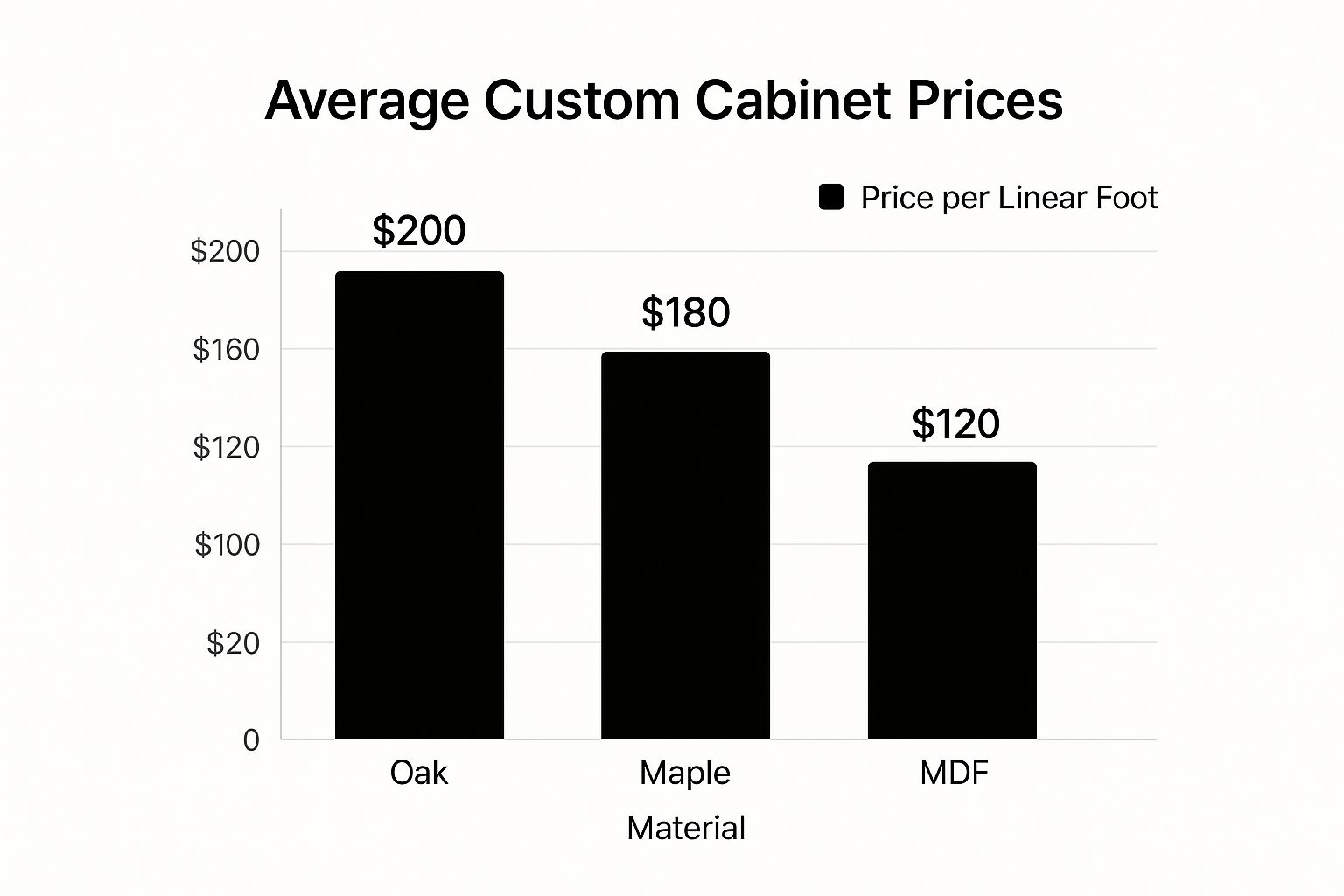
As you can see, MDF is your most wallet-friendly starting point. From there, the price climbs as you move into hardwoods like Oak, proving that the material you pick is one of the biggest decisions you'll make for your budget.
Why Materials and Craftsmanship Matter Most
When you start digging into the custom cabinet price per linear foot, you’ll find two things that move the needle more than anything else: the wood you choose and the hands that build it. It’s a lot like commissioning a custom suit. The quality of the fabric and the tailor's expertise are what separate a good suit from a great one. The same exact principle applies to your cabinets.
You’re not just buying wooden boxes; you’re investing in an artisan’s time, their precision, and their hard-won skill. Understanding this is key to making sense of your quote. The journey from a raw piece of lumber to a perfectly fitted cabinet is a complex one, filled with intricate cuts, time-tested joinery techniques, and a flawless, multi-step finishing process that stock cabinets just can't replicate.
This expert labor is a huge part of the investment. In fact, the skilled craftsmanship behind true custom work often accounts for 30% to 50% of the total project cost—right up there with the price of the raw materials themselves.
The Hierarchy of Cabinet Materials
Just like different fabrics come with different price tags, so do cabinet materials. The choice you make here will create the biggest swing in your budget. Let’s walk through the common options, starting with the most budget-friendly and working our way up to the premium selections.
- MDF (Medium-Density Fiberboard): This engineered wood product is a favorite for painted finishes because it provides a perfectly smooth, stable surface. It's a cost-effective choice, but keep in mind it’s heavier and less resistant to moisture than solid wood or high-quality plywood.
- Maple and Birch: These hardwoods are popular mid-range workhorses, known for their fine grain and excellent durability. They take paint and stain beautifully, offering a clean, versatile look that feels right at home in almost any kitchen style.
- White Oak: As a highly sought-after premium hardwood, white oak is all about that striking grain pattern and serious durability. It’s a top contender for modern and transitional designs, celebrated for its strength and natural resistance to rot.
- Cherry: Widely considered a luxury wood, cherry is prized for its rich, warm coloring that deepens and grows even more beautiful over time. Its smooth, uniform grain makes it a go-to for high-end, traditional cabinetry where a timeless, elegant look is the goal.
The material you choose sets the foundation for both the look and longevity of your cabinets. While an affordable option like MDF is great for painted styles, investing in a hardwood like white oak or cherry means you're paying for natural beauty and decades of durability.
Putting Numbers to Materials and Labor
Seeing the different tiers is one thing, but the price differences really make it tangible. For custom work, labor and materials are the two core components that dictate the price per linear foot.
To give you a real-world example, industry data shows that a project using MDF might land in the $300 to $400 per linear foot range. But if you opt for a premium wood like Cherry, that number can easily climb to $500 to $700 per linear foot. That price jump is driven almost entirely by the cost of the raw material. You can get a deeper dive into how material and labor costs impact your cabinet project from Casta Cabinetry.
Ultimately, balancing the kitchen you’re dreaming of with the budget you have often comes down to this single choice. A good cabinet maker won’t just build for you; they'll guide you toward a material that gives you the look and performance you want at a price point you’re comfortable with.
How Custom Features Impact Your Final Cost
Once you've locked in your materials and door style, you've essentially established the base price for your cabinets. Think of it like buying the "base model" of a car—it’s solid and does the job, but the real magic happens when you start adding the upgrades. From this point on, every feature you add will nudge the final custom cabinet price per linear foot.
These features are where you get to truly make your kitchen work for your life. You're moving beyond simple storage boxes and turning your cabinetry into a highly functional system designed specifically for you. Each one is a line item, so you can decide what’s worth the investment.
For instance, a standard drawer with basic slides comes at one price. But upgrading that same drawer to full-extension glides with a whisper-quiet, soft-close mechanism might tack on $75 to $150 per drawer. It might not sound like much, but do that for a dozen drawers, and you can see how functional hardware directly shapes the cost.
Upgrades That Shape Your Budget
These are some of the most popular customizations that deliver a huge functional punch, but they come with their own price tags. Knowing what they are helps you make smart calls on where to put your money for the biggest impact on your day-to-day life.
- Appliance Panels: Want to hide your dishwasher or refrigerator behind a custom wood panel for that seamless, built-in look? It’s a beautiful touch, but it requires extra material and very precise craftsmanship. This can add $200 to $800+ per appliance, depending on how big and complex it is.
- Integrated Lighting: Adding under-cabinet LED strips for task lighting or in-cabinet puck lights for display shelves involves electrical work and special components. This can easily add $200 to $500 per cabinet to the project.
- Pull-Out Organizers: Things like pull-out trash and recycling bins, dedicated spice racks, or Lazy Susans for corner cabinets are absolute game-changers for organization. The specialized hardware for these systems can run anywhere from $150 to over $600 each.
It's best to think of your custom cabinet project as a collection of individual choices. When you understand how each feature adds to the total cost, you can strategically put your budget toward the upgrades that will bring you the most joy and make your life easier.
Prioritizing Your Custom Features
The beauty of going custom is that you are in the driver's seat. You get to decide which upgrades are "must-haves" and which are just "nice-to-haves." Do you cook all the time and need to get into the very back of your pantry without a struggle? A high-end pull-out shelving system might be your top priority.
On the flip side, if you lean toward a more minimalist look, you could skip the fancy crown molding and put that money into premium soft-close hardware instead. To get a better feel for how these choices fit into the overall project, you can learn more about the complete breakdown of custom cabinetry cost per linear foot and plan your budget from there.
At the end of the day, it's all about finding that perfect balance—getting the features you need to hit your target budget without giving up the core functionality that made you want custom cabinets in the first place.
Budgeting for Cabinets in Different Rooms
When we talk about custom cabinetry, the kitchen usually steals the show. But the truth is, bespoke storage can transform just about any room in your home. While the custom cabinet price per linear foot is a great starting point, the final cost really depends on where those cabinets are going.
It’s a common mistake to think a linear foot of cabinetry costs the same everywhere. The reality is much more nuanced. The price tag shifts based on what a room is used for, the environment, and how complex the design needs to be. That adaptability is what makes custom work so valuable.
Pricing for Bathrooms and Laundry Rooms
Step into a bathroom or laundry room, and you're dealing with one major factor: moisture. Constant humidity and the occasional splash mean cabinets in these spaces have to be built tough to prevent water damage, swelling, and mold. This isn’t the place for standard materials.
That’s why we often recommend high-grade plywood for the cabinet boxes instead of MDF and use specialized, moisture-resistant finishes. These necessary upgrades mean a bathroom vanity might have a higher price per linear foot than a kitchen cabinet of the same size. You're paying for durability that will stand the test of time where cheaper materials would quickly fail.
Costs for Home Offices and Entertainment Centers
Now, let's head to the living room or home office. For built-ins like library shelving or entertainment centers, the cost drivers are completely different. Here, it’s all about scale and strength.
- Load-Bearing Needs: Think about a wall of floor-to-ceiling bookshelves. They need to be engineered to hold the immense weight of hundreds of books without sagging. This demands thicker materials, reinforced construction, and a much more robust installation.
- Vertical Scale: Entertainment centers and library walls often stretch much higher than standard kitchen cabinets. That extra height requires more material and more labor, which naturally bumps up the price.
The specific demands of each room—be it moisture resistance in a bathroom or load-bearing strength for a library—directly shape the cost. You're not just buying a cabinet; you're investing in a solution tailored to the space's unique needs.
As home renovation has boomed, so have the costs for quality custom work. Today, a full kitchen cabinet project often falls between $6,000 and $30,000, while bathroom cabinetry can run anywhere from $700 to $15,000. That popular, high-end look of extending cabinets to the ceiling? Expect that to add 10% or more to your final bill. You can discover more insights about custom cabinet costs to see how these figures break down further.
Uncovering the Hidden Costs in Your Project
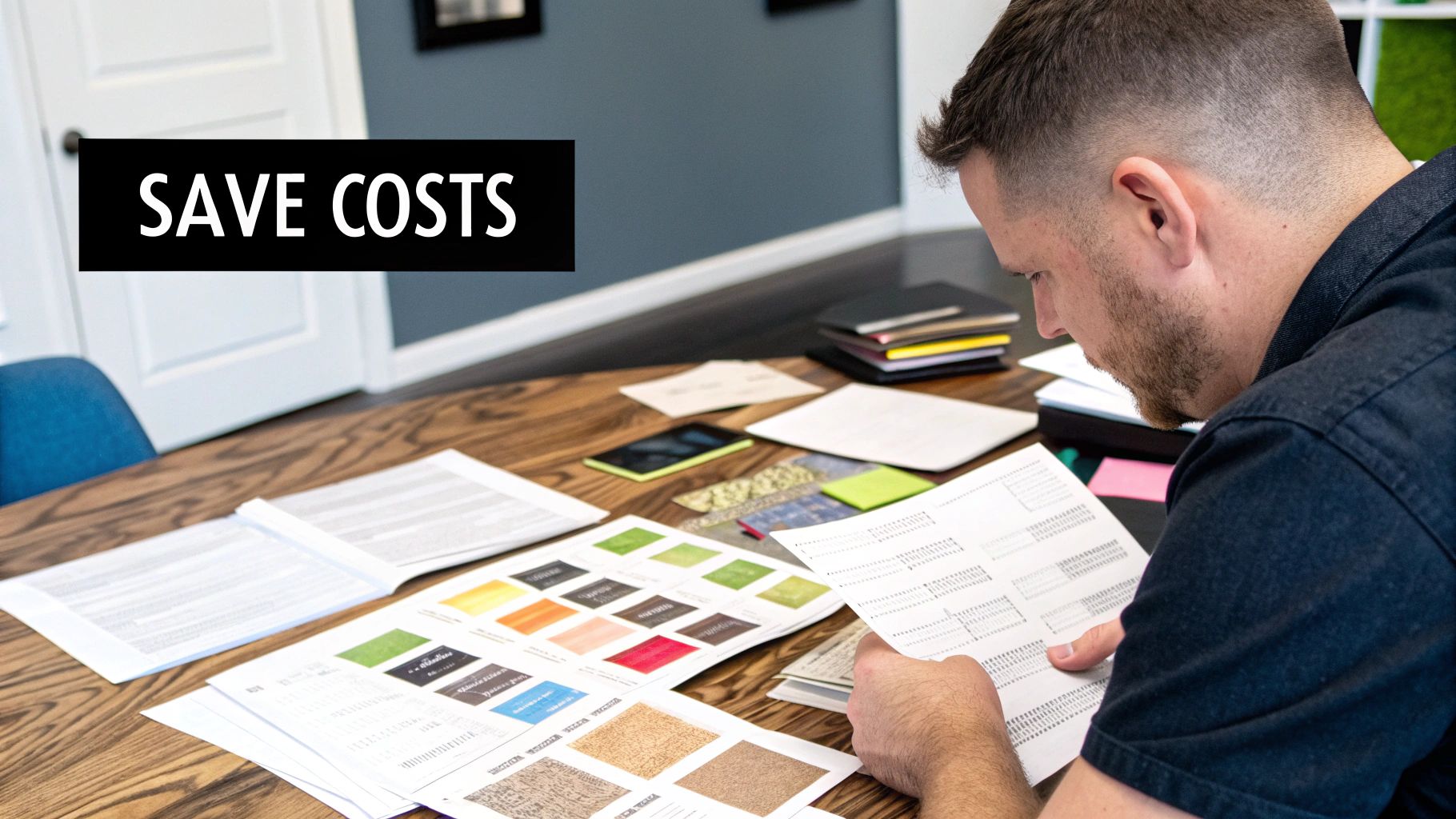
Getting that quote for your beautiful new cabinets is a huge step, but it’s so important to remember that it isn't the final number. The custom cabinet price per linear foot is for the cabinets themselves, but a full-blown renovation always has other expenses that can sneak up on you.
Think of your cabinet quote as just one piece of a much larger puzzle. To build a budget that won't give you a headache later, you have to account for everything that comes before, during, and after the cabinets go in. This isn't just about cabinetry; it’s about the total investment needed to bring your vision to life. Honestly, overlooking these related costs is one of the most stressful mistakes a homeowner can make.
Your Hidden Costs Checklist
Before you give the green light on your cabinet order, run through this checklist of potential add-ons. Factoring these into your budget from the get-go will give you a much more realistic picture of the total project cost.
-
Demolition and Removal: Those old cabinets have to go somewhere! Tearing out and disposing of them can tack on anywhere from $300 to $800, depending on your kitchen's size and the labor needed.
-
Site Preparation: Are the walls behind your old cabinets ready for what's next? Drywall repair, patching holes, and priming are often required to get a smooth, level surface for a professional-grade installation.
-
Plumbing and Electrical Work: If you're moving a sink, adding a dishwasher to a new island, or installing that slick under-cabinet lighting, you'll need licensed pros. Plumbers and electricians bill by the hour, and their fees are completely separate from your cabinet maker’s quote.
-
New Countertops: Your stunning custom cabinets deserve an equally beautiful surface. Countertops are a major expense in their own right and are almost always budgeted separately from the cabinetry.
Think of it this way: your cabinet quote is the price for the main event, but it doesn't cover the cost of setting the stage. From demolition to hardware, these so-called "hidden" expenses are critical parts of the complete renovation and absolutely must be in your overall budget.
Permits and Final Touches
Depending on how big your remodel is and where you live, you might need to pull permits for any structural, electrical, or plumbing work. The fees can vary a lot, but they’re a necessary step to make sure your project is safe and up to code.
And finally, don't forget the jewelry for your cabinets—the hardware. Knobs and pulls are sold separately and their prices are all over the map, from a few dollars to $50 or more per piece for high-end or custom-made designs. It’s a small detail that makes a huge visual impact, but the cost can add up fast.
For a deeper dive into how all these moving parts fit together, a comprehensive guide can help you understand the full kitchen cabinet cost per linear foot and all the associated expenses.
Getting an Accurate Cabinet Quote
Walking into a conversation with a cabinet maker unprepared is a bit like going to the grocery store starving and without a list. You're bound to make some questionable choices and forget the essentials. To get a quote that truly reflects the custom cabinet price per linear foot for your project, you need to do a little homework first.
This isn't about becoming an expert overnight. It's about arming yourself with the right information so the conversation is productive and the quotes you get are based on your real needs, not just a wild guess. A little bit of prep work up front saves a world of headaches and confusion down the road.
What to Have Ready Before You Call
Any good cabinet maker can give you a much sharper estimate right out of the gate if you come to the table with a clear plan. Before you start dialing up local shops, try to pull these things together:
- Rough Measurements: You don't need professional blueprints. A simple, hand-drawn sketch of your room showing the basic wall lengths is perfect. Make sure to mark where windows, doors, and major appliances are located. This gives the maker a critical sense of scale.
- Inspiration Photos: This is huge. Start a Pinterest board or tear pages out of magazines. Photos of kitchens, bathrooms, or built-ins that capture the vibe you're after will communicate your vision far more effectively than words ever could.
- A "Must-Have" List: What features are absolutely non-negotiable for you? Maybe you've been dreaming of a pull-out pantry, can't live without soft-close drawers, or need a slick, integrated recycling and trash center. List out your top priorities.
- A Realistic Budget Range: Be honest with yourself (and your cabinet maker) about what you can comfortably spend on the entire renovation, not just the cabinets. This isn't about showing your cards; it's about letting a professional guide you toward materials and features that actually fit your financial reality.
When you start comparing quotes, resist the urge to immediately jump on the lowest number. The cheapest bid often becomes the most expensive one in the long run if it conveniently leaves out things like installation, hardware, or uses subpar materials to get the price down.
How to Compare Quotes Like a Pro
Once the proposals start rolling in, your job is to compare them apples-to-apples. Remember, the cheapest price rarely equals the best value. You want to see a detailed, transparent proposal that spells everything out and leaves zero room for expensive assumptions.
A truly professional quote will clearly list the exact materials for the cabinet boxes and doors, the specific brand and model of hardware (like hinges and drawer slides), the type of finish being applied, and the detailed terms of installation. A vague, one-page quote is a major red flag. By being prepared and knowing what a quality proposal looks like, you can navigate the process with confidence and make a smart decision you’ll be happy with for decades.
Common Questions Answered
Alright, so we've covered the nuts and bolts of what goes into the custom cabinet price per linear foot. But even with all the details laid out, you probably still have a few questions swirling around. Let's tackle some of the most common ones homeowners ask when they're deciding if custom is the right move for them.
Are Custom Cabinets Really Worth the Extra Money?
In a word, yes—especially if you care about a perfect fit and building something that will last. While you'll definitely see a higher upfront cost compared to off-the-shelf options, you're paying for superior materials and old-school construction that's meant to hold up for decades, not just a few years.
That blend of durability and a design made just for your room doesn't just make your day-to-day life easier; it seriously boosts your home's functionality and can even increase its resale value down the road.
How Long Does It Take to Get Custom Cabinets?
This is where a little patience pays off. True craftsmanship can't be rushed. From the moment you sign off on the final designs, you can generally expect a lead time of 8 to 16 weeks before your cabinets are built and ready for installation.
Once they arrive, the installation itself can take anywhere from a few days to over a week, all depending on how big and complex your project is.
The real value of custom cabinets isn't just in their beauty, but in their durability. While stock cabinets may last 10-15 years, a well-made custom set can easily last over 40 years, making them a smarter long-term investment.
What's the Best Way to Save Money on a Custom Project?
Great question. You can absolutely make smart choices to bring the cost down without cutting corners on the quality that matters most.
Here are a few ideas:
- Choose a cost-effective wood: Go for a solid, reliable hardwood like maple instead of a premium species like cherry. You’ll save a good chunk of money without sacrificing durability.
- Simplify your door style: A clean, classic Shaker-style door is timeless and much less labor-intensive to make than a door with intricate carving or raised panels.
- Be strategic with organizers: Instead of loading up on every fancy pull-out and complex internal gadget, pick one or two that will make the biggest impact on your daily routine.
If you want to dig even deeper, we have a complete breakdown of how much custom cabinets cost in our in-depth guide.
Ready to transform your space with cabinetry built to last a lifetime? At Sinclair Cabinetry inc, we combine 35 years of expertise with state-of-the-art design to bring your vision to life. Contact us today for a personalized consultation and quote.