

Selecting the right material for your cabinetry is one of the most critical decisions in any kitchen or bathroom remodel. It's a choice that defines the room's aesthetic, functionality, and long-term durability. While countless materials are available, solid wood and high-quality wood veneers remain the gold standard for their timeless beauty, strength, and ability to be refinished. Making the correct choice ensures your investment lasts for decades, resisting the daily wear and tear of a busy household while anchoring your home's design.
This guide is designed to cut through the noise and provide a comprehensive evaluation of the best wood species for cabinets. We will move beyond surface-level descriptions to offer a detailed comparison, helping you align the perfect material with your specific needs, budget, and style preferences. We'll explore the pros and cons of ten popular options, from the classic hardiness of Oak and Maple to the rich, luxurious tones of Walnut and Cherry. Each entry will analyze key factors including:
- Durability and Hardness: How well the wood resists dents, scratches, and dings.
- Appearance and Grain: The unique visual character, from subtle, straight grains to bold, rustic patterns.
- Cost: A relative comparison to help you budget effectively.
- Finishing Qualities: How easily the wood accepts stains, paints, and protective topcoats.
Understanding these core attributes is fundamental to selecting a material that performs as beautifully as it looks. To make an informed choice, it's beneficial to consider the various wood species available and their unique properties. For further reading on material characteristics, a useful guide on choosing from different hardwood types and their characteristics can be found here. Let’s dive into the top contenders for your forever cabinets.
1. Oak (Red and White)
Oak stands as a timeless and highly popular choice for cabinetry, revered for its remarkable strength, prominent grain patterns, and versatile aesthetic. As one of the best wood species for cabinets, its classic appeal fits seamlessly into designs ranging from traditional American farmhouse to modern transitional. Oak is categorized into two main varieties, red and white, each offering distinct characteristics suitable for different applications.
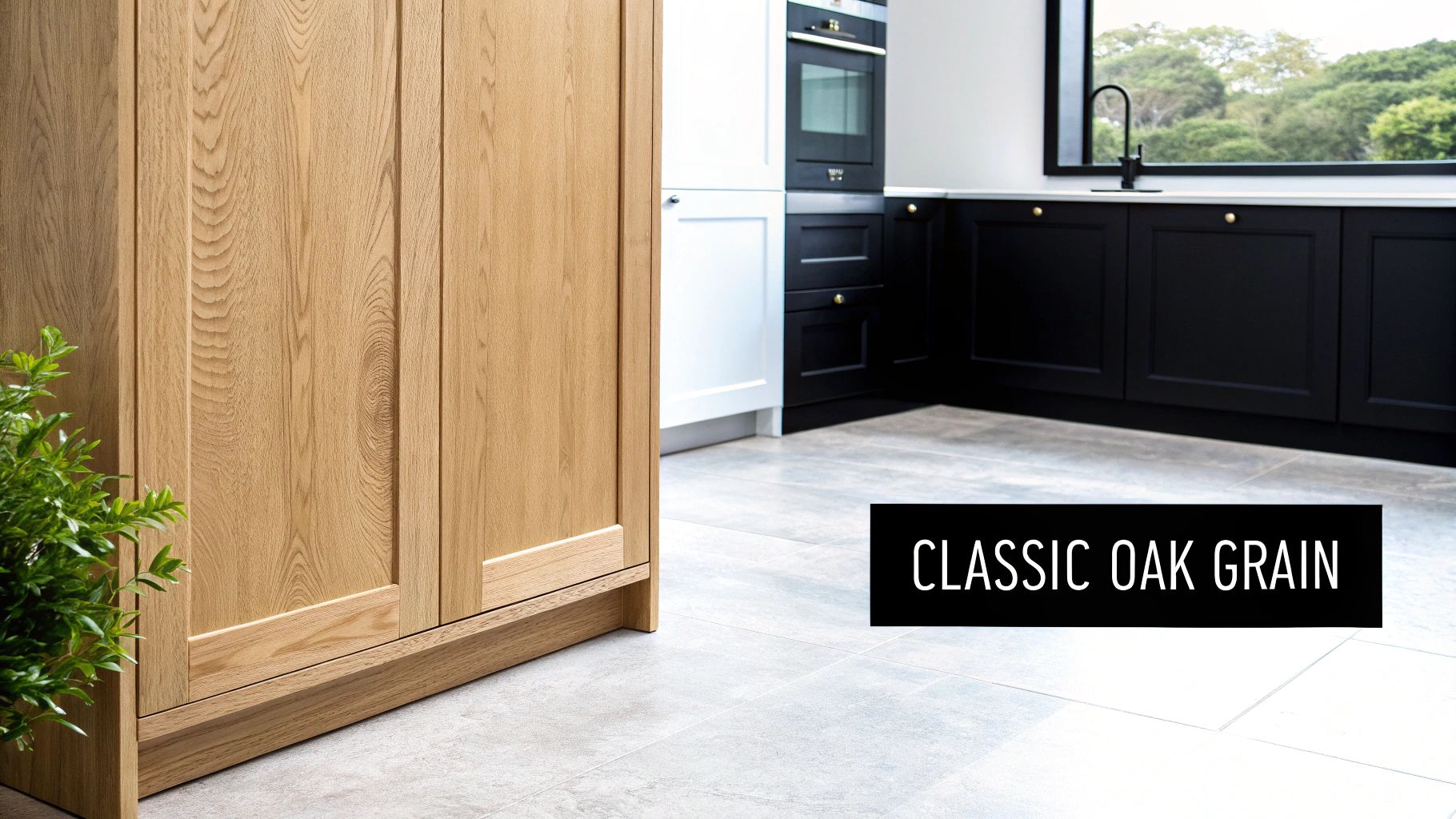
Red oak features warm, pinkish-red undertones and a more dramatic, open grain, while white oak presents a cooler, yellowish-brown hue with a tighter grain. White oak is slightly harder and denser than its red counterpart, boasting superior resistance to moisture and decay due to its closed cellular structure (tyloses). This makes it an exceptional material for high-humidity areas like kitchens and bathrooms.
Why Choose Oak for Your Cabinets?
Oak's enduring popularity, seen in collections from brands like Kraftmaid and Thomasville, is rooted in its practical benefits. Its inherent hardness makes it resistant to dents and daily wear, ensuring longevity. The wood's pronounced grain adds texture and visual interest, creating a warm, inviting atmosphere that many homeowners desire. Whether you're aiming for a rustic look or a refined, classic style, oak provides a robust and beautiful foundation. The versatility of oak also extends to its finishing potential; it accepts stains evenly, allowing for a wide range of color possibilities.
Actionable Insights for Oak Cabinetry
To make the most of this durable wood, consider these practical tips for implementation:
- Select Based on Location: Opt for white oak in moisture-prone areas like kitchens, bathrooms, or laundry rooms for its natural water-resistant properties.
- Prepare for Painting: Oak’s deep grain can show through paint. For a completely smooth finish, apply a grain filler before priming and painting to create a uniform surface.
- Enhance Natural Beauty: If you love the grain, use light-colored or natural stains. These finishes highlight the wood's intricate patterns without overpowering them.
- Achieve a Professional Finish: When staining, always sand thoroughly between the stain application and the final topcoat. This crucial step removes any raised grain and ensures a silky-smooth, durable surface.
Choosing the right material is fundamental, and you can explore more details about the best wood for cabinet doors on Sinclair Cabinets' blog.
2. Maple
Maple is a premium hardwood renowned for its fine, uniform grain and exceptional density, making it a top contender among the best wood species for cabinets. Valued for its clean, light appearance and smooth surface, hard maple (also known as sugar maple) offers outstanding durability. This makes it an ideal choice for high-traffic kitchens where resistance to dents, dings, and daily wear is crucial. Its subtle grain pattern creates a sleek, contemporary look that complements modern and transitional designs.
Unlike the prominent, open grains of woods like oak, maple's tight, consistent texture provides a minimalist canvas. Its natural color ranges from creamy white to a light, reddish-brown, offering a bright and airy feel to any space. This uniformity and pale coloring make it a favorite for both clear finishes that highlight its natural beauty and opaque paint applications that result in a flawless, smooth surface.
Why Choose Maple for Your Cabinets?
Maple's reputation, especially in high-end cabinetry from brands like Crystal Cabinet Works, is built on its combination of strength and refined beauty. Its impressive hardness, second only to hickory among common domestic hardwoods, ensures that your cabinets will withstand the rigors of a busy household for decades. The wood’s smooth surface is less porous than others, making it easier to clean and maintain. For homeowners and designers seeking a clean, versatile aesthetic, maple provides a sophisticated and durable foundation perfect for painted finishes or a natural, modern look.
Actionable Insights for Maple Cabinetry
To leverage the unique qualities of this resilient wood, consider these practical tips:
- Ideal for Painted Finishes: Maple's tight, uniform grain creates an exceptionally smooth surface for paint. If you desire a flawless, solid-color look for your cabinets, maple is one of the best choices available.
- Prevent Blotchy Stains: Maple can absorb stain unevenly, resulting in a blotchy appearance. To ensure a consistent color, always apply a pre-stain wood conditioner before staining.
- Embrace a Contemporary Style: The wood's clean look pairs perfectly with modern or transitional designs. Complement it with sleek, contemporary hardware like brushed nickel or matte black pulls to enhance its minimalist appeal.
- Pair with Neutral Palettes: Maple's light, creamy tones work beautifully alongside neutral paint colors like white, gray, or beige. This combination creates a bright, serene, and cohesive kitchen environment.
3. Cherry
Cherry is a luxury hardwood prized for its rich warm color that deepens beautifully over time. As one of the best wood species for cabinets it brings an elegant sophistication to high-end kitchen and bathroom designs.
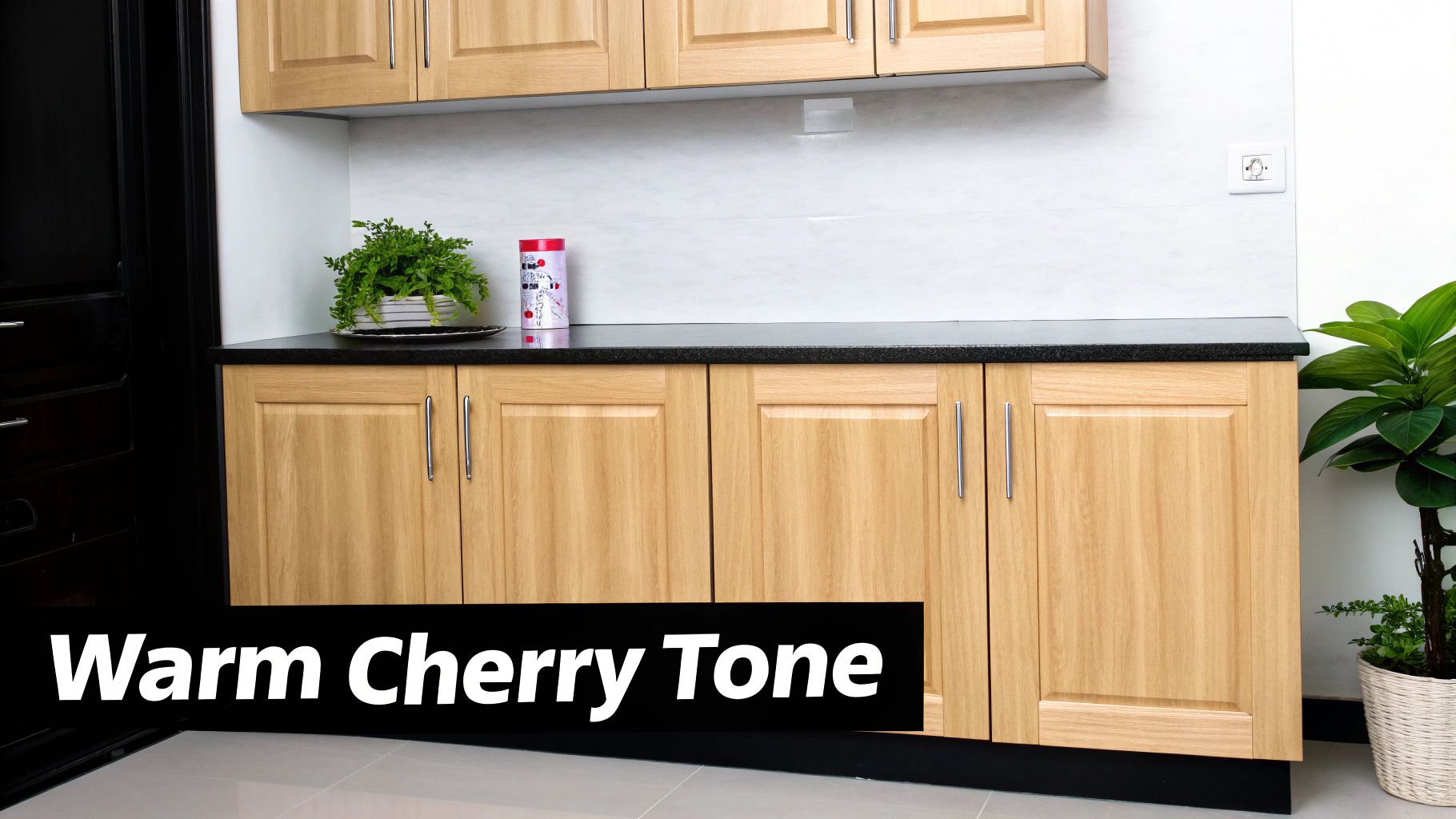
Black cherry wood exhibits a straight to slightly wavy grain and natural luster that requires minimal finishing. It’s a favorite among custom furniture makers and luxury home renovations in the Northeast United States for its refined appearance.
Its moderate hardness and excellent workability allow for intricate molding details and custom door profiles in traditional or transitional interiors. Many Pennsylvania cherry furniture makers have popularized its use in bespoke cabinetry that ages gracefully with minimal maintenance.
Why Choose Cherry for Your Cabinets?
Cherry stands out in upscale residential and commercial cabinetry due to its fine grain and warm hue. Its color matures from light pinkish tones to deep reddish brown, creating a unique patina over years.
Actionable Insights for Cherry Cabinetry
- Let Finish Cure Properly: Allow at least 48 hours before heavy use to protect the wood surface from dents and scratches.
- Use Protective Hardware: Install soft-close hinges and bumper pads in high-traffic doors and drawers to reduce impact.
- Position Away from Direct Sunlight: Sunlight accelerates color change and may cause uneven fading on cabinet faces.
- Enhance Natural Color: Apply a matte or satin polyurethane finish to showcase cherry’s depth without a glossy sheen.
- Select Moderate Traffic Areas: Reserve cherry cabinets for spaces with balanced activity such as formal kitchens or custom bar niches.
4. Walnut
Walnut is a sophisticated, luxury hardwood celebrated for its rich, chocolate-brown coloring and dramatic, elegant grain patterns. As a premium choice among the best wood species for cabinets, its inherent beauty delivers a sense of opulence and warmth. Its smooth texture and deep tones make it a go-to material for creating high-end, contemporary spaces, from minimalist kitchens to designer showroom displays.
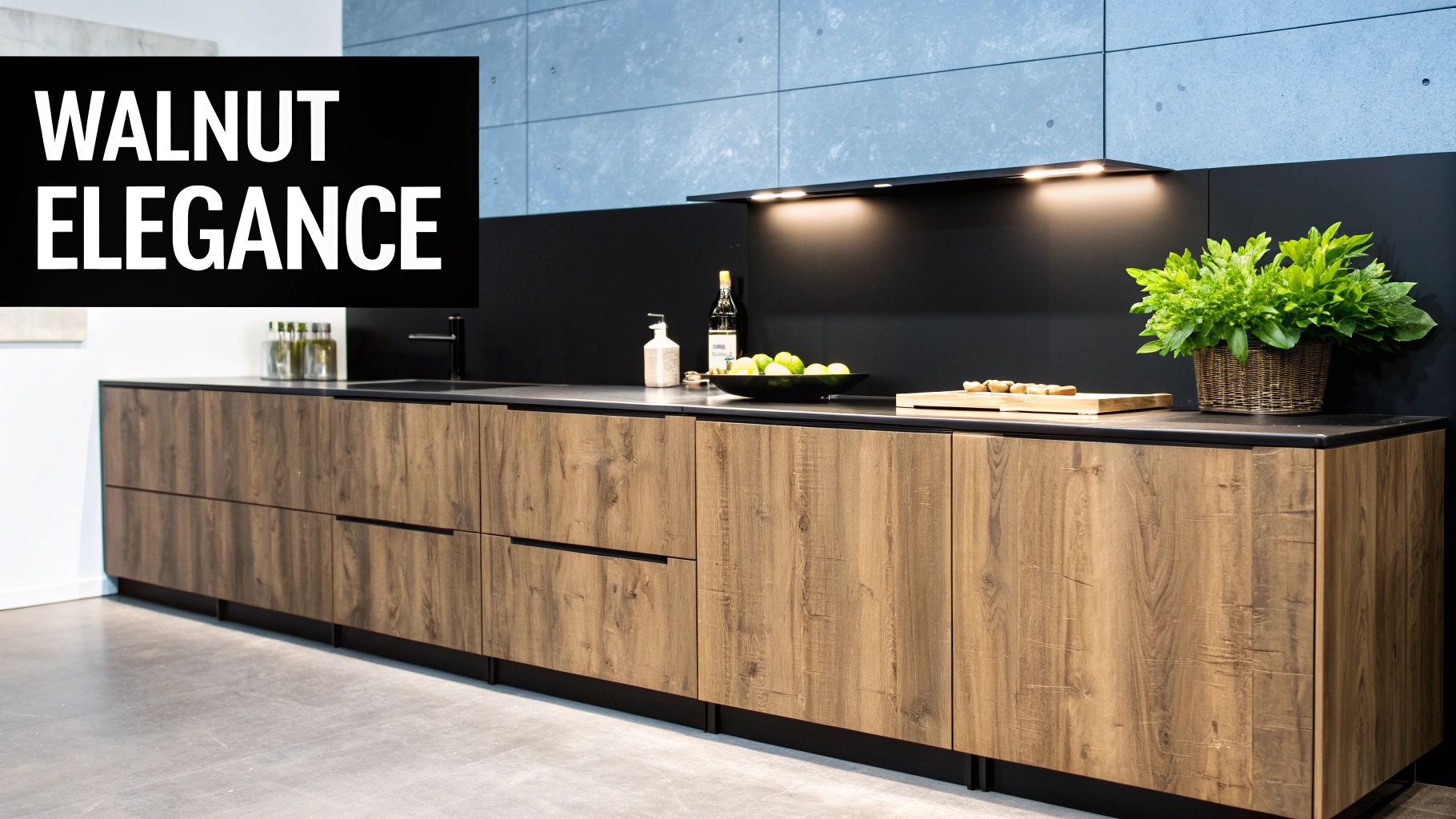
This hardwood features colors ranging from light grayish-brown to a deep, dark purplish-brown. Its grain can be straight or have a beautiful wavy or curly pattern, adding unique character to each cabinet door. While not as hard as maple or oak, walnut is still a durable wood prized by custom furniture artisans and luxury interior designers for its workability and stunning finish.
Why Choose Walnut for Your Cabinets?
Walnut’s appeal lies in its ability to create a dramatic yet timeless statement. The wood's naturally dark, rich tones provide instant sophistication without the need for heavy stains, making it perfect for luxury residential projects and high-end custom cabinetry. Its fine, straight grain polishes to an exceptionally smooth finish, exuding a quiet elegance that complements modern and transitional aesthetics alike. Favored by high-end kitchen design firms, walnut elevates any interior with its deep, inviting color and distinctive visual texture.
Actionable Insights for Walnut Cabinetry
To maximize the impact of this luxurious wood, consider these practical implementation tips:
- Showcase Natural Grain: Use a clear matte or satin finish instead of a heavy stain. This approach protects the wood while allowing its beautiful, complex grain patterns to remain the focal point.
- Consider Strategic Placement: Walnut is slightly softer than other hardwoods. Use it for upper cabinets or in lower-traffic areas to minimize the risk of dents and scratches.
- Modernize with Hardware: Pair walnut cabinets with sleek, modern hardware in finishes like brushed nickel, matte black, or brass to create a striking contemporary look.
- Balance Cost with Veneers: For large-scale projects or to manage budget, consider using walnut veneers for cabinet boxes and solid walnut for doors and drawer fronts. This provides the same high-end look more cost-effectively.
Understanding how different finishes interact with this wood is key, and you can explore various options for cabinet wood stain colors on Sinclair Cabinets' blog.
5. Hickory
Hickory is a domestic hardwood celebrated for its exceptional hardness and dramatic, rustic character. Known as one of the hardest and strongest woods native to North America, it offers unparalleled durability. Its most striking feature is the significant color variation within a single board, which can range from creamy white sapwood to dark, reddish-brown heartwood. This distinctive look makes it a standout choice for farmhouse, rustic, and mountain home cabinet designs.
The prominent, often swirling grain patterns combined with its natural color contrasts give hickory cabinets an energetic and untamed appearance. This inherent visual texture means no two hickory cabinets are exactly alike, providing a truly custom and organic feel to any space. Its robust nature makes it an excellent candidate for heavily-used areas, ensuring it withstands the rigors of a busy household.
Why Choose Hickory for Your Cabinets?
Hickory's primary advantage is its superior durability, surpassing even oak and maple in hardness on the Janka scale. This makes it incredibly resistant to dents, dings, and scratches, perfect for high-traffic kitchens or homes with active families. The wood's bold grain and color variations are its aesthetic signature, creating a warm, inviting, and visually dynamic statement. This natural character is highly sought after by farmhouse design enthusiasts and those looking to create rustic cabin interiors. Hickory stands out as one of the best wood species for cabinets when longevity and a strong, natural aesthetic are top priorities.
Actionable Insights for Hickory Cabinetry
To harness the unique qualities of this tough wood, consider these practical tips for implementation:
- Manage Color Variation: For a more unified look, sort boards by color before assembly or use a medium to dark stain to even out the dramatic contrast between the sapwood and heartwood.
- Embrace the Rustic Vibe: Pair hickory cabinets with rustic hardware like forged iron or brushed bronze pulls to complement their natural character. Distressed finishes also work beautifully to enhance their rugged charm.
- Target High-Wear Areas: Due to its exceptional hardness, use hickory for high-impact zones like kitchen islands, base cabinets, or heavy-duty work surfaces where durability is crucial.
- Select the Right Finish: A clear or natural finish will celebrate hickory's dramatic grain and color shifts. If you opt for a stain, choose one that harmonizes with the wood's inherent tones rather than attempting to hide them.
6. Ash
Ash is a durable, domestic hardwood celebrated for its straight, consistent grain and pale, creamy appearance. Often compared to oak for its strength, ash presents a finer, less pronounced grain pattern, making it one of the best wood species for cabinets in modern and transitional designs. Its light, bright color can make spaces feel larger and more open, while its inherent toughness ensures it stands up to the demands of daily use in high-traffic areas like kitchens.
This hardwood is known for its excellent flexibility and shock resistance, qualities that made it the traditional material for baseball bats and tool handles. For cabinetry, these traits translate into a resilient product that resists splitting and denting. Ash’s neutral, light-colored sapwood and light-to-medium brown heartwood provide a clean canvas that takes stains and paints exceptionally well, offering remarkable design versatility from natural-look finishes to bold, contemporary colors.
Why Choose Ash for Your Cabinets?
Ash delivers a compelling combination of aesthetic appeal and functional durability at a reasonable price point. Its ability to mimic the look of more expensive woods with the right stain makes it a cost-effective alternative without sacrificing quality. The wood's light color and subtle grain are favored by contemporary designers and homeowners seeking a clean, minimalist aesthetic. Its smooth surface provides an ideal base for painted finishes, allowing for a flawless, modern look that is difficult to achieve with more open-grained woods. This makes ash a top contender for both natural wood and painted cabinet applications.
Actionable Insights for Ash Cabinetry
To leverage the unique qualities of ash, consider these practical implementation tips:
- Achieve an Even Tone: To ensure uniform stain absorption across the wood, always apply a pre-stain wood conditioner. This step prevents blotchiness and results in a more professional, even-colored finish.
- Ideal for Painted Finishes: If you desire a sleek, contemporary painted cabinet, ash is an excellent choice. Its relatively smooth grain requires less prep work than oak for a uniform, high-quality paint job.
- Brighten Smaller Spaces: Utilize ash cabinetry with a natural or light-stained finish in smaller kitchens or bathrooms. Its pale hue reflects light, creating an illusion of a larger, more airy space.
- Complement with Modern Hardware: Ash’s clean lines and subtle grain pair beautifully with minimalist hardware. Opt for sleek, modern pulls and knobs in finishes like brushed nickel, matte black, or brass to enhance its contemporary appeal.
7. Birch
Birch is a versatile, moderately-priced hardwood prized among the best wood species for cabinets. It features a fine, consistent grain and a pale, creamy color that lends itself beautifully to contemporary and modern designs. Thanks to its excellent paint-taking properties and smooth surface, birch delivers a uniform, high-end look ideal for both residential kitchens and commercial installations.
Why Choose Birch for Your Cabinets?
Birch’s uniform appearance makes it a go-to choice for Scandinavian-inspired and minimalist interiors. Its workability allows cabinetmakers to produce razor-sharp edges and crisp details, perfect for sleek shaker doors or flat-panel styles. Even under heavy use, birch offers solid durability—ranking around 1,260 on the Janka hardness scale—so it holds up well in busy households. Designers often pair birch with matte white or soft gray paints to emphasize clean lines and bright, open spaces.
Actionable Insights for Birch Cabinetry
- Best with Painted Finishes: Enhance birch’s uniform grain by using a high-build primer and a durable enamel topcoat.
- Use Quality Primer: Apply a stain-blocking primer to prevent yellowing and ensure even paint adhesion.
- Inspect for Knots and Defects: Select clear-grade panels to avoid unsightly knots, especially when staining or light finishes are planned.
- Ideal for Minimalist Designs: Leverage birch’s smooth surface in flat-panel or handleless cabinets to achieve a sleek, modern aesthetic.
Choosing birch means balancing cost, durability, and a clean, contemporary look. Whether you’re remodeling a Scandinavian-style kitchen or outfitting a commercial space, birch stands out as one of the best wood species for cabinets. For more design ideas and technical specs, visit Woodworkers Source.
8. Pecan
Pecan is a premium domestic hardwood prized among the best wood species for cabinets. Native to the southern United States, it offers rich warm tones and dramatic color variation, making each cabinet run distinctly unique. Exceptionally hard and durable, pecan withstands daily wear in high-performance kitchen and bath installations. Its upscale appearance and natural character appeal to homeowners seeking a statement material.
Why Choose Pecan for Your Cabinets?
Pecan ranks highly for its exceptional durability and visual interest. With a Janka hardness rating near 1,820 lbf, it resists dents and scratches more effectively than many other domestic species. The varied heartwood hues—from light amber to deep chocolate—create a one-of-a-kind backdrop in luxury Southern home renovations or high-end kitchen cabinetry. Natural oils in pecan also enhance moisture resistance, which is ideal for kitchens and bathrooms.
Real-World Examples:
- Luxury Southern home renovations featuring floor-to-ceiling pecan cabinets
- Custom transitional interiors balancing rustic warmth and clean lines
- High-end kitchen islands showcasing live-edge pecan panels
Actionable Insights for Pecan Cabinetry
“Pecan’s dramatic color variation creates eye-catching focal points in any space.”
-
Board Selection and Layout
- Manage Variation: Handpick and sequence boards to balance light and dark streaks.
- Showcase Patterns: Use contrasting grain figures on doors and drawer fronts for visual depth.
-
Strategic Placement
- High-Use Areas: Specify pecan for islands or sink bases where durability is critical.
- Accent Zones: Frame open shelving or hood surrounds in pecan to highlight its warm hues.
-
Finishing Techniques
- Warm Hardware Pairing: Match with oil-rubbed bronze or brass pulls to complement amber tones.
- Grain Filling: Apply a compatible grain filler before painting to attain a smooth, furniture-grade finish.
By integrating pecan cabinets, you select a top-tier wood species that stands out for both its performance and distinctive beauty. For more on choosing the best wood species for cabinets, explore resources from specialty cabinetry artisans and Southern design experts.
9. Alder
Alder is a softer domestic hardwood with a fine, uniform grain and a pale, warm appearance. Harvested primarily from the Pacific Northwest, it offers excellent workability and consistency, making it one of the best wood species for cabinets when you need detailed, custom craftsmanship. Its smooth texture responds well to shaping, routing, and carving, so designers often specify alder for intricate accents and moldings.
Beyond its aesthetic appeal, alder is valued by eco-conscious homeowners for being sustainably managed in American forests. It takes stains and paints evenly, delivering a flawless finish whether you choose a natural clear coat or a bold, contemporary hue. Craftsman-style builders and Arts and Crafts enthusiasts favor alder for its ability to convey authentic, handcrafted quality without the premium cost of harder species.
Why Choose Alder for Your Cabinets?
Alder secures its place among top cabinet woods thanks to a blend of practical and design benefits:
-
Smooth, Closed Grain
Allows for uniform paint coverage and minimal grain fill, ideal for crisp, custom color schemes. -
Ease of Fabrication
Its softness reduces tool wear and speeds up shaping tasks, lowering labor costs on custom installations. -
Cost-Effective Premium Look
Delivers the warmth of hardwood at a budget-friendly price, making it a smart choice for large-scale or specialty projects. -
Sustainable Option
Widely available from responsibly managed U.S. forests, appealing to green builders and homeowners.
Actionable Insights for Alder Cabinetry
- Reserve for Lower-Traffic Areas: Use alder in pantries, guest baths, or accent islands where impact risk is lower.
- Highlight Custom Details: Specify alder for decorative trim, door panels, and moldings to showcase its workability.
- Optimize Painted Finishes: Apply a high-quality primer then two topcoats of paint; the grain will remain subtly visible for depth.
- Seal High-Wear Zones: In kitchens or busy bathrooms, finish with a durable polyurethane or conversion varnish to protect edges and corners.
- Balance Styles: Pair alder with stone or metal elements in Craftsman, Arts and Crafts, or transitional designs for a cohesive, handcrafted look.
10. Plywood and Engineered Wood Veneer Panels
While not a solid hardwood species, engineered wood panels with a real wood veneer have earned their place as a top choice in modern cabinet construction. These products offer a blend of stability, cost-effectiveness, and the aesthetic appeal of solid wood. By combining premium hardwood veneers like oak, cherry, or walnut over a stable plywood core, they balance high-end looks with superior performance, making them one of the best materials for cabinets in many applications.
Engineered panels consist of a thin slice of real wood (veneer) bonded to a core material, typically furniture-grade plywood or MDF. This construction makes them less susceptible to the warping, cracking, and expanding that can affect solid wood in fluctuating humidity levels. This stability is particularly advantageous for large, flat surfaces like slab-style cabinet doors, side panels, and pantry doors, a feature leveraged by brands from IKEA to high-end semi-custom manufacturers.
Why Choose Plywood and Veneer for Your Cabinets?
The primary advantage of engineered wood veneer panels is their exceptional dimensional stability. Solid wood naturally moves with changes in temperature and humidity, but the cross-grained layers of a plywood core resist this movement, ensuring doors and panels remain flat and true. This method also provides the consistent look of premium woods at a more accessible price point and is often a more sustainable use of rare or expensive lumber. The result is a durable, beautiful, and reliable cabinet that excels in modern and contemporary designs.
Actionable Insights for Plywood and Veneer Cabinetry
To ensure you get the best performance and look from your engineered wood cabinets, consider these practical tips:
- Prioritize a Quality Core: Opt for cabinets built with multi-ply hardwood plywood cores, such as birch. These are stronger, hold screws better, and are more resistant to moisture damage than lower-grade MDF or particleboard cores.
- Insist on Quality Edge Banding: The edges are the most vulnerable part of a veneer panel. Ensure your cabinet maker uses thick, durable edge banding made from PVC or real wood to prevent chipping and protect the core from moisture.
- Ideal for Clean, Modern Designs: The stability of engineered panels makes them perfect for contemporary, minimalist, and mid-century modern kitchens that feature large, flat slab doors with clean, uninterrupted lines.
- Seek Sustainable Options: Look for panels made with FSC-certified plywood and veneers. This certification ensures the wood is sourced from responsibly managed forests, making it an eco-friendly choice.
For a deeper dive into how these materials compare with others, you can explore Sinclair Cabinets' guide on the best materials for kitchen cabinets.
Top 10 Cabinet Wood Species Comparison
| Material | Complexity 🔄 (implementation) | Workability / Efficiency ⚡ | Durability / Quality ⭐ | Ideal Use Cases 📊 | Key Advantages / Tips 💡 |
|---|---|---|---|---|---|
| Oak (Red & White) | Medium — moderate machining; grain care needed | Medium — takes stain well; open grain complicates painting | Excellent (25–40+ yrs) ⭐⭐⭐⭐ | Traditional/transitional kitchens, white oak for wet areas | Readily available, cost-effective; fill grain before painting |
| Maple | Medium–High — very hard to machine; precise tooling required | Medium — excellent for paint/stain but tooling slows work | Excellent (30–50+ yrs) ⭐⭐⭐⭐ | High-traffic kitchens, painted Shaker or modern cabinets | Tight, uniform grain; great for painted finishes; higher cost |
| Cherry | Medium — easy to work but softer surface needs protection | Good — sands and finishes well; avoid heavy abuse | Good–Excellent (20–40 yrs) ⭐⭐⭐ | Luxury residential, traditional/transitional cabinetry | Rich warm color that deepens with age; premium price |
| Walnut | Medium — excellent for detailed work but variable grain | Good — works well for custom joinery and finishes | Good (15–30 yrs) ⭐⭐⭐ | High-end custom cabinets, accent walls, designer projects | Dramatic dark grain; use clear finishes to showcase beauty |
| Hickory | High — very hard; demanding on tools and labor | Low — hard to machine and finish smoothly | Exceptional (40–50+ yrs) ⭐⭐⭐⭐ | Farmhouse, rustic, and heavy-use kitchen cabinetry | Extremely durable with bold character; sort boards for color |
| Ash | Medium — straightforward machining; consistent grain | Good — machines and finishes evenly | Good (20–35 yrs) ⭐⭐⭐ | Contemporary and transitional cabinets, painted applications | Cost-effective alternative to maple; bright, uniform appearance |
| Birch | Low–Medium — easy to work but inspect for knots | High — excellent paint adhesion and panel workability | Good (15–30 yrs) ⭐⭐⭐ | Modern/Scandinavian painted cabinets, budget builds | Affordable and consistent; prime well for paint |
| Pecan | High — very hard with strong color variation | Low — tough to machine; requires board selection | Exceptional (40–50+ yrs) ⭐⭐⭐⭐ | Luxury and high-use kitchens, custom rustic projects | Distinctive warm tones; arrange boards to manage variation |
| Alder | Low — very easy to machine and detail | Very High — excellent for paint and detailed work | Fair–Good (10–20 yrs) ⭐⭐ | Craftsman-style, painted custom cabinetry, low-traffic areas | Very affordable and easy to craft; protect high-wear zones |
| Plywood & Engineered Veneer Panels | Low — straightforward installation, stable panels | Very High — dimensionally stable, efficient for large runs | Good (20–35 yrs) ⭐⭐⭐ | Contemporary systems, large flat panels, commercial builds | Cost-effective, no warping; choose quality cores and edge banding |
From Wood Species to Dream Kitchen: Your Next Steps
Key Takeaways
- Oak (Red and White) delivers lasting durability with bold grain patterns that fit both farmhouse and classic kitchen styles.
- Maple provides a smooth, pale canvas that accepts stain evenly for modern or minimalist cabinetry.
- Cherry introduces warm, reddish hues that deepen gracefully over time, enhancing traditional or transitional designs.
- Walnut elevates luxury interiors with dramatic contrast, though it requires precise sealing to maintain its rich finish.
- Hickory offers extreme hardness and knotty character, perfect for rustic cabins or high-traffic kitchens.
- Ash balances strength and flexibility, showcasing straight grains that suit eclectic or industrial themes.
- Birch acts as a cost-effective base that paints and stains uniformly, ideal for custom color palettes.
- Pecan combines robustness with a warm amber tone, making it a standout choice for statement cabinetry.
- Alder brings a softer feel and charming knots, excellent for painted, distressed, or vintage-inspired finishes.
- Engineered Wood Veneers on plywood maximize stability and sustainability, especially in moisture-prone bathrooms or laundry rooms.
“Selecting the right wood species lays the groundwork for cabinets that perform beautifully and last for decades.”
Actionable Next Steps
- Clarify Your Priorities
- List your top 3 goals: durability, cost efficiency, aesthetic impact, or eco credentials. This sharp focus streamlines wood selection.
- Collect Real Samples
- Order small swatches of your shortlisted woods. Test them under your kitchen lighting and next to existing fixtures.
- Consult a Cabinetry Specialist
- Book a visit with a pro to discuss grain direction, joinery methods, finish options, and hardware compatibility.
- Compare Quotes and Warranties
- Gather at least three detailed estimates. Verify finish warranties, supplier certifications, and installation timelines.
- Evaluate Sustainability Credentials
- Check for FSC certification or reclaimed sources. Prioritize species with low VOC finishes to protect indoor air quality.
- Schedule a Site Assessment
- Have a contractor verify wall plumb, floor level, and utility locations. Early site checks prevent costly delays during installation.
Why Mastering These Choices Matters
Choosing the best wood species for cabinets is more than a design decision. It directly affects long-term functionality, maintenance demands, and overall return on investment. By aligning wood properties with daily use patterns, you ensure your cabinetry weathers wear while retaining its original beauty.
Eco-conscious homeowners and designers will appreciate how sustainable wood sourcing reduces environmental impact. Similarly, luxury real estate projects benefit from specifying premium species like walnut or cherry to command higher resale value. Well-informed material choices translate into fewer callbacks and happier clients.
Bringing It All Together
Investing time now to understand each species’ strengths and limitations pays dividends over your kitchen’s lifetime. From the rustic charm of hickory to the refined elegance of maple, your selected wood will define your space’s personality and performance.
As you move toward final decisions, remember that expert guidance and hands-on testing are key. Use this roadmap to turn insights on the best wood species for cabinets into real-world success. Your dream kitchen awaits—solid, sustainable, and styled to perfection.
Ready to transform your vision into reality? Partner with Sinclair Cabinetry inc for expert cabinet design and installation using top-rated woods.
Sinclair Cabinetry inc offers custom solutions and professional guidance to help you select the best wood species for cabinets and bring your dream space to life.