

Selecting the perfect kitchen cabinets goes far beyond choosing a color or door style. The very material they are made from, the wood itself, forms the foundation of their beauty, strength, and longevity. The right choice ensures your kitchen not only looks stunning on day one but also withstands the daily rigors of cooking, cleaning, and family life for decades to come. Making an informed decision means balancing aesthetics with practicality, considering how different species react to humidity, resist dents, and accept stains. This is where understanding the distinct characteristics of each option becomes critical.
This guide provides a comprehensive comparison of the most popular and effective materials, helping you find the best wood for kitchen cabinets that aligns with your specific needs, budget, and design vision. We will move beyond surface-level descriptions to offer a detailed analysis of eight leading wood types, from the resilient and classic Oak to the rich and luxurious Walnut.
For each wood, we will explore:
- Durability and Hardness: How well it resists scratches, dings, and wear.
- Aesthetic and Grain Pattern: Its natural color, texture, and visual appeal.
- Cost and Value: Its price point relative to its performance and lifespan.
- Finishing Characteristics: How effectively it takes paint, stain, and other finishes.
By the end of this roundup, you will have the practical knowledge needed to confidently select a cabinet material that not only defines your kitchen's style but also serves as a lasting investment in your home's value and functionality. Let's delve into the top contenders.
1. Maple
Maple is a powerhouse in the world of kitchen cabinetry, widely celebrated for its exceptional durability and clean, refined appearance. As a dense, fine-grained hardwood, its smooth surface provides a perfect canvas for a variety of finishes, making it one of the most versatile options available. This versatility allows maple to fit seamlessly into design schemes ranging from sleek, modern kitchens to warm, traditional spaces.
Its popularity is evident in the product lines of major cabinet manufacturers like Kraftmaid, Merillat, and American Woodmark, who frequently feature maple in their collections. You'll often find it used for classic white Shaker-style cabinets, a timeless choice in many kitchen renovations, because its minimal grain doesn't distract from the clean lines of the design.
Why Choose Maple Cabinets?
The primary reason homeowners and designers gravitate toward maple is its combination of strength and beauty. It stands up remarkably well to the daily wear and tear of a busy kitchen, resisting dents and scratches better than many other wood species. This resilience makes it an excellent long-term investment. Furthermore, its light, creamy-white to reddish-brown hue acts as a neutral base that can be stained to mimic more expensive woods like cherry or walnut, or painted for a crisp, uniform look.
Key Insight: Maple's fine, uniform grain is its standout feature. Unlike oak with its prominent, open grain, maple provides a subtle, smooth texture that contributes to a more contemporary and polished aesthetic.
For a quick reference, this summary highlights the core attributes that make maple a top contender for kitchen cabinets.
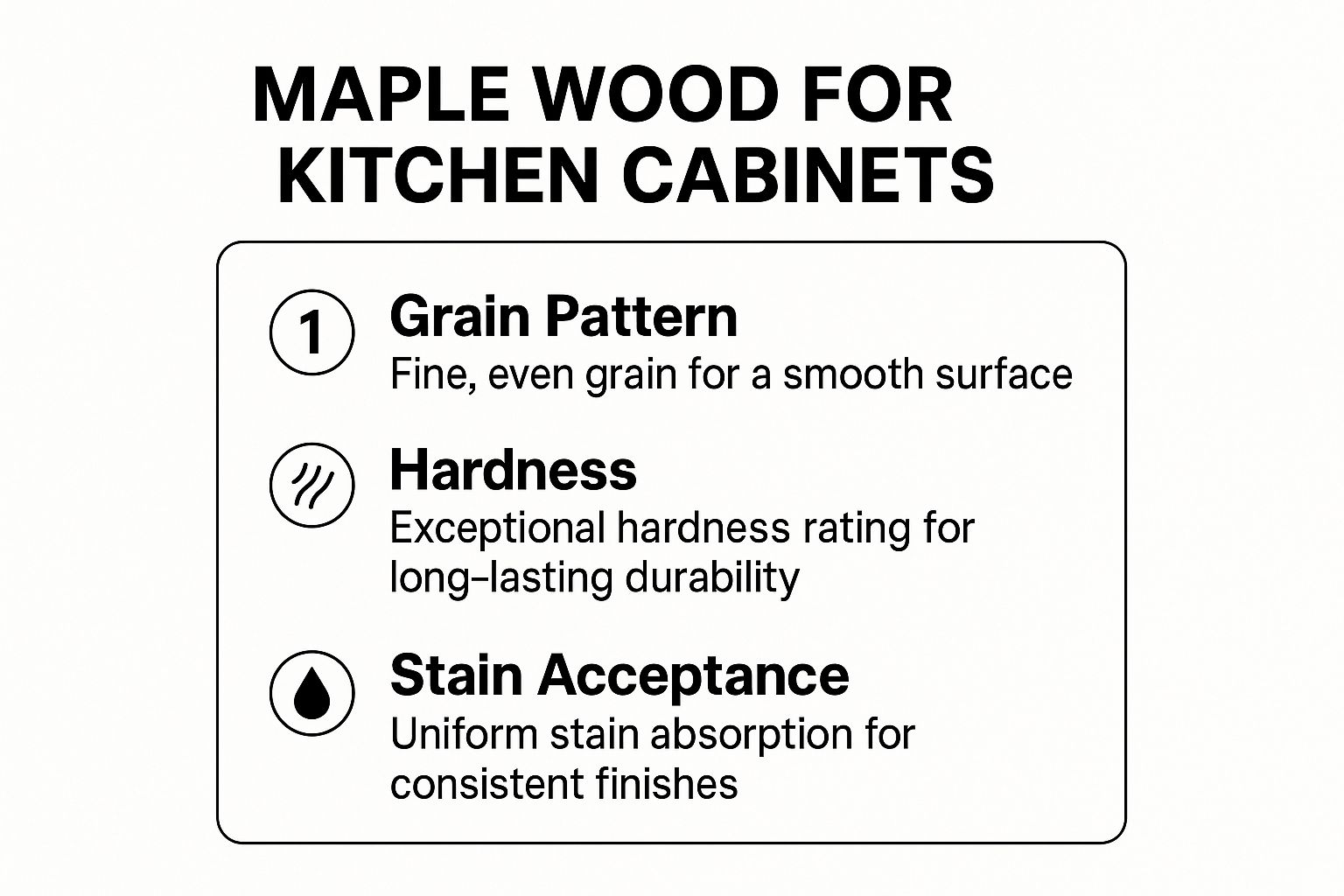
These three characteristics, exceptional hardness, a fine grain, and reliable stain acceptance, combine to make maple one of the best wood choices for durable and beautiful kitchen cabinets.
Finishing and Installation Tips
To achieve a flawless finish with maple, proper preparation is crucial. Due to its dense, tight grain, maple can sometimes absorb stain unevenly, resulting in a blotchy appearance.
- Use a Pre-Stain Conditioner: Applying a wood conditioner before staining helps the wood absorb the color evenly.
- Opt for Gel Stains: Gel stains sit on top of the wood rather than soaking in deeply, which significantly reduces the risk of blotching and creates a more uniform color.
- Sand Progressively: For an ultra-smooth surface ready for finishing, sand the wood in stages, moving up to a fine 220-grit sandpaper.
When selecting your material, always specify hard maple over its softer counterparts. Hard maple (from species like Sugar Maple) is significantly more durable and better suited for the demands of cabinetry than soft maple.
2. Oak
Oak is a traditional hardwood powerhouse, long revered in furniture and cabinet making for its pronounced grain and exceptional strength. As a classic choice, it brings a sense of warmth and enduring character to any kitchen. Oak is available in two main varieties, red and white, each offering distinct tones and properties that make it a versatile, reliable material for cabinetry that is built to last.
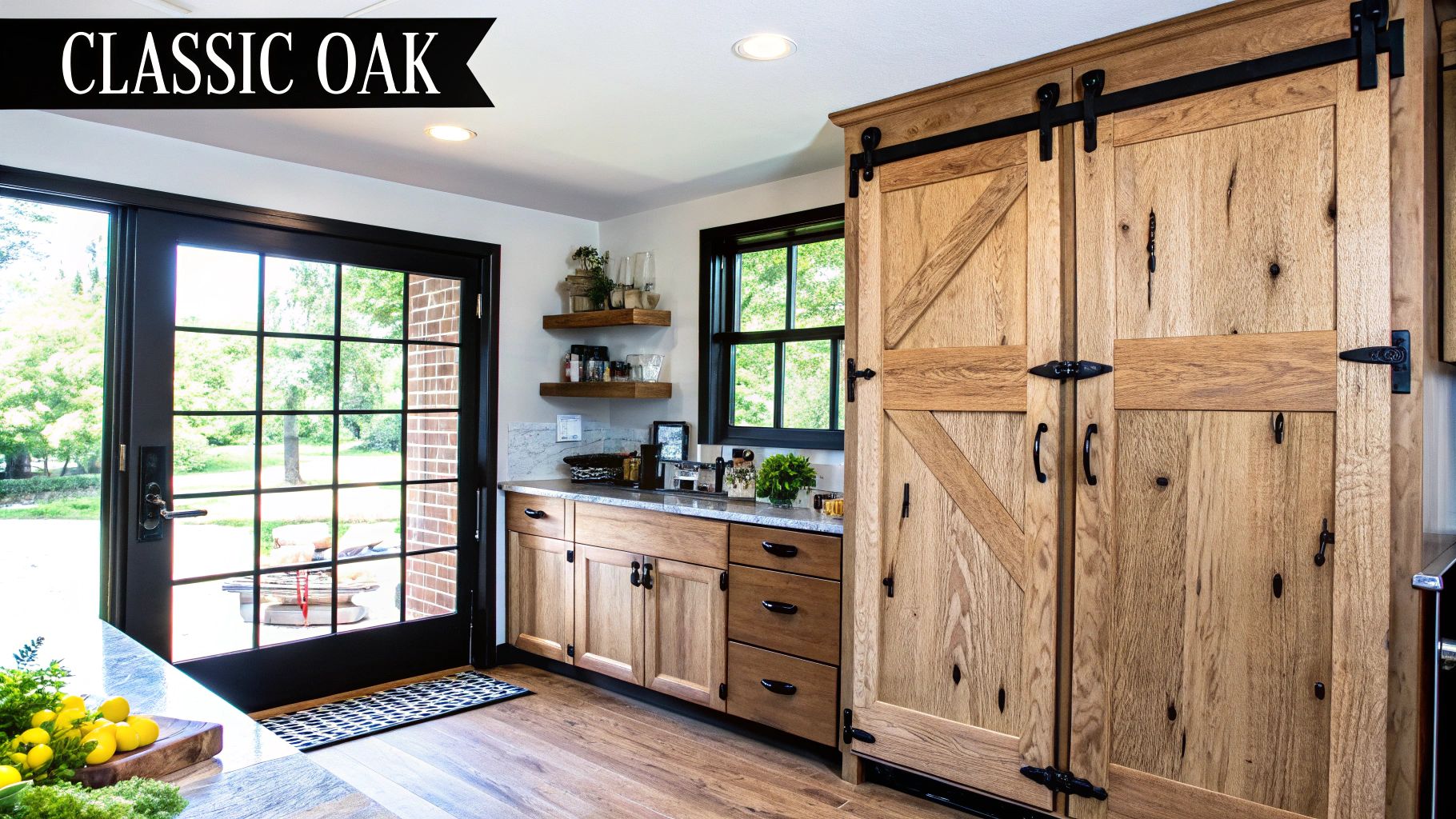
Its signature grain patterns make it a standout choice for specific design aesthetics, particularly traditional American farmhouse, rustic, and Craftsman-style kitchens. Brands like Restoration Hardware and Pottery Barn often feature oak in their collections, celebrating its natural texture and robust feel. The distinctive look of oak has defined kitchen design for generations, making it one of the best wood for kitchen cabinets when a timeless, sturdy appearance is desired.
Why Choose Oak Cabinets?
The primary appeal of oak lies in its durability and distinct, textured appearance. It's a very hard and heavy wood that resists dents, dings, and the general wear and tear of a high-traffic kitchen, ensuring your investment remains beautiful for years. Unlike woods with subtle graining, oak makes a statement; its prominent patterns add visual depth and a natural, organic feel that many homeowners find appealing.
Key Insight: Oak's prominent, open grain pattern is its defining characteristic. This texture is ideal for creating a rustic or traditional look and is often enhanced with stains that highlight the grain's depth and complexity.
For those wanting to learn more about how oak compares to other options, you can explore additional details about wood choices on sinclaircabinets.com. Its strength and traditional aesthetic secure its place as a top contender for kitchen cabinets that need to be both beautiful and hardworking.
Finishing and Installation Tips
Working with oak's pronounced grain requires a specific approach to achieve the best finish, whether you're staining or painting.
- Embrace the Grain: Rather than trying to hide it, use stains that enhance oak’s natural patterns. Darker stains can create a dramatic, sophisticated look, while lighter ones maintain a fresh, airy feel.
- Consider Quarter-Sawn Oak: For a more unique, linear grain pattern with less cathedraling, ask for quarter-sawn oak. This cut produces a straighter grain and adds a refined, almost artisanal look reminiscent of Craftsman-style furniture.
- Use a Tannin-Blocking Primer: Oak is high in tannins, which can bleed through paint and cause yellowing or discoloration over time. Always apply a quality tannin-blocking primer before painting to ensure a clean, stable finish.
When choosing between varieties, remember that white oak is naturally more resistant to moisture and rot than red oak due to its closed-grain structure. This makes it a superior choice for high-humidity areas like kitchens, especially around the sink.
3. Cherry
Cherry is a premium hardwood renowned for its luxurious warmth and sophisticated, smooth-grained appearance. Highly prized for high-end cabinetry, its defining characteristic is a rich, reddish-brown hue that gracefully darkens and deepens over time with exposure to light. This natural aging process, known as patina, gives cherry cabinets an evolving, distinguished character that is impossible to replicate.
Its elegant and uniform texture makes it a staple in traditional, transitional, and formal kitchen designs. You'll find cherry featured prominently in the collections of premium cabinet brands like Thomasville and Wood-Mode, often used to create a sense of timeless opulence. It is a frequent choice for custom cabinetry in Colonial or Georgian-style homes where its classic beauty can be fully appreciated.
Why Choose Cherry Cabinets?
Homeowners and designers select cherry for its unparalleled elegance and rich, inviting color. While it is softer than woods like maple or oak, it is still a durable hardwood that holds up well to the demands of a kitchen environment. Its smooth, closed-grain pattern lends itself to a variety of finishes, from a clear coat that highlights its natural beauty to a darker stain that adds depth and drama.
The most compelling reason to choose cherry is its unique aging process. A freshly installed cherry cabinet might have a lighter, pinkish tone, but it will mature into a deeper, burnished red within months to a year. This natural transformation adds value and a unique, lived-in feel that makes it one of the best wood for kitchen cabinets for those seeking classic charm.
Key Insight: Cherry's most distinctive feature is its photosensitivity. The wood darkens and becomes richer with age and light exposure, a quality that adds depth and character over time. This makes each cherry kitchen a truly unique space that evolves with the home.
For those considering the specific components of their cabinetry, cherry is an excellent material for doors. Its stability and refined grain make it a top choice, and you can learn more about the best wood for cabinet doors on sinclaircabinets.com.
Finishing and Installation Tips
Properly finishing and sourcing cherry is key to maximizing its beauty and ensuring a consistent look. Its fine grain accepts stain well, but its natural color variations require careful consideration.
- Plan for Color Maturation: Be aware that the cherry cabinets you install will not be the same color a year later. Avoid placing permanent objects on new countertops or surfaces that might leave lighter "shadows" on the wood as the surrounding area darkens.
- Match Lumber Lots: To ensure color consistency across your cabinetry, make sure all doors and frames are sourced from the same batch of lumber. Variations between lots can be significant.
- Consider a UV-Inhibiting Finish: If you want to slow the natural darkening process, a finish with a UV inhibitor can help protect the wood from light exposure and maintain its initial color for longer.
- Use Veneer for Cost Savings: For a more budget-conscious approach, consider using cherry veneer on flat panel areas like cabinet sides. This provides the same luxurious appearance at a reduced cost compared to solid cherry throughout.
4. Hickory
Hickory stands out as one of the hardest and most durable domestic woods available for cabinetry, prized for its dramatic grain patterns and striking color variations. As a dense, heavy hardwood, its pronounced character ranges from creamy white sapwood to dark, reddish-brown heartwood, often appearing together on the same board. This rustic charm makes it the perfect wood for kitchens designed to be bold, warm, and full of personality.
Its rugged aesthetic is a staple in design styles that celebrate natural materials and texture. You will commonly find hickory cabinets featured in rustic lodge-style kitchens, Southwestern-themed homes, and cozy country or mountain cabin designs. Its inherent strength and visual depth create a powerful statement that feels both grounded and authentic.
Why Choose Hickory Cabinets?
The primary appeal of hickory is its exceptional hardness combined with its unique visual character. It is significantly harder than oak or maple, offering unparalleled resistance to dents, dings, and the general abuse of a high-traffic kitchen. This makes hickory an outstanding choice for families or anyone seeking cabinets that will endure for decades with minimal signs of wear.
Beyond its durability, hickory's prominent grain and wide color spectrum provide a distinctive, rustic look that cannot be easily replicated. While some may see the color variation as a challenge, others embrace it as the wood's defining feature, creating a one-of-a-kind kitchen full of natural artistry. It is an excellent wood for homeowners who want their cabinets to be a focal point rather than a neutral backdrop.
Key Insight: Hickory's most defining feature is its dramatic and unpredictable variation in color and grain. Unlike the uniform appearance of maple or cherry, hickory delivers a rustic, high-character look that makes each cabinet door unique.
For a quick reference, this summary highlights the core attributes that make hickory a top contender for kitchen cabinets.
- Exceptional Hardness: One of the strongest commercially available domestic woods, ensuring superior durability.
- Pronounced Grain: Features a bold, open grain pattern that adds significant texture and visual interest.
- Color Variation: Displays a dramatic mix of light sapwood and dark heartwood, creating a rustic, calico effect.
These three characteristics, superior hardness, a bold grain, and dramatic color variation, combine to make hickory one of the best wood choices for distinctive and incredibly durable kitchen cabinets.
Finishing and Installation Tips
Working with hickory requires attention to its unique properties, particularly its density and color variations. A well-planned approach ensures a beautiful and lasting result.
- Embrace Natural Character: The best way to finish hickory is often with a clear or light-toned stain that enhances its natural grain and color differences. Trying to achieve a uniform dark stain can be difficult and often masks the wood's best features.
- Plan Your Layout: Before installation, it is wise to arrange your cabinet doors and drawer fronts to create a pleasing distribution of light and dark boards. This step, often called "color sorting," prevents jarring contrasts and creates a more cohesive look.
- Pre-Drill All Holes: Hickory is so hard that it is prone to splitting if you attempt to drive screws or nails directly into it. Always pre-drill pilot holes for all hardware and fasteners to prevent damage to the wood.
When sourcing your material, be prepared for the "calico" appearance. If you desire a slightly more uniform look, some cabinet manufacturers offer a "rustic hickory" grade that includes knots and other character marks, or a more selective grade that minimizes color extremes.
5. Walnut
Walnut is a premium hardwood celebrated for its rich, chocolate-brown color and elegant, flowing grain patterns. Considered one of the most beautiful woods for cabinetry, it offers a sophisticated appearance that works exceptionally well in contemporary and mid-century modern kitchen designs. Its natural warmth and depth create an immediate sense of luxury and refinement, making it a statement piece in any high-end kitchen.
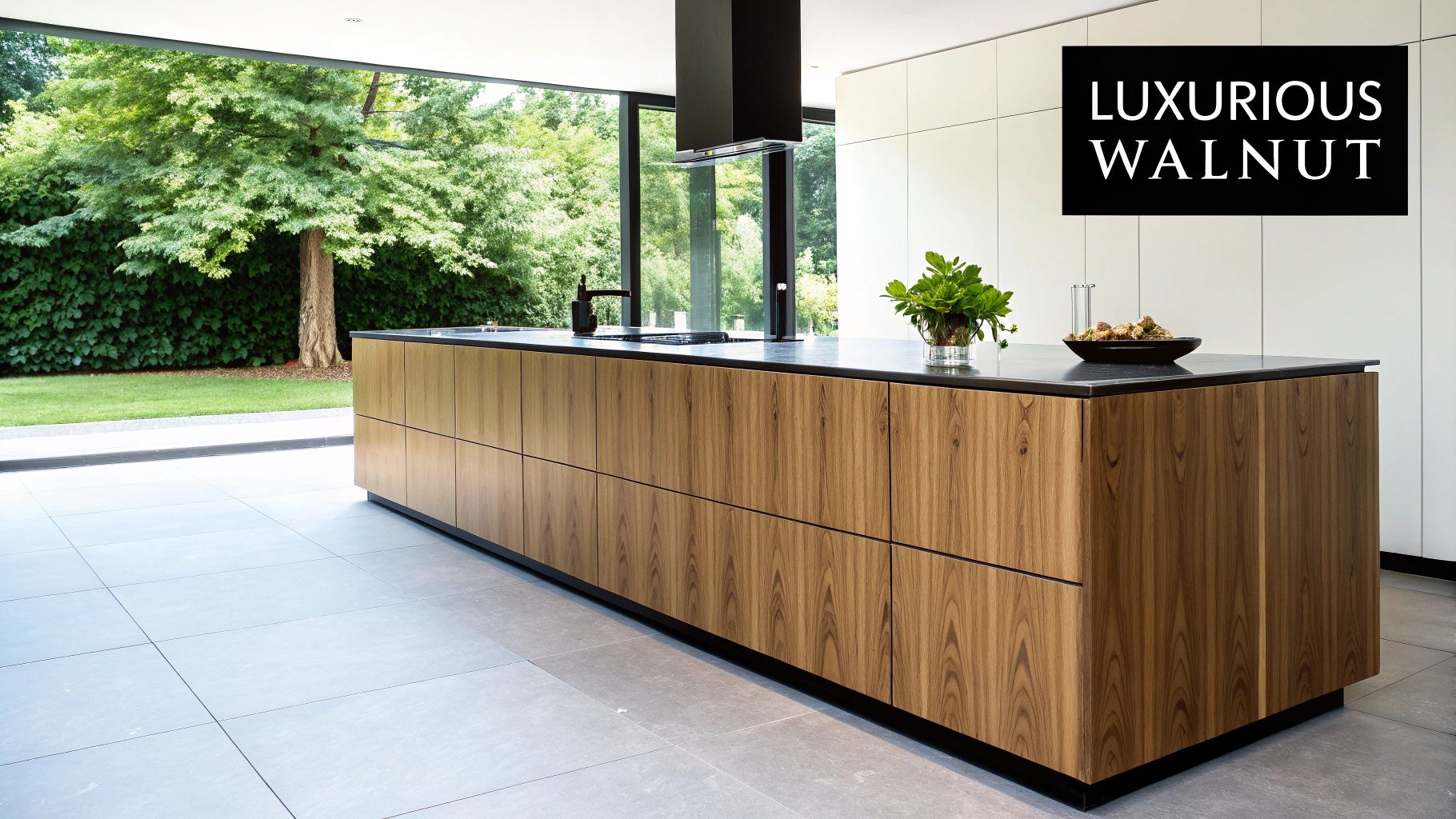
The distinctive look of walnut is often showcased by high-end custom cabinet makers and is a hallmark of luxury home builds. It is particularly popular in mid-century modern restorations, where its organic beauty complements the clean lines and minimalist ethos of the design style. The wood's grain can range from straight to wavy, adding dynamic visual interest.
Why Choose Walnut Cabinets?
Homeowners and designers choose walnut primarily for its unparalleled aesthetic appeal. Its deep, rich tones do not require a dark stain to achieve their signature look; a simple clear coat is enough to enhance its natural beauty. While softer than hard maple or oak, walnut is still a durable hardwood that holds up well in a kitchen environment, resisting dings and everyday use effectively. Its unique color provides a dramatic contrast to lighter countertops and backsplashes, creating a visually stunning focal point. For a detailed breakdown, you can learn more about walnut cabinet wood types and costs on sinclaircabinets.com.
Key Insight: Walnut's defining characteristic is its rich, inherent color and complex grain. Unlike woods that rely on stain for their final look, walnut's beauty is natural, offering a level of authenticity and sophistication that is hard to replicate.
Its unique color profile and graceful grain patterns are what set walnut apart as one of the best wood choices for creating a luxurious and visually captivating kitchen.
Finishing and Installation Tips
To make the most of walnut's natural character, the finishing process should aim to enhance, not conceal, its features.
- Use Clear Finishes: Apply a clear lacquer or oil finish to protect the wood while allowing its natural color and grain to be the star. This approach preserves its authentic look.
- Consider Book-Matched Panels: For a truly dramatic and high-end effect on cabinet doors or island panels, use book-matched walnut slabs. This technique creates a stunning, symmetrical mirror image of the grain pattern.
- Explore Walnut Veneer: To achieve the luxurious look of walnut at a more accessible price point, consider using walnut veneer over a stable substrate like MDF or plywood. This is an excellent option for slab-style doors in modern kitchens.
When working with walnut, remember to protect it from excessive direct sunlight, as UV exposure can cause its rich brown color to lighten over time. Applying a finish with UV inhibitors can help mitigate this effect.
6. Birch
Birch is a highly practical and attractive hardwood that offers a beautiful, light appearance similar to maple but at a more accessible price point. As a strong, fine-grained wood, its smooth surface and uniform texture make it an excellent choice for a variety of kitchen styles, particularly those featuring painted finishes. This affordability and versatility make birch a favorite for homeowners undertaking budget-conscious renovations or extensive DIY projects.
Its value proposition is recognized by many cabinet lines found in home improvement stores and budget-friendly manufacturers who use it extensively. You will frequently see birch used for painted Shaker-style cabinets, where its subtle grain allows the crisp, clean lines of the cabinet design to take center stage without the higher cost associated with maple or other premium woods.
Why Choose Birch Cabinets?
The primary appeal for choosing birch is achieving a high-end look without the premium price tag. It is a durable hardwood that holds up well against the dings and dents of a busy kitchen, offering a reliable and lasting cabinet solution. Its natural color ranges from a creamy pale white to a yellowish-white, providing a bright, clean base that is ideal for paint but can also be stained, though it requires some care to do so evenly.
Key Insight: Birch's biggest advantage is its cost-effectiveness. It delivers much of the same aesthetic appeal and durability as hard maple, making it one of the best wood for kitchen cabinets when balancing a tight budget with a desire for quality hardwood.
For a quick reference, this summary highlights the core attributes that make birch a top contender for kitchen cabinets.
These three characteristics, strong value, a smooth surface, and excellent paintability, combine to make birch one of the most popular and intelligent choices for beautiful yet budget-friendly kitchen cabinets.
Finishing and Installation Tips
To get the best results with birch cabinets, proper surface preparation is key, especially if you plan to paint or stain them. Its grain can sometimes be prone to tear-out during milling and may absorb stain unevenly.
- Prime Thoroughly Before Painting: Always use a high-quality primer before painting. This ensures a smooth, durable finish and prevents the wood's natural tones from bleeding through the paint.
- Sand with Care: Birch sands smoothly, but be careful to avoid creating uneven spots or tear-out. Progress through grits evenly, ending with a fine-grit sandpaper for a flawless surface.
- Consider a Hybrid Approach: To maximize your budget, use solid birch for cabinet doors and frames, but opt for birch plywood for the cabinet boxes. This provides strength where it matters most while reducing overall material costs.
When staining, much like maple, birch can appear blotchy. Using a pre-stain wood conditioner is highly recommended to promote even color absorption.
7. Alder
Alder is often considered a "chameleon" wood in the cabinetry world, prized for its remarkable ability to mimic more expensive hardwoods like cherry and mahogany when stained. As a relatively soft hardwood with a straight, even grain and a uniform, light brown color with reddish undertones, it offers a refined look without the high price tag. This workability and versatile appearance make it an excellent choice for a wide range of kitchen styles, from rustic and traditional to transitional and even contemporary designs.
Its popularity is growing, particularly in mid-range and custom cabinet lines. You’ll often see alder used for cabinets that require a rich, dark finish or a smooth, consistent paint job. Because its grain is less pronounced than oak but has more character than maple, it strikes a perfect balance for homeowners wanting a subtle texture.
Why Choose Alder Cabinets?
The primary appeal of alder lies in its combination of aesthetic flexibility and affordability. It is one of the most workable hardwoods, which means it is easier to shape, sand, and finish, often resulting in lower labor costs for custom cabinetry projects. Its consistent color and minimal grain absorb stains very well, allowing for deep, rich tones that can be difficult to achieve with other woods. For painted cabinets, its smooth surface provides a flawless canvas.
This makes alder one of the best wood choices for kitchen cabinets when you want a high-end look on a more moderate budget. It’s a fantastic material for achieving the warmth of cherry without the associated cost, making luxury designs more accessible.
Key Insight: Alder's key advantage is its finishing versatility. Its fine, consistent grain structure accepts stains with exceptional uniformity, making it the ideal choice for achieving a dark, luxurious finish that emulates pricier woods.
Finishing and Installation Tips
While alder is beautiful and workable, its relative softness requires careful handling during finishing and installation to ensure long-term durability in a busy kitchen.
- Apply a Hard Topcoat: To protect against dents and scratches, always use a durable polyurethane or conversion varnish topcoat. This added layer of protection is essential for high-traffic areas.
- Consider for Painted Finishes: Alder's smooth surface and lack of prominent grain make it an excellent candidate for painted cabinets, yielding a uniform, high-quality finish.
- Use Gel Stains: For achieving a deep and even color, gel stains work wonderfully on alder. They sit on the surface, minimizing any potential for blotchiness and enhancing the wood's natural warmth.
When planning your kitchen, consider using alder for cabinet doors and drawer fronts while pairing them with more robust hardwood for the cabinet boxes. This strategy leverages alder's aesthetic strengths while ensuring the structural integrity of your cabinetry.
8. Pine
Pine is a softwood that brings a warm, rustic charm to kitchen cabinetry, characterized by its prominent grain patterns and distinctive knots. While not as hard as maple or oak, its affordability and unique aesthetic make it an excellent choice for creating a cozy, casual atmosphere. Pine is particularly well-suited for farmhouse, cottage, and country-style designs, where its natural imperfections contribute to an authentic, lived-in feel.
Its popularity is often seen in custom-built and DIY projects, as featured on home renovation shows and by farmhouse style influencers. You'll find it used to create everything from full kitchen cabinet sets to charming accent pieces like a rustic kitchen island or open shelving. Clear pine offers a more uniform look, while knotty pine is celebrated for the character its knots provide.
Why Choose Pine Cabinets?
The primary appeal of pine lies in its ability to create a warm, inviting kitchen at a budget-friendly price point. It is one of the most affordable solid wood options, making it accessible for homeowners looking to achieve a natural wood look without the high cost of hardwoods. Pine is also lightweight and easy to work with, making it a favorite for DIY enthusiasts. Its naturally light, yellowish-white color can be left natural, stained, or even painted to suit various design palettes.
Key Insight: Pine's most defining characteristic is its ability to develop a unique patina over time. As it ages, it tends to darken, and the occasional dents or dings it acquires from daily use add to its rustic charm rather than detract from its beauty.
This ability to age gracefully is what sets pine apart, making it one of the best wood choices for kitchen cabinets intended to have a relaxed, rustic character. For those seeking a pristine, factory-perfect finish, pine may not be ideal, but for a homey, welcoming kitchen, it is a superb contender.
Finishing and Installation Tips
Properly finishing pine is essential to protect it from moisture and wear, especially in a high-traffic kitchen environment. Because it's a softwood, it requires extra care to ensure longevity.
- Seal Knots Before Finishing: The knots in pine can bleed resin over time, which can discolor the final finish. Apply a knot-sealing primer or shellac over each knot before painting or staining.
- Use Multiple Topcoats: To protect the soft surface from scratches and dents, apply several coats of a durable polyurethane or varnish. This protective layer is crucial for cabinetry.
- Consider Its Placement: Because it is softer, pine is an excellent choice for upper cabinets or accent pieces that see less physical contact. If using it for base cabinets, be prepared for it to show signs of wear, which can be part of its rustic appeal.
When choosing your material, decide between knotty pine for a classic rustic look or clear pine for a cleaner, more subtle appearance. Both offer the same workability and affordability, allowing you to tailor the final look to your specific design goals.
Top 8 Woods for Kitchen Cabinets Comparison
| Wood Type | Implementation Complexity 🔄 | Resource Requirements ⚡ | Expected Outcomes 📊 | Ideal Use Cases 💡 | Key Advantages ⭐ |
|---|---|---|---|---|---|
| Maple | Moderate – dense wood requires careful sanding and prep | Moderate – readily available and affordable | Durable, smooth finish with uniform stain absorption | Modern and transitional kitchens | Durable, excellent stain acceptance, clean appearance |
| Oak | Moderate – tannin management and grain handling needed | Moderate – easy to work with traditional tools | Strong, distinctive grain with long-lasting beauty | Traditional, rustic, farmhouse kitchens | Extremely strong, attractive grain, ages well |
| Cherry | Moderate to high – careful handling due to price and denting | High – premium hardwood with limited availability | Rich color that deepens with age, elegant finish | Traditional, formal, luxury kitchens | Beautiful color, smooth grain, premium look |
| Hickory | High – very hard wood, difficult to work | Moderate – mid-range cost but requires sorting | Bold, rustic character with high durability | Rustic, country, lodge-style kitchens | Exceptionally durable, unique appearance |
| Walnut | Moderate – careful handling to avoid dents | High – very expensive and limited availability | Sophisticated, dark rich finish | Contemporary, modern, luxury kitchens | Stunning beauty, upscale, stable wood |
| Birch | Low to moderate – smooth sanding, good for painted finishes | Low – budget-friendly and readily available | Smooth painted surface with good durability | Painted cabinets, budget projects | Affordable, good for paint, smooth grain |
| Alder | Low – soft wood, easy to work and stain | Low to moderate – budget to mid-range | Even stain and consistent appearance | Painted or stained cabinets, budget-friendly | Affordable, excellent stain acceptance |
| Pine | Low – soft wood, easy to work but requires maintenance | Low – very budget-friendly | Rustic, casual look prone to dents | Farmhouse, cottage, rustic kitchens | Very affordable, natural rustic character |
Making the Final Cut: Partnering with an Expert for Lasting Quality
Choosing the material for your kitchen cabinets is one of the most significant decisions you'll make in a kitchen remodel. As we've explored, the journey to finding the best wood for kitchen cabinets is less about finding a single "best" option and more about discovering the ideal match for your specific lifestyle, aesthetic preferences, and budget. Your kitchen is the heart of your home, and the wood you select sets the entire tone, influencing everything from daily durability to long-term property value.
Let's recap the essential takeaways from our deep dive into the top wood contenders. We've seen how the clean, uniform grain of Maple offers a perfect canvas for modern paints and stains, while the pronounced, traditional patterns of Oak provide timeless character and exceptional resilience. For those seeking luxury, the rich, darkening patina of Cherry and the deep, complex elegance of Walnut deliver unparalleled sophistication.
On the other hand, if your priority is rugged durability with a rustic flair, the distinctive color variations and robust nature of Hickory make it a standout choice. For homeowners navigating tighter budgets, Birch and Alder present compelling alternatives, offering the look of more premium woods with excellent finishing capabilities. And we can't forget Pine, which brings a cozy, knotty charm perfect for farmhouse or cottage-style kitchens.
From Wood Selection to Flawless Installation
Ultimately, the perfect wood choice is a balance. It's about weighing the hardness and dent resistance needed for a bustling family kitchen against the visual warmth you desire. It’s about understanding how a wood like Cherry will mature over time versus how a stable wood like Maple will hold a painted finish.
Key Insight: The success of your project doesn't end with selecting the wood. The most beautiful, durable wood can be undermined by poor craftsmanship. The quality of construction, the precision of the finish, and the skill of the installation are what transform raw timber into a functional and breathtaking kitchen.
This is where the partnership with a skilled professional becomes invaluable. A master cabinet maker or a seasoned kitchen designer can provide physical samples, explain the nuances of grain patterns under different lighting, and guide you toward a choice that truly aligns with your vision. They bridge the gap between an idea and a tangible, lasting result. To ensure your cabinet choice translates into lasting quality, partnering with the right professional is key, which includes knowing how to find a trusted contractor who can execute your vision with precision and care.
Your Final Decision Checklist
As you move forward, use this final checklist to solidify your choice:
- Aesthetic Harmony: Does the wood’s grain, color, and character complement your home's architectural style, flooring, and countertops?
- Lifestyle Durability: Does the wood's hardness (Janka rating) and grain structure align with your household’s activity level? Will it stand up to kids, pets, and frequent use?
- Finishing Goals: Are you planning a rich stain, a solid paint color, or a natural finish? Ensure your chosen wood is well-suited for your desired look.
- Budget Reality: Have you accounted for the full cost, including material, construction, finishing, and professional installation?
Investing time in this decision-making process ensures your new kitchen cabinets will not only look stunning on day one but will also continue to bring you joy and functional excellence for decades to come. Your cabinets are a long-term feature of your home, and making an informed, confident choice is the first step toward creating a space you’ll love.
Ready to bring your vision to life with expertly crafted cabinets? The artisans at Sinclair Cabinetry inc specialize in transforming premium woods into stunning, custom cabinetry that forms the foundation of a beautiful kitchen. Explore their portfolio and discover how they can tailor the perfect wood choice to your unique style at Sinclair Cabinetry inc.