
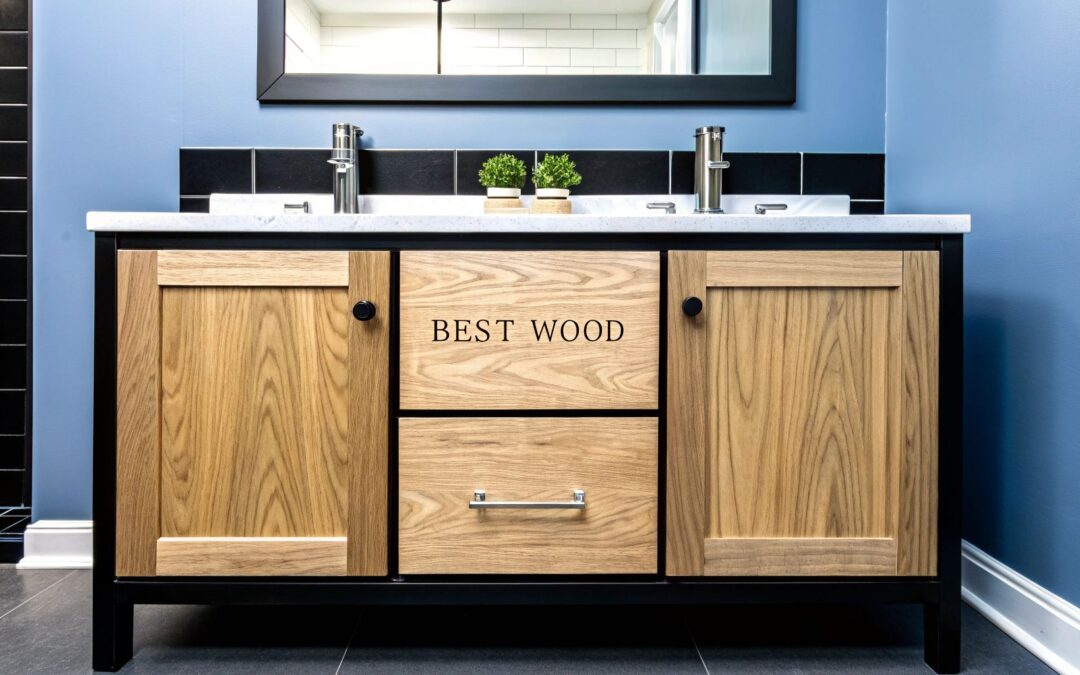
When you're on the hunt for the best wood for your bathroom cabinets, the conversation usually circles back to two main camps. You have your solid hardwoods like Oak, Maple, and Cherry, which are known for their sheer durability, and then you have engineered woods like high-quality plywood, which really shine when it comes to handling moisture. The right choice for you will come down to balancing how well the wood performs in a steamy bathroom with the look and budget you have in mind.
Why Wood Is Still the Go-To for Bathroom Vanities
Picking out cabinets for a bathroom remodel is tricky. You're dealing with constant humidity and moisture, which can be tough on any material. Even so, wood remains the top choice for its incredible warmth, timeless style, and amazing design flexibility. Its popularity isn't just about looks; it's about performance.
Wood is, by far, the most popular material for bathroom cabinets around the world, and for good reason. It’s expected to make up up to 58.28% of the market share in the bathroom cabinet sector by 2025. That number alone speaks volumes about its unique blend of beauty, versatility, and toughness when it's treated the right way. You can dig deeper into the stats on wood's dominance in the cabinet market to see for yourself.
Key Factors for Choosing the Right Wood
Getting this right is about more than just finding a pretty grain. A few key factors will determine how well your cabinets hold up over the years:
- Moisture Resistance: How well does the wood stand up to water? You want something that resists warping or swelling.
- Durability: This is all about hardness and the wood's ability to handle the daily grind without getting banged up.
- Dimensional Stability: Wood naturally expands and contracts with changes in temperature and humidity. How much it moves is a big deal in a bathroom.
- Finishing Potential: Some woods take stains, paints, and protective sealers better than others, which is critical for protection.
The secret to wood cabinets that last isn't just picking the right species. It's making sure they're perfectly sealed with a high-quality, water-resistant finish. In this guide, we’ll walk through the best options—from solid hardwoods to engineered woods—so you can make a choice you feel great about.
Wood Options at a Glance
To make things a bit simpler, here’s a quick breakdown of the two main categories you'll be looking at.
| Category | Best For | Key Advantage | Primary Consideration |
|---|---|---|---|
| Solid Hardwood | Stained finishes, traditional or classic designs | Unmatched natural beauty and grain patterns | Can be prone to warping if not properly sealed and maintained |
| Engineered Wood | Painted finishes, modern or contemporary styles | Excellent dimensional stability and moisture resistance | Quality varies greatly; premium grades are essential for bathrooms |
Solid Hardwood vs. Engineered Wood in Humid Spaces
Before you even start thinking about specific wood species, there's a more fundamental decision to make. It’s the classic matchup: solid hardwood versus engineered wood. This choice isn't just about looks; it's the foundation of your cabinet's longevity, especially in the steamy, challenging environment of a bathroom.
Each material handles moisture and temperature swings differently, so getting this right from the start is critical. Solid hardwood has a timeless, authentic appeal that's tough to beat. The natural grain patterns and rich textures just feel luxurious and substantial. But it's a natural material, and like all wood, it "breathes"—expanding and contracting as humidity levels rise and fall. In a bathroom, that movement can lead to warping or cracking if it’s not managed perfectly.
Engineered wood, on the other hand, was created specifically to solve this problem. It’s all about stability. The two main players in this category are high-quality plywood and Medium-Density Fiberboard (MDF), and each brings something different to the table.
The Stability of Plywood
When we talk about plywood for cabinets, we mean furniture-grade stuff—not what you’d find at a big-box construction aisle. It’s made by gluing thin layers of wood veneer (called "plies") together, with the grain of each layer running perpendicular to the one below it.
This cross-laminated structure gives it incredible dimensional stability. It’s engineered to fight wood's natural tendency to swell, shrink, and warp, making it a fantastic choice for the cabinet "box" or carcass. The crisscrossing grain works like woven fabric, creating a rigid and reliable sheet that keeps your cabinet doors aligned and drawers running smoothly, even after a long, hot shower.
The Smooth Finish of MDF
Medium-Density Fiberboard (MDF) is a different beast altogether. It’s made by breaking down wood residuals into fine fibers, mixing them with wax and resin, and then pressing them into dense panels under extreme heat and pressure. The result is a perfectly uniform material with zero wood grain.
Because it’s so flawlessly smooth, MDF is the ideal canvas for painted, lacquered, or thermofoil finishes. You'll never have to worry about wood grain "telegraphing" through the paint, which ensures a crisp, consistent look that’s perfect for modern and contemporary designs.
Key Insight: The big trade-off here is between the unmatched natural beauty of solid wood (and its potential for movement) versus the superior stability and perfect finish of engineered materials. Often, the best solution is a hybrid—using ultra-stable plywood for the cabinet boxes and then choosing either solid wood or MDF for the doors, depending on whether you want a stained or painted look.
While picking the right wood is a huge step, remember that managing your bathroom's climate will make any cabinet last longer. It’s worth checking out some expert tips for controlling indoor humidity.
Ultimately, it comes down to balancing performance with your personal style. If you dream of a rich, stained finish that celebrates natural wood character, solid hardwood doors are the only way to go. But if you’re after a sleek, flawless painted look, MDF is almost always the smarter and more stable choice.
Comparing The Best Wood Species For Cabinetry
Picking the right wood for your bathroom cabinets is a big deal. You're not just choosing a look; you're choosing how well your investment will hold up against the daily onslaught of steam, splashes, and humidity. It’s a decision that pits beautiful aesthetics against brute performance, and not every wood is up for the challenge.
Let's break down the real-world differences between the top contenders: Oak, Maple, Cherry, Birch, and Teak. We'll get into how they actually handle moisture, their long-term durability, what they bring to the table design-wise, and of course, the cost.
This is about giving you the practical insights to choose a material that not only looks stunning on day one but continues to perform for years to come.
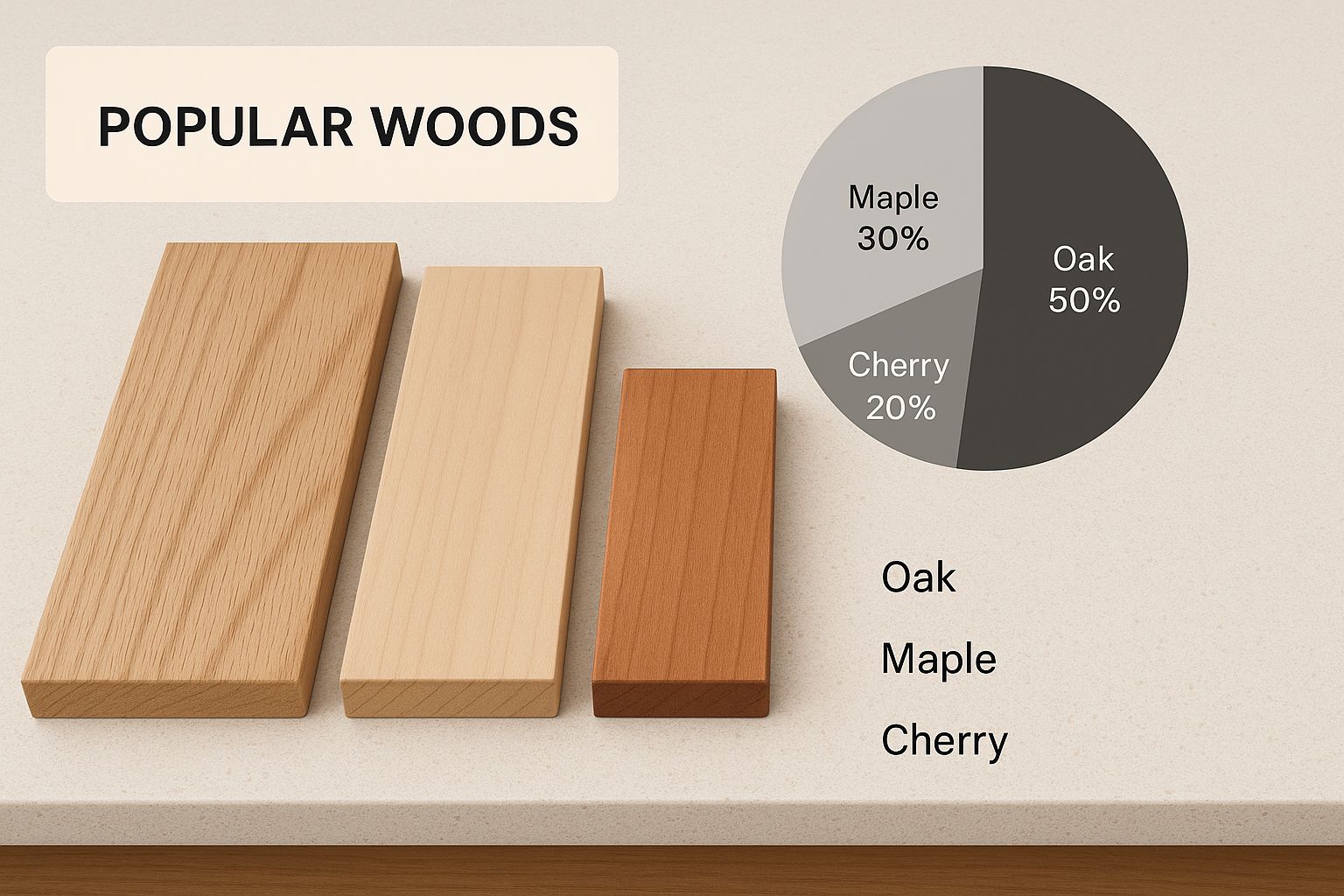
As you can see, the visual differences are striking. From the bold, textured grain of Oak to the silky-smooth finish of Maple, each wood has a distinct personality that can define the entire feel of your bathroom.
Oak: The Resilient Classic
There's a reason Oak has been a cabinetry staple for generations. It's a dense, tough hardwood that can take the bumps and knocks of a busy family bathroom without flinching. You’ll find it in two main varieties: Red Oak, which has warm, pinkish undertones, and White Oak, which leans cooler with gray-green hues. This gives you some great design flexibility right from the start.
What really defines Oak is its prominent, open grain. This pronounced texture is a huge plus for high-traffic bathrooms because it does a fantastic job of hiding minor scratches and dings. The flip side is that this same deep grain needs an absolutely bulletproof seal to keep moisture out. A top-notch, multi-coat finish isn't just a suggestion here—it's a requirement.
Maple: The Smooth Modernist
If your vision board is filled with clean lines and a sleek, contemporary vibe, Maple should be at the top of your list. It’s known for its incredibly fine, uniform grain and creamy light color that instantly makes a space feel brighter and more open.
That minimal texture makes Maple a perfect canvas for paints and light stains, resulting in a smooth, flawless surface that’s hard to beat. It’s also one of the hardest and most durable woods you can choose. The only catch? Its dense, light-colored surface can make dark stains look blotchy unless they're applied by an expert.
Cherry: The Elegant Choice
Cherry just screams luxury. With its rich, reddish-brown color and smooth, closed grain, it brings an immediate sense of sophistication to a bathroom. But its most prized trait is the way it ages. With time and exposure to light, Cherry deepens into a gorgeous, rich patina that adds incredible character.
While it’s a solid hardwood, Cherry is a bit softer than Oak or Maple, so it can be more prone to dents in a really high-traffic zone. It sits at a higher price point, but if you’re creating a timeless, elegant bathroom, Cherry is an investment that pays off in pure style.
Birch: The Versatile Workhorse
Think of Birch as Maple's more budget-friendly cousin. It's a strong, pale hardwood with a similar fine grain that gives it a clean, smooth appearance. This makes it another fantastic candidate for painted finishes, but it can also be stained to mimic more expensive woods like Maple or even Cherry.
Birch is a durable wood that holds up well in a bathroom setting. Just like Maple, however, it can get a bit blotchy with dark stains, so professional finishing is key. For anyone wanting that fine-grained hardwood look without the premium price tag, Birch is a smart and versatile pick. If you're weighing all your options, our guide on the best material for bathroom cabinets dives into other alternatives you might consider.
Teak: The Moisture-Defying Champion
When it comes to pure, raw performance in a wet environment, Teak is in a league of its own. This tropical hardwood is naturally loaded with protective oils and silica, which make it incredibly resistant to water, mold, and rot. It's the same reason shipbuilders have used it for centuries to build boat decks.
Key Differentiator: Teak's natural oils create a protective barrier from the inside out, actively repelling moisture. This makes it the ultimate choice for a spa-like master bathroom or any space with constant high humidity. No other wood provides this level of built-in defense.
Teak boasts a beautiful golden-brown hue and a classic straight grain. That incredible water resistance comes with a hefty price tag, making it the most expensive option here. But if the budget allows and your number one priority is bulletproof longevity, Teak is the undisputed king. If you want to see just how tough it is, you can discover why teak is a preferred wood for demanding environments that face conditions far harsher than any bathroom.
Comparative Analysis of Wood Species for Bathroom Cabinets
To help pull all this information together, here’s a side-by-side look at how these woods stack up against each other. Think about what matters most for your project—is it bomb-proof durability, a specific look, or staying on budget?
| Wood Species | Moisture Resistance | Durability (Janka Hardness) | Appearance & Grain | Cost Index |
|---|---|---|---|---|
| White Oak | Good (when sealed) | High (1360) | Pronounced, open grain | $$$ |
| Maple | Good (when sealed) | Very High (1450) | Fine, uniform grain | $$$$ |
| Cherry | Moderate (needs excellent sealing) | Medium (950) | Smooth, closed grain, darkens with age | $$$$$ |
| Birch | Moderate (needs excellent sealing) | High (1260) | Fine grain, similar to Maple | $$ |
| Teak | Excellent (naturally oily) | Medium (1070) | Straight grain, golden-brown | $$$$$$ |
As you can see, each wood offers a unique trade-off between performance, looks, and price. Your final decision will come down to balancing these practical needs with your personal style and what you’re willing to invest.
Why Engineered Woods Are a Smart Alternative
Look, the classic appeal of solid hardwood is hard to deny. But let's be realistic—the "best wood" for a bathroom vanity isn't always a single solid plank. Engineered woods have come a long way from their early days, and now they offer some serious advantages that often blow solid wood out of the water in a bathroom's humid, high-stakes environment.
Think of them less as a compromise and more as a strategic upgrade. Materials like furniture-grade plywood and moisture-resistant Medium-Density Fiberboard (MDF) were literally invented to solve the exact problems that make solid wood a liability in damp spaces: warping, swelling, and cracking. Their stability is what makes modern, long-lasting cabinetry possible.
The Structural Superiority of Plywood
Every great cabinet starts with a solid box, or carcass. This is where furniture-grade plywood really shines. It’s made by bonding thin layers of wood veneer together, with the grain of each layer running perpendicular to the next. This cross-grain construction creates incredible dimensional stability.
This isn’t just a minor perk; it's a total game-changer for bathroom cabinets. In a room where a single hot shower can send humidity levels soaring, plywood cabinet boxes stay square and true. That means your doors will hang correctly and your drawers will glide smoothly for years to come, keeping the whole vanity structurally sound.
Real-World Application: A hybrid approach is almost always the smartest strategy. Use furniture-grade plywood for the cabinet carcass to build a strong, stable foundation. It gives you a warp-resistant core that can handle daily humidity swings without batting an eye.
The Flawless Finish of High-Quality MDF
When you’re after a perfect, sleek painted finish, Medium-Density Fiberboard (MDF) is the undisputed champ. MDF is made by breaking down wood fibers, mixing them with wax and resin, and then pressing them into dense, uniform panels. The result? A perfectly smooth surface with no grain, knots, or imperfections.
This ultra-smooth surface is the ideal canvas for paint or lacquer. Unlike solid wood, where the grain can sometimes "telegraph" through a painted finish over time, MDF gives you a flawless, consistent look. It also doesn't expand and contract like solid wood, which means you won't see those annoying hairline cracks appear at the joints of a painted door after a few seasons.
A Hybrid Approach for a Perfect Bathroom Vanity
The best cabinetmakers know how to play to each material's strengths. A hybrid strategy gives you the best of both worlds: unwavering structural integrity and a perfect aesthetic finish. This is the combination you should be asking for:
- Cabinet Box: Use ¾-inch furniture-grade plywood for its superior strength and moisture resistance. This creates an unshakeable foundation for your vanity.
- Cabinet Doors & Drawer Fronts: If you want a painted finish, go with high-quality, moisture-resistant MDF. It guarantees a smooth, durable surface that will look brand new for years.
There's a reason this combination is a professional standard. You get the rugged, moisture-fighting structure of plywood where it counts, paired with the perfect finishing surface of MDF on all the parts you see every day. It’s a smart, practical way to build a beautiful bathroom vanity that's truly engineered to last.
How Protective Finishes Ensure Cabinet Longevity
Picking the right wood for your bathroom vanity is only half the battle. Even the toughest, most water-resistant wood species is vulnerable in a humid bathroom without a top-notch protective finish. Think of the finish as an impermeable shield, its sole job being to block water vapor from ever touching the wood. Without it, you're looking at swelling, warping, and eventually, rot.
This isn't just a simple top coat; it’s a complete defense system. A high-quality finish has to be tough enough to handle daily wear and tear, flexible enough to move with the wood's natural expansion and contraction, and chemically resistant to common bathroom cleaners. Skipping on a quality finish is like building a beautiful boat but forgetting to make it waterproof.
Comparing High-Performance Finishes
Not all finishes are created equal, especially when they’re up against the steam and splashes of a bathroom. Basic lacquers or shellacs that work fine in a living room will fail spectacularly here. For this demanding environment, you need to look at the professional-grade options.
- Polyurethane: A durable, plastic-like polymer that forms a hard, water-resistant shell. It’s widely available and offers good protection, but oil-based versions can sometimes yellow over time.
- Catalyzed Lacquer: This is a step up from standard lacquer. It's a fast-drying finish that’s harder and more durable, offering solid moisture resistance and a smooth look. It’s a good middle-ground, but it can't quite match the performance of conversion varnish.
- Conversion Varnish: When it comes to bathroom cabinetry, this is the undisputed champ. It’s a two-part, chemically cured finish that creates an exceptionally hard, non-porous barrier. It's incredibly resistant to moisture, chemicals, and scratches.
Professional Insight: There's a reason conversion varnish is the industry standard for high-end custom cabinetry. Its chemical cross-linking process creates a finish that is up to 40% more solids by volume than pre-catalyzed lacquers. The result is a tougher, more water-tight seal that stands up to the demands of a high-traffic family bathroom.
The longevity of your cabinets hinges on these protective finishes, which operate on similar principles to how a specialized barrier provides the principles of protective barriers and stain protection. This invisible shield is your cabinet's first and last line of defense.
What to Ask Your Cabinet Maker
A premium finish is only as good as its application. To make sure your investment is truly protected, you need to have a direct conversation with your cabinet maker. Simply asking if the cabinets are "sealed" just doesn't cut it. You need to dig into the details.
Here are the key questions to ask:
- Which type of finish do you use? Don't be shy—specifically ask if they use conversion varnish and why.
- How many coats are applied? A professional process should involve a sealer coat followed by at least two top coats for a durable build.
- Are all surfaces fully sealed? This is a deal-breaker. Every single surface—the backs, the bottoms, and especially the cut edges for sinks and plumbing—must be completely sealed. Any exposed wood is an invitation for moisture to wick in.
When applied correctly, a high-performance finish not only protects your cabinets but also makes them far easier to clean and maintain. For day-to-day care, our guide on how to clean wood cabinets has practical tips to keep your finish looking brand new for years.
Matching Your Wood Choice to Your Bathroom Style
Choosing the best wood for your bathroom cabinets goes way beyond just the technical specs and how well it handles moisture. Your final decision has to feel right for the room's overall vibe, turning what could be a purely functional space into your own personal sanctuary. The material you pick really sets the tone for everything else, so it’s crucial to make sure its natural character lines up with your design vision.
If you’re drawn to a classic or rustic style, for example, the warmth and texture of natural wood is what makes the whole look come together. Stained Oak, with its bold and unmistakable grain, is a fantastic choice here. It brings a timeless, sturdy feel that’s both authentic and inviting, making it a perfect match for farmhouse or traditional decor.
But what if you're aiming for something sleek and modern? For a minimalist bathroom, the visual focus shifts to clean lines and smooth, unbroken surfaces. In that case, the heavy grain of Oak might feel a bit too busy and distracting. A wood with a finer, more subtle texture is going to be your best friend.
Creating a Contemporary Look
For that contemporary aesthetic, Maple with a clear or light-toned finish is an absolute winner. Its fine, uniform grain creates a clean, bright backdrop that opens up the room and makes it feel more spacious. You still get the warmth of real wood, but it doesn't overpower the minimalist design.
Another excellent route for modern bathrooms is painted MDF. Since it has no wood grain at all, you get a perfectly smooth, monolithic surface that’s ideal for a flawless coat of paint. A crisp white or even a bold, dramatic color on MDF doors can create a stunning, high-impact statement.
Style-Driven Selection: Let your desired aesthetic be your guide. For a seamless, modern look, go for woods with a fine grain like Maple or the perfect canvas of painted MDF. For a textured, classic feel, lean into the rich character of a pronounced grain like Oak.
Designing for Luxury and Durability
When you’re designing a luxurious primary suite or a spa-like retreat, performance and aesthetics carry equal weight. This is where a premium material like Teak really shines as the ultimate choice. Its natural water resistance and rich, golden glow lend an unmatched sense of opulence that’s built to last.
Ultimately, the best wood for your bathroom is one that performs perfectly while also reflecting your personal style. Think beyond just the material itself and consider how the cabinet design fits with the room’s layout. Planning around practical details like the average height of bathroom vanity ensures that both form and function are working together. Taking this kind of holistic approach will help you land on the ideal wood that fits your budget, style, and long-term needs—creating a space you’ll love for years to come.
Answering Your Top Bathroom Cabinet Questions
Even after you’ve narrowed down your choices, a few questions always pop up before making the final call on bathroom cabinets. Getting straight, practical answers is the best way to move forward with confidence. Let’s tackle some of the most common queries we hear from homeowners.
Can I Use a Softer Wood Like Pine?
While the rustic charm of a softer wood like Pine is undeniable—and it’s certainly friendly on the wallet—it's just not a great match for a high-moisture bathroom. Pine has a low Janka hardness rating, which is a fancy way of saying it dents and scratches very easily.
Even with a top-notch protective finish, that inherent softness is its weak point. One good knock can compromise the seal, letting moisture seep in and cause swelling, or worse, rot. For a room that sees daily steam and splashes, sticking with hardwoods or premium engineered woods is a much smarter investment for the long haul.
What’s the Difference Between Water-Resistant and Waterproof?
People often use these terms as if they mean the same thing, but in the world of cabinetry, the distinction is huge. Knowing the difference helps set the right expectations for how your vanity will perform.
- Water-Resistant: This means the material can handle moisture exposure for a limited time. A properly sealed wood cabinet is water-resistant. It’ll shrug off splashes and humidity, but if you let a puddle of water sit on it for hours, you're eventually going to see damage.
- Waterproof: This is a whole other level. Waterproof materials are completely immune to water, no matter how long the exposure. Think PVC or solid surface composites. No natural wood is ever truly 100% waterproof.
The Real Goal: With wood cabinetry, the aim is to achieve the highest level of water resistance possible. This comes from picking a dense wood species and coating it with a superior, multi-layer protective finish.
How Can I Spot Moisture Damage on My Wood Cabinets?
Catching the early warning signs of moisture damage can save you from a much bigger headache down the road. It’s a good idea to give your cabinets a quick check every so often, especially around the sink and plumbing where leaks are most likely to start.
Here’s what to look for:
- Discoloration or Dark Spots: These usually show up first along the bottom edges of doors or at the cabinet base where water tends to pool.
- Bubbling or Peeling Finish: This is a dead giveaway that moisture has gotten past the top coat and is starting to affect the wood itself.
- Swollen or Warped Wood: Are the doors not closing quite right anymore? Do the joints look like they’re pulling apart? That’s a clear sign of swelling.
- Mold or Mildew: A musty smell or any visible mold spots, particularly inside the cabinet, means you have a persistent moisture problem that needs immediate attention.
Should I Go with Stock, Semi-Custom, or Custom Cabinets?
The best choice here really boils down to your budget, your timeline, and the specific quirks of your bathroom layout. Each option strikes a different balance between cost, flexibility, and quality.
Stock cabinets are your most affordable, off-the-shelf option. They’re quick to get but come in standard sizes with very few style choices. If you have a uniquely shaped bathroom, custom cabinets are the perfect solution. They are built from scratch to your exact measurements, giving you total design freedom and the highest possible quality. Semi-custom cabinets hit that sweet spot in the middle—you get more sizes and finishes than stock, but without the premium price tag of a fully custom job.
For a truly personalized solution that combines premium materials with expert craftsmanship, Sinclair Cabinetry inc specializes in building custom wood cabinets designed to withstand the unique challenges of any bathroom. Explore our custom bathroom vanity options to create a piece that is both beautiful and built to last.