

I've heard it a thousand times: "What's the best closet system?" People often expect me to rattle off brands like IKEA PAX or The Container Store's Elfa system. And while those are fantastic, flexible options, the real answer is that the best system is the one designed around your specific wardrobe. A high-end custom built-in might be perfect for one person, while a modular setup is ideal for another.
The secret isn't in the product you buy; it's in the prep work you do before you even spend a dollar.
Assess Your Space Before You Buy Anything
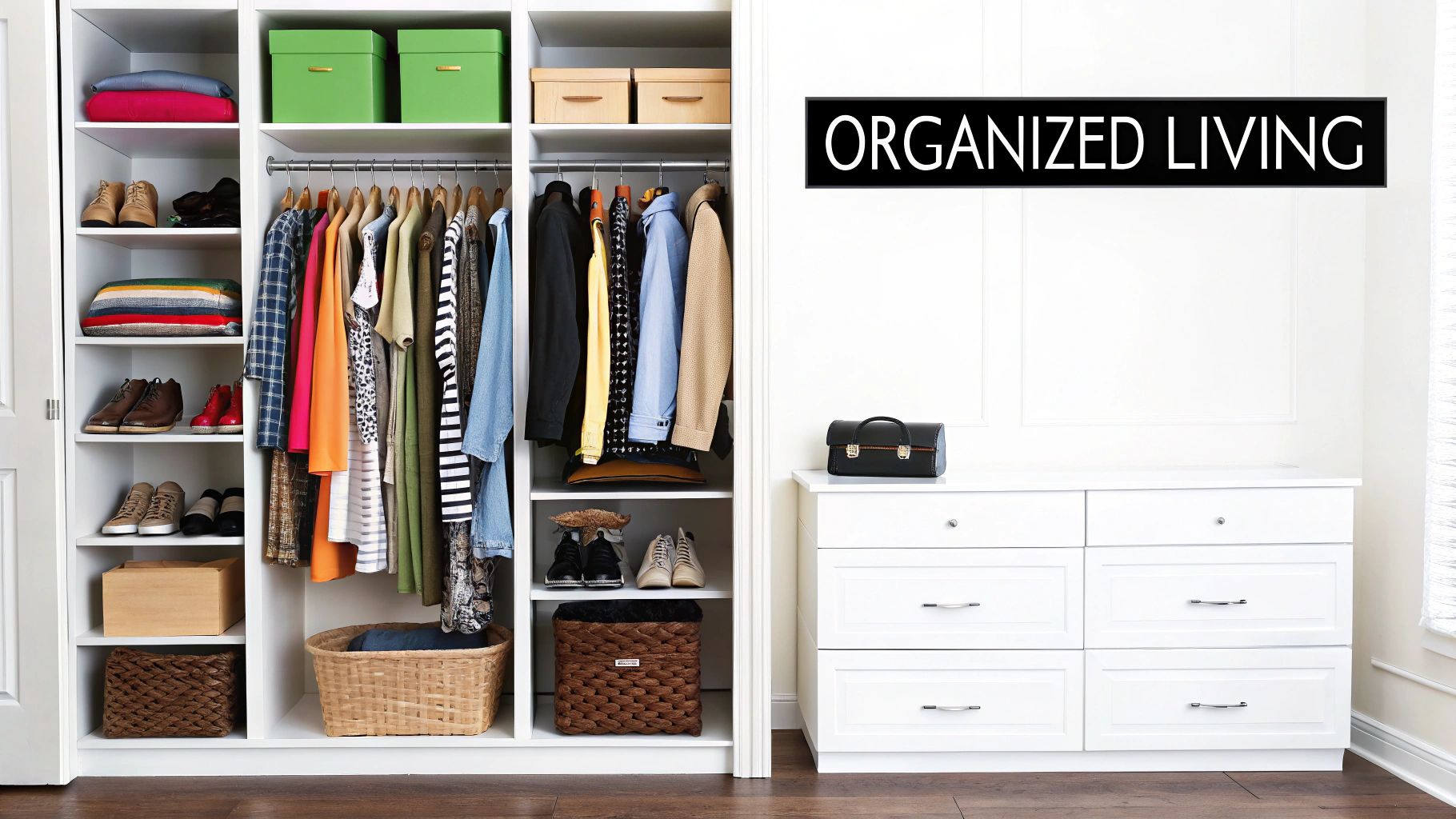
Before you start pinning dream closets on Pinterest, you have to get real about what you're working with. A new organizer can't fix a clutter problem on its own—it will just give your clutter a fancier home.
So, the first, non-negotiable step is to pull everything—and I mean everything—out of your closet. Pile it all on the bed. Yes, it’s going to look like a disaster for a little while, but this process gives you a clean slate and a brutally honest look at your inventory.
Once the space is empty, sort every single item into three piles: keep, donate, or discard. Be ruthless. If you haven't worn something in over a year or it just doesn't fit your life anymore, it's time to let it go. This single action is the foundation for a truly organized space.
Take a Practical Wardrobe Inventory
Now, turn your attention to the 'keep' pile. This isn't just about cramming things back in. It's about taking stock of what you actually own and how it needs to be stored. Start grouping similar items together—all your long-sleeve shirts in one stack, trousers in another, dresses, and so on.
Then, get specific with a few key counts:
- Hanging Items: Count how many short-hang items (shirts, blouses, jackets) you have versus long-hang items (dresses, coats, long skirts). This tells you whether you'll benefit more from double-hang rods or need dedicated full-length space.
- Folded Garments: Get a real tally of your sweaters, jeans, and t-shirts that are better off folded. This number directly informs how much shelving or drawer space you need.
- Shoes and Accessories: Don't forget about your shoes, belts, scarves, and handbags. Each of these categories needs its own kind of storage solution, whether it's slanted shoe shelves, drawer dividers, or hooks.
This detailed inventory is what keeps you from buying a generic system that doesn't actually solve your problems. You might be surprised to find you need way more shelf space for your massive sweater collection than you do hanging room.
To make this easier, I've put together a simple checklist. Grab a clipboard and get counting.
Closet Inventory Checklist
Use this checklist to inventory your clothing and accessories so you can choose a system with the right storage components.
| Item Category | Quantity | Preferred Storage (Hang, Fold, Drawer, Shelf) |
|---|---|---|
| Short-Sleeve Shirts | ||
| Long-Sleeve Shirts | ||
| Sweaters | ||
| Trousers/Pants | ||
| Jeans | ||
| Dresses | ||
| Skirts | ||
| Coats/Jackets | ||
| Shoes (Pairs) | ||
| Belts | ||
| Scarves | ||
| Handbags | ||
| Other |
Once you have these numbers, you'll have a much clearer picture of what your ideal closet system needs to include.
Measure Your Closet with Precision
With your inventory complete and the closet empty, it's time to grab a tape measure. You need the exact dimensions: wall-to-wall width, floor-to-ceiling height, and the overall depth. Most importantly, don't forget to account for any obstructions.
Make a note of anything that could interfere with your new system. This includes light fixtures, electrical outlets, thermostats, or even the swing of the closet door. Ignoring these small details can lead to major installation headaches later on.
For a deeper dive into planning your layout, you can explore this ultimate guide to walk-in closet dimensions for some expert tips. Getting your measurements and inventory right from the start ensures your investment is a smart one, putting you in good company. The global closet organizers market, valued at approximately USD 4,033.3 million in 2025, is projected to grow to USD 8,529.7 million by 2035. This trend shows just how many people are realizing the value of smart, organized storage.
Choosing Your Ideal Closet System Type
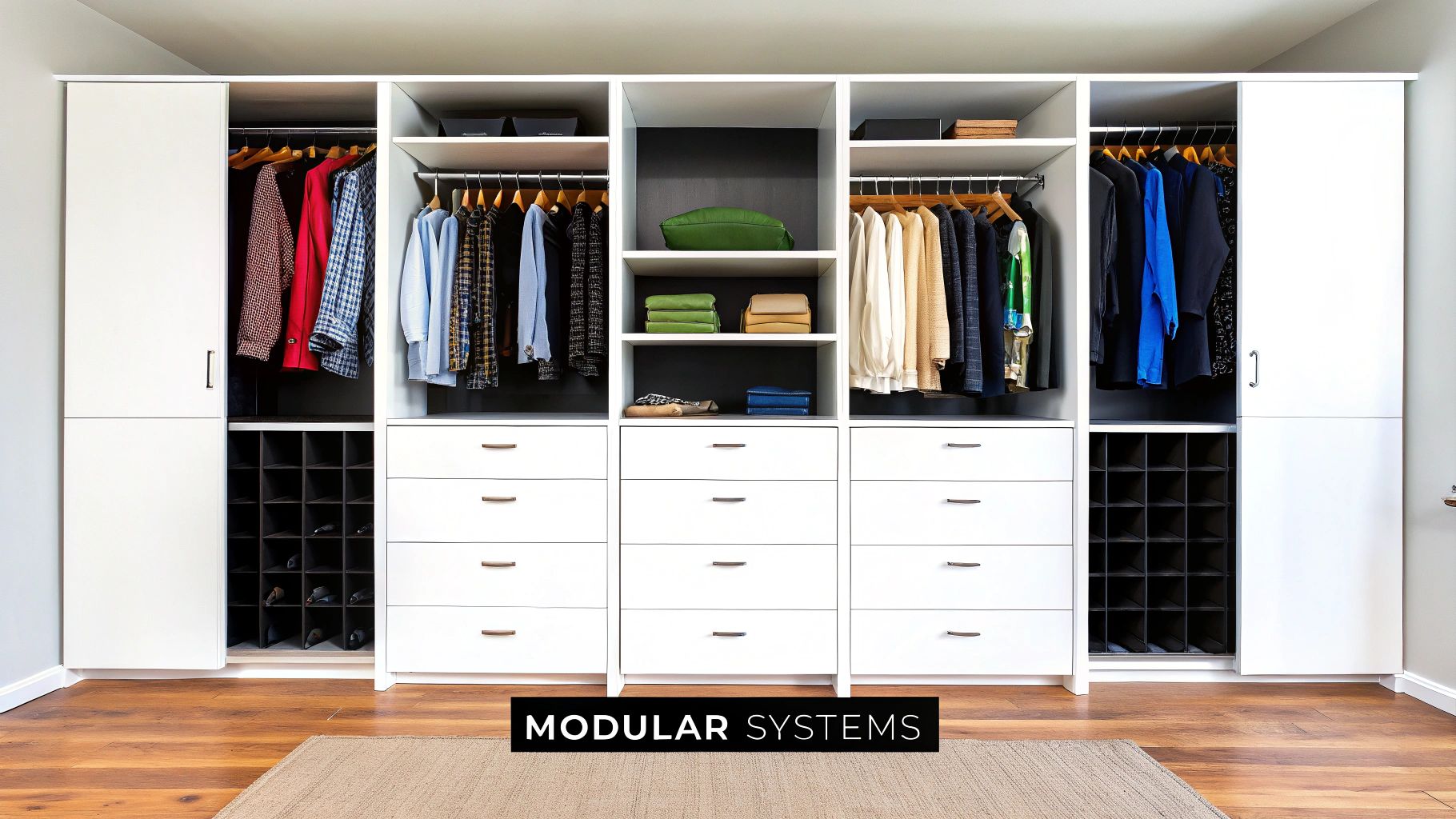
With a detailed inventory in hand, you're ready for the fun part: picking the actual system. The best closet organization systems aren't one-size-fits-all. The right choice is a direct reflection of your budget, your personal style, and just how much you enjoy a good DIY project.
Think of it like choosing a car. A simple, reliable sedan gets the job done perfectly well. On the other hand, a luxury SUV offers more features and a custom finish. Both get you from A to B, but the experience—and the cost—are vastly different. Your closet system works on the same logic.
Wire Shelving Systems
Wire systems are the undisputed workhorses of the closet world. They’re affordable, you can find them just about anywhere, and they promote excellent air circulation, which is a huge plus for preventing musty smells. Their open design also means everything stays visible at a glance.
Of course, there's a downside. Small items can easily fall through the gaps, and let's be honest, the aesthetic isn't for everyone. They can also sag under heavy loads if you don't install them correctly into wall studs. A wire system is often the perfect starting point for a kid's closet or a secondary storage space where function is the top priority.
Pro Tip: If you go with a wire system, do yourself a favor and invest in shelf liners. These simple plastic sheets stop smaller items from tipping over or falling through the cracks, giving you a solid surface without blowing your budget.
Laminate and Wood Composite Systems
If you're looking for a more polished, built-in look, laminate or wood composite systems are a solid step up in both price and appearance. These are typically sold as kits or modular components, giving your closet a more substantial feel with solid shelves and drawers.
You'll see great examples of these from brands like IKEA's PAX system or ClosetMaid's Style+ collections. They hit that sweet spot, offering a custom feel without the bespoke price tag. For a deeper dive into these options, take a look at our guide on the top custom closet systems available for your home.
Modular and Adjustable Systems
If your needs tend to change, a modular system is your best friend. These systems, like the ever-popular Elfa from The Container Store, are built on a framework of wall-mounted tracks. This means you can easily add, remove, or reposition shelves, drawers, and hanging rods as your wardrobe evolves over time.
- Pros: They are incredibly flexible, easy to reconfigure, and you can even take them with you if you move.
- Cons: They can be pricier than fixed laminate systems, and installation requires precision to get the tracks perfectly level and secure.
This adaptability makes them ideal for renters or anyone who knows their storage needs will change—think a nursery that will one day become a teenager's room.
Fully Custom Built-Ins
For the ultimate in personalization and luxury, nothing beats a fully custom built-in system. This is the top-tier option, tailored precisely to your space and your inventory. You'll work with a designer to create a solution that maximizes every single inch, often incorporating high-end materials and specialized accessories you can't find off the shelf.
This is definitely the most expensive route, but it delivers a seamless, high-end result that can add real value to your home. This kind of investment tracks with a bigger trend; homeowners in the United States spent a whopping $472 billion on home improvements in 2022, driven by the desire for more functional and beautiful living spaces. You can dig into more data on the growing closet organizer market in this detailed market report.
Designing a Smarter Closet Layout
A high-quality closet system is only half the battle. The real magic happens when you create a layout designed around your actual, day-to-day life. The goal here is to stop thinking of your closet as just a box for clothes and start treating it like a small, highly efficient room that makes getting ready easier.
The best closet organization systems are built on a simple principle: zoning. This just means creating dedicated areas for different types of clothing. Group all your workwear in one spot, your casual clothes in another, and stick the formal or seasonal stuff in a less accessible area. This simple act of sorting keeps things from becoming a chaotic mess where you can never find what you need.
Designing your layout all starts with taking an honest look at your wardrobe and your space. This is what helps you choose the right system components down the line.
This infographic breaks down the foundational steps to get your closet design journey started on the right foot.
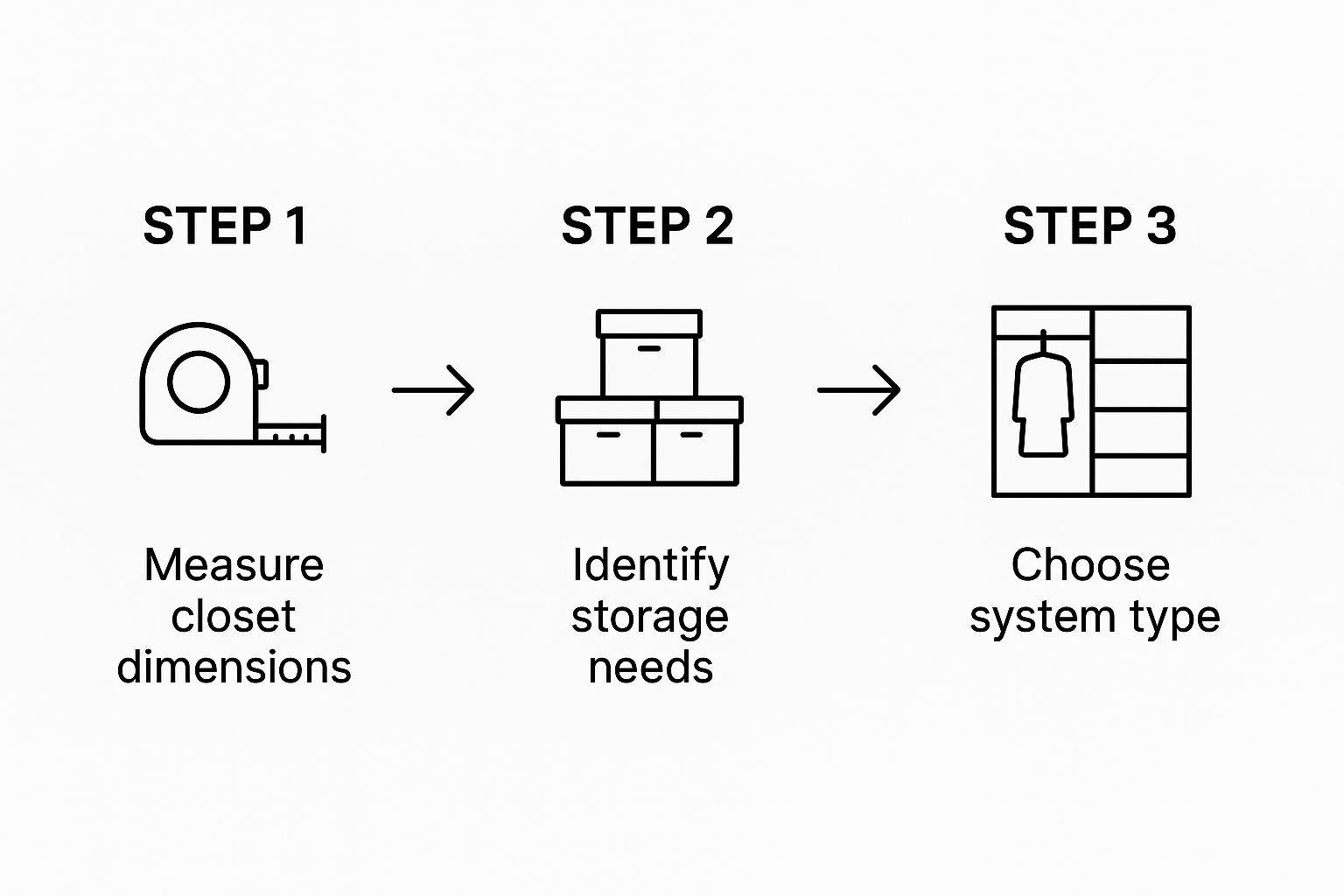
Following this flow ensures you’re building a layout based on solid measurements and a clear picture of everything you need to store.
Applying Ergonomics to Your Closet
Ergonomics isn’t just for fancy office chairs. Bringing those same ideas into your closet design can make a world of difference in how it feels to use it every day. The trick is to keep the items you use most often right where you can easily see and grab them—basically, between your shoulders and your waist.
- Prime Real Estate: This eye-level zone is for your everyday heroes. Think of the shirts, pants, and shoes you wear constantly.
- High Storage: The top shelves are perfect for things you don't need often, like bulky winter coats, luggage, or extra bedding.
- Low Storage: Use the floor-level space or bottom drawers for less-used shoes or heavier folded items like sweatshirts and jeans.
By placing your go-to items in the most accessible spots, you streamline your morning routine and reduce the daily friction of digging through piles. It’s a small change that makes a huge difference.
Making the most of your vertical space is another non-negotiable strategy. If your inventory showed you have a ton of shirts and pants, installing double-hang rods is a no-brainer—it instantly doubles your hanging capacity. One rod at a standard height with another about 40 inches below it is a total game-changer for most closets.
Even smaller reach-in closets are getting smarter designs, with the market for them projected to grow from USD 2.8 billion in 2024 to USD 4.7 billion by 2033. This boom reflects a huge demand from homeowners for efficient, customized storage that just works.
Common Layout Blueprints
While every closet is a little different, there are a few tried-and-true layout templates that work as great starting points. For a deeper dive into what's possible, check out these custom closet design ideas.
- The Symmetrical 'His and Hers': This is perfect for shared walk-ins. The layout is mirrored on both sides, giving each person equal and clearly defined space.
- The Boutique Walk-In: This design feels a bit more luxe, often featuring a central island with drawers and a countertop for accessories, while hanging space and open shelving line the walls.
- The L-Shaped Reach-In: This is a clever way to reclaim a dead corner in a reach-in closet. Shelves run along the back wall and turn to meet a hanging rod on a side wall, maximizing every inch.
The principles of smart design aren’t just for closets, of course. For a wider look at creating hardworking rooms, this guide on designing functional and stylish spaces has some great insights. A well-planned layout, whether it's for a closet or a laundry room, completely transforms how you use and enjoy your home.
Elevate Your Closet with Smart Accessories
Once the main shelves and rods are set, it’s the accessories that truly bring a custom closet to life. These are the thoughtful details that eliminate those little daily frustrations and add a touch of luxury. This is what separates a decent closet from one of the best closet organization systems you'll ever use.
Forget about a mismatched collection of hangers. One of the simplest yet most impactful upgrades is switching to a uniform set of slim, non-slip velvet hangers. They don't just stop your silky tops from ending up on the floor; their thin profile genuinely frees up a surprising amount of hanging space compared to those chunky plastic or wood ones.
Small Add-Ons That Make a Big Difference
The most effective closet accessories are the ones that solve a specific problem. If you’re tired of digging through a drawer to find the right belt or untangling a mess of scarves, dedicated racks are an absolute game-changer.
Think about adding a few of these workhorses to your design:
- Pull-Out Valet Rod: This handy little rod is perfect for staging tomorrow's outfit or hanging your dry cleaning before putting it away. It keeps your clothes separate and ready to go.
- Integrated Tie and Belt Racks: Stop coiling your belts or draping ties over a random hanger. A slide-out rack displays them neatly, making it easy to see what you have and grab what you need.
- Jewelry Organizer Trays: Custom, felt-lined drawer inserts are a must-have for organizing rings, earrings, watches, and bracelets. They keep everything protected and tangle-free.
These additions ensure every last item has its own place. That’s the real secret to staying organized long-term—when everything has a logical home, putting things away becomes second nature.
Don't Overlook Lighting
A dark closet is a useless closet. It doesn’t matter how perfectly organized your space is if you have to use your phone’s flashlight to tell a black shirt from a navy one. Good lighting isn’t an extra; it's an essential.
A well-lit closet completely changes the experience. It makes everything easier to find and gives the space a high-end, boutique feel. It’s one of the most common "aha!" moments clients have after a redesign.
Modern options make it incredibly easy to light up your space. Integrated LED strip lighting tucked under shelves or inside cabinets gives a clean, seamless look. For a simpler approach, battery-powered, motion-activated puck lights are fantastic for brightening up dark corners or high shelves. This one upgrade makes your entire wardrobe more visible and a lot more enjoyable to use.
Should You DIY or Hire a Professional?
You’ve got the perfect closet layout designed and all the components picked out. Now for the final hurdle: the installation. This is where you face a classic crossroads—do you roll up your sleeves and tackle it yourself, or do you bring in a pro to handle the heavy lifting?
Both paths lead to an organized oasis, but the journey to get there looks very different. Let’s break it down.
The Reality of a DIY Installation
Going the DIY route can be incredibly satisfying. It’s a great way to save money and gives you a real sense of accomplishment. But it’s crucial to be honest with yourself about what it really takes. This is more than a simple screwdriver job.
You’ll need a solid toolkit, including a reliable level, a quality stud finder, a drill, and a precision measuring tape. More than that, you’ll need a healthy dose of patience and a good eye for detail. As one homeowner who installed an IKEA PAX system noted, the instructions are clear, but it’s still hours of focused, painstaking work.
When you decide to DIY, you’re not just the installer—you're the project manager. You’re on the hook for every single detail, from making sure the wardrobe frames are perfectly level to securing them safely to the wall. One of the most common—and dangerous—mistakes we see is failing to anchor shelves and hanging rods directly into wall studs.
It’s a small oversight that can have big consequences, like sagging shelves or a total collapse under the weight of your clothes. You’re also responsible for all those finishing touches that make it look polished, like filling in extra pre-drilled holes and ensuring every door and drawer is perfectly aligned. You get total control, but you also carry all the risk.
The Case for Hiring a Professional
On the other hand, hiring a professional installer means trading some of that control for expertise, speed, and peace of mind. A seasoned pro has seen it all. They know how to anticipate and solve problems you might not even notice, like navigating uneven walls, tricky corners, or floors that aren't quite level.
They come equipped with specialized tools and a wealth of experience that ensures a precise, secure, and fast installation. What might take you an entire weekend, they can often knock out in a single day.
A professional installation is more than just a service; it's an investment in quality and durability. Most professional services also offer a warranty on their workmanship, giving you a safety net against any future issues.
Of course, finding the right installer is key. To make sure you’re getting a true professional, here’s what you should do:
- Request a Portfolio: Don't just take their word for it. Ask to see photos of their previous work, especially with systems similar to yours.
- Check References and Reviews: See what past clients are saying. Look for feedback on their punctuality, professionalism, and the final quality of their work.
- Ask About Insurance: This is non-negotiable. Ensure they carry liability insurance to protect your home from any accidental damage during the job.
- Get a Detailed Quote: Always ask for a written quote that breaks down the full scope of work and the total cost. This helps avoid any nasty surprises on the final bill.
Ultimately, this decision comes down to a simple trade-off: balancing your budget, time, and confidence in your own handiwork against the undeniable value of professional assurance.
Still Have Questions About Your New Closet System?
It's totally normal. Even with a perfect plan in hand, a few questions can pop up right before you pull the trigger. Let's tackle some of the most common ones I hear from homeowners, so you can move forward feeling confident about your project.
One of the first things everyone wants to know is, "What's this going to cost me?" And the honest answer is: it varies—a lot. You could grab a simple wire kit for under $200, or you could go all-in on a professionally installed, custom walk-in that runs into the thousands.
As a ballpark, a good quality laminate system for a typical reach-in closet usually lands somewhere between $500 and $1,500. If you're dreaming bigger with a walk-in, that number can easily jump to $3,000 or more, depending on the materials, size, and all the cool accessories you add.
How Long Will Installation Take?
Time is another big factor. If you're a seasoned DIY-er, I'd recommend clearing a full weekend for the project. I've heard from plenty of homeowners who've installed an IKEA PAX system, and while they say the instructions are clear, it's always more time-consuming than you think. You're not just screwing pieces together; you're leveling everything perfectly, securing it safely, and adding all those final finishing touches.
On the flip side, a professional installer can usually knock out the same job in a single day. They’ve got the experience and all the right tools to work quickly and handle any curveballs, like walls that aren't perfectly straight, without breaking a sweat.
Can I Take My Closet System With Me If I Move?
This is a great question, and it really depends on what kind of system you choose. Custom built-ins are there to stay—they become a permanent part of the house and add to its value. But luckily, many of the best closet systems are designed to be flexible.
- Modular Systems: Brands like Elfa, which hang from a simple wall-mounted track, are practically designed for moving. You can take down the components and reinstall them in your next place with relative ease.
- Freestanding Wardrobes: Think of something like IKEA's PAX wardrobes. While you absolutely should secure them to the wall for safety, they can be disconnected and moved just like any other piece of furniture.
If you're a renter or think you might move in the next few years, going with a modular or freestanding system is a no-brainer. It protects your investment and lets you take your perfectly organized setup with you.
What's the Best Material for Closet Shelves?
When you get down to the materials, you've got a few solid choices, each with its own pros and cons.
Melamine or Laminate (MDF): This is hands-down the most popular option, and for good reason. It's budget-friendly, super durable, won't warp easily, and comes in an endless variety of finishes. You can get anything from a clean, solid white to a surprisingly realistic wood grain look.
Solid Wood: Nothing beats the beauty and strength of solid wood, but it's definitely a premium choice. It's usually what you'll find in high-end, custom closets. Just be aware that it can be prone to warping in very humid climates if it's not sealed correctly.
Plywood: Don't sleep on good old plywood. High-quality plywood is a fantastic mid-range alternative to solid wood. It’s incredibly strong and stable, giving you great durability without the hefty price tag of solid hardwood.
Ready to transform your space with a closet system designed just for you? At Sinclair Cabinetry inc, we specialize in crafting high-quality, custom cabinetry that turns organizational dreams into reality. Explore our custom closet solutions and get started today!