

Let’s be honest, walking into the world of bathroom vanities can feel a bit like navigating a maze. But a few standout brands consistently rise above the noise, delivering on quality time and time again. The best bathroom vanity brands typically start with a solid foundation—think solid wood or high-grade plywood construction—and finish it off with premium touches. Names like James Martin Vanities, Ronbow, and Wyndham Collection often come up in conversation for their blend of durability and sharp design.
What Defines the Best Bathroom Vanity Brands
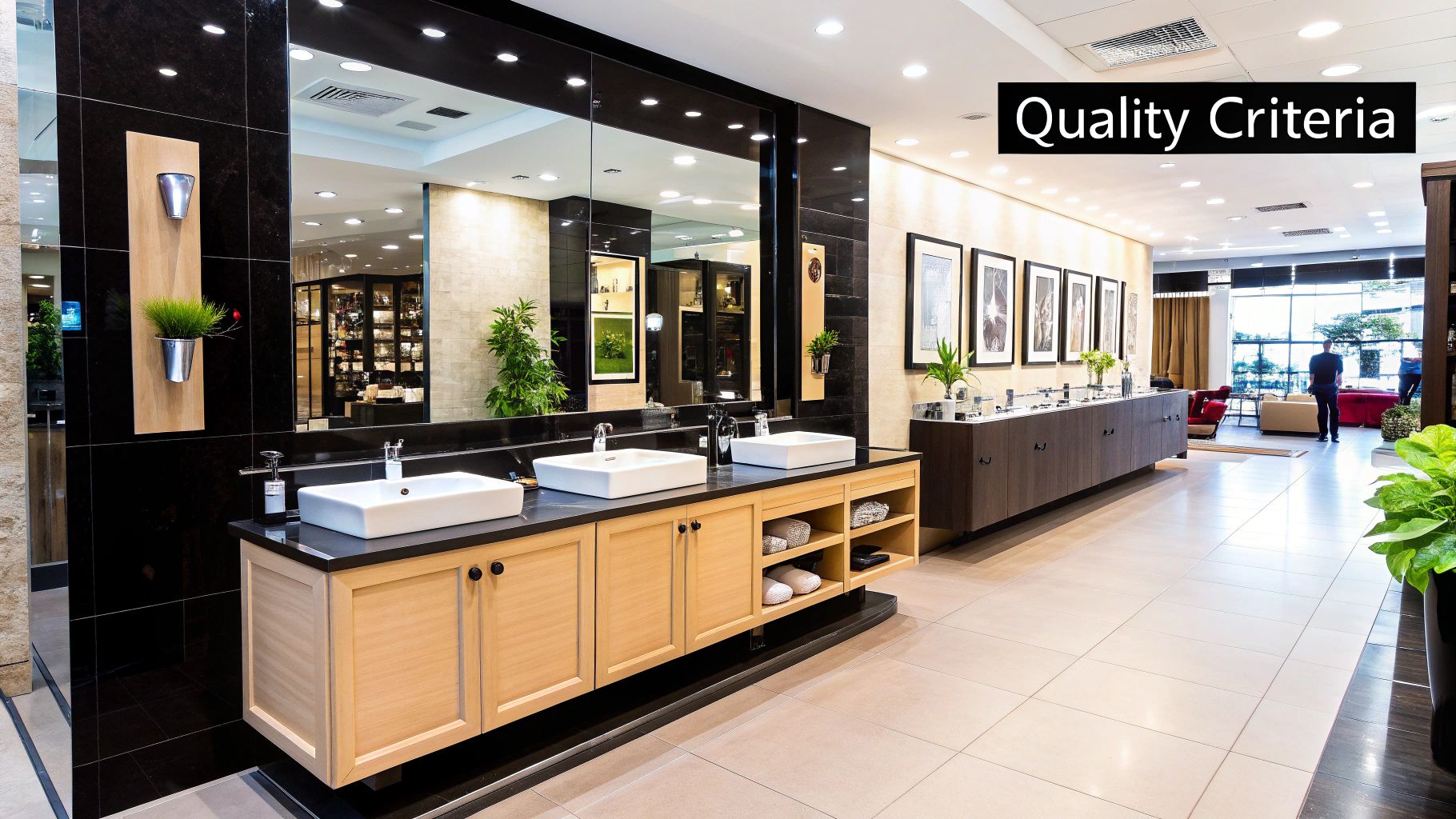
Before you even think about adding a vanity to your cart, it’s crucial to understand what separates a great one from a mediocre one that you’ll regret in a few years. The "best" brand isn’t just about a flashy name or a hefty price tag; it’s about a careful balance of superior materials, expert craftsmanship, and a design that actually works for your daily routine. Think of it as a framework for making a smart, long-term investment in your home.
A high-quality vanity has to survive the unique challenges of a bathroom—we're talking constant humidity and temperature swings. A brand that cuts corners with cheap particleboard might look great online, but it will almost certainly start to swell, peel, or warp. On the other hand, top-tier brands build their products to last.
The Core Pillars of a Quality Brand
To truly find the cream of the crop, you need to look past the surface-level aesthetics and dig into a few key criteria. These pillars are what hold up a product that will not only look stunning on day one but will also perform reliably for years to come.
Here are the essential factors we'll be breaking down throughout this guide:
- Material Integrity: The choice of wood and countertop material is hands-down the most important factor for longevity.
- Build Quality and Construction: How a vanity is put together—from its joints to its hardware—determines its strength and how it feels to use every day.
- Design and Functionality: A great design perfectly balances style with practical storage solutions that fit your life.
- Warranty and Support: A strong warranty isn't just a piece of paper; it's a brand's vote of confidence in its own work.
The best brands get it: a vanity is more than just furniture. It's the functional centerpiece of your bathroom. It has to endure daily use while consistently elevating the entire space.
This guide is all about empowering you with the knowledge to see past the marketing hype and spot true quality. To get you started, the table below boils down the key criteria you should be using to size up your options.
Key Criteria for Evaluating Bathroom Vanity Brands
To help you compare different brands at a glance, we've put together this simple table. It outlines the most important factors to look for and explains why each one is so critical for a vanity that you'll love for years.
| Evaluation Criterion | What to Look For | Why It Matters |
|---|---|---|
| Materials | Solid wood, furniture-grade plywood, quartz or granite tops. | Resists moisture, warping, and daily wear, ensuring longevity in a humid environment. |
| Construction | Dovetail joints, soft-close hardware, reinforced corners. | Indicates superior craftsmanship that provides structural stability and a premium user experience. |
| Design Flexibility | A wide range of sizes, styles, finishes, and storage options. | Allows you to find a vanity that perfectly matches your aesthetic and functional needs. |
| Warranty | Clear, comprehensive coverage for defects and materials. | Protects your investment and reflects the manufacturer's confidence in their product quality. |
Think of these as your non-negotiables. A brand that ticks all these boxes is one that’s serious about quality and dedicated to creating a product that lasts.
Understanding the Foundation of a Quality Vanity
A stunning bathroom vanity is only as good as the materials it's made from. It doesn't matter how beautiful the design is if it can't handle the steam, splashes, and temperature swings of a busy bathroom.
Think of choosing a vanity like building a house: the material is your foundation. A weak foundation will eventually lead to cracks and structural failure, no matter how gorgeous the house looks from the outside. In the same way, the wrong material will cause a vanity to warp, peel, or swell over time. This is why getting to know the core components is the single most important step in finding the best bathroom vanity brands. It lets you see past the slick marketing and judge true, lasting quality for yourself.
The demand for stylish, long-lasting bathroom storage is booming. In fact, the bathroom cabinets market is projected to skyrocket from USD 74.8 billion in 2025 to a massive USD 161.5 billion by 2035. This growth is all about homeowners wanting products that don't just look good, but are genuinely built to last.
Decoding Vanity Materials
When you start shopping, you’ll run into a handful of common materials, and each one has its pros and cons. Some are champions of moisture resistance, while others are easier on the wallet but carry big risks in a bathroom. Knowing the difference is everything.
Here are the main players you'll find:
- Solid Wood: Famous for its strength and timeless beauty, solid wood brings unmatched durability to the table. The catch? It must be perfectly sealed to keep moisture from causing it to warp or crack.
- Plywood: This is often the smartest choice for bathrooms. High-quality, furniture-grade plywood is made from multiple layers of wood veneer, which makes it incredibly stable and resistant to the expansion and contraction that moisture causes.
- Medium-Density Fiberboard (MDF): An engineered product made from wood fibers and resin, MDF has a smooth surface that’s great for painting. It’s budget-friendly, but it acts like a sponge around water, swelling up and falling apart if the finish gets compromised.
- Particleboard: This is the cheapest and least durable option out there. It's basically compressed wood chips and glue, and it disintegrates quickly when wet. It's a poor choice for any bathroom vanity, period.
This infographic breaks down the top three materials so you can see how they stack up in the areas that matter most.
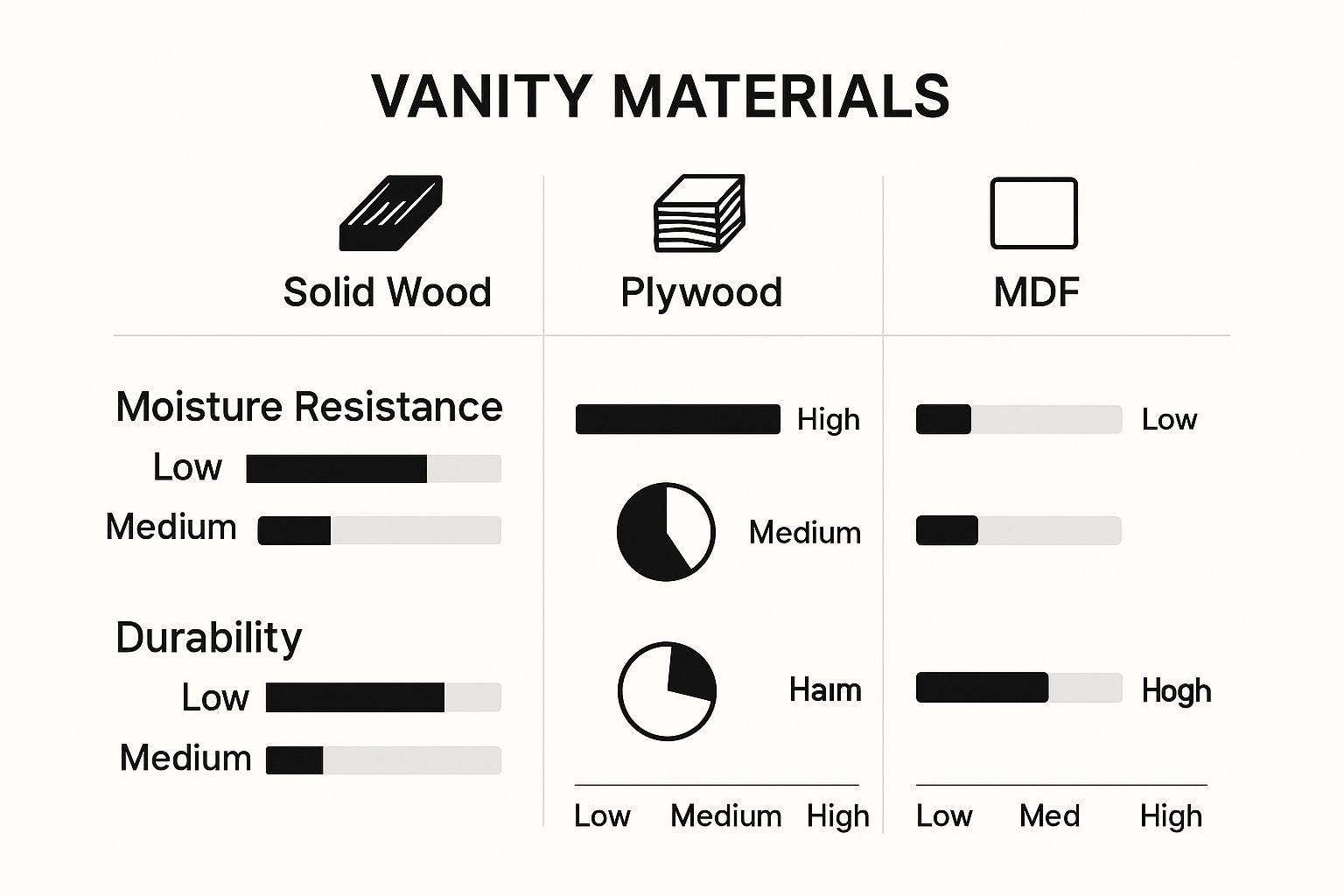
As you can see, while solid wood is the king of durability, high-quality plywood hits the sweet spot. It offers the best balance of moisture resistance and strength for the price, making it a rock-solid foundation for a vanity that will last.
Why Plywood Often Outperforms Solid Wood
It might sound backward, but engineered plywood frequently has an advantage over solid wood in the humid, demanding environment of a bathroom. It all comes down to its cross-grained construction, which makes it "dimensionally stable."
Key Takeaway: Dimensional stability means the material is far less likely to expand, contract, or warp when humidity and temperatures change. This is exactly what you need in a bathroom.
While a solid oak vanity is undeniably strong, a single panel of it can swell or shrink across its grain. Plywood’s layered structure cancels out that movement, ensuring your doors and drawers stay perfectly aligned for years to come.
Of course, the right material also needs to be paired with the right dimensions for your space. For help with sizing, check out our complete guide to bathroom vanity cabinet dimensions and tips. The best brands understand this distinction and are deliberate about choosing materials suited for the unique demands of a bathroom.
How Craftsmanship Separates Good from Great

Choosing the right materials is a lot like picking out the best ingredients for a five-star meal. But even the finest ingredients can fall flat without a skilled chef. In the world of cabinetry, craftsmanship is that expert chef—it’s the technique and attention to detail that turns high-quality wood and hardware into a beautiful, functional vanity that will last for decades.
Craftsmanship is the invisible force that truly separates an average vanity from a premium one. It’s the difference between a cabinet that feels rock-solid and operates like a dream, versus one that starts to wobble, sag, or stick after just a couple of years. A glossy finish might catch your eye on the showroom floor, but it's the bones of the piece—the construction quality—that determines the real value of your investment.
The Secrets of Strong Joinery
How a vanity is physically held together speaks volumes about its build quality. Think of the vanity’s frame as its skeleton; the stronger the joints, the more resilient the entire structure will be against the daily grind of a busy bathroom.
Low-quality vanities often rely on quick and cheap shortcuts like staples, glue, or basic screws. These methods just can’t stand up to the constant humidity and stress, and they're almost guaranteed to fail over time.
On the other hand, the best bathroom vanity brands lean on time-tested joinery techniques that create strong, interlocking mechanical bonds. These methods aren't just for show; they ensure the vanity stays rigid and sturdy for its entire lifespan.
- Dovetail Joints: Instantly recognizable by their interlocking "pins" and "tails," these are the gold standard for drawer boxes. This design creates an incredibly strong connection that resists being pulled apart, which means your drawers can handle years of daily use without falling to pieces.
- Mortise and Tenon Joints: A classic in woodworking, this technique involves fitting a precisely cut "tenon" (a projecting piece of wood) into a matching "mortise" (a hole). It’s like fitting a key into a lock, creating a powerful, stable connection that’s perfect for building the main frame of a vanity.
Think of it this way: a stapled joint is like holding two pieces of paper together with a single paperclip. A dovetail joint is like weaving the very fibers of the paper together. One is a temporary fix; the other creates a permanent, unified structure.
When it comes to identifying quality, the type of joinery and hardware used are dead giveaways. Here’s a quick comparison of what to look for versus what to avoid.
Construction Technique Comparison
| Technique/Hardware | Description | Indicator of Quality |
|---|---|---|
| Dovetail Joints | Interlocking pins and tails that create a strong, mechanical bond, typically seen in high-end drawers. | High. A clear sign of superior craftsmanship and durability. |
| Staples & Glue | A fast, low-cost method where pieces are simply glued and stapled together, common in budget furniture. | Low. Prone to separating over time, especially in humid areas. |
| Soft-Close Hinges | A mechanism that allows doors and drawers to close gently and quietly, reducing wear and tear. | High. Shows an investment in user experience and longevity. |
| Standard Hinges | Basic metal hinges that allow doors to open and close but offer no controlled motion. | Low. Can lead to slamming, which stresses the cabinet frame. |
This table makes it easy to see how small details in construction can have a huge impact on the vanity's lifespan and overall performance.
Hardware Is More Than Just a Luxury
It’s tempting to dismiss details like soft-close hinges and drawer glides as simple frills, but they're actually powerful clues about a vanity’s overall build quality. A manufacturer that invests in premium hardware is probably paying close attention to every other detail, too.
These features do more than just prevent slamming. They actively reduce stress on the entire cabinet structure—the joints, the frame, and the doors themselves. By ensuring a gentle, controlled motion every time you use it, they extend the life of the vanity and protect its structural integrity. If a brand cuts corners on hardware, it’s a massive red flag that they’ve likely cut corners elsewhere.
Your Practical Inspection Checklist
You don’t need to be a master carpenter to spot the signs of quality craftsmanship. When you're shopping for a vanity, use this simple checklist to inspect any piece you're considering, whether you’re in a showroom or looking at detailed photos online.
- Check the Drawers: Pull a drawer all the way out. Does it feel sturdy, or does it wobble? Look at the corners—can you see the distinct, interlocking pattern of dovetail joints?
- Examine the Frame: Look closely where the legs meet the cabinet or where structural pieces join. High-quality vanities will have tight, seamless joints with no visible gaps.
- Test the Doors: Swing the cabinet doors open and shut. Do they move smoothly and line up perfectly when closed? Soft-close hinges should engage gently without any catching or stuttering.
- Feel the Finish: Run your hand over the surface. A quality finish will be completely smooth and even, with no rough patches, drips, or inconsistencies, especially around the edges and corners.
By learning to spot these details, you can look past the surface-level style and identify a vanity that is truly built to endure. The relationship between great materials and expert craftsmanship is everything, and you can dive deeper into what makes the best material for bathroom cabinets in our detailed guide.
Matching Vanity Design to Your Lifestyle
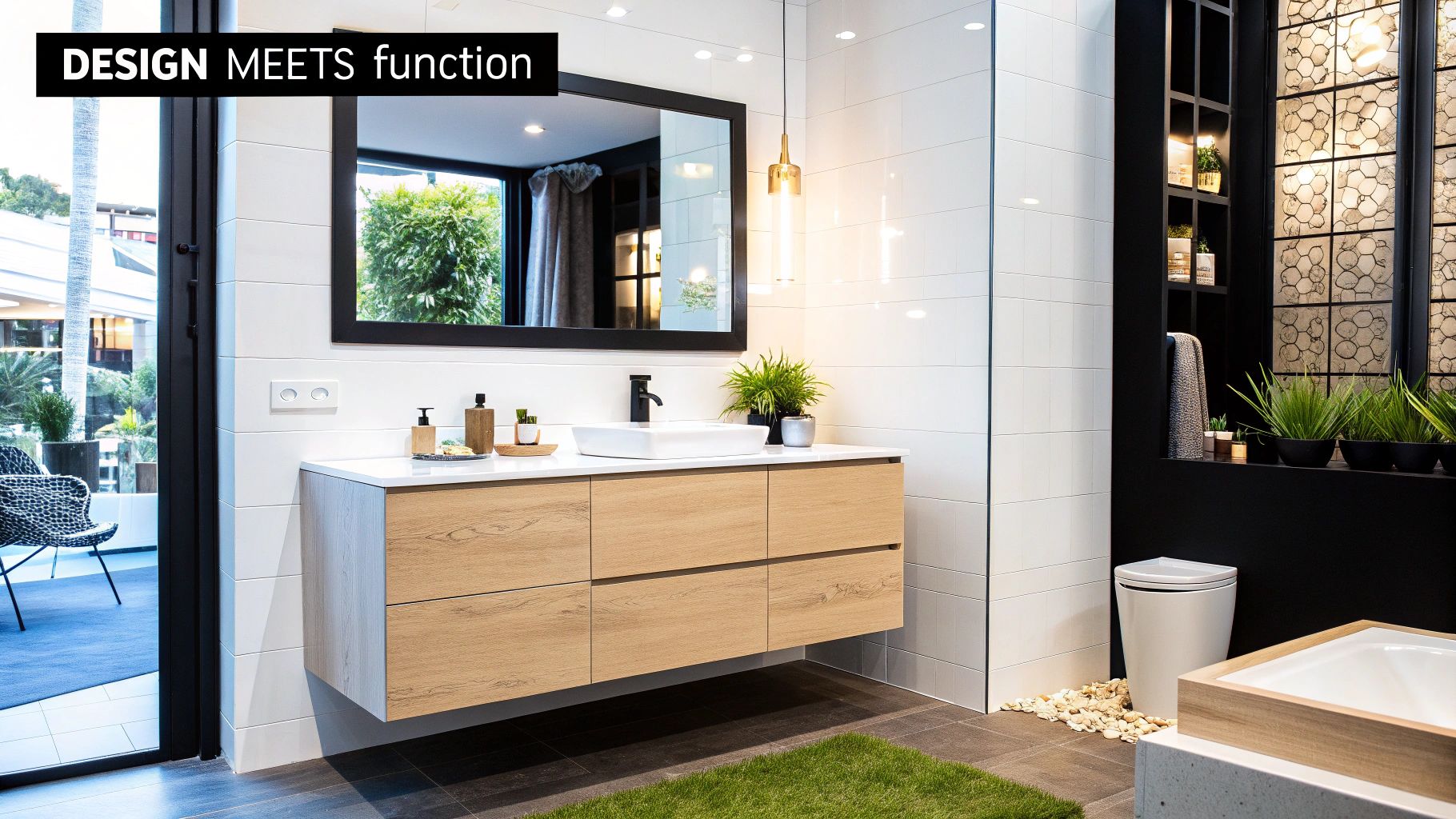
A well-built vanity is one thing, but it's the design that turns it from a simple storage box into the functional heart of your bathroom. The best brands know that design isn't just about looking good—it's about solving real-world problems and making your daily routine flow. It’s those thoughtful details that decide whether your bathroom feels like a chaotic mess or a calm retreat.
Think of your vanity's design as the user interface for your bathroom. A sleek, modern vanity might catch your eye, but if it doesn't have the drawer space you need for the morning rush, it's a functional failure. On the flip side, a massive unit with endless storage could completely overwhelm a small powder room. The sweet spot is finding that perfect marriage of form and function that truly fits how you live.
This is where a brand's versatility really comes into play. When a manufacturer offers a wide range of styles, finishes, and configurations, you get the power to find a piece that feels like it was custom-made just for you.
Finding the Right Vanity Style
Your vanity is the anchor piece that sets the stylistic tone for the entire room. Nailing down the style is your first real step toward creating a space that reflects your taste and meets your day-to-day needs. Most designs fall into a few key categories, each with its own vibe and advantages.
-
Freestanding Vanities: These are the classics, often resembling traditional pieces of furniture. Standing on their own legs or a solid base, they offer a timeless, sturdy presence and plenty of storage. They’re incredibly versatile and work beautifully in almost any bathroom size or style.
-
Floating (Wall-Mounted) Vanities: If you're going for a modern, airy feel, nothing beats a floating vanity. By mounting it directly to the wall, you leave the floor visible underneath, creating an illusion of more space. It's a brilliant trick for smaller bathrooms, and it makes cleaning the floor an absolute breeze.
-
Corner Vanities: Built to make the most of tight spaces, these vanities tuck neatly into otherwise useless corners. They might offer less storage, but they are a fantastic solution for powder rooms or compact guest baths where every single inch matters.
Beyond the structure, it’s all about the aesthetic. If you're aiming for a cohesive feel, exploring ideas like Mediterranean style home decor can spark inspiration for a vanity that elevates your entire home's design.
How Finishes and Countertops Enable Personalization
Once you’ve locked in a style, the real fun begins with finishes and countertops. The best bathroom vanity brands give you a rich palette to play with, letting you fine-tune the final look. The finish—whether it's a warm wood stain, a bold pop of color, or a sleek lacquer—is what injects personality into the piece.
Countertops are just as crucial. They have to be tough enough to handle water, soap, and cosmetics while also complementing the cabinet finish. Some popular choices include:
- Quartz: Incredibly durable, non-porous, and comes in a massive array of colors and patterns. A true workhorse.
- Granite: A natural stone offering unique veining and fantastic durability, though it does need to be sealed periodically.
- Laminate: This budget-friendly option has improved dramatically over the years, now offering convincing imitations of stone and wood.
The demand for high-end, customized bathroom furniture is skyrocketing. In fact, North America, led by the U.S., commands over 69% revenue share of the regional market. This growth is driven by renovation booms and a clear preference for premium finishes and trendy designs like floating vanities.
A brand’s design flexibility is a direct reflection of its commitment to the customer. When you have ample choices in styles, finishes, and hardware, you can create a piece that is uniquely yours.
This is exactly where a brand like Sinclair Cabinetry proves its worth. By focusing on custom solutions, they go way beyond the one-size-fits-all approach. A family with young kids might need a durable, low-maintenance finish with extra-deep drawers for bath toys. Meanwhile, a couple designing their dream spa-like primary suite might go for a sleek floating vanity with a luxe quartz top and minimalist hardware.
That’s what true design excellence is all about—the ability to cater to completely different needs. By offering a whole spectrum of possibilities, Sinclair Cabinetry makes sure the final product isn't just a beautiful piece of furniture, but an essential part of your daily life. You can see this versatility in action in our gallery of stunning luxury bathroom vanity designs that truly redefine elegance.
Why a Warranty Is a Mark of Confidence
A brand's true commitment to you doesn't end when the transaction is complete. What happens after the delivery truck pulls away—that post-purchase experience—is a massive, yet often overlooked, sign of a company’s character. A strong warranty and real, accessible customer support are non-negotiable. They tell you a brand is willing to stand behind what they build.
Think of a warranty as an insurance policy for your investment. It’s the manufacturer's promise that their work and materials can actually handle the daily grind. For a piece of furniture living in a high-humidity bathroom, that promise is everything. Just as important as the quality of the wood itself, understanding product warranties gives you crucial peace of mind.
What to Look For in a Warranty
Let's be clear: not all warranties are created equal. A "lifetime warranty" that's riddled with exclusions is often less valuable than a straightforward, comprehensive five-year warranty. When you're comparing the best bathroom vanity brands, you have to get into the details.
Drill down on the specifics of what’s covered:
- Duration: How long are you protected? One year is pretty standard, but the brands that are truly confident in their products often step up with five years or more.
- Scope of Coverage: Does it cover defects in materials and craftsmanship? Look for explicit mentions of the finish, hardware (like those all-important hinges and glides), and the structural integrity of the cabinet itself.
- Exclusions: What isn't covered? Normal wear and tear is a standard out, but keep an eye out for vague language that could let the company off the hook.
A great warranty isn’t just about fixing a broken part; it’s a direct reflection of a company's confidence in its own manufacturing. A brand that expects its products to last has no problem guaranteeing them.
The global bathroom vanities market is absolutely booming, projected to jump from around USD 47.13 billion in 2025 to a staggering USD 78.70 billion by 2032. With a flood of new products hitting the market, a solid warranty is one of the clearest ways top-tier brands separate themselves from the pack.
The Role of Customer Support
Even with the best products, things can go sideways. A vanity might show up with hidden shipping damage, or your contractor might hit a snag during installation. This is where a responsive and helpful customer service team becomes your lifeline.
A top-tier brand makes it easy to get a real person. Look for companies that give you multiple ways to reach them—phone, email, or live chat—and have a reputation for sorting things out quickly and fairly. Sinclair Cabinetry, for instance, has built its reputation on this very idea. By offering clear warranty terms and dedicated support, they show a long-term commitment to their customers. It ensures a potential issue is just a small bump in the road, not a frustrating dead end. That level of support is the final piece of the puzzle that truly defines the best brands.
Your Bathroom Vanity Questions, Answered
Alright, you've done the research, but a few practical questions might still be lingering. It's completely normal. Nailing down these final details is what turns a good decision into a great one. Let's tackle the most common questions we hear, so you can move forward with total confidence.
What’s the Most Durable Material for a Bathroom Vanity?
This is a big one. While solid hardwood has a reputation for being tough as nails, high-quality, furniture-grade plywood often wins out in the humid, demanding environment of a bathroom. Why? Because its layered construction gives it incredible stability. It's far less likely to warp, swell, or crack when faced with the daily onslaught of steam and temperature changes.
Both solid wood and plywood are in a completely different league than Medium-Density Fiberboard (MDF) or particleboard, which are like sponges around water and almost guaranteed to fail over time. If you’re looking for the sweet spot between raw strength and moisture resistance, plywood is almost always the smartest play for a vanity that lasts.
Should I Go with a Single or a Double Sink?
This really boils down to two things: how big is your bathroom, and how do you live in it? For a primary bathroom shared by two people, a double vanity is a relationship-saver. No more elbowing for space or jockeying for the faucet during the morning rush. It gives everyone their own zone.
On the other hand, for a cozy guest bath or a small powder room, a single sink is the way to go. It frees up precious counter space for soaps, lotions, and other essentials without making the room feel claustrophobic. The goal is to match the vanity's setup to the room's real-world use.
Pro Tip: If you're even thinking about a double vanity, make sure you have at least 60 inches of wall space to work with. Anything smaller, and it’ll feel too cramped for two people to use at the same time.
How Much Should a Good Quality Bathroom Vanity Cost?
The price tag can swing wildly, but let's get you in the right ballpark. For a solid, mid-range vanity (think 36 to 48 inches wide) built from durable materials like plywood or solid wood, you can expect to invest somewhere between $800 and $2,500. That price usually gets you the cabinet, countertop, and sink.
Of course, if you're looking at premium, luxury, or fully custom vanities from the best bathroom vanity brands, the cost can easily climb past $3,000. That extra investment reflects higher-end materials, detailed craftsmanship, and one-of-a-kind designs. The trick is to find the right balance between what you want to spend and the quality of the materials, ensuring you get fantastic value for years to come.
What Are the Benefits of a Floating Vanity?
Floating vanities—the ones mounted directly to the wall—are all about creating a modern, airy vibe. By lifting the cabinet off the floor, you create an illusion of more space, which is a fantastic trick for making smaller bathrooms feel bigger and more open.
But it’s not just about looks. They have some real practical perks, too. Cleaning the floor underneath is a breeze (no more dust bunnies hiding in corners!), and you can install them at the perfect height for you and your family. The only real trade-off is storage; floating designs naturally have a bit less cabinet space than their freestanding cousins.
Ready to create a bathroom that combines timeless style with unmatched quality? At Sinclair Cabinetry inc, we craft custom, real-wood cabinets designed to last a lifetime. Explore our custom bathroom vanity solutions and start your project today.