

Thinking about a new bathroom vanity? It's one of the quickest ways to give your space a facelift, but figuring out the total cost can feel like a guessing game.
On average, you can expect the total cost for a new bathroom vanity and its installation to land somewhere between $300 and $2,200. Most homeowners find their sweet spot right around $1,500 for both the unit and the professional labor to get it installed. But remember, that's just a ballpark number. The final price tag really depends on the vanity's size, the materials you choose, and how complex your specific project is.
Your Guide to Bathroom Vanity Installation Costs
The price you see on a vanity in the showroom is only part of the story. The total cost is really a mix of two things: the price of the vanity unit itself and what it costs to have a pro install it correctly.
It’s a bit like buying a car. You have the sticker price, but that’s just where it begins. The final cost changes based on the model you pick (a simple sedan vs. a high-end SUV), the features you add (like leather seats or a fancy sound system), and the dealer’s service fees. In the same way, your total vanity cost is a blend of your personal style and what's actually going on with your home's plumbing.
Key Cost Components to Consider
Before we get into the nitty-gritty, let's break down the main things that make up your final quote.
- The Vanity Unit: This is the cabinet, countertop, sink, and faucet. Your design choices here will have the biggest impact on the price.
- Professional Labor: This covers hiring a plumber or contractor to take out the old vanity, put the new one in place, and hook up all the plumbing.
- Project Complexity: A straightforward swap is always cheaper. If you need to move plumbing lines or patch up the wall behind the old unit, your budget will need to grow.
Costs for materials and labor are always shifting. For example, a small 2.5-foot single vanity with a basic countertop might only run you $100 to $500 for the unit. But a bigger 6-foot model can easily jump to $800 to $2,100, especially if you opt for materials like granite instead of laminate. You can see more about how these costs break down over at HomeAdvisor.com.
If you're trying to see how a new vanity fits into a larger remodel, tools like our bathroom remodel cost estimator can give you a clearer picture of your total investment.
To give you a better idea of what to expect, we put together a quick cheat sheet.
Estimated Bathroom Vanity Installation Costs at a Glance
This table breaks down the estimated total costs—that’s the vanity plus professional installation—for some of the most common sizes and types.
| Vanity Type / Size | Estimated Vanity Unit Cost | Estimated Installation Cost | Estimated Total Cost Range |
|---|---|---|---|
| 24-inch Single Vanity | $150 – $600 | $200 – $450 | $350 – $1,050 |
| 36-inch Single Vanity | $300 – $1,200 | $250 – $500 | $550 – $1,700 |
| 48-inch Single Vanity | $400 – $1,800 | $300 – $600 | $700 – $2,400 |
| 60-inch Double Vanity | $700 – $2,500 | $400 – $800 | $1,100 – $3,300 |
As you can see, the numbers can vary quite a bit. Next, we'll dive into what actually drives these costs up or down.
Decoding Your Installation Price Tag
Knowing the average cost to install a bathroom vanity is a great starting point, but the final number on your quote is really a puzzle. The complete picture only comes together when you see how the four main pieces—the vanity unit, labor, plumbing, and materials—fit. Every choice you make, from the cabinet style to the faucet finish, will nudge that total cost up or down.
The vanity itself is the most visible part of the equation. A simple, freestanding unit is usually the most budget-friendly because the installation is straightforward. On the other hand, a wall-mounted or floating vanity often costs more for both the unit and the labor, since it needs extra support built into the wall to hang safely.
It’s a similar story with sinks. A single-sink vanity is a much simpler project than a double vanity, which needs twice the plumbing connections for faucets and drains. That instantly adds to your material and labor bill.
This diagram breaks down how the total cost is split between the vanity itself and the installation labor.
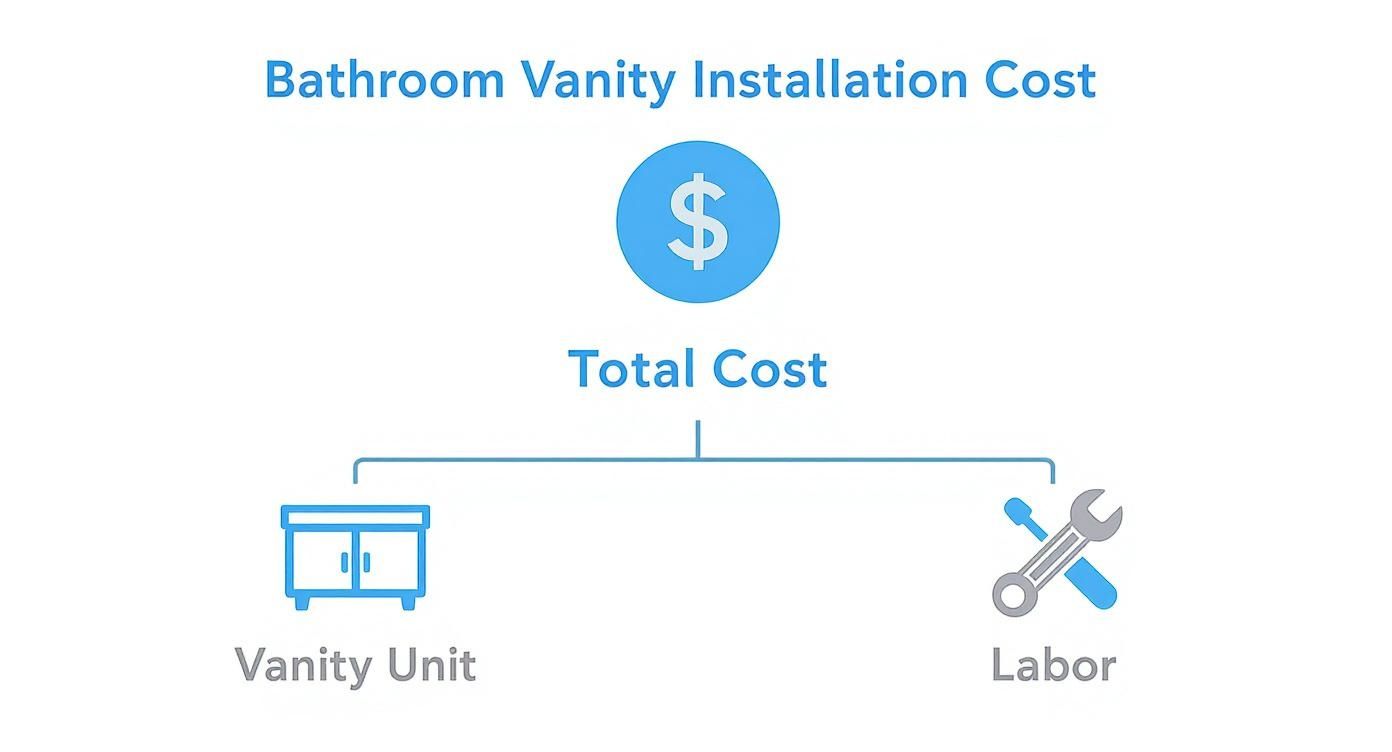
As you can see, these two expenses form the foundation of your budget, with other factors causing the final price to shift.
The Critical Role of Plumbing
While the vanity’s style sets the stage, the plumbing in your bathroom is often the biggest wildcard. A simple "like-for-like" swap—where the new vanity has the same footprint and plumbing setup as the old one—is the most cost-effective scenario you can hope for. In this case, a pro just needs to disconnect the old unit and hook up the new one.
But the moment you decide to move things around, the complexity and cost shoot up.
The single biggest cost driver in a vanity installation is moving the plumbing. Shifting water supply lines or drainpipes means opening up the walls, which adds a ton of labor for demolition, new plumbing work, and then patching and painting the drywall.
That one decision can easily add $500 to $1,500 or more to your project, turning a simple swap into a mini-remodel.
Labor: The Human Element of Cost
Who you hire has a huge impact on your budget. Labor rates vary widely based on your location and the pro’s experience and specialty. You’ll generally choose between a general contractor and a licensed plumber.
- General Contractor or Handyman: This is often the more economical choice for simple, direct replacements. They can handle the physical install, minor drywall patching, and painting.
- Licensed Plumber: A plumber is absolutely essential for any project that involves changing supply lines or drains. Their hourly rate is usually higher, but their expertise is non-negotiable for complex plumbing. You need it done right to meet code and avoid leaks.
Even a project that looks simple can hide surprises. For instance, if the old vanity was hiding water damage on the subfloor or mold on the drywall, you’ll have to tack on unexpected repair costs.
How Material Choices Drive the Final Price
Finally, the materials you pick for your countertop, faucet, and hardware add another layer of cost. The cabinet is just the start; the finishing touches can dramatically change the price. Globally, vanity installation costs are shaped by local labor rates and what materials are available. Many homeowners are leaning toward more luxurious finishes, which can really inflate the budget. For example, choosing high-end materials like quartz or granite countertops can push the cost of a single vanity well past $1,000. The entire bathroom remodel, including the vanity, can run anywhere from $3,000 to $30,000 or more, depending on how ambitious you get. This huge range really underscores why planning is so important. For a deeper dive into these numbers, you can find more insights about bathroom remodel costs on Modernize.com.
Here’s a quick comparison to give you an idea:
- Budget-Friendly: Laminate or cultured marble countertops with a standard chrome faucet.
- Mid-Range: A solid surface countertop paired with a stylish brushed nickel faucet.
- High-End: Quartz or granite countertops with a designer faucet in a premium finish like matte black or brass.
Ultimately, balancing these four key elements—vanity type, plumbing, labor, and materials—is how you get control over your final installation cost.
Choosing Your Pro: The Labor Cost Breakdown
While the vanity unit itself is a fixed price you can budget for, the labor is where things can get a little unpredictable. The bathroom vanity installation cost hinges heavily on who you hire. Think of it like this: you wouldn't use a sledgehammer to hang a picture frame, and you wouldn't use a tiny screwdriver to break up concrete. You need the right pro for your specific job.
Hiring someone is about more than just finding a person with a truck and some tools. Labor costs often eat up 30% to 50% of a total remodel budget. That significant chunk reflects the skill, insurance, and expertise needed to do the job right the first time. Your choice between a plumber, a handyman, or a general contractor will directly shape that final number.

Comparing Your Professional Options
Let's break down who you might call and what they typically charge. Each pro brings a different set of skills to the table, and matching them to your project's complexity is the secret to keeping costs in check.
- The Licensed Plumber: If your project involves touching the water supply lines or drain pipes, a licensed plumber is non-negotiable. Their hourly rate is usually the highest, somewhere between $70 to $150 per hour, but that expertise is what prevents leaks, ensures proper drainage, and keeps everything up to code.
- The Handyman: For a simple swap—where you're just replacing an old vanity with a new one and all the plumbing lines up—a skilled handyman is your most cost-effective bet. They can handle the demolition, cabinet placement, and minor drywall repairs. Expect to pay $50 to $100 per hour.
- The General Contractor (GC): If installing a new vanity is just one piece of a larger bathroom renovation, a GC is your best friend. They’re the project manager, coordinating plumbers, electricians, and tile setters. While their fee might seem higher upfront, they can save you a world of headaches and money by keeping the project running smoothly.
When you're vetting professionals, look for plumbers who specialize in professional fixture installation. A vanity setup involves critical plumbing that absolutely has to be done right.
How Job Complexity Impacts Labor Hours
The scope of your project is the single biggest dial that turns your labor bill up or down. A simple replacement might be a quick job, but a more involved installation can easily stretch over several days.
For example, swapping out a freestanding vanity that connects to existing pipes is like changing a lightbulb. It’s a straightforward task for a pro, usually wrapped up in 2 to 4 hours. The checklist is simple: disconnect the old, position the new, and hook everything back up.
But if you’re tearing out an old, built-in vanity that’s tiled into the wall? That’s a whole different ballgame.
Removing a built-in unit often reveals surprises like damaged drywall or subflooring. This adds significant labor time for demolition, repairs, and preparation before the new vanity can even be brought into the room.
A project like that can easily take 8 to 12 hours or more, often spread across different days to allow for repairs and prep work.
Getting Accurate Quotes
To avoid sticker shock and make sure you’re getting a fair price, getting detailed quotes is a must. A vague estimate is a major red flag. A proper quote should break down the job into itemized tasks with the time allocated for each.
Here’s what you should look for in a quote:
- Demolition and Disposal: Does it include the time and cost to remove and haul away your old vanity?
- Installation Tasks: It should clearly list setting the cabinet, securing the countertop, installing the sink, and mounting the faucet.
- Plumbing Connections: This part should detail connecting the new faucet supply lines and the sink drain.
- Finishing Work: Does it cover sealing the countertop, caulking the seams, and any necessary paint touch-ups?
Always get at least three quotes from different professionals. It’s not just about finding the best price—it gives you a feel for how different pros plan to tackle the job. Understanding these labor dynamics gives you the power to control your bathroom vanity installation cost and pick the right expert for a perfect result.
Beyond the Cabinet: A Look at Material Costs
The vanity cabinet might be the star of the show, but it’s the supporting cast—the countertop, faucet, and hardware—that truly pulls the look together and has a huge say in your final budget. When you’re adding up the total bathroom vanity installation cost, these other pieces can sometimes cost as much as the cabinet itself. Getting a handle on these costs is the key to knowing where to invest your money for the biggest impact.
For the countertop alone, you’ll find a pretty clear "good, better, best" price range. Each material strikes a different balance between cost, durability, and style, giving you the flexibility to match your vanity to both your taste and your wallet.
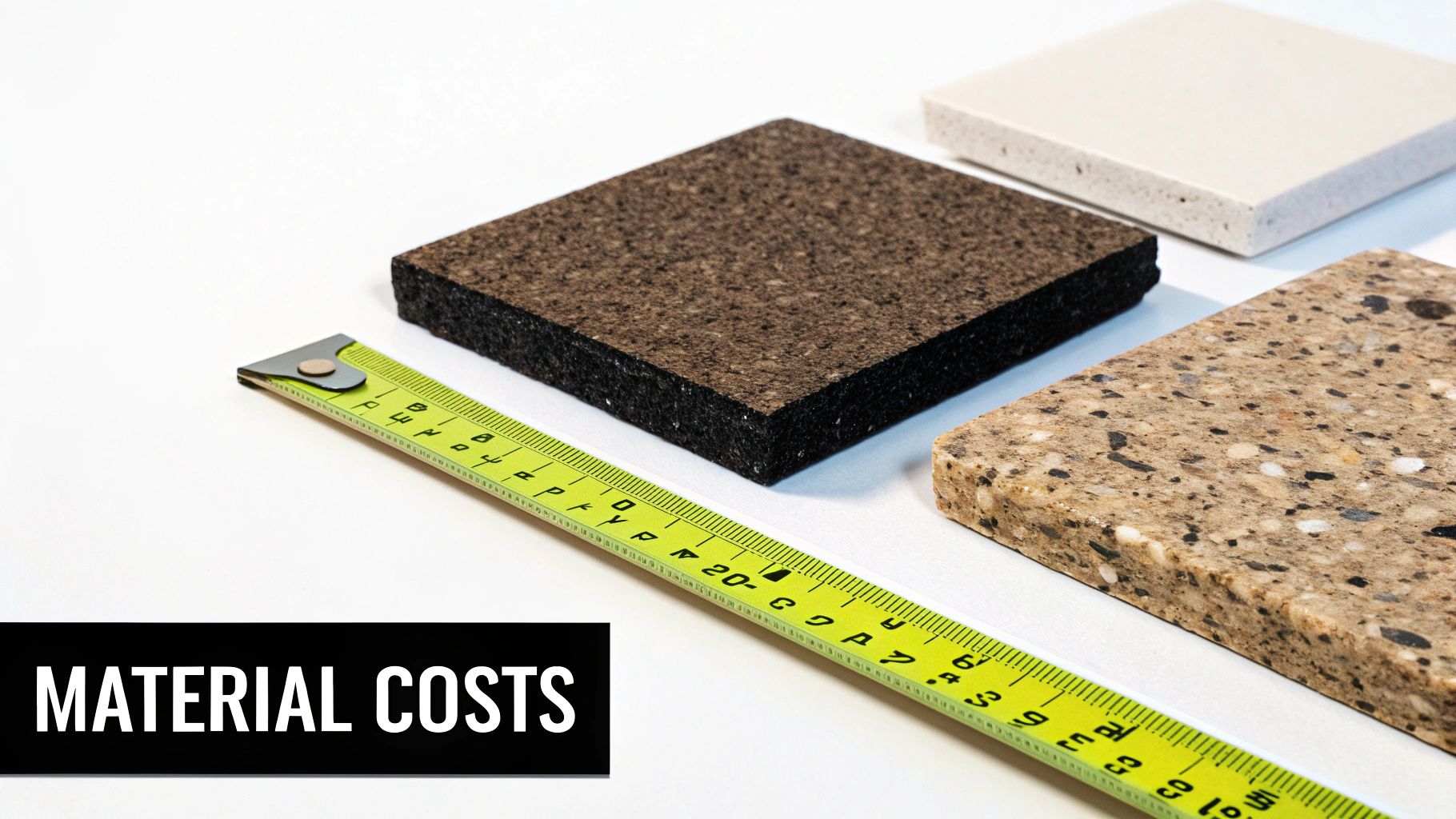
Comparing Countertop Materials
Your countertop does more than just sit there and look pretty; it's a workhorse that has to stand up to water, soap, and daily use. The material you pick will have a major effect on both the final price tag and how much upkeep you’ll be doing down the road.
Let’s break down some of the most popular choices:
- Laminate: This is your most budget-friendly option, hands down. It comes in a massive range of colors and patterns and is a breeze to clean, but it can be vulnerable to scratches and heat.
- Cultured Marble: A smart man-made material that gives you the look of natural stone without the hefty price. It’s non-porous and simple to maintain, though it can pick up scratches over time.
- Granite: A classic for a reason. This natural stone is famous for its durability and one-of-a-kind patterns. It does need to be sealed now and then to keep stains away, but it holds up incredibly well.
- Quartz: As an engineered stone, quartz is about as tough as they come. It’s non-porous, resists scratches and stains, and is available in a wide variety of consistent colors, making it a top-tier, low-maintenance workhorse.
If you want to make sure your cabinet is as durable as your countertop, take a look at our guide on the best material for bathroom cabinets to create a truly solid design.
To give you a clearer picture, it helps to see how these materials stack up side-by-side.
Comparing Bathroom Vanity Countertop Materials
Choosing the right countertop is a balancing act between your budget, your style, and how much time you want to spend on maintenance. This table breaks down what you can expect from the most common options.
| Material | Average Cost per Square Foot | Pros | Cons |
|---|---|---|---|
| Laminate | $20 – $50 | Highly affordable, wide variety of designs, easy to clean. | Prone to scratches and heat damage, can delaminate over time. |
| Cultured Marble | $40 – $100 | Seamless one-piece design (integrated sink), non-porous, easy maintenance. | Can scratch or chip more easily than natural stone. |
| Granite | $50 – $150+ | Extremely durable, heat resistant, each slab is unique. | Porous and requires regular sealing to prevent stains. |
| Quartz | $60 – $200+ | Non-porous, highly resistant to scratches and stains, consistent patterns. | Higher upfront cost, can be damaged by extreme heat. |
Ultimately, this comparison shows there’s a great option for just about every budget and lifestyle, whether you prioritize affordability or bomb-proof durability.
The Surprising Cost of Faucets and Hardware
It’s so easy to overlook the little things, but faucets and hardware are where costs can sneak up on you—fast. A basic, functional chrome faucet might only set you back $50 to $100. But a designer fixture in a trendy finish like matte black, brushed gold, or oil-rubbed bronze? That can easily run $300 to $600, or even more.
This is a perfect example of how small choices can dramatically inflate your material costs. The same goes for cabinet pulls and knobs. You can find simple hardware for just a few dollars a pop, while artisanal or designer pieces can cost $20 to $50 each. On a big double vanity with lots of doors and drawers, that can add hundreds to your final bill.
Think of your faucet and hardware as the "jewelry" for your bathroom vanity. A high-end faucet can easily cost more than a budget cabinet, making it a critical line item to watch when you're planning your expenses.
At the end of the day, these material choices give you a fantastic chance to make your vanity your own. By understanding where the money goes—from the countertop slab down to the drawer pulls—you can make smart decisions, splurging where it matters most to you and saving where it makes sense.
DIY vs. Pro: A Realistic Cost-Benefit Analysis
It’s the question every homeowner asks themselves while wandering the aisles of the hardware store: "Can I just do this myself?" When you look at the total bathroom vanity installation cost, the DIY route is incredibly tempting. After all, labor can easily eat up 30% to 50% of your budget, and cutting that out feels like a huge win.
The appeal is obvious. You picture a productive weekend, the satisfaction of a job well done, and a little extra cash in your pocket. For the right person and the right project, this is absolutely achievable. But before you jump in, it’s smart to weigh those potential savings against the very real risks.
The True Cost of a DIY Mistake
Before you clear your schedule and break out the toolbox, you need a clear-eyed view of what’s at stake. Installing a vanity isn't just about screwing a box to the wall. It involves plumbing, leveling, and securing a heavy, awkward fixture. One little mistake can snowball into a massive headache.
A poorly sealed drain or an improperly tightened water line can cause a slow leak. This isn't just a harmless drip—it's a silent project-killer that can cause thousands of dollars in damage to your subfloor, drywall, and the ceiling below before you even know it's there.
A weekend project that saves you $500 in labor can quickly turn into a $5,000 repair if a plumbing connection fails. The cost of professional water damage remediation far outweighs the initial savings of a DIY installation gone wrong.
And what about the tools? Do you already own a good level, a basin wrench, pipe wrenches, a stud finder, and a hole saw? Buying or renting specialty tools can quickly chew through your projected savings, sometimes costing you a couple of hundred bucks for a one-time job.
When DIY Makes Perfect Sense
Despite the warnings, tackling a vanity installation yourself can be a fantastic, rewarding project—under the right circumstances. The key is to be brutally honest about your skills and the complexity of the job.
The perfect DIY scenario is a "like-for-like" replacement. This is where you’re just swapping an old vanity for a new one of the exact same size and configuration, and all the plumbing lines up perfectly.
Here’s when a DIY approach is a great fit:
- Simple Swaps: You’re replacing a standard freestanding vanity with another of the same dimensions.
- Existing Plumbing: The water supply lines and drain pipe are exactly where they need to be for the new unit. No adjustments needed.
- You Have the Tools: You’ve already got the necessary plumbing and carpentry tools ready to go.
- Basic Skills: You’re comfortable shutting off the main water valve, connecting supply lines, and making sure the cabinet is perfectly level and secured to the wall.
If this sounds like your project, our guide on installing a bathroom vanity offers a great step-by-step walkthrough to help you gauge the demands of the job.
When to Call a Professional
On the flip side, some situations should be immediate red flags, telling you it’s time to call in a pro. The risk of a costly error skyrockets the moment the project moves beyond a simple swap.
You should hire a professional if your project involves any of the following:
- Moving Plumbing: If the new vanity requires shifting the water supply or drain lines even by an inch, you need a licensed plumber.
- Wall Modifications: Installing a floating vanity? That requires adding structural support (blocking) inside the wall—a job best left to someone with experience.
- Electrical Work: If your new vanity has built-in lighting or outlets, a licensed electrician is non-negotiable.
- Uneven Floors or Walls: Old houses are rarely perfectly square. A pro knows how to shim and scribe a vanity for a seamless, custom-fit look against imperfect surfaces.
In the end, the decision comes down to a realistic assessment. A successful, simple DIY swap is a clear financial victory. But for any project with twists and turns, the professional bathroom vanity installation cost is really an investment in peace of mind, ensuring the job is done right, up to code, and without the risk of a watery disaster down the road.
Smart Ways to Save on Your Vanity Installation
Knowing what drives up your bathroom vanity installation cost is half the battle. The other half? Actively managing those costs. With a few smart moves, you can bring your final bill down significantly without sacrificing the look or quality you're after. This isn't about cutting corners—it's about making savvy choices that get you the most bang for your buck.
Think of it like planning a vacation. You can book everything at the last minute and pay top dollar, or you can book flights in advance, travel during the off-season, and find a great hotel deal. You still get a fantastic trip, but you're left with more money in your pocket. Applying that same mindset here can unlock some serious savings.
Be a Savvy Shopper
Where and when you buy your materials can make a huge difference before a single tool even comes out of the box. A little patience and research here will pay off big time. Don't just grab the first vanity that catches your eye.
- Shop Seasonal Sales: Keep an eye out for big sales events. Retailers love to offer deep discounts during holiday weekends like Memorial Day, Labor Day, and Black Friday. Planning your purchase around these times can easily save you 20% to 40% on the vanity unit itself.
- Consider Floor Models or Discontinued Styles: Showrooms need to make space for new inventory, so they often sell their floor models at a steep discount. You can score a high-end vanity for a fraction of its original price if you're not chasing the absolute latest trend.
- Look at Budget-Friendly Materials: Instead of splurging on a solid granite or marble top, check out the newer, high-quality laminate or cultured marble options. They look fantastic, hold up well, and come at a much friendlier price point.
Here's a pro tip: Smart savings often come from separating the purchase from the installation. Buying your vanity directly from a retailer during a sale and then hiring a local professional just for the install can be way more cost-effective than a package deal from one company.
Optimize Your Installation Strategy
How you line up the actual work is another huge opportunity to keep costs in check. The key is to make your pro's time as efficient as possible.
The single most important thing you can do is get at least three detailed quotes from different professionals. This isn't just about hunting for the lowest number. Comparing itemized bids helps you see what the fair market rate really is and lets you spot any red flags or services that seem way overpriced.
Also, think about bundling jobs. If you're already planning to replace a toilet or update your shower fixtures, have it all done at the same time as the vanity install. Most plumbers would rather book a full day of work and will often give you a better overall rate than they would for several small, separate visits. If you need more ideas, check out these tips for affordable bathroom renovations on a tight budget.
Embrace Strategic DIY
You don't have to be a master plumber to save money on labor. By taking on some of the non-technical prep and cleanup work yourself, you can cut down on the number of hours you're paying a pro for.
Consider handling these straightforward tasks on your own:
- Demolition: Carefully removing the old vanity, countertop, and mirror is a simple job that can save you an hour or two of paid labor. Just be sure to turn the water off first!
- Preparation: Patching any small holes in the drywall or putting a fresh coat of primer on the wall behind the vanity are perfect DIY tasks.
- Final Touches: Once the pro has handled the plumbing and secured the new unit, you can easily take over for the final wall painting and cleanup.
Your Vanity Installation Questions Answered
Even after you've crunched the numbers, a few specific questions always seem to pop up right when you're ready to finalize your plans. Let's tackle some of the most common queries about bathroom vanity installation costs with some clear, straightforward answers.
How Much Does a Plumber Charge to Install a Bathroom Vanity?
Getting a licensed plumber involved is a key part of the budget, and their rates can vary. You can typically expect to pay somewhere between $70 and $150 per hour for their professional skills.
For a basic, no-frills vanity swap—disconnecting the old one, then hooking up the new sink and faucet—a plumber will likely need 2 to 4 hours. That puts your plumbing labor cost somewhere in the $140 to $600 ballpark. But be warned: if you need to move any of the supply or drain lines, that "simple job" suddenly gets a lot more complicated, adding serious time and money to the project.
Does Installing a Floating Vanity Cost More Than a Standard One?
Yes, almost every time. A floating or wall-mounted vanity will cost you more to install than a standard freestanding one, and it all comes down to the extra labor required to hang it safely and securely.
Think about it—a floating vanity has to defy gravity. It needs rock-solid support inside the wall to hold the weight of the cabinet, the countertop, and a sink full of water. This isn't just a matter of a few extra screws. The process usually involves:
- Cutting into the drywall to get to the wall studs.
- Adding new structural supports, called "blocking," between those studs.
- Mounting the vanity securely onto this brand-new framework.
- Patching, finishing, and painting the drywall so it looks like it was never touched.
All that extra work requires more time and a higher skill level, which bumps up the labor cost.
What Are Some Hidden Costs I Should Budget For?
Ah, the renovation surprise. It's almost a guarantee that you'll uncover something unexpected, and vanity installations are no different. That's why it's always a good idea to have a little extra cash set aside for those "just in case" moments.
Pro tip: A smart budgeting rule of thumb is to add a 10-15% contingency fund on top of your total estimated cost. This buffer keeps unexpected discoveries from blowing up your budget or derailing your project.
Here are a few of the most common hidden costs that can pop up:
- Subfloor or Drywall Repair: Finding water damage, soft spots, or even mold after you pull out the old vanity.
- New Plumbing Parts: Realizing the old shut-off valves are corroded shut or the P-trap has seen better days.
- Disposal Fees: The cost to actually haul away and properly dispose of the old vanity and debris.
- Electrical Work: If your new vanity has fancy integrated lighting or outlets, you'll need to call in an electrician.
Ready to transform your bathroom with a stunning new vanity? The experts at Sinclair Cabinetry inc have over 35 years of experience crafting and installing custom, high-quality wood cabinets that redefine elegance and functionality. Explore our custom bathroom vanity solutions today!