

Choosing between framed and frameless cabinets might feel like a minor detail, but it ripples through every aspect of your project—from the overall style to how much you can stash inside and even how installers tackle uneven walls.
By definition, framed cabinets carry a 1.5-inch solid wood face frame on the front of the box, giving that familiar, sturdy look. Frameless cabinets skip the frame altogether, delivering clean lines and more interior elbow room.
Unpacking The Great Cabinet Debate
When you’re sketching out a kitchen or bathroom remodel, the cabinetry style you pick often sets the tone. On one side, you’ve got the classic American approach—robust, forgiving, built to last. On the other, European-inspired frameless boxes aim for sleek efficiency and every last inch of storage.
Here’s how designers and homeowners typically weigh these two philosophies:
-
Classic Framed Cabinets
• Embrace a traditional aesthetic with inset or overlay doors
• Tolerate slightly uneven walls thanks to the sturdy face frame
• Anchor hinges and hardware with rock-solid stability -
Modern Frameless Cabinets
• Showcase minimal gaps for a seamless, contemporary look
• Unlock up to 15% more usable storage space
• Demand precision installation to keep doors and drawers aligned
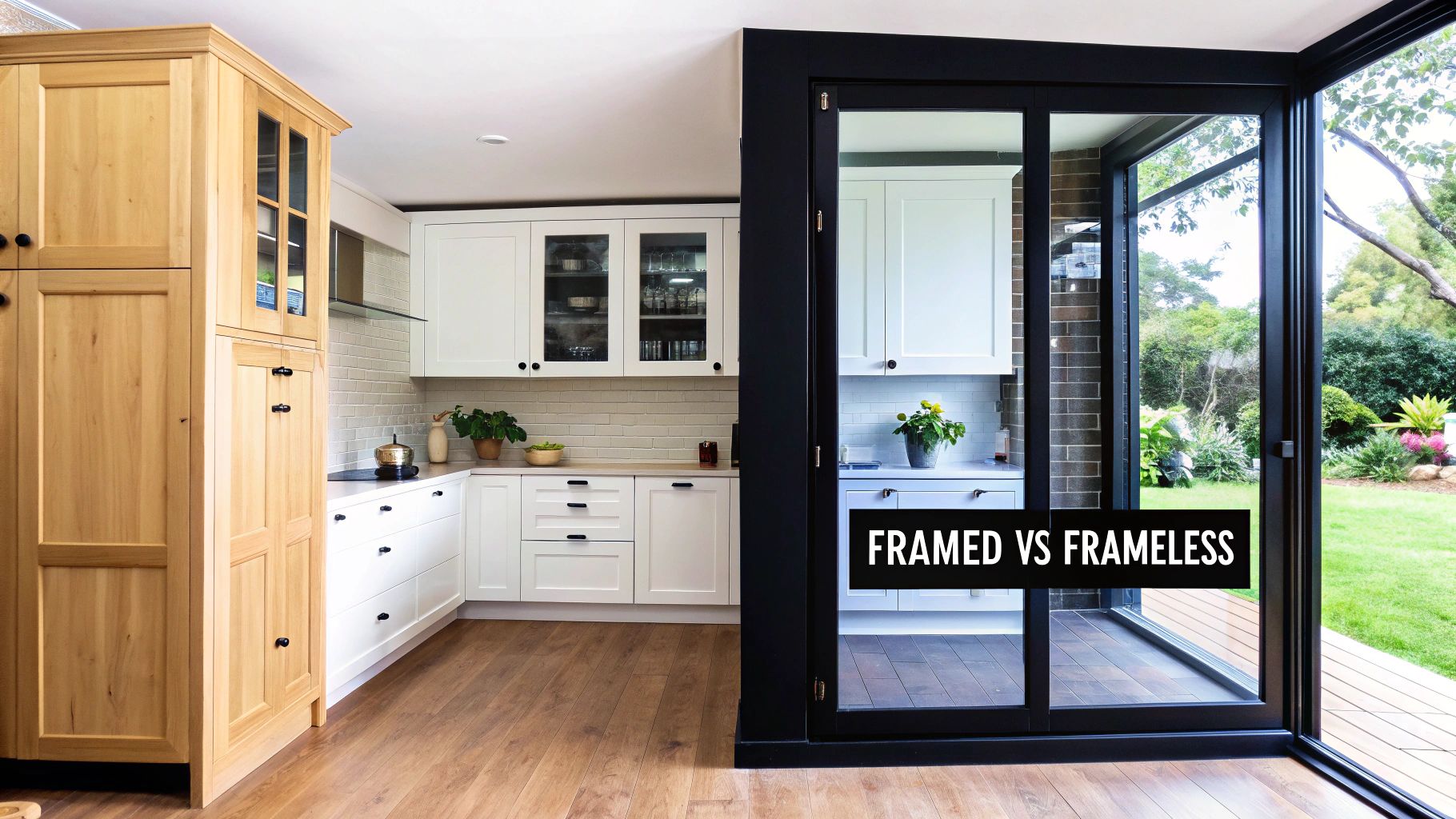
Framed Cabinets (American Style)
Framed cabinets feature that unmistakable solid-wood front frame. It adds rigidity, making doors hang perfectly even if your walls aren’t. Installers love how the frame hides minor imperfections and provides a robust anchor for everything from soft-close hinges to heavy glass doors.
Frameless Cabinets (European Style)
By dropping the face frame, frameless cabinets offer edge-to-edge access—no center stile blocking your goodies. The box itself is built thicker to compensate, and hardware carries the load. The result feels crisp and uncluttered, a top pick for ultra-modern kitchens and tight spaces.
Choosing between these two isn’t purely aesthetic. It’s a trade-off: the forgiving strength of a face frame versus the unrestricted access of frameless design.
Below, you’ll find a quick summary of how these styles compare across six critical criteria. Use it as a starting point before diving into detailed case studies and real-world examples.
At a Glance Key Differences Between Cabinet Styles
| Feature | Framed Cabinets (American Style) | Frameless Cabinets (European Style) |
|---|---|---|
| Construction | Cabinet box with a 1.5-inch solid wood face frame attached to the front. | Thicker cabinet box with no face frame, doors mount directly to sides. |
| Appearance | Traditional look—supports inset, partial, and full-overlay doors. | Seamless contemporary look; minimal gaps around doors and drawers. |
| Accessibility | Slightly restricted openings; center stiles on double doors. | Full, unobstructed access to the entire interior. |
| Storage Space | Frame takes up interior space; slightly less cubic footage. | Up to 15% more usable storage; wider drawers possible. |
| Installation | Frame can mask uneven walls; more forgiving alignment. | Demands precise, level cabinet runs for proper fit and function. |
| Durability | Face frame adds exceptional rigidity and long-term stability. | Relies on a robust box and premium hardware to maintain strength. |
This snapshot lays the groundwork for exploring detailed pros and cons, real-world scenarios, and a tailored decision checklist. Whether you’re updating a cozy powder room or designing a luxury chef’s kitchen, understanding these core differences brings you one step closer to the perfect fit.
The Enduring Appeal of Framed Cabinet Construction
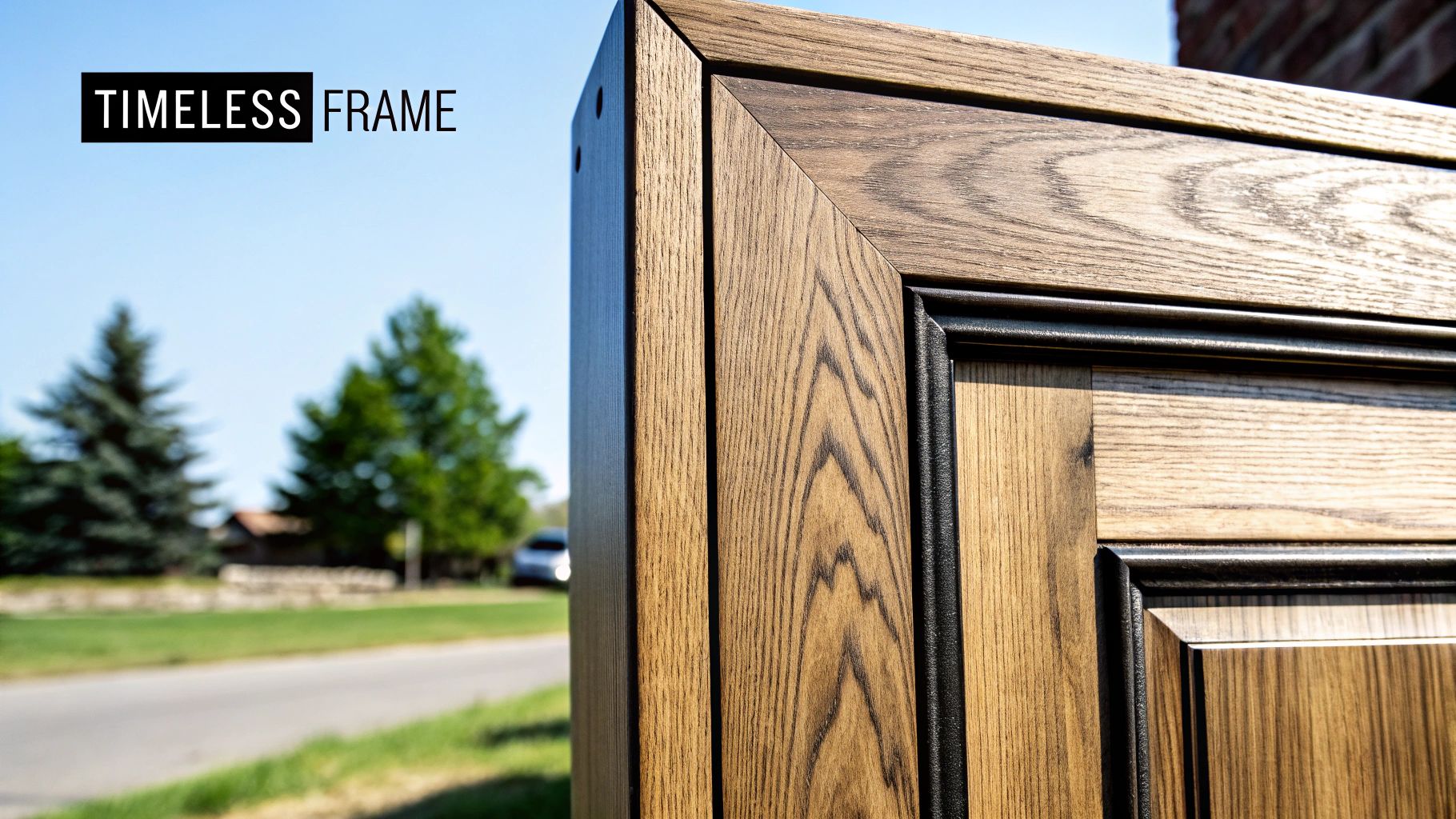
Framed cabinets are the tried-and-true backbone of American kitchen design, and for good reason. They are valued for their incredible strength and timeless look. The concept is straightforward: a solid wood frame, usually 1.5 inches wide, is built and then attached to the front of the cabinet box.
This simple addition fundamentally changes the cabinet's structure. This face frame acts like an outer skeleton, giving the box remarkable rigidity and preventing it from twisting or "racking" over decades of use. That structural integrity is a huge plus, especially for cabinets made from real wood that can shift with changes in temperature and humidity.
This isn't just about sticking to tradition; it’s about proven performance. Framed cabinets have long been the standard in the U.S. market, accounting for roughly 55-60% of all installations as of 2025 because they’re durable and incredibly versatile. Here in Florida, that extra reinforcement helps our kitchens stand up to the humidity, ensuring they last for the long haul.
Unmatched Durability and Installation Forgiveness
The biggest win for the face frame is its raw strength. Because the doors are mounted directly onto this solid wood frame instead of the thinner cabinet box walls, the hinges have a much stronger anchor point. This setup takes a massive amount of stress off the cabinet box itself, which means your doors will stay perfectly aligned for years, no matter how much you use them.
The face frame also offers a huge practical advantage during installation. It creates a slight lip that expertly hides minor imperfections in walls that aren't perfectly straight or plumb.
This built-in tolerance makes framed cabinets a godsend for remodelers working in older homes where the walls are never perfect. It can simplify the installation process and even cut down on labor time.
This reinforcement also means the cabinet box can be built from slightly thinner materials without sacrificing overall strength, which can be a factor in both material costs and the cabinet's final weight. To get into the nitty-gritty, you can explore our detailed guide on what a face frame cabinet is.
A Foundation for Diverse Aesthetic Styles
Beyond its brawn, the face frame is a designer's best friend. It acts as a canvas for a massive range of door styles, empowering homeowners to create looks that range from classic farmhouse to sleek and transitional. This adaptability is one of the biggest reasons it has remained so popular.
Often, the final choice between framed vs frameless cabinets boils down to the look you're trying to achieve, and framed construction simply gives you more stylistic roads to travel.
- Inset Doors: The door sits perfectly flush within the face frame, creating a clean, high-end look with precise, tight gaps. It's a style that truly showcases the cabinetry's craftsmanship.
- Partial Overlay Doors: Here, the door covers part of the face frame, leaving a sliver of the frame visible around the edges. This is a classic, cost-effective look that never goes out of style.
- Full Overlay Doors: The door covers almost the entire face frame, giving you an appearance that’s very similar to frameless cabinetry but with the robust strength of a framed box underneath.
This ability to support so many different door styles makes framed cabinets an incredibly flexible choice. Whether you’re dreaming of a rustic kitchen with classic inset doors or a sophisticated, transitional space with full overlay doors, framed construction provides the solid foundation to bring that vision to life with enduring quality.
The Modern Efficiency of Frameless Cabinets
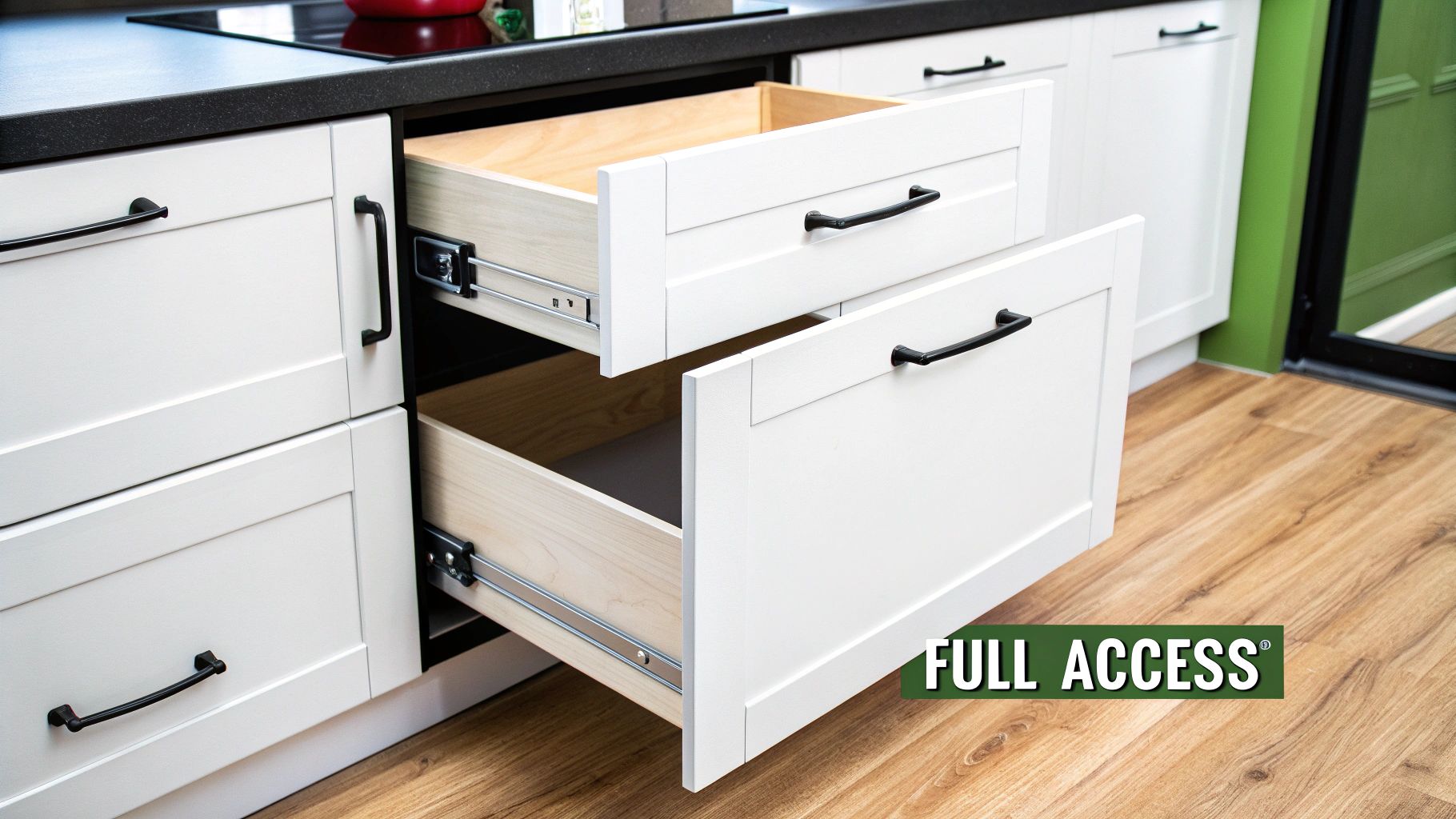
While framed cabinets have a traditional appeal, frameless cabinets bring a distinctly modern sensibility to the table, defined by clean lines and incredible efficiency. Often called European-style cabinets, their design philosophy is simple but powerful: get rid of the face frame altogether.
In this style of construction, the cabinet doors and drawer fronts attach directly to the sides of a thicker, more robust cabinet box. This small change makes a huge visual difference, creating the seamless, full-overlay look that’s become a signature of contemporary and minimalist design. The gaps between doors are minimal—often just a few millimeters—presenting a sleek, uninterrupted surface.
The popularity of frameless cabinetry is booming. It now commands an impressive 40-45% of the U.S. market share, a massive jump from just 10% a decade ago, fueled by the demand for modern aesthetics. This trend is especially strong in urban markets like those near Cape Coral, where homeowners are looking to maximize every inch in contemporary renovations. You can dig deeper into this market shift in this 2026 cabinetry analysis.
Maximizing Every Inch of Storage
One of the biggest draws of frameless construction is the serious gain in usable storage. By eliminating the 1.5-inch face frame that partially blocks the cabinet opening, you get full, unhindered access to everything inside.
This translates to a significant bump in functional space—often up to 15% more than a framed cabinet of the same size. You’ll feel this benefit right away in a few key areas:
- Wider Drawers: Without a frame narrowing the opening, drawers can be built wider, sometimes gaining up to 1.5 inches of valuable real estate. This is a game-changer for storing large utensils, pots, and pans.
- Unobstructed Access: Getting things out of a frameless cabinet is just plain easier. There’s no center stile on double-door cabinets, so storing and retrieving bulky items like serving platters or small appliances is a breeze.
- Easier Cleaning: The smooth, open interior without a frame lip makes wiping down shelves and corners a much simpler chore.
This space optimization isn’t just a minor perk; it’s a core feature that can fundamentally improve a kitchen’s functionality, especially in smaller layouts where every inch truly counts.
The Critical Role of Precision and Hardware
The streamlined beauty of frameless cabinets comes with a non-negotiable requirement: precision. Because there's no face frame to hide slight imperfections or misalignments, the cabinet box must be perfectly square, and the installation has to be flawless. Your walls and floors need to be level to ensure the doors and drawers line up perfectly with those minimal gaps.
This need for precision extends to the hardware, which plays a far more critical structural role than in framed cabinetry. Since the doors mount directly to the cabinet box, high-quality hinges are absolutely essential for stability and smooth, long-term operation.
Premium European-style hinges are engineered to support the full weight of the door while allowing for fine-tuned adjustments. These components are the unsung heroes that ensure your doors hang perfectly and function reliably for years. For homeowners considering this style, it’s vital to understand what frameless cabinets are and the advanced manufacturing required to achieve their signature look. The reliance on thicker box materials and superior hardware is exactly what gives high-end frameless cabinetry its robust, lasting quality.
Style, Storage, and Durability: A Side-by-Side Look
Choosing between framed and frameless cabinets isn't just about how they're built—it’s a decision that defines your room's entire feel, how it functions day-to-day, and how well it holds up over time. These two styles come from completely different design philosophies.
Framed cabinetry is all about traditional, familiar structure, while frameless is built for sleek efficiency and maximizing every inch of space. Seeing how these differences play out in the real world is the key to picking the right one for your home.
Comparing Style and Aesthetics
The first thing you’ll notice is the look, and the difference is huge. Framed cabinets have a design flexibility that has kept them a top choice for generations. The face frame itself is an architectural detail, giving you a canvas for all kinds of styles.
- Traditional and Transitional: The frame is a natural fit for classic designs. When you use inset or partial overlay doors, the frame becomes part of the cabinet's personality, adding a sense of depth and character.
- Design Versatility: That solid frame is a strong anchor, so it can easily support heavier or more detailed door styles. This makes it perfect for everything from a rustic farmhouse kitchen to a more elegant, transitional space.
On the other hand, frameless cabinets are pure modern minimalism. The entire look is built on clean lines and smooth, unbroken surfaces. Doors and drawers mount right to the cabinet box, shrinking the gaps between them to create that seamless, uniform appearance people love in contemporary design. It's no wonder they're a go-to for modern condos and minimalist homes.
The big question on aesthetics is simple: Do you want your cabinets to have visible architectural detail (framed), or do you want a clean, monolithic look that blends right into the room (frameless)?
Evaluating Storage and Accessibility
Beyond looks, the practical side of storage is a huge part of the frameless vs. framed debate. This is where frameless construction really pulls ahead. By getting rid of the 1.5-inch face frame that eats into the opening, you get complete, easy access to everything inside.
This simple change can give you up to 15% more usable space in each cabinet. It might not sound like much at first, but it makes a massive difference across an entire kitchen.
- Wider Drawers: Without a frame in the way, drawers can be built wider. That means more room to organize silverware, pots, and pans without cramming things in.
- No Center Stile: On double-door cabinets, there’s no vertical beam down the middle. You can slide large platters, mixing bowls, and small appliances in and out without having to twist and turn them.
Framed cabinets are still highly functional, even if they give up a little cubic footage. The trade-off for that super-strong face frame is a slightly smaller opening. But with modern hardware like pull-out shelves and clever organizers, you can easily make up for most of the difference. It all comes down to what you prioritize: getting every last inch of space (frameless) or gaining extra rigidity (framed).
Understanding Durability and Longevity
Both cabinet styles are designed to last for years, but they get their strength in different ways. The true longevity of either style depends on the quality of the materials and the precision of the build. To get into the nitty-gritty, you can explore the different cabinet construction methods and learn what separates a great build from an average one.
Framed cabinets get their muscle from a solid wood face frame. This frame acts like a skeleton, keeping the cabinet box from twisting or racking over the years. It also gives the hinges an incredibly strong mounting point, which means your doors are far less likely to sag or get out of alignment, even with heavy use. This built-in strength makes framed cabinets tough and forgiving.
Frameless cabinets take a different approach. Since there's no face frame, the cabinet box itself has to be stronger. They are typically built from thicker, 3/4-inch plywood or particleboard. The durability of a frameless cabinet really comes down to two things: the quality of that box and the quality of the hardware.
High-end, fully adjustable European hinges aren't just for opening and closing the door—they are a critical part of the cabinet's structure. They have to support the full weight of the door and keep it perfectly aligned. When built with top-tier materials and hardware, frameless cabinets are incredibly durable and will serve you well for decades. The trick is to ensure the manufacturer uses premium components and precise assembly, because there's less room for error with this style.
How to Choose the Right Cabinets for Your Project
So, how do you make the final call between frameless and framed cabinets? It really boils down to your specific project. Theory is great, but seeing how these styles actually perform in the real world is what gives you the confidence to choose. What works for a sprawling suburban kitchen just won't be the best fit for a tight urban condo.
This whole process is a balancing act between your aesthetic vision and the practical stuff—storage, durability, and how you actually use the room. When you match the cabinet’s core strengths to what you’re trying to achieve, you get a result that not only looks incredible but also works perfectly for your lifestyle.
For a Classic Suburban Kitchen Remodel
In a traditional or transitional family kitchen, framed cabinets are usually the way to go. Their solid wood face frames are built like a tank, easily handling the daily abuse from kids and a busy household. That inherent rigidity means your doors will stay perfectly aligned for years, if not decades.
From a design standpoint, that face frame is the perfect canvas for timeless door styles like inset or partial overlay—the very looks that define classic American kitchen design. The frame also gives you a practical leg up during installation, since it can hide minor wall imperfections often found in older homes. If you're planning a kitchen renovation, you can find more great advice in a practical guide to choosing kitchen cabinets.
For a Modern Urban Condo
Frameless cabinets are the undisputed champ for modern, space-conscious living. When every inch counts in an urban condo, the full-access design of frameless construction is a total game-changer. By getting rid of the face frame, you can gain up to 15% more usable storage, which is a massive win for smaller kitchens.
The clean, uninterrupted lines of frameless cabinetry deliver a sleek, minimalist look that makes compact spaces feel bigger and more open. This style is all about precision, giving you that seamless, sophisticated finish that lines up perfectly with contemporary design trends.
The decision here really hinges on your priorities. If timeless durability and a forgiving installation are at the top of your list, framed is your answer. If you need to maximize every inch of storage with a sleek, modern look, frameless is the clear winner.
This flowchart can help you visualize the decision-making process based on what matters most to you: style, storage, or long-term durability.
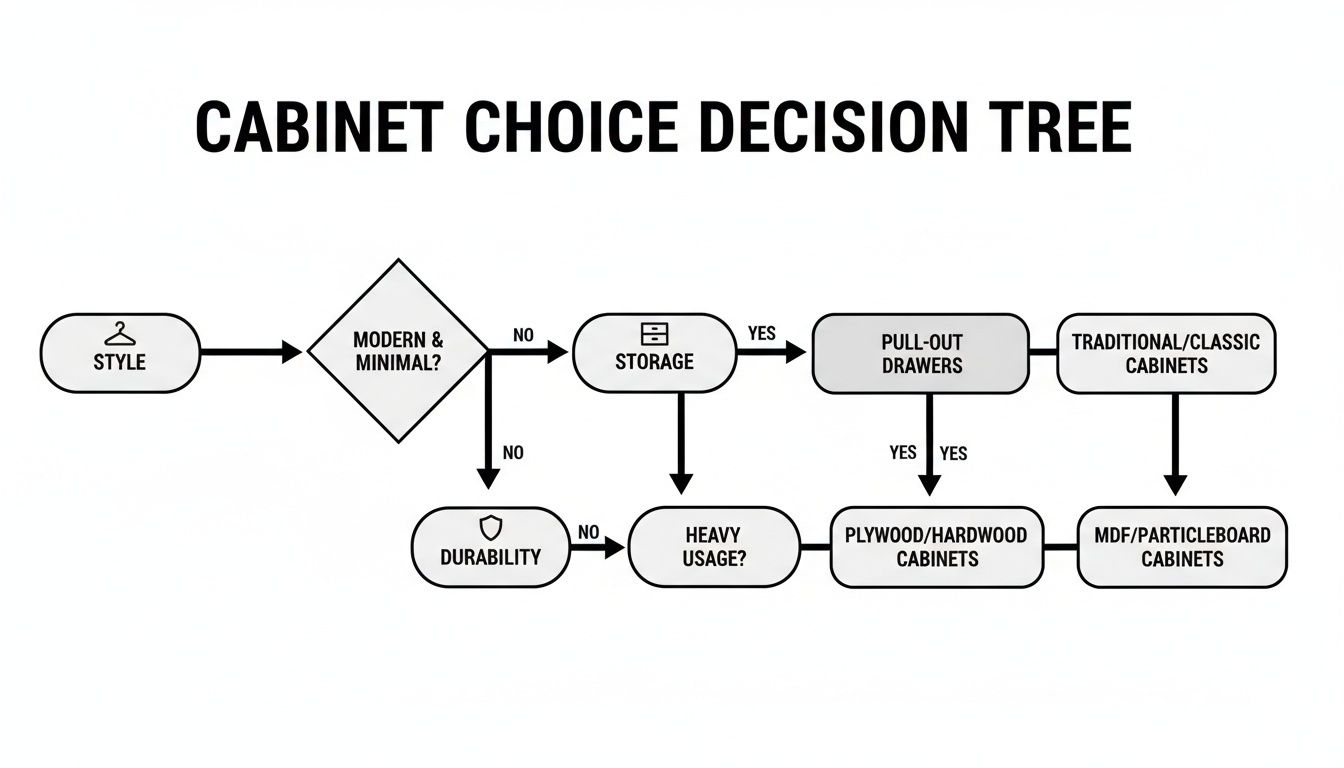
As you can see, your main goal—whether it's nailing a specific look, optimizing space, or ensuring maximum toughness—points you directly to the right cabinet construction.
Specific Use Cases and Recommendations
Moving beyond the kitchen, the choice between frameless and framed can be tailored for other rooms, too, since each has its own unique demands.
-
Bathroom Vanities: Durability is everything in a high-moisture space. While both styles can be built with moisture-resistant materials, the tough structure of a framed cabinet often provides that extra layer of stability, making it a reliable pick for a heavily used family bathroom.
-
Custom Home Offices: Here, it’s all about function and easy access. The full-access interior of frameless cabinets is a huge advantage, giving you unobstructed space for files, printers, and supplies. The wider drawers are perfect for storing large documents and equipment without a hassle.
-
Luxury Builds and Closets: For high-end projects where a seamless, built-in look is the goal, frameless cabinets are the standard. Their clean lines and full-overlay doors create a sophisticated, furniture-like appearance that elevates walk-in closets, entertainment centers, and custom bars.
Let's Talk Brass Tacks: Cost, Installation, and Customization
Looks and storage are one thing, but the real-world decisions often come down to budget, installation headaches, and how much you can truly personalize your space. These factors can make or break your project timeline and final cost, so it’s crucial to know the trade-offs between frameless and framed cabinets before you dive in.
A common myth we hear is that one style is always the budget-friendly choice. The truth? It’s not that simple. The price tag has far more to do with your choice of materials, finishes, and hardware than the construction style itself.
A Closer Look at Cost Differences
Frameless cabinets can sometimes start with a higher price point. That’s because their construction is more demanding—it requires thicker, sturdier box materials like 3/4-inch plywood and more complex, fully adjustable hardware. Without a face frame, these high-quality components aren’t just a nice-to-have; they’re essential for structural integrity.
On the other hand, framed cabinets can get away with slightly thinner box materials because the solid wood face frame does the heavy lifting structurally. But don't let that fool you. Once you start eyeing premium wood species, detailed inset doors, or a custom paint job, the cost of framed cabinets can quickly climb, often soaring past their frameless cousins.
Here's the bottom line: Your material and finish selections will steer the final price far more than the cabinet's core construction. A basic framed cabinet will probably cost less than a premium frameless one, but a fully decked-out framed kitchen can be a much bigger investment.
Installation: Forgiving vs. Fussy
This is where the two styles really part ways, and it directly impacts your labor costs. Framed cabinets are known for being much more forgiving. The 1.5-inch face frame creates a small lip that can cleverly hide minor imperfections in your walls—a huge plus in older homes where perfectly square corners are a fantasy. This built-in flexibility often makes for a faster, simpler installation.
Frameless cabinets, however, demand perfection. Because the doors sit nearly flush with almost no gap, the cabinets have to be installed on a perfectly level and plumb surface. If they're not, you'll see it immediately, and it can mess with how the doors and drawers work. This need for precision means installation can take longer and requires a more skilled installer, which can bump up labor costs.
Making the Cabinets Your Own
Both styles open up a world of customization, so you can absolutely create a look that's uniquely yours. The question isn’t about which one has more options, but which style’s options are the right fit for your vision. To really dig into the possibilities and see how different styles would look in your own home, exploring a professional design studio experience can be a game-changer.
Here’s how their customization strengths break down:
- Framed Customization: This style is the champion of aesthetic variety. You get a huge menu of door styles—inset, partial overlay, and full overlay—plus all the decorative moldings and details that give traditional and transitional designs their character.
- Frameless Customization: Here, customization is all about clean lines and modern function. While your door style is limited to full overlay, the material possibilities are endless. Think high-gloss acrylics, textured laminates, and exotic wood veneers that create a sleek, seamless finish.
In the end, both paths can lead to a stunning, personalized kitchen. The choice between frameless and framed really comes down to balancing the upfront material costs with the potential installation challenges, all while making sure your design dreams align with the unique strengths of each construction method.
Answering Your Cabinet Questions
Making the final call between frameless and framed cabinets is a big decision. It’s an investment in your home, and you want to get it right. We get a lot of questions from homeowners trying to sort through the details, so let’s clear up a few common ones.
Are Frameless Cabinets Really Less Durable?
Not at all, provided they’re built correctly. It’s a common myth that the lack of a face frame makes them weak. While a framed cabinet gets its muscle from the solid wood frame, a quality frameless cabinet is engineered differently. It uses thicker, more robust box materials—typically 3/4-inch plywood—to provide that necessary strength.
Durability really comes down to the quality of construction and hardware. When we build frameless cabinets with premium materials and install them professionally, they are incredibly sturdy and will last for decades. The key is making sure the box construction and hinges are top-notch.
A well-made frameless cabinet will easily outlast a poorly constructed framed one. The most important factor in longevity for either style isn’t the frame—it’s the quality of the materials and the skill of the builder.
Can I Still Get a Modern Look with Framed Cabinets?
Absolutely. While frameless is the natural choice for sleek, minimalist designs, you can get a nearly identical look with framed cabinets by opting for full-overlay doors. This door style covers almost the entire face frame, leaving only a sliver of space between doors and drawers.
This approach gives you a fantastic blend of both worlds: the clean, modern aesthetic you’re after, plus the classic rigidity and installation flexibility of a framed box. It’s an incredibly popular solution for transitional kitchens that walk the line between contemporary and traditional.
Which Style Gives Me More Customization?
This is a great question, because both styles offer a ton of customization—they just focus on different things.
- Framed cabinets are the champion of aesthetic versatility. You can choose from various door styles like inset, partial overlay, and full overlay. They also open the door to more intricate decorative moldings and classic architectural details.
- Frameless cabinets shine when it comes to customizing with modern finishes and unique materials. This is where you’ll see stunning high-gloss acrylics, textured laminates, and exotic wood veneers that create a seamless, uninterrupted look.
Ultimately, neither style will hold you back. The right choice depends on your vision. If you’re drawn to architectural details and classic lines, framed is a great fit. If your style is all about clean surfaces and material-focused design, frameless is the way to go.
Ready to bring your vision to life with cabinetry that perfectly matches your style and needs? The experts at Sinclair Cabinetry inc are here to help you design and build the custom kitchen, bathroom, or closet of your dreams. Explore our gallery and schedule your consultation at https://sinclaircabinets.com.