
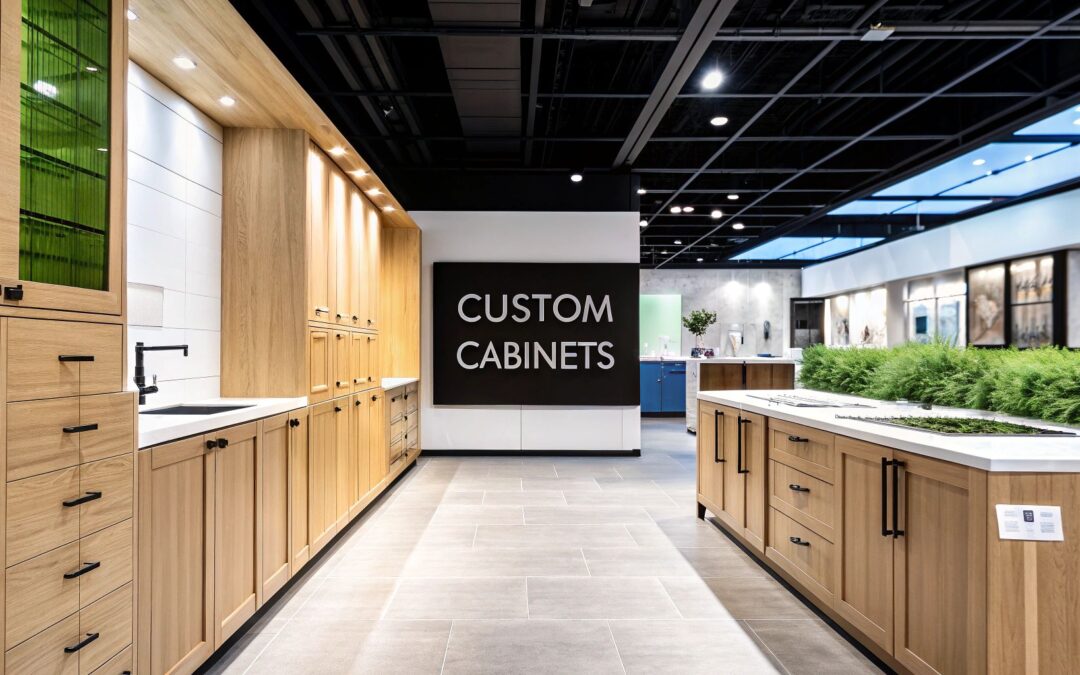
So, you're ready to find a "custom cabinet company near me" and kickstart a real home transformation. This is the moment you move past the generic, off-the-shelf stuff and into a space that’s designed just for you. A local artisan brings a level of quality and personalization that the big-box stores just can't touch. Let’s walk through how to find the perfect partner for your project.
Your Search for Bespoke Cabinetry Starts Here
Choosing custom cabinetry is about so much more than adding new storage—it's a serious investment in your home’s day-to-day function and long-term value. Unlike stock cabinets, which are mass-produced in standard sizes, bespoke cabinetry is built from the ground up to fit your space like a glove. This approach gets rid of those awkward gaps, uses every last inch for storage, and gives your room a seamless, high-end look.
Picture a kitchen where every single drawer and cabinet is exactly where you need it for your cooking workflow. Or a bathroom vanity that fits perfectly into that unique little alcove. That’s the magic of custom work. With over 35 years of experience under our belts, we at Sinclair Cabinetry live and breathe this philosophy, creating solutions that truly align with a homeowner's life and their home's architecture.
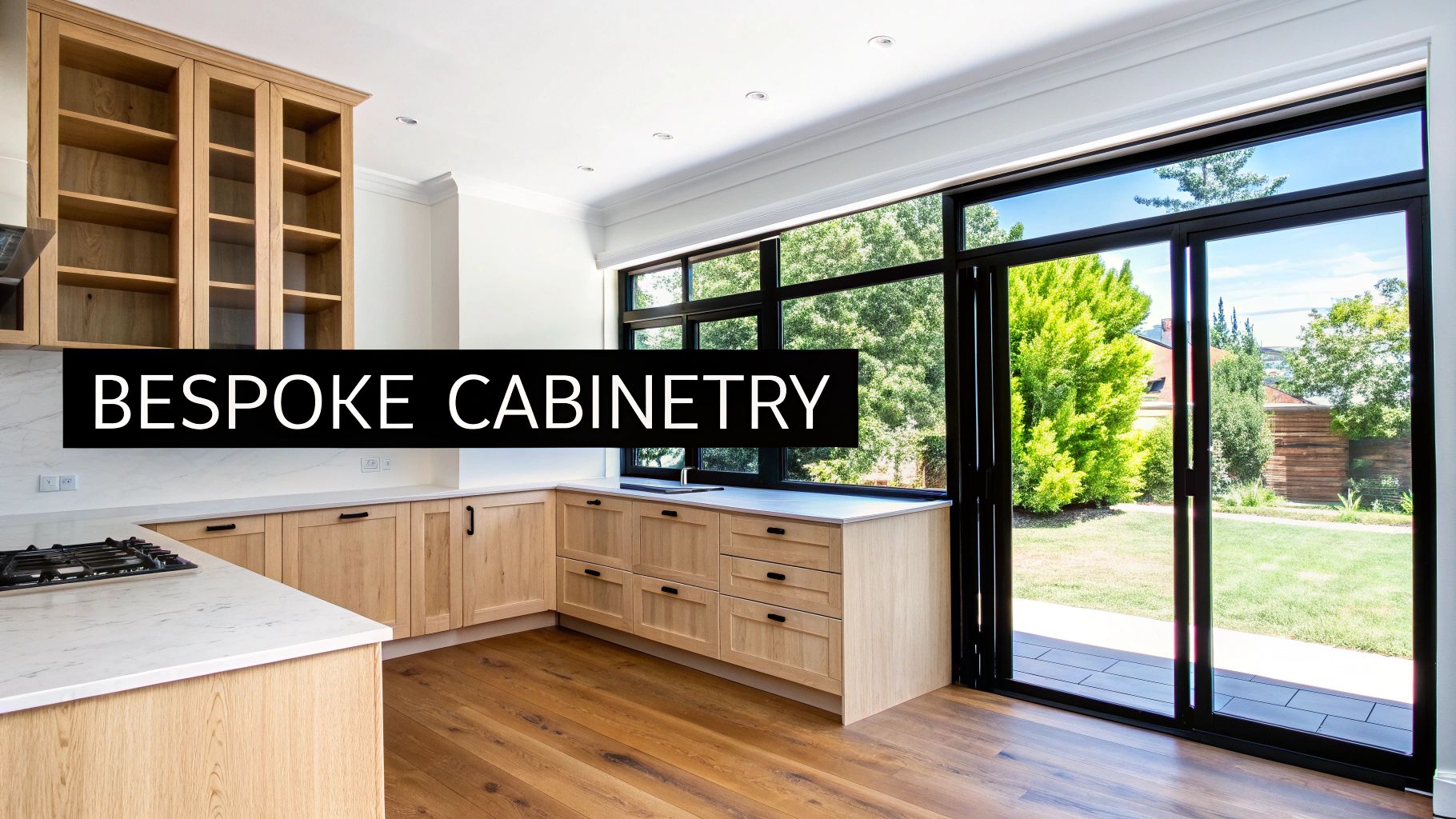
Defining Your Project Vision
Before you start dialing up local shops, take some time to gather inspiration. Trust me, walking into those initial consultations with a clear idea of your style, materials, and must-have features will make the whole process smoother. Start by thinking about the problems you're trying to solve. Is it a constant lack of counter space? Cluttered, disorganized storage? Or just an outdated look that drives you crazy?
A few key things to nail down are:
- Aesthetic Style: Are you leaning modern and minimalist with clean, flat-panel doors, or do you prefer a more traditional look with ornate details?
- Material and Finish: Do you love the natural warmth of wood like walnut, or are you dreaming of a bright, crisp painted finish?
- Functional Needs: What would make your life easier? Think about specialized storage like a pull-out spice rack, a hidden trash bin, or deep drawers for all your pots and pans.
To get the ideas flowing, it's always a good idea to check out the current trends for custom kitchen cabinets. Knowing what you like helps you communicate your vision clearly from the get-go.
The best custom cabinet projects always start with a solid grasp of both what you want it to look like and what you need it to do. A great cabinet maker is more than a builder; they're a partner who helps turn that vision into a functional work of art.
The Value of Local Craftsmanship
Going with a local company has some major perks that go way beyond convenience. A local maker gives you a direct line of communication, so you can be a part of the design and build from start to finish. You can actually visit their workshop, see the quality for yourself, and build a real relationship based on trust.
Plus, a local artisan just gets the regional architecture and material preferences, making sure your new cabinets feel right at home. This hands-on, personal approach guarantees a level of quality and attention to detail that you just don't get from the national chains.
Of course, as you start looking, one of the first questions on your mind will probably be about price. For a detailed breakdown, our guide on how much do custom cabinets cost is a great resource to help you budget effectively.
Finding and Vetting the Right Local Cabinet Maker
Finding the perfect cabinet maker isn't like picking a product off a shelf. You're looking for a true artisan, a partner in your project. While typing "custom cabinet companies near me" into a search bar is a decent first step, the real masters of the craft are often discovered through word-of-mouth and a discerning eye.
You’re not alone in wanting this level of quality. The demand for high-end, personalized cabinetry is surging. The global market is expected to rocket to $35 billion by 2025, and in the US, custom cabinets are projected to jump from 20% of the market in 2022 to 25% by mid-2024. This isn’t just a trend; it's a clear signal that homeowners are tired of one-size-fits-all solutions. You can read more on the high-end cabinet market trends to see just how big this shift is.
Start with the Pros Who Know
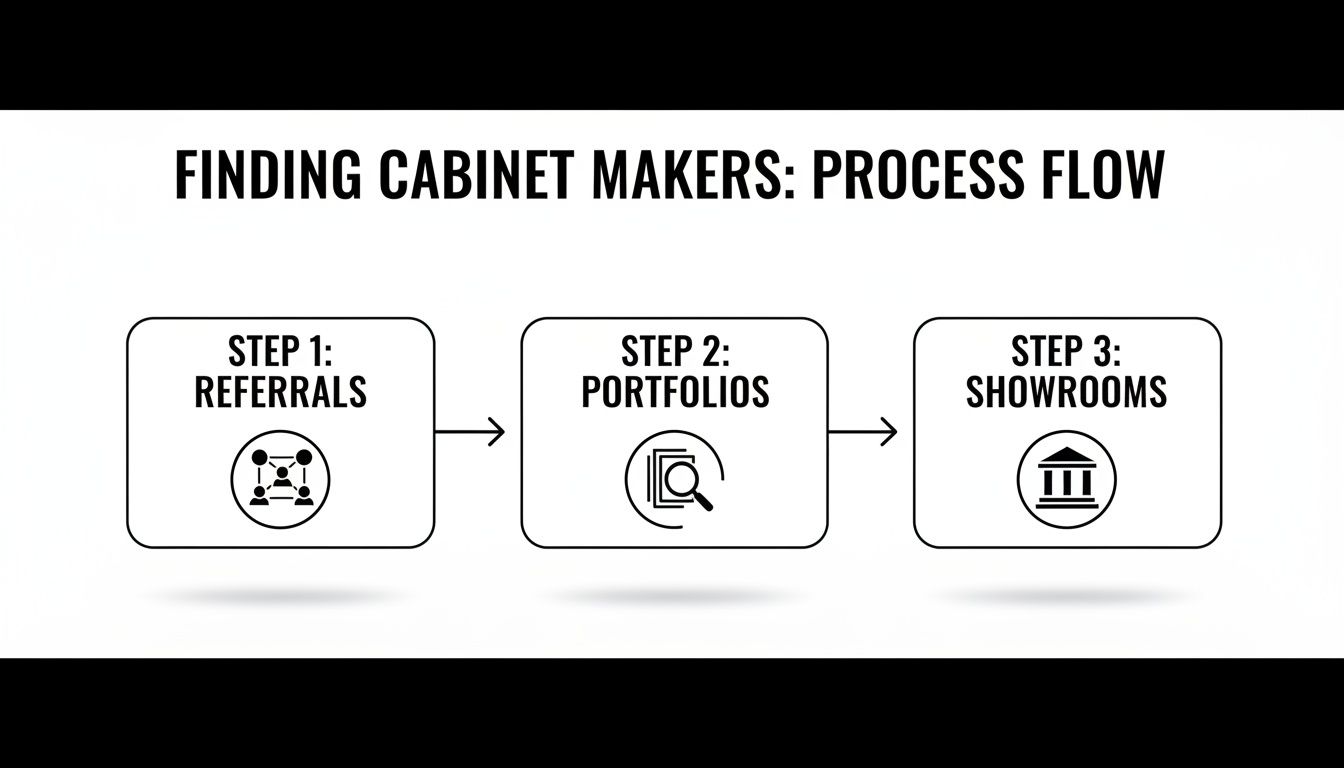
The best cabinet makers often don't need splashy ad campaigns. Their calendars are filled thanks to referrals from other respected professionals in the home industry. Their reputation does the talking for them.
Here’s who to talk to for those insider recommendations:
- Interior Designers: A good designer’s reputation is on the line with every contractor they recommend. They know who delivers consistently high-quality work and who to avoid.
- Custom Home Builders: High-end builders rely on a trusted network of subcontractors. Check out the websites of respected local builders—they often showcase their partners or feature their work prominently in project photos.
- Luxury Real Estate Agents: Agents specializing in upscale properties know exactly which features add real, lasting value to a home. They can point you toward the cabinet makers whose work makes buyers take notice.
Scrutinize Their Online Portfolio
Once you have a few names, it's time to play detective online. A cabinet maker’s website and social media are their virtual portfolio. A strong portfolio, like the one we've built at Sinclair Cabinetry, isn't just a gallery of nice photos—it’s a testament to their skill, range, and attention to detail.
When you're digging through their work, look for these clues:
- Consistent Quality: Are the joints tight and the finishes flawless across all their projects, big and small? This signals a commitment to excellence.
- Stylistic Range: Can they execute modern frameless cabinets as flawlessly as they can traditional framed inset ones? A versatile portfolio proves they have deep technical expertise.
- Revealing Details: Don’t just glance at the wide shots. Look for close-ups of joinery, interior organizers, and wood grain. If all the photos are taken from a distance, they might be hiding something.
Your takeaway from a portfolio should be confidence. You need to see proof of not just beautiful concepts, but of masterful execution. The magic is in the details—that's where true craftsmanship reveals itself.
The In-Person Showroom Test
If a company has a physical showroom, make it a priority to visit. There's no substitute for seeing and feeling the quality of their work up close. You can learn more in ten minutes of touching the materials than you can in hours of scrolling online.
Once you’re there, give the displays a thorough inspection. Open and close the doors and drawers. Do they glide smoothly and shut silently? Examine the seams and corners of the cabinet boxes. Are they perfect? A well-kept showroom with an extensive library of high-quality material samples is a huge green flag. It shows they're an established, professional outfit that takes pride in their work.
By the end of this process, your goal is to have a solid shortlist of three to five companies you feel good about. Combining trusted referrals with a critical eye—both online and in-person—will set you up perfectly for the next step: the interview.
Vetting Your Top Choices With The Right Questions
You’ve done the legwork—you've sifted through referrals, pored over portfolios, and maybe even walked a showroom or two. Now comes the most critical part: interviewing your shortlist of local cabinet makers.
Think of this as more than just a sales pitch; you're the one in the driver's seat. Asking the right questions at this stage can save you from a world of headaches down the road. It's your chance to see past the pretty pictures and understand a company’s process, their philosophy, and how they handle the inevitable bumps in the road.
Diving Deep Into Their Design And Build Process
First things first, you need to know how they turn a sketch into a finished product. A company's design and construction methods say everything about their commitment to quality. This is your shot to understand their craftsmanship from the inside out.
Kick things off by asking about their design philosophy. Do they use 3D rendering software to help you visualize your new kitchen or bathroom before a single piece of wood is even cut? Seeing a realistic digital model is a massive advantage, letting you fine-tune the layout and catch potential issues early. This is a standard practice for us at Sinclair Cabinetry to ensure we’re perfectly aligned with your vision.
Equally important are the nuts and bolts of construction. Ask them to walk you through how their cabinets are built. Get specific.
- Joints: Are they using time-tested dovetail joints for their drawer boxes? Dovetails are known for incredible strength and longevity. Anything less, like staples or dowels, is a red flag.
- Materials: Do they use solid wood for face frames and doors? What grade of plywood do they use for the cabinet boxes themselves? The quality of these core materials matters.
- Hardware: What brand of hinges and drawer slides do they rely on? High-end hardware from companies like Blum is the industry standard for a reason—it ensures your cabinets will open and close smoothly for decades.
Discussing Logistics And Communication
A stunning set of cabinets can be completely ruined by a frustrating, chaotic project management experience. That’s why your next line of questioning should focus on logistics, timelines, and communication. Clear communication is the glue that holds a project together.
Start by asking who your main point of contact will be. Is it the designer? A project manager? The owner? Having a single, dedicated person to call with questions makes the whole process feel much more manageable.
Next, get a handle on their typical project timeline. Every custom job is different, of course, but an experienced company can give you a realistic estimate from design approval to final installation. Ask for a phase-by-phase breakdown.
A great custom cabinet company is an open book. They should welcome detailed questions about their timeline and communication style, seeing it as a sign of an engaged and informed client, not a nuisance.
Finally, talk about installation. Do they use their own in-house installers or subcontract the work? An in-house team almost always means better accountability and a more seamless final product. For an even deeper list, check out our guide on more questions to ask contractors before you commit.
Verifying The Business Essentials
This last part is non-negotiable. Before you sign anything, you have to verify the company’s credentials to protect yourself, your home, and your investment. Don't feel awkward about asking for proof—a legitimate business will have it ready. The same logic for figuring out how to choose a contractor applies perfectly here.
Make sure you see documentation for:
- Licensing: Are they licensed to perform the work in your state and city?
- Insurance: They must carry both liability insurance (to cover any damage to your property) and workers' compensation. Ask for their certificate of insurance.
- Warranty: What kind of warranty do they offer on their craftsmanship? A reputable builder will stand behind their work with a clear, written guarantee.
By asking these pointed questions, you can compare potential custom cabinet companies near me on what really matters—the substance of their business, not just the style of their photos.
To make this process easier, we've created a simple checklist. Use this table to compare the companies on your shortlist side-by-side. It’s an easy way to keep your thoughts organized and see who really stacks up.
Cabinet Company Vetting Checklist
| Evaluation Criteria | Company A | Company B (e.g., Sinclair Cabinetry) | Company C |
|---|---|---|---|
| Design Process | |||
| Offers 3D Renderings? | ☐ Yes / ☐ No | ☐ Yes / ☐ No | ☐ Yes / ☐ No |
| Construction Quality | |||
| Uses Dovetail Joints? | ☐ Yes / ☐ No | ☐ Yes / ☐ No | ☐ Yes / ☐ No |
| Uses Solid Wood Frames? | ☐ Yes / ☐ No | ☐ Yes / ☐ No | ☐ Yes / ☐ No |
| Uses Quality Hardware (e.g., Blum)? | ☐ Yes / ☐ No | ☐ Yes / ☐ No | ☐ Yes / ☐ No |
| Logistics & Communication | |||
| Dedicated Point of Contact? | ☐ Yes / ☐ No | ☐ Yes / ☐ No | ☐ Yes / ☐ No |
| Clear Project Timeline Provided? | ☐ Yes / ☐ No | ☐ Yes / ☐ No | ☐ Yes / ☐ No |
| In-House Installation Team? | ☐ Yes / ☐ No | ☐ Yes / ☐ No | ☐ Yes / ☐ No |
| Business Credentials | |||
| Provided Proof of License? | ☐ Yes / ☐ No | ☐ Yes / ☐ No | ☐ Yes / ☐ No |
| Provided Proof of Insurance? | ☐ Yes / ☐ No | ☐ Yes / ☐ No | ☐ Yes / ☐ No |
| Offers a Written Warranty? | ☐ Yes / ☐ No | ☐ Yes / ☐ No | ☐ Yes / ☐ No |
Once you've filled this out, the right choice often becomes much clearer. This vetting process is your best tool for finding a true partner for your project—one who will deliver a final result you'll absolutely love for years to come.
Let's Talk Materials and Finishes
This is where the magic really happens. The materials and finishes you choose are the true soul of your custom cabinetry. It’s the point where skilled craftsmanship transforms into functional art, and your decisions here will define the look, feel, and durability of your investment for decades.
When you work with a genuine custom cabinet company, you’re not just flipping through a color swatch book. You’re selecting the very foundation of your room’s personality.
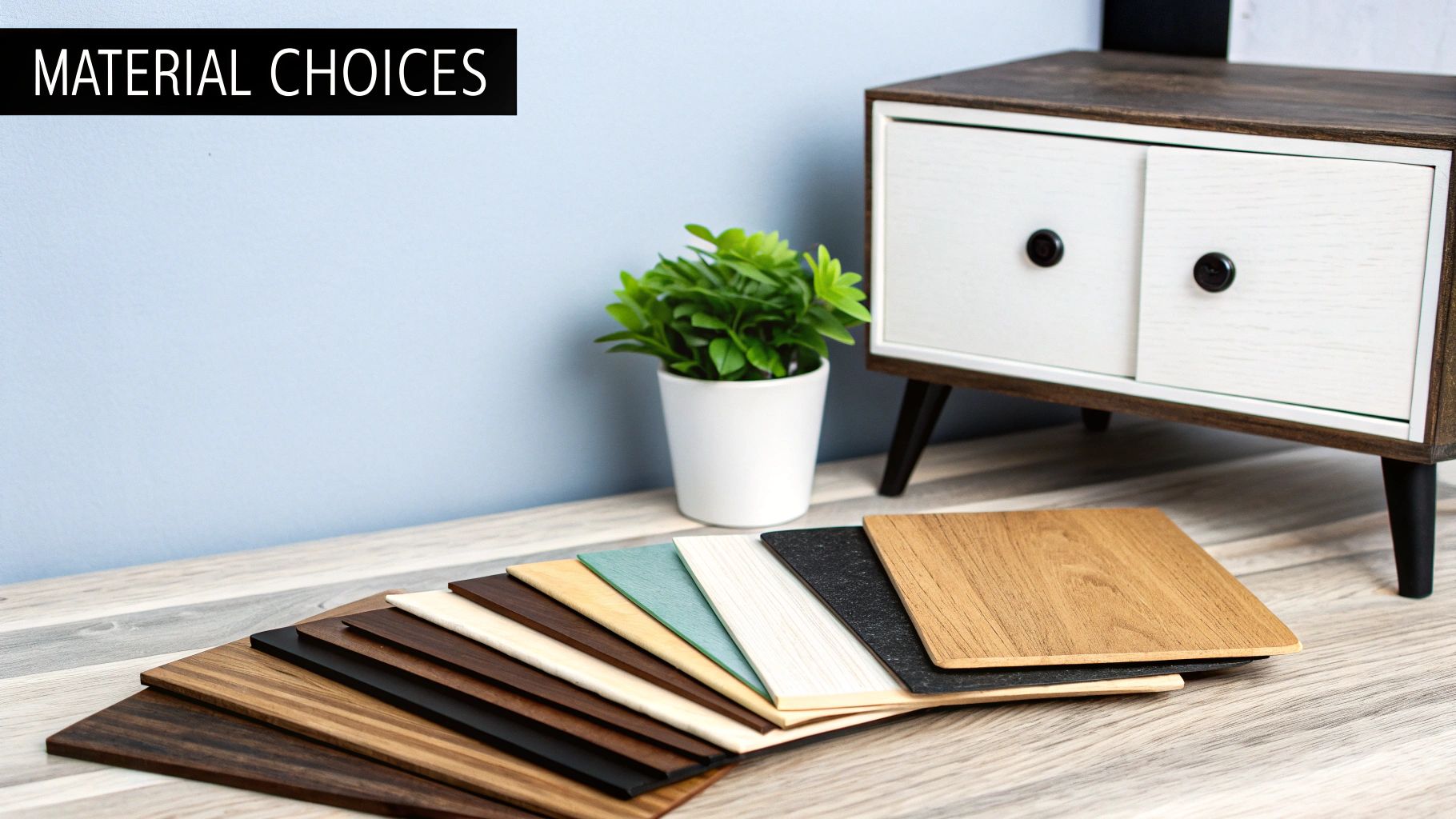
There's a reason wood remains the undisputed champion in the cabinet world, holding a massive 71.84% of the market share. Homeowners keep coming back to it for its natural elegance, warmth, and proven strength—qualities that manufactured materials just can't replicate. If you want to dive deeper, you can discover more insights about the cabinet market and see why custom work is gaining so much traction.
Finding the Right Wood Species
Every type of wood brings its own character to the table. From the grain pattern to the color and hardness, understanding these nuances is the first step toward picking a material that truly fits your lifestyle and design vision.
- Oak: A timeless classic, oak is known for its prominent grain and incredible durability. It takes stain beautifully and stands up to the daily grind of a busy home, resisting dings and dents.
- Maple: If you’re looking for a cleaner, more uniform look, maple is a fantastic choice. Its fine, subtle grain is a perfect canvas for both paint and stain. Plus, it’s one of the hardest woods available.
- Cherry: Famous for its rich, warm reddish hues that only get deeper and more beautiful with age. Cherry has a smooth, closed grain that gives it an undeniably luxurious and refined feel.
- Walnut: A premium option that makes a bold statement. Walnut boasts dramatic, swirling grain patterns and a deep, chocolatey color that’s perfect for sophisticated, modern spaces.
At Sinclair Cabinetry, real wood is at the heart of everything we do. We believe in using these timeless materials to create cabinetry that isn’t just beautiful on day one, but is built to be part of your family’s story for a lifetime.
Your cabinet maker should be your guide through this process. They should encourage you to feel the difference in weight between a maple and a cherry door. They should show you how a dark stain settles into the open grain of oak versus the tight grain of maple. This hands-on experience is what the custom process is all about.
What’s Inside Counts: Construction Core and Sustainable Choices
Beyond the beautiful wood on the outside, what's used for the cabinet box construction is just as critical for structural integrity. Any top-tier custom cabinet company will be completely transparent about what’s going on behind the scenes.
- Solid Wood: The go-to for face frames, doors, and drawer fronts. Nothing beats it for strength and authentic beauty.
- High-Grade Plywood: This is the gold standard for the cabinet boxes themselves (the sides, top, bottom, and back). It’s exceptionally strong, stable in changing humidity, and holds screws far better than cheaper alternatives like particleboard.
- MDF (Medium-Density Fiberboard): Don’t let the name fool you—high-quality MDF has its place. It’s perfect for the center panel on painted cabinet doors because its stability prevents the paint from cracking as solid wood expands and contracts with the seasons.
If sustainability is a priority for you, there are some great eco-friendly materials out there. Ask potential cabinet makers about FSC-certified lumber, which ensures the wood comes from responsibly managed forests. Reclaimed wood is another wonderful option, offering a rustic character and a unique story that new materials can't match.
For a more comprehensive look, check out our expert guide on the best materials for luxurious kitchen cabinets.
Demystifying Cabinet Finishes
Think of the finish as your cabinet’s armor. It’s the first line of defense against spills, grease, scratches, and everything else daily life throws at it. A great finish provides color and sheen, but its most important job is to protect the wood.
A catalyzed conversion varnish is widely recognized as the best in the business. This isn't something you brush on in a garage; it's a high-performance coating applied in a controlled spray booth and then chemically cured. The result is an incredibly hard, durable, and non-porous surface that resists just about anything.
While old-school hand-applied oils can look beautiful, they simply don't offer the same level of protection and require far more maintenance. Make sure you discuss the finishing process in detail—it’s the key to ensuring your cabinets are as tough as they are beautiful.
Navigating Contracts, Installation, and Long-Term Care
You've made it through the design maze and picked your materials. Now for the exciting part—seeing it all come together. But don't rush through these final steps. A solid contract, a clean installation, and knowing how to care for your new cabinets are what turn a great design into a lasting investment.
The cabinet market is booming, expected to jump by a massive $28.21 billion between 2024-2029, fueled by the home renovation wave. With that much money being invested, you want to be sure you're getting what you paid for. This is where professional installation and a rock-solid guarantee separate the pros from the rest. You can learn more about the latest cabinet market trends to see just how big this movement is.
Scrutinizing the Contract Before You Sign
Before a single tool enters your home, you need a detailed contract. Think of it as the project’s rulebook—it protects you and the cabinet maker by spelling out every last detail. A simple one-page estimate won't cut it.
A legitimate contract from a professional company will always include:
- Final Drawings and Specs: This isn't just a sketch. It's a full set of blueprints with exact measurements, plus a list of every material—wood species, finish color, hardware models, and any special organizers.
- Total Cost and Payment Schedule: The contract should break down all costs and outline a clear payment plan tied to milestones. For example, a deposit to start, another payment on delivery, and the final balance after the walkthrough.
- Project Timeline: You need a projected start date and an estimated completion date. Sure, hiccups happen, but this gives you a benchmark for holding the company accountable.
Treat your contract like the project’s constitution. If it’s not in writing, it doesn’t exist. A trustworthy partner like Sinclair Cabinetry will provide a meticulously detailed contract to ensure complete transparency and eliminate any potential for misunderstandings.
Preparing for a Smooth Installation Day
Installation day is when the magic happens. A professional crew makes it look easy because they're clean, efficient, and respectful of your home. You can help them do their best work with just a little prep.
Clear a path from the door to the kitchen or bathroom. It's also a good idea to cover any nearby furniture or flooring to protect it from dust. Chat with the project manager beforehand about logistics—where should they park? Where can they set up their tools? A garage or outdoor space is usually best for cutting.
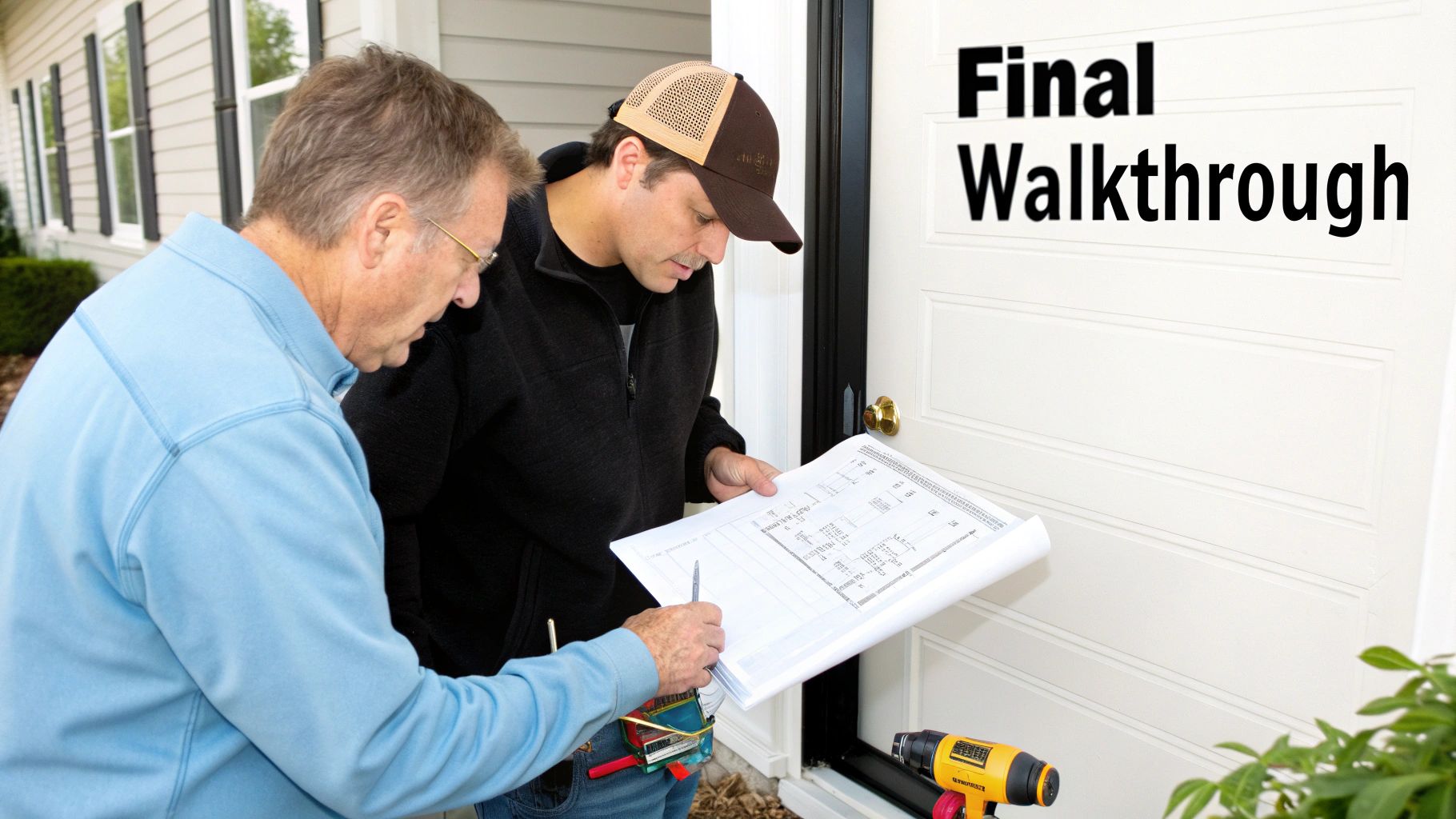
Once the cabinets are in, it’s time for the final walkthrough. This is your chance to go over everything with the installer or project manager.
- Open every single door and drawer. Do they operate smoothly?
- Check the alignment. Are all the doors and drawer fronts level and evenly spaced?
- Look closely at the finish. Are there any scratches, dings, or blemishes?
- Confirm all your hardware and accessories are installed correctly.
Don't be afraid to speak up! A true professional will welcome your feedback and create a "punch list" of any small fixes. They'll schedule a time to come back and make everything perfect.
Understanding Your Warranty and Long-Term Care
The job isn’t done when the installers leave. A good warranty shows a company stands behind its work. Most reputable custom shops offer a limited lifetime warranty that covers defects in materials and craftsmanship. Make sure you get the details in writing so you know exactly what is and isn't covered.
Finally, ask for care instructions. The type of finish on your cabinets determines the best way to clean them. Usually, a soft cloth dampened with a mild soap and water solution is all you need. Steer clear of harsh chemicals, abrasive sponges, or too much water—they can ruin the finish over time. With the right care, your custom cabinets will be a source of pride for decades.
Answering Your Custom Cabinetry Questions
When you start thinking about a custom cabinetry project, the questions come thick and fast, especially if it's your first time diving in. Getting clear, straight answers is the best way to move forward with confidence. We’ve pulled together the most common things homeowners ask when they start searching for "custom cabinet companies near me" to give you the clarity you need.
How Much More Do Custom Cabinets Really Cost?
It’s the first question on everyone's mind, and for good reason. The simplest way to think about it is that custom cabinets are a long-term investment in your home, not just another purchase. Yes, the upfront cost is higher than what you'll find at a big-box store, but you’re paying for a completely different class of product.
Generally, you can expect true custom cabinetry to run 20-30% more than semi-custom options. Compared to standard stock cabinets, the difference is even more significant—often 50-100% more. That premium goes directly into superior materials like solid hardwood and furniture-grade plywood, expert craftsmanship with details like dovetail joints, and a factory-quality finish that's built to last for decades.
But the real value isn't just in the materials. It's in the perfect fit. Stock cabinets force you to work around their standard sizes, which almost always results in awkward filler strips and dead, wasted space. Custom work is built to the exact dimensions of your room, maximizing every single inch for a seamless, high-end look that off-the-shelf options simply can't replicate.
What Is a Realistic Timeline for a Custom Cabinet Project?
Patience is definitely a virtue when it comes to true craftsmanship. A realistic timeline hinges on a few key things: the complexity of your design, the materials you choose, and the cabinet maker's current schedule. From your very first design meeting to the final installation walkthrough, a typical project takes between 8 to 16 weeks.
It’s helpful to see how that time breaks down:
- Design and Revisions (1-3 weeks): This is the fun, collaborative part. You’ll work with the designer to nail down layouts, materials, and styles, often using 3D renderings to see your vision come to life.
- Final Measurements and Material Ordering (1-2 weeks): Once the design is locked in, the team takes precise measurements on-site and orders all the necessary wood, hardware, and finishing supplies.
- Fabrication (6-10 weeks): This is the longest phase, where skilled artisans in the workshop bring your cabinets to life, building everything from scratch.
- Installation (2-5 days): The professional installation crew arrives to carefully fit each piece into place, turning drawings into reality.
Always, always insist on getting a detailed, phase-by-phase timeline in your contract. A reputable company will be totally transparent about their schedule and keep you in the loop every step of the way.
A common mistake is trying to rush the process. Quality custom work just can't be hurried. That timeline reflects the careful, detailed work required to build something that will last a lifetime, so plan accordingly to avoid unnecessary stress during your renovation.
How Can I Ensure the Final Product Matches My Vision?
The fear that the finished project won’t look like what you imagined is completely normal. The good news is, avoiding that disconnect comes down to clear communication and a solid approval process. Any professional custom cabinet company will have systems in place to make sure you and the design team are always on the same page.
First off, 3D rendering software is a total game-changer. It lets you see a photorealistic model of your new kitchen or bathroom before a single piece of wood is cut. This is your chance to tweak layouts, play with colors, and confirm every last detail. At Sinclair Cabinetry, we consider this an absolutely essential part of our process.
Second, never approve a project based on a computer screen alone. Make sure you ask for physical samples. You need to be able to see and touch the exact wood species, door style, and finish color you've picked out. Seeing how those samples look in your home's actual lighting is critical.
Finally, make sure you formally sign off on all final design drawings and material specifications. A great partner will welcome your questions, provide updates from the workshop, and ensure there are absolutely no surprises on installation day.
Should I Choose Framed or Frameless Cabinets?
The choice between framed and frameless (often called European-style) cabinets is a big one, affecting both the look and the function of your space. Neither one is inherently "better," but one will likely be a better fit for your home's style and how you plan to use your kitchen.
Here’s a quick comparison to help you sort it out:
| Feature | Framed Cabinets | Frameless Cabinets |
|---|---|---|
| Aesthetic | Traditional, classic look with a visible face frame. Allows for more door styles, like inset. | Modern, sleek, and minimalist with seamless lines and minimal gaps between doors. |
| Construction | A solid wood face frame is attached to the front of the cabinet box, adding rigidity. | The cabinet box is built without a face frame; doors attach directly to the sides of the box. |
| Accessibility | The face frame creates a small lip that slightly reduces the opening size. | Offers full, unobstructed access to the cabinet interior, making it easier to store bulky items. |
| Durability | The solid wood frame makes them exceptionally strong and rigid. | High-quality construction is very durable, but the edges of the doors are slightly more exposed. |
At the end of the day, it comes down to personal preference. Talk it over with your designer to figure out which style best complements your home's architecture and aligns with how you'll be using the space every day.
Your dream home deserves cabinetry that is as unique as you are. At Sinclair Cabinetry inc, we combine decades of craftsmanship with a passion for personalized design to create spaces you'll love for a lifetime.
Ready to start your own custom cabinet project? Contact us today for a consultation.