

So, can you actually reface thermofoil cabinets? The short answer is yes, you absolutely can. In fact, for many homeowners, it's a fantastic, budget-friendly way to give a tired kitchen a major facelift. The real key to success, though, isn't about the thermofoil itself—it's all about the condition of your cabinet boxes. If those are still in good shape, refacing is a solid option.
Unlocking the Potential of Thermofoil Cabinet Refacing
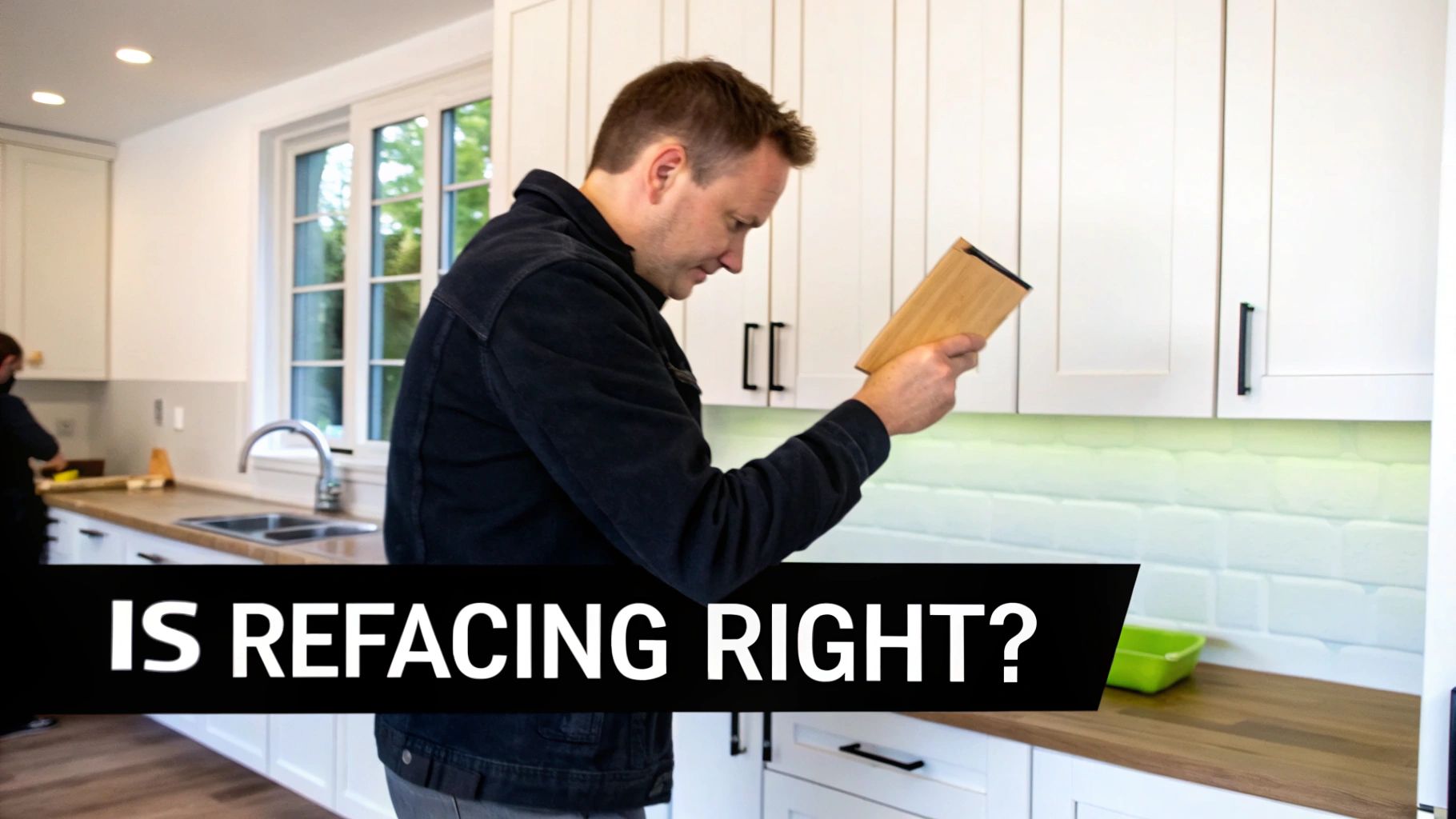
Thermofoil cabinets are pretty common, known for that smooth, seamless look. They’re made by heat-fusing a vinyl layer over an MDF (medium-density fiberboard) core. But over time, that vinyl can start to peel, bubble, or get damaged, especially around heat sources like your oven or dishwasher. Refacing tackles this problem head-on by replacing those worn-out surfaces without needing to rip out your entire kitchen.
Think of it as giving your kitchen a cosmetic makeover rather than performing major surgery. The "bones" of your cabinetry—the boxes mounted to the wall—stay right where they are. A professional will come in, strip off the old, damaged thermofoil, prep the MDF underneath, and then apply a brand-new, high-quality veneer. This is usually paired with new doors and drawer fronts, completely transforming the look and feel of your space.
Why Consider Refacing Your Thermofoil Cabinets
This approach has become a go-to for homeowners everywhere. The global kitchen cabinet market is huge, and refacing is a big reason why—it’s just so cost-effective. We’re talking about saving up to 50-70% compared to a full cabinet replacement, which is a massive win for anyone on a budget. You can discover more insights about the growing cabinet market and its trends if you're curious.
Beyond the savings, you get a fresh, modern kitchen without the headache and disruption of a full demolition. A typical refacing project is done in just a few days, not weeks. But it’s important to know its limits.
Key Takeaway: Cabinet refacing is a cosmetic upgrade. It won’t fix underlying structural problems like water damage, warped cabinet boxes, or a layout you just don't like.
Before you jump in, you have to give your cabinet framework an honest assessment. If the boxes are sound and you’re happy with the kitchen's current flow, refacing thermofoil cabinets offers an incredible combination of value, speed, and visual impact. It lets you get that high-end look while freeing up a good chunk of your budget for other things, like new countertops, a stylish backsplash, or that dream appliance you’ve been eyeing.
To give you a clearer picture, here's a quick comparison of what you're looking at with refacing versus a full replacement.
Thermofoil Cabinet Refacing At a Glance
| Consideration | Refacing Thermofoil Cabinets | Full Cabinet Replacement |
|---|---|---|
| Cost | 50-70% less expensive than replacement. | Significantly higher upfront cost for materials and labor. |
| Timeline | Typically 2-5 days. Minimal kitchen disruption. | Can take 2-6 weeks or more, rendering kitchen unusable. |
| Best For | Sound cabinet boxes, good layout, and cosmetic updates. | Damaged boxes, poor layout, or a complete kitchen overhaul. |
| Customization | Excellent for styles, colors, and hardware. Layout stays the same. | Complete freedom to change layout, style, and configuration. |
| DIY Potential | Possible for experienced DIYers, but tricky. | Very complex; professional installation is highly recommended. |
| Environmental Impact | More eco-friendly as it reuses existing cabinet boxes. | Creates more waste from demolition and new materials. |
As you can see, the right choice really comes down to the current state of your kitchen and your overall renovation goals. This guide will walk you through everything you need to know to make the best decision for your home.
What Exactly Are Thermofoil Cabinets?
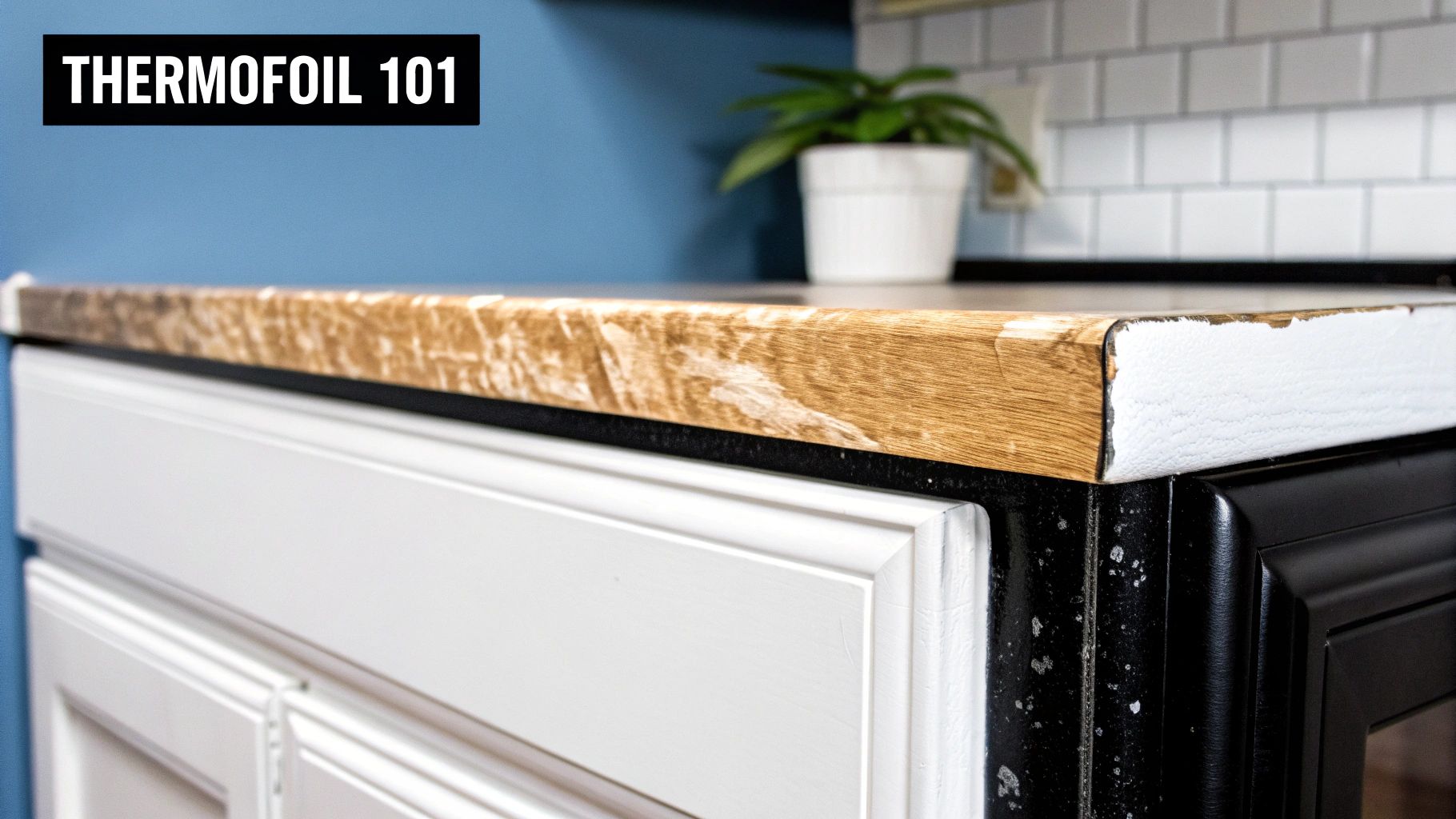
Before we can talk about refacing, we first need to get on the same page about what thermofoil cabinets actually are. The name is a little misleading—there’s no metal foil involved at all. Think of it as a vinyl finish, but with a high-tech application process.
Picture a thin, flexible sheet of vinyl. This vinyl "skin" is laid over a core of medium-density fiberboard (MDF). The real magic happens inside a vacuum chamber, where intense heat and pressure are applied. This process fuses the vinyl to the MDF, shrink-wrapping it perfectly around every curve and corner to create a smooth, seamless cabinet door.
This method is what made thermofoil so popular. It delivers a perfectly consistent color and finish, free from the knots and grain variations of real wood. Plus, it can be molded into all sorts of styles, from sleek, modern flat panels to more traditional raised-panel designs.
The Achilles Heel of Thermofoil
Ironically, the very process that gives thermofoil its clean, seamless look is also the source of its biggest weakness. The heat-activated adhesive that bonds the vinyl to the MDF is tough, but it has two mortal enemies: excessive heat and moisture.
Over the years, daily kitchen life can cause that bond to break down. When it does, you'll start to see the classic signs of damage that lead homeowners to consider a cabinet facelift in the first place.
Here’s what to keep an eye out for:
- Peeling: This is the most common issue, usually starting at the corners and edges of doors and drawer fronts where the vinyl layer begins to lift off the MDF core.
- Bubbling: That blast of heat from your oven, toaster, or even a coffeemaker can cause the vinyl to form ugly bubbles or blisters on the surface.
- Delamination: In steamy areas like kitchens and bathrooms, moisture can creep under the vinyl, causing large sections to completely detach from the MDF underneath.
- Yellowing: While it’s not a structural problem, white thermofoil is notorious for yellowing over time, especially when exposed to direct sunlight or cooking smoke. It can make a once-bright kitchen feel tired and dated.
When you're inspecting your cabinets, zero in on the areas around your stove, dishwasher, sink, and any countertop appliances that kick off heat or steam. These "hot spots" are almost always the first places thermofoil damage will show up.
Why Surface Condition Is Everything
Understanding this construction is key, because the success of any refacing project depends entirely on the condition of the MDF underneath the vinyl.
If the vinyl is just starting to peel but the MDF core is still smooth, flat, and solid, you've got a great candidate for refacing. A pro can strip away the old vinyl, sand the MDF until it's perfectly prepped, and apply a brand-new veneer.
But if the damage goes deeper, the story changes. Once moisture gets in and causes the MDF to swell, crumble, or warp, refacing is off the table. You simply can't apply a new finish to a foundation that's compromised and unstable. In those situations, the entire door or drawer front needs to be replaced—which, fortunately, is a standard part of most professional refacing jobs.
To get a better handle on this, you can dive deeper into our guide on what thermofoil cabinets are and how they're made. It's the perfect first step to figuring out what’s really going on with your cabinets and choosing the best path forward for your kitchen.
Weighing the Pros and Cons of Refacing
So, is refacing your thermofoil cabinets the right call for your home? It's a great question, and like any home improvement project, the answer depends on what you're trying to achieve. There are some fantastic advantages, but also a few limitations you need to know about upfront.
Let's break down the complete picture. Getting a clear-eyed view of the pros and cons will help you line up your project with your budget, timeline, and the vision you have for your kitchen.
The Clear Advantages of Refacing
The biggest win here is, without a doubt, the dramatic cost savings. A professional refacing project can run 50-70% less than a full gut job where you're installing new custom or semi-custom cabinets. That's a huge chunk of change you can now put toward other high-impact upgrades, like those quartz countertops you've been dreaming of, new appliances, or a killer backsplash.
Another massive plus is how little it disrupts your life. A full kitchen demolition can turn the heart of your home into a chaotic, dusty construction zone for weeks on end. Refacing, on the other hand, is refreshingly fast. Most projects are wrapped up in just two to five days, and your kitchen stays functional for most of that time. It's a far less stressful way to get a new look.
Finally, refacing is a choice you can feel good about. By keeping your existing cabinet boxes, you’re saving perfectly good materials from ending up in a landfill. It's a "reuse and renew" approach that massively cuts down on renovation waste, making it a much greener option than a total replacement. You get a stunning new kitchen while minimizing your environmental footprint.
The Upside in a Nutshell: Refacing delivers a powerful combo of affordability, speed, and sustainability. You're getting the look and feel of a brand-new kitchen without the sticker shock, extended downtime, or environmental waste of a full-scale remodel.
Understanding the Limitations and Drawbacks
While the benefits are compelling, it’s just as important to be realistic about what refacing can't do. First and foremost, refacing is a cosmetic solution. It's designed to give your kitchen a beautiful new face, but it won’t fix any deep-seated structural issues.
If your cabinet boxes are warped from an old leak, sagging under the weight of your dishes, or showing signs of rot, refacing just isn't the answer. Slapping a new veneer over a weak foundation is a recipe for disappointment. For a refacing project to be successful, you absolutely need to start with healthy cabinet boxes—that's non-negotiable.
Another key thing to remember is that refacing can't change your kitchen’s layout. It works with the footprint you already have. If your dream kitchen involves adding a big island, moving the sink to a new wall, or completely reconfiguring the workflow, you're going to need a full replacement. Refacing enhances what's already there; it doesn't redesign it.
And while you get a ton of choices for new door styles, colors, and hardware, your customization options aren't as limitless as they would be with fully custom cabinets built from scratch. You’re still working within the framework of your existing cabinet sizes and configurations.
Decision Matrix Refacing vs Replacing Thermofoil Cabinets
To make things even clearer, sometimes it helps to see the trade-offs side-by-side. This table breaks down the key differences between refacing your thermofoil cabinets and tearing everything out for a full replacement with something like custom wood cabinets.
| Factor | Thermofoil Refacing | Full Replacement (e.g., Custom Wood) |
|---|---|---|
| Primary Goal | Cosmetic update for a fresh look. | Complete overhaul of style, layout, and function. |
| Cost | Significantly lower, often saving 50% or more. | High upfront investment in materials and labor. |
| Project Timeline | Quick, typically 2-5 days with minimal disruption. | Lengthy, often 4-8 weeks or more. Kitchen is unusable. |
| Structural Fixes | No. Cannot fix warped, rotted, or damaged boxes. | Yes. Solves all structural issues by starting fresh. |
| Layout Changes | No. Must stick with the current kitchen footprint. | Yes. Complete freedom to redesign the entire layout. |
| Customization | Excellent for style and color, but limited to existing sizes. | Unlimited options for size, configuration, and materials. |
| Ideal Candidate | Homeowner with solid cabinet boxes and a functional layout. | Homeowner needing structural repairs or a new layout. |
Ultimately, weighing these factors will point you in the right direction. If your cabinet boxes are in good shape and you like your layout, refacing is an incredibly smart, efficient, and budget-friendly way to transform your space. If not, a full replacement might be the better long-term investment.
The Professional Refacing Process Step by Step
Let's pull back the curtain on what a professional cabinet refacing project actually looks like. It’s a common misconception that refacing is just a simple facelift. When done right, it's more like a surgical upgrade that transforms your kitchen without the weeks of dust and disruption a full remodel brings. The whole idea is to keep your solid cabinet boxes and give everything you see and touch a brand-new life.
The entire process kicks off with a detailed professional assessment. An expert will come out and give your existing thermofoil cabinets a thorough inspection. They're looking at the structural integrity of the boxes, checking the condition of the MDF core under that vinyl wrap, and getting a feel for the overall layout. This first step is absolutely critical—it tells us if your cabinets are a solid candidate for refacing or if there are bigger issues lurking beneath the surface.
Once your cabinets get the green light, the real work begins. This is where you see the difference between a DIY attempt and a seasoned pro.
Preparing the Foundation for a Flawless Finish
First things first, all the old cabinet doors and drawer fronts come off. Since these are being completely replaced, they’re set aside for disposal. Now, with the cabinet boxes exposed, the team gets to the most important part: stripping the old, peeling thermofoil from the frames and any end panels.
This isn't just a matter of peeling off a sticker. Professionals use specialized tools and careful techniques to get the vinyl layer off without gouging or damaging the MDF core underneath. After the wrap is gone, they clean off every bit of old adhesive and then sand the MDF surface until it's perfectly smooth and ready for its new skin.
Professional Insight: Proper surface preparation is everything. It's the single most important factor in a durable refacing job. A surface that isn't prepped correctly will almost always lead to the new veneer bubbling or peeling down the road.
After sanding, every speck of dust is cleaned away. This ensures the new adhesive can create an unbreakable bond. If you're curious about tackling this yourself, our guide on how to reface cabinets dives deeper into these essential prep stages.
Applying the New Skin and Final Touches
With the cabinet boxes prepped and clean, it’s time to apply the new veneer. This is typically a high-quality laminate or a real wood veneer, depending on what you've chosen. The pros cut each piece to the exact size of your cabinet frames and apply it with a powerful, permanent adhesive. They use special tools to press the veneer down, squeezing out any air pockets and ensuring a seamless bond from edge to edge.
This focus on a solid bond is what makes professional refacing so durable. When done correctly, the vacuum-formed PVC film has a 98% adhesion success rate. A well-executed refacing can add another 12-20 years to your cabinets' life. In fact, U.S. data shows renovated cabinets can handle over 5,000 open-close cycles a year without peeling.
This infographic breaks down the main reasons why so many homeowners love this option.
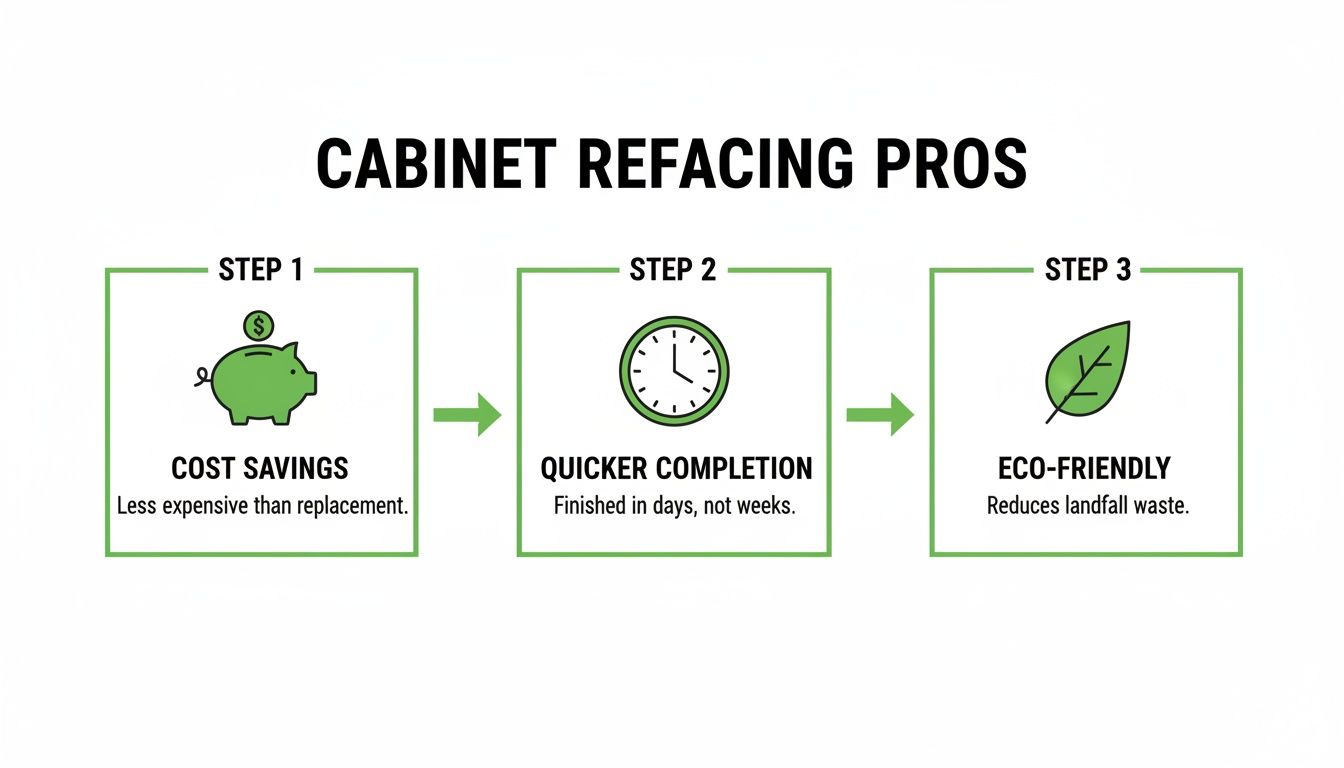
As you can see, the big wins are in cost, time, and being a bit kinder to the planet.
Finally, the brand-new, custom-made doors and drawer fronts are installed. Getting the alignment just right is a skill in itself and often requires specialized furniture fitting expertise. Installers make sure every door hangs perfectly level with perfectly even gaps. The final touch is putting on the new hardware—hinges, knobs, and pulls—that ties the whole look together, leaving you with a kitchen that feels completely new.
Breaking Down the Costs and Return on Investment
Let's talk numbers. When you're planning a kitchen upgrade, the budget is always a huge part of the conversation. Refacing thermofoil cabinets gets tossed around as a budget-friendly move, but what does that really mean for your bank account? To figure out if it's the right financial choice for your home, you need to understand the costs, how long the results will last, and what kind of return you can expect.
The biggest draw for refacing is, without a doubt, the cost savings compared to a full gut job. On average, a complete kitchen refacing project will run you somewhere between $7,000 and $12,000. Of course, that number can swing up or down depending on how big your kitchen is, the materials you pick, and even where you live.
While that might still sound like a chunk of change, you have to put it in perspective. Tearing everything out and installing brand-new custom cabinets can easily hit $25,000 to $50,000—sometimes even more. This means you can get a nearly identical visual refresh for a 60-75% lower price tag. That’s a powerful incentive for a lot of homeowners. Want a closer look at how these numbers add up? Check out our detailed guide on the average cabinet refacing cost.
Factoring in Lifespan and Durability
Price is just one piece of the puzzle. Real value comes from how long your investment holds up. A professionally handled thermofoil refacing project isn't just a temporary facelift. When it's done right with top-notch materials, you can count on your new cabinet look lasting for 10 to 15 years, and sometimes longer.
What makes it last? A few key things:
- Quality of Materials: Higher-end veneers and solid new doors will stand up to daily wear and tear much better than the cheap, builder-grade stuff.
- Skill of the Installer: This is a big one. The longevity of the finish is directly tied to how well the installer preps the MDF surface and applies the new veneer. It needs to be meticulous for a bond that lasts.
- Your Home Environment: A kitchen with good ventilation that keeps extreme heat and moisture in check will help your cabinets look great for years to come.
A professional refacing job is an investment in craftsmanship. The longevity of the finish is directly tied to the skill of the installer who prepares the surface and applies the new materials.
Calculating Your Return on Investment
Okay, so you save money upfront. But what about the long game? Refacing thermofoil cabinets actually offers a pretty impressive return on investment (ROI), especially if you're thinking about selling your home down the road. Kitchens sell houses, and an outdated kitchen with peeling cabinets can be a major turn-off for buyers.
A modern, clean kitchen can seriously boost your home's perceived value and make it more appealing on the market. Since refacing delivers that high-impact update for a fraction of the cost of a full remodel, the ROI is often way higher. In the U.S., a majority of kitchen renovations under $15,000 choose refacing for an ROI that can exceed 70% upon resale. Plus, the whole project only takes about 3-5 days, so you get maximum value with minimal disruption.
At the end of the day, refacing is more than just a cosmetic fix—it’s a smart financial play. It gives you the power to transform the most important room in your house, improve your daily life, and increase your property value without having to empty your savings account.
When Full Cabinet Replacement Is the Better Choice
While refacing can work wonders for many kitchens, it's important to remember what it is: a cosmetic upgrade, not a structural cure-all. Think of it like putting a beautiful new roof on a house with a cracked foundation. If the underlying structure is shot, a surface-level fix is just a temporary patch.
There are definitely times when skipping the reface and going straight for a full cabinet replacement is the smarter, more effective long-term investment. The decision almost always boils down to the health of your existing cabinet boxes. You simply can't wrap a new finish over a compromised foundation and expect it to hold up.
Red Flags That Signal a Need for Replacement
Some problems are more than skin-deep. If you spot any of these major red flags during your inspection, it’s a clear sign you should be planning for a full replacement, not just a reface.
- Significant Water Damage: If a leaky sink or dishwasher has caused the cabinet boxes to swell, warp, or crumble, their structural integrity is gone. There's no coming back from that.
- Mold or Mildew Growth: Finding mold inside or behind your cabinets means you have a serious moisture issue. This needs to be completely handled, which almost always means tearing out the old cabinetry.
- Structural Failure: Are your cabinet boxes sagging, pulling away from the wall, or struggling to hold the weight of your dishes? These are signs of a complete structural breakdown.
- An Unworkable Layout: Refacing keeps your current kitchen footprint exactly as it is. If your layout is cramped, inefficient, or just doesn’t work for your family, a full replacement is the only way to truly reconfigure the space.
When the fundamental structure of your cabinetry is compromised or the layout itself is the problem, a full replacement is not just an upgrade—it's a necessary solution. It addresses root issues rather than just covering them up.
The Long-Term Benefits of a Full Replacement
Choosing a full replacement opens up a world of possibilities that refacing just can't touch. It’s your chance to build the kitchen you've always wanted from the ground up, tackling both function and style without making compromises.
With brand-new custom cabinets, you get total control over every single detail. This is how you finally get that kitchen island you’ve been dreaming of, move the dishwasher to a more sensible spot, and choose high-quality materials like solid wood that will last for decades. You can pick out premium finishes, unique door styles, and clever storage solutions that are perfectly suited to your needs.
Yes, the upfront investment is higher, but a full cabinet replacement delivers a lasting solution that genuinely enhances your home's value and your daily life for years to come.
Your Top Questions About Thermofoil Refacing, Answered
Even after mapping out your project, a few questions about refacing thermofoil cabinets can linger. We get it. This is a big decision, and you want to feel confident. Let’s tackle some of the most common questions we hear from homeowners just like you.
Can You Just Paint Over Peeling Thermofoil?
It's a tempting thought—a quick fix that seems too good to be true. And honestly, it is. Painting directly over peeling thermofoil is a recipe for disappointment. The real issue isn't the color; it's the failing vinyl wrap underneath. Paint needs a solid, stable surface to grab onto, and that peeling layer just isn't it.
In fact, the weight and moisture from the paint can make the peeling even worse. For a finish that actually lasts, that failing thermofoil has to come off completely. From there, the MDF core needs to be sanded smooth and coated with a high-quality primer before a single drop of paint goes on. If you skip that prep work, you're almost guaranteed to see bubbles and chips in no time.
How Do I Clean and Maintain My Newly Refaced Cabinets?
The great news is that keeping your beautifully refaced cabinets looking fresh is simple. No harsh chemicals or complicated routines needed. Gentle, regular cleaning is all it takes to prevent grime from building up.
- For a weekly wipedown, just use a soft microfiber cloth with a little warm water and a drop of mild dish soap.
- To cut through greasy spots, a simple mix of water and white vinegar works wonders. Just be sure to avoid abrasive sponges or scouring pads that could scratch the new surface.
- Always dry them off. After wiping them clean, go over the surfaces with a dry cloth. This little step prevents water spots and stops moisture from getting where it shouldn't.
A little bit of care goes a long way in keeping your kitchen looking brand new for years.
What Are My Options for New Colors and Styles?
This is where the fun really begins. When you reface, you’re not stuck with the old look. You have an incredible range of choices for your new cabinet doors and drawer fronts, which is what truly transforms the space. It’s your opportunity to hit the reset button on your kitchen’s entire style.
Refacing unlocks the freedom to pick from countless styles. You can go for sleek, modern flat panels, timeless Shaker doors, or even classic raised-panel designs. The color palette is virtually endless, too—from crisp whites and sophisticated grays to bold, dramatic hues that make a statement.
Ready to see what high-quality, real wood options could do for your kitchen? The experts at Sinclair Cabinetry inc can walk you through selecting the perfect doors and finishes to make your dream kitchen a reality. Get in touch with us today!