

When you decide to go with custom kitchen cabinet designs, you're choosing to create a kitchen that truly fits your space, your style, and the way you actually live. Unlike the cabinets you can buy off the shelf, custom cabinetry is built from scratch to your exact specifications. This simple difference ensures every inch is put to good use and every detail reflects who you are. It’s how standard storage becomes a cornerstone of your home's entire design.
Why Custom Cabinets Are Redefining Kitchens
Think about the difference between a suit off the rack and one that's been tailored just for you. Stock cabinets are the one-size-fits-all option; they get the job done, but the fit is never quite right. Custom kitchen cabinets are the bespoke suit—meticulously measured, cut, and crafted to fit the unique dimensions of your kitchen and the specific demands of your life. This isn't just a minor upgrade; it's a complete shift in how you experience the most important room in your home.
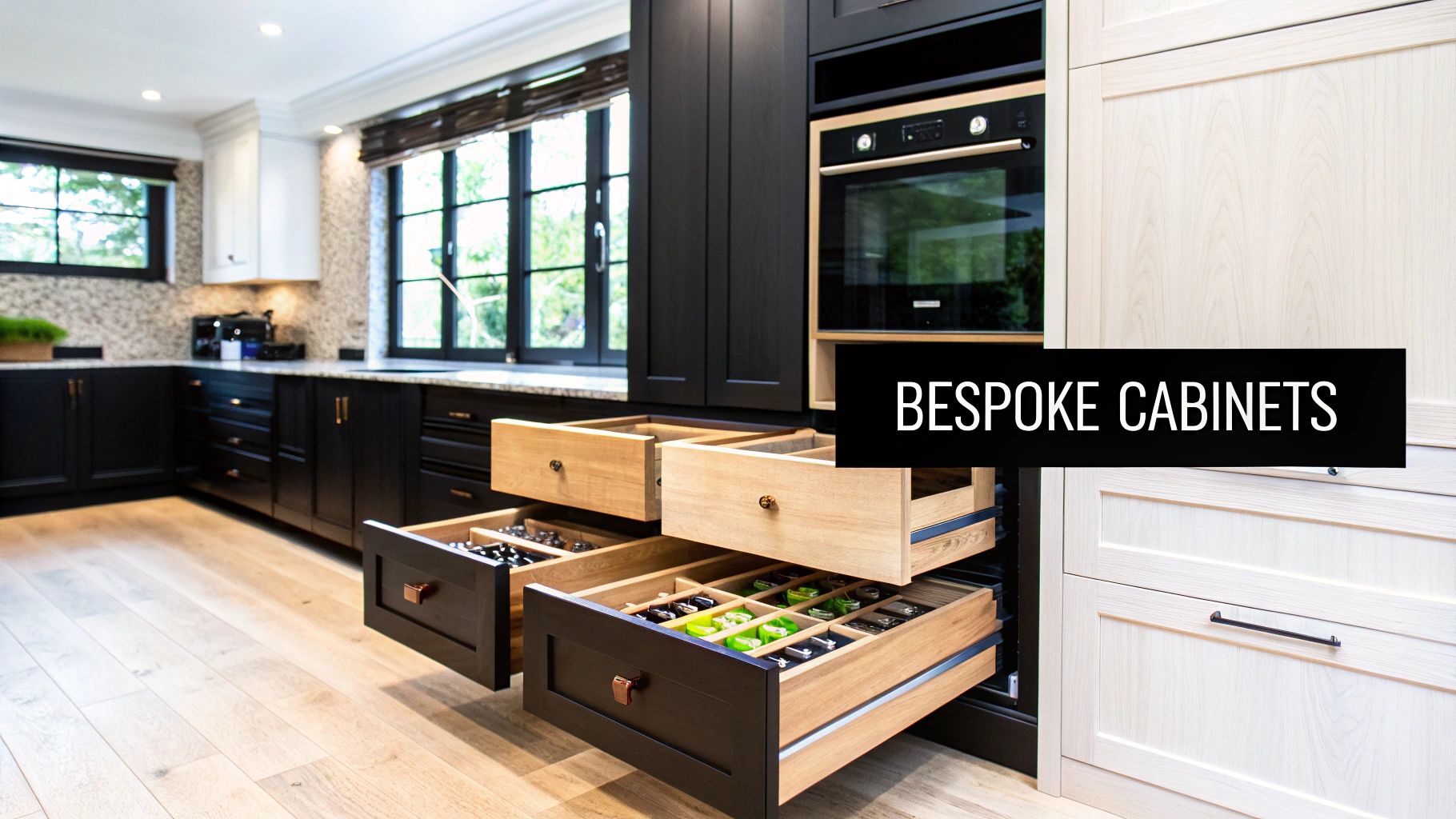
The real magic of choosing custom goes way beyond just the looks. It’s about building a kitchen that works for you, not the other way around.
- Truly Unmatched Personalization: You’re in the driver's seat for every decision. From the exact shade of blue paint to the specific type of wood and the profile of the cabinet doors, it's all your call.
- Superior Materials and Craftsmanship: Custom makers rely on high-quality woods and proven construction techniques like dovetail joinery. The result? Cabinets that are far more durable than anything mass-produced.
- Smart Space Optimization: Custom designs make wasted space a thing of the past. Those awkward corners, unusual layouts, and non-standard ceiling heights stop being problems and start becoming opportunities for clever, built-in solutions.
A Growing Trend Toward Personalization
This move toward tailored kitchens isn't just something we're seeing anecdotally; the numbers back it up. Recent market trends show a clear shift in what homeowners want. While mass-produced cabinet lines saw a 5.7% decline year-over-year in early 2024, the custom cabinetry market grew its share from 20% to an impressive 25% during that same time. It's a strong signal that people are prioritizing the quality and personalization that only custom work can deliver.
Custom cabinetry isn't just about making things fit; it's about making your kitchen work for you. It's an investment in your home's daily function and long-term value, turning a purely utilitarian space into a personalized sanctuary.
At the end of the day, opting for custom design is a practical choice. It gives you the power to create a kitchen that isn't just beautiful but is also incredibly efficient. For anyone planning a full-scale kitchen upgrade, digging into broader expert kitchen remodeling insights can offer great context on how custom cabinets fit into the big picture. By putting quality and tailored function first, you’re laying the foundation for a space you’ll love for years to come.
Finding Your Signature Cabinet Style
Choosing your cabinet style is like picking the personality for your entire kitchen. It’s the first thing people notice, the visual language that speaks volumes before a single drawer is even opened. This is where custom kitchen cabinet designs really come into their own, letting you go way beyond generic labels to find an aesthetic that genuinely feels like you. It’s the difference between a kitchen that just functions and one that tells your story.
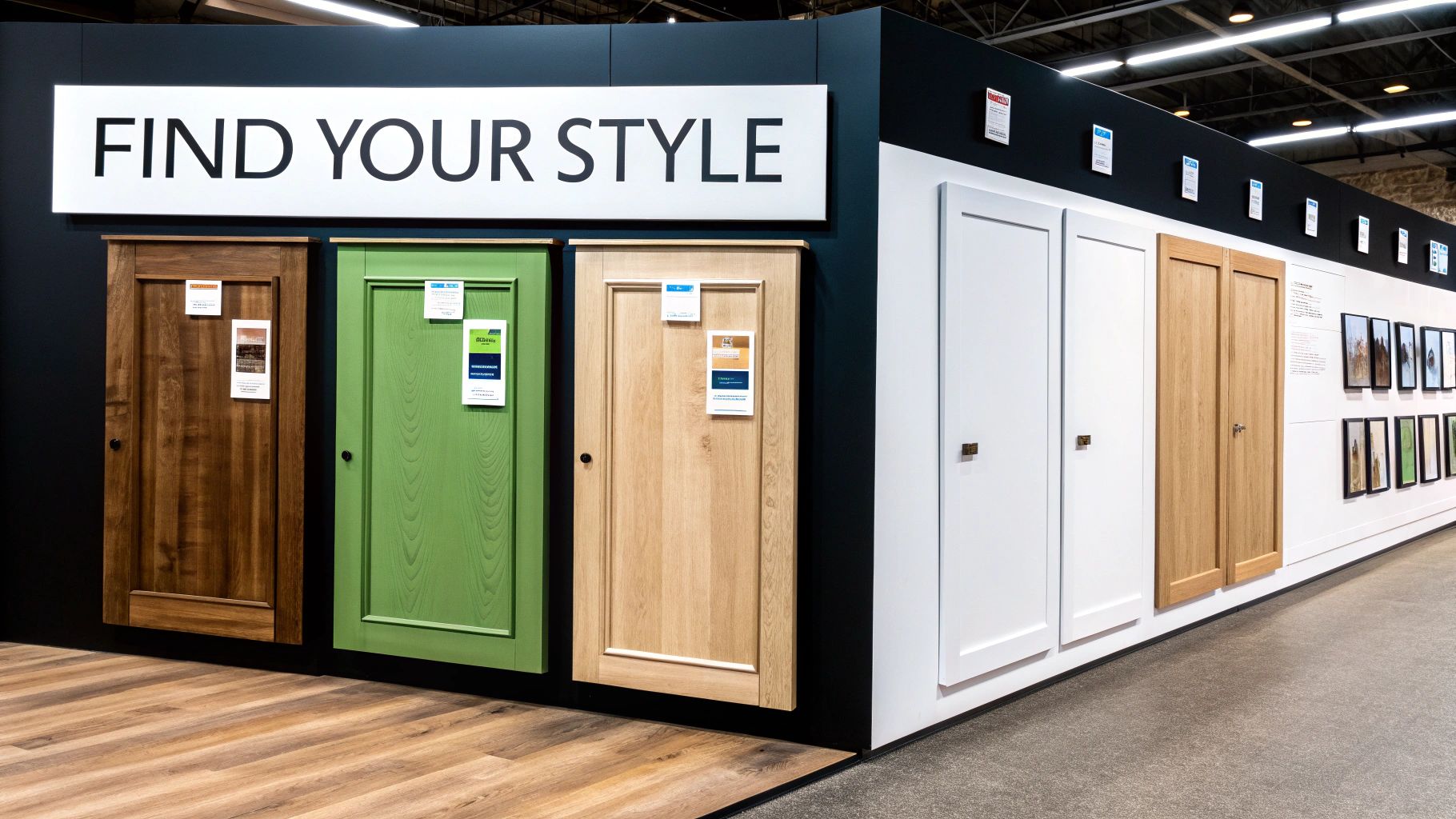
As you start pinning down your signature look, it helps to understand how different design roles fit together. Knowing the distinction between interior architecture and interior design can really clarify how the aesthetic choices you make will blend with the kitchen’s functional blueprint.
Let's dive into the core styles that form the foundation for most of the custom projects we build.
The Timeless Appeal of Shaker Cabinets
If there’s one style that perfectly masters versatility, it's the Shaker cabinet. Defined by a simple, five-piece door with a recessed center panel, Shaker cabinets are the true chameleons of the design world. Their clean lines and lack of fussy details let them slide seamlessly into almost any kitchen aesthetic, from classic farmhouse to ultra-contemporary.
Think of them as the perfect pair of blue jeans—you can dress them up or down with the right accessories.
- For a modern look: Go with crisp white Shaker cabinets paired with sleek, minimalist hardware and a clean quartz countertop.
- For a transitional feel: Try a muted gray or navy paint, and accent them with elegant brass pulls.
- For a rustic vibe: Opt for a natural wood finish, like oak or maple, to let the beautiful grain take center stage.
This incredible adaptability is exactly why Shaker remains the most popular cabinet style out there. It offers a timeless foundation that won't feel dated in a few years.
Sleek and Uncluttered Modern Designs
Modern custom kitchen cabinet designs are all about minimalism and clean geometry. The absolute hallmark of this style is the flat-panel, or slab, door. It’s just a single, solid piece of material with zero ornamentation, creating a smooth, unbroken surface that feels clean and intentional.
This style is a perfect fit for anyone who craves an uncluttered, streamlined aesthetic. The beauty is all in the simplicity, where the material and finish become the real stars of the show.
A Modern kitchen is a study in restraint. The focus shifts from decorative details to the quality of the finish and the precision of the installation, creating a space that feels both calm and highly functional.
Modern designs are especially striking when finished with high-gloss paints in bold colors or sophisticated neutrals. On the other hand, a rich, exotic wood veneer on a slab door can introduce incredible warmth and texture without disrupting that minimalist vibe.
The Cozy Charm of Farmhouse and Traditional Styles
While Modern design is all about simplicity, Farmhouse and Traditional styles lean into warmth, detail, and a rich sense of history.
Farmhouse style is all about being inviting and comfortable. It often features elements like beadboard panels, classic apron-front sinks, and plenty of open shelving. Cabinet finishes here tend to be painted—think classic whites, soft creams, or muted greens—and are often given a lightly distressed or antiqued glaze for that perfect lived-in feel.
Traditional cabinets, on the other hand, are more formal and ornate. They pull inspiration from historical European designs, featuring raised panels, intricate moldings, decorative corbels, and rich, dark wood stains. These custom kitchen cabinet designs are built to project a sense of permanence and classic elegance, making a powerful statement in any home.
Selecting The Best Materials For Durability And Beauty
The material you choose for your custom kitchen cabinets is the very heart of the project. It dictates not just the look and feel but, more importantly, how your kitchen will stand up to years of daily life. This is where stunning aesthetics meet long-term, real-world durability.
Unlike stock cabinets, which often rely on lower-grade materials like particleboard, going custom gives you complete control over the quality of your build, from the core outwards.
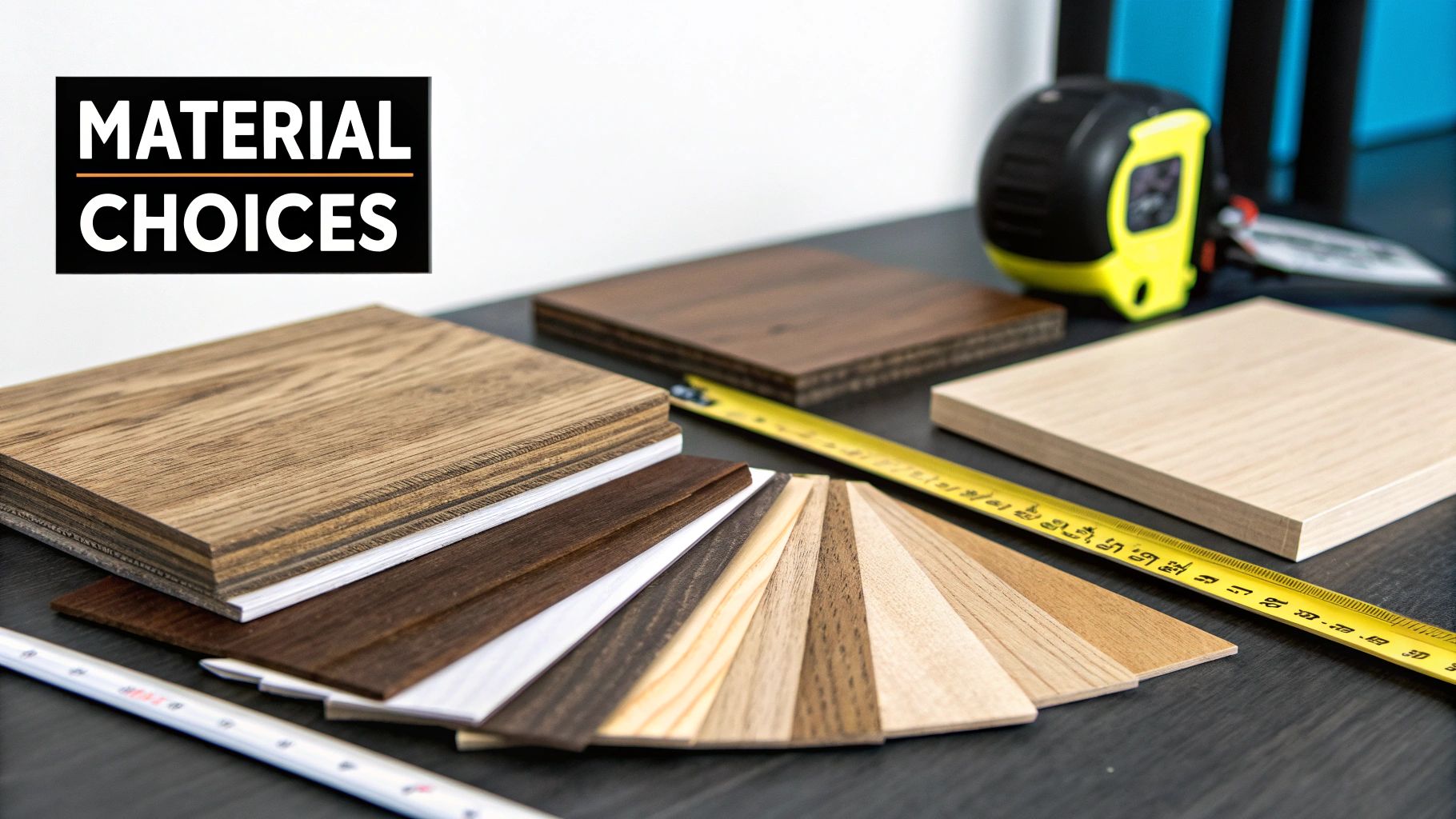
Choosing the right material is like selecting the perfect canvas for a painting. Some woods are prized for their dramatic grain patterns that come alive under a simple stain. Others provide a flawlessly smooth surface, making them the ideal base for a rich, painted finish. Let's explore the most popular options to help you find the perfect match for your vision and lifestyle.
Exploring Classic Solid Hardwoods
Solid hardwoods are the traditional gold standard for high-quality custom cabinetry, and for good reason. They are renowned for their strength, longevity, and timeless natural beauty. Each species brings its own unique character to the table, completely shaping the final look of your kitchen.
- Oak (Red and White): A true classic, oak is known for its prominent grain patterns and exceptional durability. It absorbs stains beautifully, making it the perfect choice for traditional and farmhouse styles where letting the wood's texture shine is a key part of the design.
- Maple: This hardwood has a fine, subtle grain and a smooth, uniform appearance. Its hardness makes it incredibly durable, and its non-porous surface provides an ideal base for crisp paint colors and light stains. It’s a go-to for modern and transitional kitchens.
- Walnut: For a touch of pure luxury and drama, walnut is an incredible option. Its rich, dark tones and elegant grain patterns create a sophisticated, high-end look that needs little more than a clear coat to enhance its natural beauty.
These are just a few heavy hitters, but the world of solid wood offers a vast palette of colors and textures. For a deeper dive, our guide on the best materials for kitchen cabinets provides even more detailed insights.
Choosing the right wood is a critical step in bringing your dream kitchen to life. To make it a little easier, here’s a quick comparison of some of the most popular choices we work with.
Comparing Popular Wood Types for Custom Cabinets
| Wood Type | Hardness & Durability | Grain Pattern | Best For Finishes | Relative Cost |
|---|---|---|---|---|
| Oak | Very Hard | Prominent, open grain | Stains beautifully | $$ |
| Maple | Very Hard | Fine, subtle grain | Paint, light stains | $$$ |
| Cherry | Medium-Hard | Fine, straight grain | Natural, dark stains | $$$$ |
| Walnut | Medium-Hard | Rich, elegant swirls | Natural, clear coats | $$$$$ |
| Hickory | Extremely Hard | Bold, dramatic grain | Natural, light stains | $$$ |
Each of these woods has a distinct personality. Thinking about how you want the finished space to feel—warm and rustic, or sleek and modern?—will help guide you to the perfect material.
The Role Of Engineered Materials
While solid wood is fantastic, high-quality engineered materials play a crucial role in modern custom cabinet designs. In fact, they often outperform solid wood in specific applications. We're not talking about the flimsy materials found in cheap furniture; these are specialized products designed for stability and a flawless finish.
The term "engineered wood" can be misleading. In custom cabinetry, it refers to premium materials like furniture-grade plywood and high-density fiberboard (HDF). These offer superior stability and prevent the warping or cracking that can affect solid wood in humid environments.
Furniture-grade plywood is what we typically use for the cabinet boxes—the main structure. It's made by layering thin sheets of wood veneer in alternating directions, creating an incredibly strong and stable panel that holds screws securely and resists moisture far better than particleboard ever could.
High-Density Fiberboard (HDF) is the preferred material for painted cabinet doors. Because it's a composite of wood fibers and resin pressed under immense pressure, it has no grain. This creates a perfectly smooth, stable surface that won't expand or contract, ensuring your painted finish remains flawless without cracks appearing at the joints over time.
Sustainable And Eco-Conscious Choices
Building a beautiful kitchen doesn't have to come at an environmental cost. The custom design process opens up several avenues for making sustainable choices without compromising on quality or style.
- FSC-Certified Lumber: We can source wood certified by the Forest Stewardship Council (FSC). This certification guarantees that the lumber was harvested from forests that are managed responsibly, promoting biodiversity and protecting vital ecosystems.
- Reclaimed Wood: For a truly unique and rustic aesthetic, reclaimed wood offers a rich history and character that new materials simply can't replicate. Sourced from old barns, warehouses, or other structures, it's a beautiful way to give old materials a new life.
- Low-VOC Finishes: The stains, paints, and sealants used to finish your cabinets are just as important as the wood. Opting for low- or no-VOC (Volatile Organic Compounds) finishes dramatically improves your home's indoor air quality and reduces environmental impact.
Fine-Tuning Your Kitchen Layout and Workflow
A beautiful kitchen is one thing, but a kitchen that works beautifully? That’s life-changing. This is where we stop just thinking about aesthetics and start focusing on ergonomics—how it feels to cook, clean, and live in your space. Custom cabinets are the secret ingredient to unlocking a seamless, efficient layout that makes your daily routine feel less like a chore.
Think of custom cabinets as more than just storage boxes. They're precision-engineered tools designed to solve the unique puzzles of your space. They’re the building blocks of a kitchen that flows intuitively, turning frustrating corners and awkward gaps into functional triumphs. A great layout doesn’t happen by accident; it’s carefully planned around the way you actually move and work.
Mastering Classic Kitchen Layouts
Most kitchens are built around a few time-tested layouts. The real magic of custom design is taking these classic blueprints and elevating them, making sure not a single inch of space goes to waste.
- The L-Shape: Perfect for corner kitchens, this layout keeps the space feeling open while offering great counter space. We can maximize that tricky corner with smart solutions like pull-out shelving or integrated lazy susans, turning a dead zone into prime real estate.
- The U-Shape: This powerhouse layout uses three walls to give you a ton of counter and cabinet space. A custom approach ensures the cabinetry is perfectly proportioned so the kitchen feels efficient, not cramped.
- The Galley: Ideal for narrower rooms, a galley kitchen has two parallel walls of cabinets. With custom designs, we can play with depth and height to create a surprising sense of spaciousness while packing in maximum storage.
With custom cabinetry, these standard layouts are just the starting point. We can tweak cabinet depths, build a perfectly sized island, or design a peninsula that becomes the natural hub for family and friends to gather.
The heart of any functional kitchen is the "work triangle"—the path between your three main work zones: the sink, the stove, and the refrigerator. A good layout keeps the steps between these points to a minimum, making everything from meal prep to cleanup feel effortless.
A skilled cabinet maker doesn't just fill walls with boxes; they engineer a layout that honors the work triangle, placing the tools and storage you need right where you’ll reach for them. It’s this thoughtful approach that makes all the difference.
Custom Solutions for Common Problems
Stock cabinets force you to work around their limitations. This often leads to awkward gaps, wasted corners, and a kitchen that just doesn't feel right. Custom cabinetry does the exact opposite—it adapts to your space, delivering elegant solutions to common layout headaches.
Take the dreaded corner cabinet. In most kitchens, it’s a dark abyss where pots and pans go to be forgotten. A custom solution swaps this black hole for something far more intelligent.
- Pull-Out Corner Drawers: These brilliant drawers are shaped to fit the corner perfectly. They slide all the way out, giving you full access to everything inside without having to get on your hands and knees.
- Integrated Lazy Susans: Forget the wobbly plastic trays of the past. Modern, custom-built units are sturdy, spin smoothly, and bring all your items right to the front with a simple turn.
Beyond corners, custom islands can be built to the exact dimensions your kitchen needs, providing dedicated storage for baking supplies, small appliances, or even a hidden waste and recycling center. To see how these ideas come together, our guide on improving kitchen efficiency through smart layout is packed with useful strategies. This dedication to solving spatial puzzles is what makes custom design a true investment in your daily convenience.
Navigating the Custom Cabinet Journey Step by Step
Taking on a custom cabinet project might seem like a huge mountain to climb, but it’s really a well-mapped-out journey we take together. Instead of a chaotic scramble, think of it as a guided partnership with clear milestones. Understanding the path from start to finish clears up the mystery and turns any anxiety you might have into pure, genuine excitement.
The whole process is built around one thing: making sure your vision is captured perfectly, from the first time we talk to the last handle we install. It’s a collaboration where your ideas become a functional work of art in your home.
The Initial Consultation and Discovery
This first step is all about exploration. It's really just a conversation where you can share your dreams for the space, vent about what drives you crazy in your current kitchen, and show us the styles you love. To get the most out of this meeting, it helps to come with a little homework done.
Gather some inspiration from magazines or online platforms like Pinterest, have a rough budget in mind, and think about how you really use your kitchen every day. This isn’t a test—it’s the creative brief that lets a designer start sketching out a plan that actually fits your life. You should leave this chat feeling like you've been truly heard.
Design Development and Approval
After our initial talk, the creative vision starts to take real shape. A designer will use specialized software to create detailed drawings and stunningly realistic 3D renderings of your new kitchen. This is the moment your custom kitchen cabinet designs jump off the page and onto the screen, letting you see exactly how the layout, styles, and finishes will feel in your actual space.
You'll also get to see and touch physical samples of everything—from different wood species and paint colors to the exact hardware you'll be using.
This is a crucial feedback loop. It's your chance to look at every single detail, ask for changes, and tweak the design until it feels just right. We don't move forward until you are 100% confident in the plan.
A key part of this design phase is nailing the kitchen workflow—the path between the sink, stove, and fridge. It’s the foundation of an efficient kitchen.
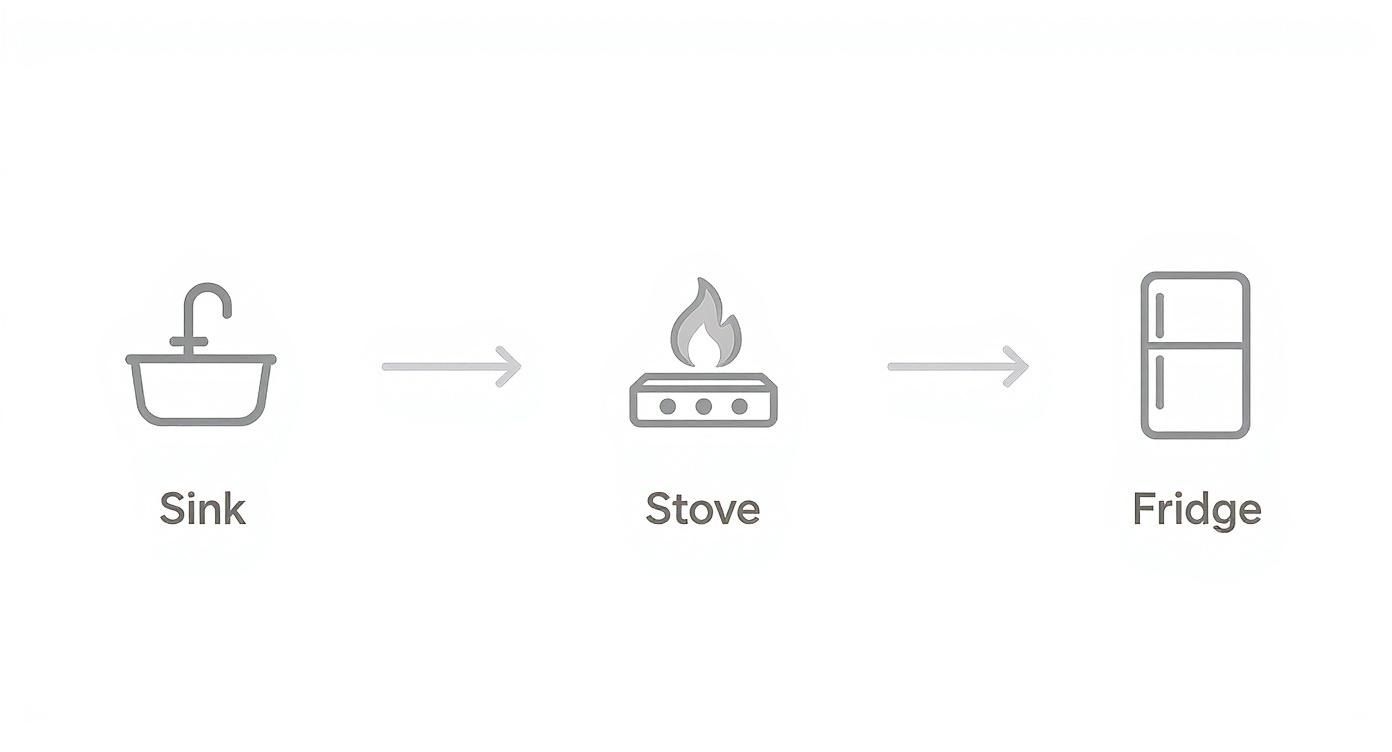
We design the cabinet layout to support this natural movement, cutting down on wasted steps and making your time in the kitchen feel effortless.
Fabrication and Craftsmanship
Once you’ve signed off on the design, the plans leave the screen and head to the workshop. This is where our skilled artisans get to work, meticulously building your cabinets from the ground up. Every piece of wood is hand-selected, cut with precision, joined using time-honored techniques, and finished to your exact specs.
The fabrication process usually takes several weeks because true craftsmanship can't be rushed. Unlike the mass-produced stuff that’s all about speed, our focus is on building something that will last for generations. It’s a behind-the-scenes phase, but it's where the superior quality of your custom cabinets is truly forged.
Installation and Final Touches
This is the home stretch. Our professional installation team brings the finished pieces to your home and expertly fits them into place. They make sure every cabinet is perfectly level, plumb, and secure before hanging the doors, fitting the drawers, and attaching all the hardware.
A typical installation can take anywhere from a few days to over a week, depending on how complex the project is. We’ll always give you a clear timeline and keep you in the loop. When that last drawer pull is tightened, your custom kitchen is officially complete and ready for a lifetime of memories.
Let's Talk About the Cost of Custom Cabinets
It’s time for an honest conversation about budgeting for your custom kitchen cabinets. While the number on the page might look higher than what you'd see for off-the-shelf options, it's so important to frame it correctly. This isn’t just an expense—it's a long-term investment in your home's value, its day-to-day functionality, and your own enjoyment of the space.
That price tag is a direct reflection of the incredible craftsmanship, top-tier materials, and perfectly tailored design that you simply can't get from a big-box store. Knowing what drives that cost puts you in the driver's seat. You'll make smarter decisions, feel more confident in your budget, and have clearer conversations with your cabinet maker. No surprises, just the satisfaction of knowing exactly what you're paying for.
What Goes Into the Final Price?
The final cost of a custom kitchen is really a blend of several key choices. Every single decision, from the wood you pick to the handles you choose, has a role to play in the total investment.
- The Wood Itself: This is a big one. The type of wood you select is a primary cost driver. A rich, luxurious hardwood like Walnut is naturally going to be more of an investment than a timeless classic like Oak.
- Design Complexity: Are you dreaming of intricate crown molding, custom-built dividers, or cabinets that fit perfectly into tricky angles? That level of detail requires more time and expert labor, which will be reflected in the price.
- The Finish: A beautiful finish is a labor of love. A simple, single-color paint or stain is one thing, but a multi-step glazed or distressed finish involves a lot more hands-on work and will cost more.
- Hardware & Accessories: This is where function meets style. High-end pulls, quiet soft-close hinges, and clever internal organizers all add to the final cost, but they also make a world of difference in how your kitchen works for you.
When you understand these building blocks, you can decide where you want to splurge on the features that truly matter to you and where you might be able to find savings.
Custom cabinetry is all about value. It boosts your home's resale price, offers a kind of durability that mass-produced boxes can't touch, and gives you a kitchen that is truly, uniquely yours.
This isn't just a niche idea; it's a major trend. The global kitchen cabinet market was valued at around $160 billion in 2023 and is on track to hit $245 billion by 2032. That's a massive signal that homeowners everywhere are choosing to invest in quality kitchens that last. You can dive deeper into this trend in the full global kitchen cabinet market report.
Ultimately, setting a realistic budget is all about finding the sweet spot between your dream kitchen and your financial plan. For a much more detailed breakdown of what you can expect, take a look at our guide on how much custom cabinets cost. Arming yourself with that knowledge is the first step to creating a kitchen you'll love, without breaking the bank.
Common Questions About Custom Kitchen Cabinets
Thinking about custom kitchen cabinets always brings up a few practical questions. It's completely normal. To help you feel confident about the process, we've pulled together the most common things homeowners ask us.
Getting clear, straightforward answers is the best way to move forward without any uncertainty. Think of this as the final checklist to make sure the entire journey is as smooth and predictable as possible.
How Long Does the Custom Cabinet Process Take?
When you’re talking about true craftsmanship, patience is part of the process. This isn’t an overnight job. A realistic timeline for a full custom cabinet project, from our first chat to the final piece being installed, is anywhere from 8 to 16 weeks. This can shift a bit depending on how complex your design is and our current schedule.
Here’s a rough breakdown of how that time is spent:
- Design & Approval: 1–3 weeks
- Fabrication & Finishing: 6–10 weeks
- Professional Installation: 1–2 weeks
We'll always give you a specific schedule, but this gives you a good idea of the commitment from the start.
Are Custom Cabinets More Durable Than Stock Options?
Yes, and the difference is huge. It really boils down to two things: the quality of the materials and the way they're put together. With custom work, you’re in the driver’s seat for both, guaranteeing a product built to last for decades, not just a few years.
Custom cabinets are built with superior materials like solid hardwoods and furniture-grade plywood. They also feature stronger construction techniques, such as dovetail joinery, which are far more robust than the glue and staples often used in mass-produced stock cabinets.
Stock cabinets often use particleboard, which just doesn't stand up to moisture or daily wear and tear. You can often feel the difference—the lightweight, hollow feel of a stock cabinet door gives away its lower quality, while a custom door feels solid and substantial in your hand.
Can Custom Cabinets Fit Awkward or Unique Spaces?
Absolutely. In fact, this is one of the biggest reasons people choose custom in the first place. Off-the-shelf cabinets are made in rigid, standard sizes that almost never fit a real-world room with its own unique quirks. Custom work is the exact opposite; it’s designed to solve those spatial puzzles.
A skilled cabinet maker can craft cabinetry that flows seamlessly around any architectural feature you can think of, including:
- Slanted or unusually high ceilings
- Odd, non-standard corners
- Uneven walls or floors
- Unique room dimensions and layouts
This is how you maximize every single inch of storage and get that beautiful, seamless, built-in look that’s simply impossible to achieve with stock options.
Ready to bring your vision for the perfect kitchen to life? The team at Sinclair Cabinetry inc has over 35 years of experience crafting high-quality, real wood cabinets that are built to last a lifetime. Explore our gallery and schedule your consultation today at https://sinclaircabinets.com.