
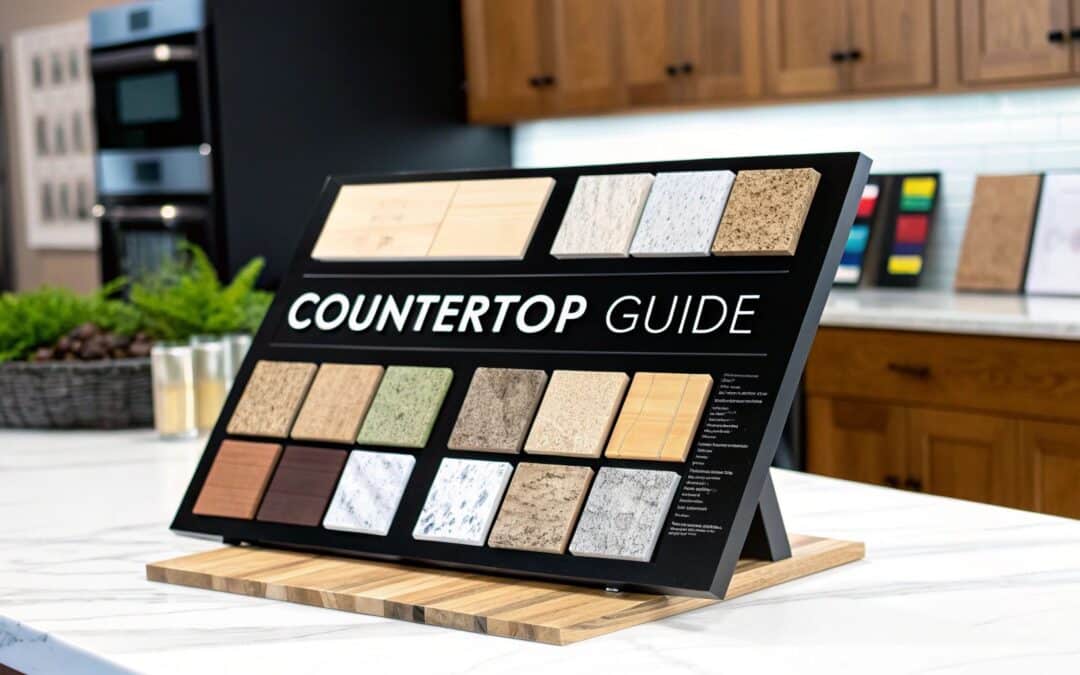
Picking the right countertop is about so much more than just landing on a color you like. It's really about matching a material to your lifestyle, your budget, and the design you're dreaming of. When you break it down, the process is all about understanding how you'll use the surface every day, setting a realistic budget for both the material and the installation, and choosing a style that feels right in your home.
If you can define these needs first, you can cut through the noise and narrow down the huge number of options with confidence.
Defining Your Countertop Needs and Budget
Before you ever set foot in a showroom or get lost scrolling through endless online galleries, the most important step happens right inside your own home. It’s a moment for an honest assessment and some practical planning.
I've seen it time and time again—homeowners who skip this foundational step often end up with budget overruns, a serious case of buyer's remorse, or a countertop that just doesn't fit the way they actually live.
This early phase isn't about colors or materials just yet. Instead, it’s about answering a few key questions that will steer every single decision you make from here on out.
- Functionality First: How do you really use your kitchen or bathroom? Are you a passionate home chef who needs a workhorse surface that can stand up to hot pans and some serious chopping? Or is your kitchen more of a social hub, where resistance to wine and coffee stains is the real priority?
- Maintenance Tolerance: Let’s be realistic about your cleaning habits. Do you want a surface you can just wipe down and forget about, or are you okay with doing some annual sealing to protect a beautiful natural stone? Some materials just plain demand more attention to prevent etching, staining, or other damage.
- Durability Demands: A busy family kitchen, with kids doing homework and spilling juice at the counter, requires a totally different level of scratch and impact resistance than a quiet powder room that only sees occasional use.
Establishing a Realistic Financial Plan
Your budget is the single biggest guardrail in this whole process. And it’s not just about the price per square foot you see on the tag; it’s the total, all-in cost of the project.
A common mistake I see is focusing only on the material cost. The truth is, fabrication, installation, removing the old countertop, sink and faucet cutouts, and edge treatments can easily add another 30-50% to your final bill. Always plan for the all-in price to avoid any nasty surprises.
To get a clear picture of what you're working with, start by measuring your countertop area to estimate the square footage you'll need. From there, you can use a kitchen remodel cost calculator to see how different material tiers will affect your overall spending.
Aligning Needs with Market Realities
The countertop market is huge, which makes sense given how central it is to home design. The global market was valued at around USD 148.34 billion and is only expected to grow. The residential sector makes up over 72% of that demand, with kitchens being the biggest piece of the pie. This just goes to show how critical this one decision is for most of us.
This growth means you have more options than ever, but it also means you need to be crystal clear on what you want.
As you start to define your needs, think about how your choices will contribute to the overall flow and usability of your kitchen. For a few more pointers on that, you can find some great ideas for optimizing kitchen efficiency. By taking the time to truly understand your lifestyle, budget, and the market, you can turn a potentially overwhelming choice into a structured, manageable process.
Comparing Popular Countertop Materials
The material you choose is the very soul of your countertop. It’s the single biggest factor that dictates not just the look of your space, but how you live in it day-to-day. Let's get past the glossy showroom descriptions and talk about how these materials actually perform in a real, busy home.
Making a choice you’ll love for years means understanding the core differences between natural stone, engineered surfaces, and a few other unique players. We’re talking durability, maintenance, and how each one handles a surprise coffee spill or a hot pan set down in a hurry.
To get your gears turning, this decision tree is a great starting point. It helps you zero in on what matters most to you, whether it's budget, lifestyle, or pure aesthetics.

As you can see, starting with your top priority—cost, daily use, or style—can quickly point you toward the best material categories for your remodel.
The Great Debate: Natural vs. Engineered Stone
More often than not, the decision comes down to this: natural stone (like granite and marble) versus engineered stone (almost always quartz). Each one brings a totally different vibe and set of rules to the table.
Natural stone gives you a one-of-a-kind beauty that simply can't be duplicated. Every slab is pulled from the earth, meaning no two pieces are ever the same—it’s like giving your kitchen a unique fingerprint. Granite, for instance, is a true workhorse. It's incredibly durable and stands up to heat, making it perfect for chaotic kitchens. It does need to be sealed annually, but that’s a simple DIY job that takes less than an hour.
Then there's marble, the undisputed champion of luxurious, classic looks. The trade-off? It’s a softer, more porous stone. This means it’s more likely to scratch, and acidic things like lemon juice or wine can cause "etching," which dulls the surface.
So many of our clients fall hard for marble's beauty but get scared off by the maintenance talk. Here's the reality: a good sealer handles most staining. Etching and small chips, however, are just part of living with marble. Over time, these little marks blend together into a unique patina that tells a story—and many people find that absolutely beautiful.
Engineered quartz has become a massively popular alternative for good reason. It's made from about 90% ground natural quartz mixed with resins and pigments, creating a non-porous and incredibly tough material. In practical terms, this means it needs zero sealing and is highly resistant to stains, scratches, and bacteria.
While early versions of quartz could look a bit artificial, today's designs are stunningly realistic. If you're leaning this way, our guide on how to spice up custom cabinets with quartz countertops is packed with design ideas. The main compromise is that it can’t quite capture the raw, organic depth you find in a true slab of granite or marble.
Countertop Material Comparison at a Glance
Sometimes, seeing the key specs side-by-side makes the decision much clearer. This table breaks down the most popular options at a high level to help you quickly compare what matters most.
| Material | Average Cost (per sq ft) | Durability Rating (1-5) | Maintenance Needs | Heat & Stain Resistance |
|---|---|---|---|---|
| Granite | $40 – $100 | 5 | Annual Sealing | High heat, moderate stain |
| Marble | $60 – $200 | 3 | Regular Sealing | Moderate heat, low stain |
| Quartz | $50 – $150 | 5 | None | Moderate heat, high stain |
| Butcher Block | $50 – $150 | 2 | Regular Oiling | Low heat, low stain |
| Concrete | $65 – $135 | 4 | Regular Sealing | High heat, moderate stain |
Remember, these are just averages. The final price and performance can vary based on the specific slab, finish, and fabricator you choose.
Exploring Unique Countertop Alternatives
Of course, the world doesn't end with stone. There are plenty of other materials that can bring warmth, an industrial edge, or a touch of rustic charm to your kitchen or bathroom.
Here’s a great example of how a unique material choice can become the focal point of a kitchen, adding tons of character.
Thinking outside the box can lead to a space that feels truly personal and perfectly suited to your needs.
Some popular non-stone materials include:
- Butcher Block: Wood countertops bring an incredible warmth and organic feel to a kitchen. They're fantastic for food prep since they are naturally gentle on knives. The downside is their vulnerability to moisture and heat; they require regular oiling to prevent drying out and cracking. When looking at wood, it's helpful to understand the differences between solid wood versus engineered wood options to find the right fit.
- Concrete: Perfect for a modern, industrial, or even rustic look, concrete countertops can be customized with all sorts of pigments and textures. They're extremely durable and heat-resistant, but they are also porous. This means they must be sealed properly and regularly to keep stains at bay.
- Stainless Steel: It's the go-to for commercial kitchens for a reason. Stainless steel is completely non-porous, heat-proof, and antibacterial. While it’s incredibly durable, it does scratch and dent fairly easily, and some people find the look and sound a bit too cold or clinical for a home setting.
At the end of the day, picking the right material is a balancing act between your aesthetic, your lifestyle, and your budget. By truly understanding the real-world pros and cons, you can confidently choose a surface that not only looks amazing on day one but continues to serve you beautifully for years to come.
Matching Countertops to Your Home's Style
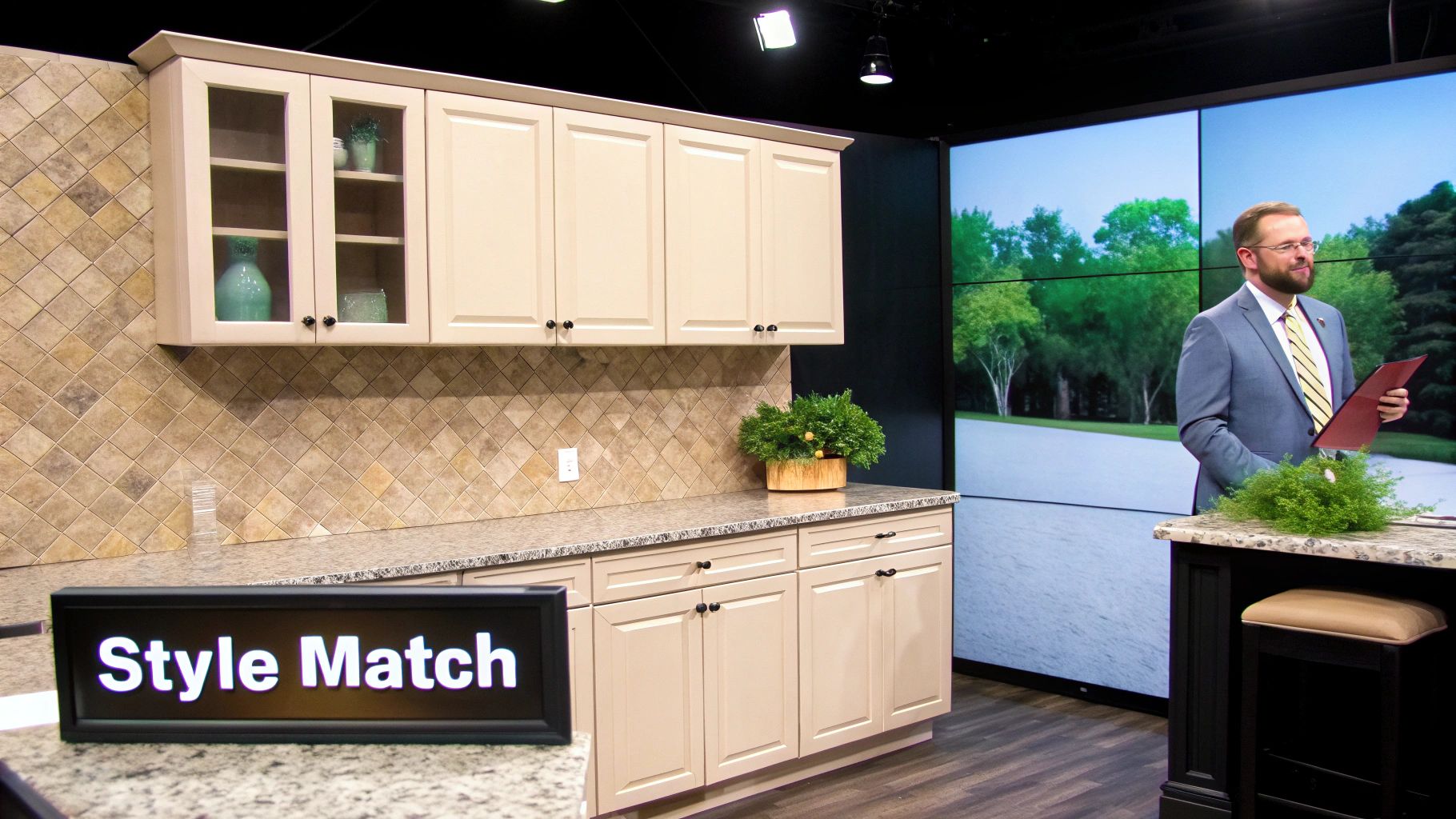
Once you’ve got a handle on the best materials for your lifestyle, the fun part begins: the design. A countertop is a massive visual element in any room. It can be the star of the show or a quiet, supportive backdrop. The key is making a choice that feels intentional, creating a look that flows beautifully with your cabinets, backsplash, flooring, and overall home aesthetic.
This is exactly where many homeowners get stuck. It’s easy to fall in love with a dramatic, heavily veined slab at the stone yard, only to find it clashes horribly with a busy backsplash tile once it’s installed. Knowing how to pick countertops that complement your existing elements is what separates a good remodel from a great one. The goal is to create a cohesive design story.
Creating a Cohesive Color Palette
Your countertop doesn't exist in a vacuum. It has to play well with the other major finishes in the room, especially your cabinets and flooring. This relationship forms the very foundation of your kitchen or bathroom's style.
A timeless strategy is to create a little contrast. Dark cabinets, for example, look absolutely stunning with light-colored countertops like a crisp Calacatta quartz or a soft Danby marble. This pairing creates a balanced, classic look that feels both grounded and airy. On the flip side, light or white cabinets paired with a deep soapstone or a bold black granite countertop deliver a modern, high-impact statement.
If you’re after a more serene and seamless feel, you can opt for a monochromatic or analogous color scheme. Pairing light wood cabinets with a warm, creamy-white countertop or grey cabinets with a subtly veined grey stone creates a sophisticated, unified look. The trick here is to make sure there’s enough textural difference to keep the design from feeling flat.
Why You Must Test Samples at Home
If you take only one piece of advice from this entire guide, let it be this: never, ever finalize a countertop choice based on what you see in the showroom. The harsh fluorescent lighting of a warehouse is a world away from the warm, natural light in your own kitchen.
I once had a client who was dead-set on a specific shade of grey quartz. In the showroom, it looked perfect. But when we brought a sample to her home, the afternoon sun streaming through her kitchen window made it look almost purple. It would have been a costly and heartbreaking mistake.
Bring home the largest samples you can get your hands on. Place them right on your existing counters and just live with them for a bit. Watch how they look in the morning light, under your artificial evening lights, and right up against your actual cabinet doors and backsplash tile. This is the only way to get a true feel for how the material will actually live in your space.
The Impact of Finishes and Edges
The final touches on your countertop—the finish and the edge profile—have a subtle but significant impact on the overall style. These details can push a design from rustic to sleek, or from traditional to contemporary, in an instant.
The finish refers to the surface texture of the stone itself.
- Polished: This is the most common finish you'll see. It’s highly reflective, which makes colors and veins appear richer and more dramatic. A polished finish feels classic and elegant, but it will also show fingerprints and smudges more easily.
- Honed: A honed finish is totally matte. It has a soft, velvety feel that diffuses light rather than reflecting it. This look is fantastic for a more relaxed, modern, or organic style. It's also excellent at hiding minor scratches and etches, especially on materials like marble.
- Leathered or Brushed: This finish has a soft sheen and a subtle texture, almost like a piece of worn leather. It adds a unique tactile quality to the stone and is exceptionally good at hiding everyday imperfections, making it a super practical choice for busy family kitchens.
Finally, the edge profile is the shape carved into the countertop's edge. This one detail can completely change the character of your counters. A sharp, squared-off eased edge looks clean and modern. A fully rounded bullnose edge is softer and feels more traditional, while a decorative ogee edge adds a formal, classic detail perfect for a luxurious design. Picking the right one really ties the entire look together, reinforcing the specific style you're trying to achieve.
Navigating the Countertop Installation Process
You’ve found the perfect slab—that’s a huge milestone! But the journey from the stone yard to your kitchen isn't quite over. Now comes the installation process, where all the planning and decisions finally take shape. It's a make-or-break phase, and knowing what to expect is the key to a smooth, headache-free experience.
That per-square-foot price you saw in the showroom? Think of it as the starting line. The final cost and timeline are shaped by a series of critical steps that happen long before that heavy slab arrives at your door. This includes everything from a technician creating a precise digital map of your cabinets to the final seam-filling and sealing on installation day. Understanding these moving parts helps you budget accurately and keeps costly surprises at bay.
Deconstructing the Total Project Cost
The sticker price of the material itself is just one piece of a much larger puzzle. A professional countertop project is a service, not just a product, and that final invoice will reflect all the skilled work involved. Always ask for an itemized quote so you know exactly what you're paying for.
Here’s a rundown of what’s typically included beyond the stone itself:
- Templating: This is probably the most critical step. An installer visits your home to create an exact template of your cabinets, usually with high-tech laser measuring tools. This digital map ensures your countertops are fabricated to the precise dimensions of your space, accounting for every little quirk, like a bowed wall or slightly uneven cabinets.
- Fabrication: Back at the shop, your slab is transformed. Using the template, the fabricators cut the stone to size and create perfect cutouts for your sink, cooktop, and faucets. This is also when they expertly carve the edge profile you chose.
- Removal and Disposal: Most quotes include the cost of tearing out and hauling away your old countertops. If you're a DIYer looking to save a few bucks by handling this yourself, just make sure to let your installer know upfront.
- Installation: This line item covers the skilled labor for the crew to deliver the stone, carefully set it in place, level it perfectly, and secure it to your cabinets. It also includes joining any seams with a color-matched epoxy and applying that first coat of sealer if you chose a natural stone.
A common point of confusion is the "all-in" square foot price versus an itemized breakdown. Always ask your fabricator for a detailed quote that lists each service separately. This transparency helps you understand exactly where your money is going and avoids the "hidden fees" that can derail a budget.
Finding and Vetting a Reputable Installer
Your fabricator and installer are every bit as important as the material you choose. I've seen it happen—a gorgeous, expensive slab can be completely ruined by a poor installation, leaving you with wide, mismatched seams or countertops that aren't level.
When you start your search, ask your cabinet provider or kitchen designer for their trusted recommendations. Online reviews are helpful, too, but you need to dig a little deeper.
Here are a few key questions I always tell clients to ask a potential installer:
- Are you licensed and insured? This is non-negotiable. It’s what protects you and your home if an accident happens on-site.
- Can I see your work? A pro will be proud to show off their portfolio. Better yet, ask if they can connect you with a few past clients.
- Who actually does the work? Find out if they use their own trained employees or if they subcontract the templating and installation. In-house teams almost always deliver more consistent, higher-quality results.
Understanding the typical workflow is also crucial for your own planning. Countertop replacement is just one part of a bigger project, so for a deeper dive into the broader timeline, check out our complete guide to kitchen remodel steps. Knowing how this piece fits into the larger picture makes the entire renovation process feel much more manageable.
The global countertop market, valued at over USD 107.57 billion, is constantly evolving, with new materials and a growing interest in sustainable options like reclaimed stone. If you're interested in these market dynamics, you can discover more insights about countertop material trends on maximizemarketresearch.com. By asking the right questions and understanding the full scope of work, you can confidently choose an installer who will bring your vision to life with precision and care.
Long-Term Countertop Care and Maintenance
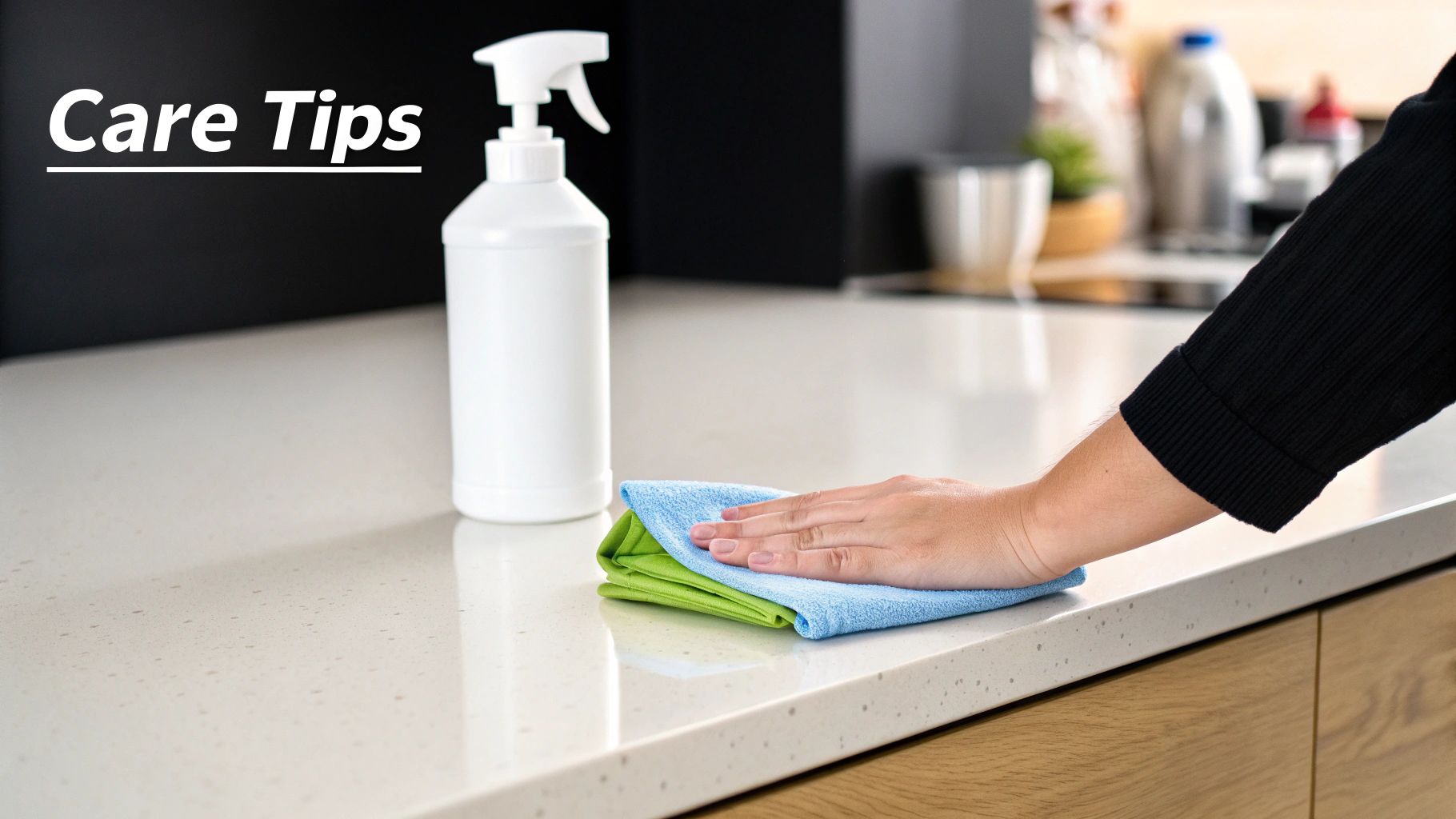
Your new countertops are in, and they look absolutely incredible. The next chapter? Keeping them that way. Protecting this investment isn't about hours of hard labor; it's about forming simple, consistent habits and really understanding what your specific material needs to look its best.
The right care preserves not just the beauty but also the durability of your surface for years to come.
Daily maintenance is your first and best line of defense. For most materials, a quick wipe-down with a soft cloth, warm water, and a drop of pH-neutral soap is all you need. Honestly, what you don't do is just as important. Stay away from abrasive scrubbers, harsh chemicals like bleach or ammonia, and acidic cleaners like vinegar or lemon juice, especially on natural stone. These can easily strip sealers, dull the finish, or even etch the surface itself.
The Role of Sealing for Natural Stone
If you’ve fallen in love with a porous natural stone like granite, marble, or quartzite, sealing is non-negotiable. Think of a sealer as invisible armor for your countertop. It works by penetrating the stone’s pores to create a protective barrier that repels liquids. This gives you precious extra time to wipe up spills before they can soak in and leave a nasty stain.
Don’t let the idea of sealing intimidate you. It’s a simple DIY task that usually takes less than an hour, maybe once a year. A good sealer is your best defense against coffee, red wine, and oil stains, preserving the pristine look of your natural stone.
So, how do you know when it's time to reseal?
It's easy. Just perform the water drop test. Drizzle a small puddle of water onto the surface and just walk away for about 15-20 minutes. If the water is still beaded up when you come back, your sealer is doing its job. If the water has started to soak in and darken the stone, it's time to apply a fresh coat.
Handling Common Countertop Issues
Life happens. Even the toughest countertops can face minor mishaps, but knowing how to respond can make all the difference between a temporary spot and a permanent problem.
- Stubborn Stains: For tough stains on stone, a simple poultice—a paste made from baking soda and water—can work wonders. Apply it to the stain, cover it with plastic wrap, and let it sit overnight. As the paste dries, it will slowly draw the stain right out of the stone.
- Light Scratches: Minor scratches on a solid surface or engineered quartz can sometimes be buffed out with a non-abrasive pad and a specialized cleaner. For deeper scratches in stone, it’s best to call a professional who can re-polish the area without causing more damage.
- Chips and Dings: Small chips, especially along the edges, are pretty common. You can find color-matched epoxy or acrylic repair kits online or at home improvement stores that make these minor damages nearly invisible.
The global countertop market is a massive industry, growing from USD 96.89 billion to an expected USD 100.29 billion in just one year. This isn't just a random statistic; it shows that homeowners are demanding more customized and high-performing surfaces. Regional preferences also play a big role, with granite and engineered stones dominating in some areas while sustainable materials gain traction elsewhere. You can dive deeper into these trends and the growth of the countertops market on thebusinessresearchcompany.com.
All this market activity means more innovation in care products, giving you better and easier tools to protect your investment. By following these simple maintenance steps, your countertops will remain a stunning and functional highlight of your home for a very long time.
Of course. Here is the rewritten section, formatted to sound like an experienced human expert and match the provided style examples.
Common Questions About Choosing Countertops
Even with all the research in the world, a few lingering questions can pop up and make that final countertop decision feel a little intimidating. Let's walk through some of the most common concerns we hear from homeowners, breaking them down with clear, straightforward answers to help you feel confident in your choice.
These are the questions that come up time and time again. Whether you're thinking about long-term value, day-to-day practicality, or just getting the design right, nailing down these details is often the last piece of the puzzle.
How Much Should I Budget for Countertops?
This is almost always the first question, and for good reason. A solid rule of thumb is to set aside about 10-15% of your total kitchen remodel budget for your new countertops. This figure should cover everything—the material itself, plus the critical steps of templating, fabrication, and professional installation.
But that number isn't set in stone. If your heart is set on a rare, exotic slab of marble, you might see that figure climb closer to 20%. On the flip side, if you go with a stylish but more wallet-friendly option like butcher block or a high-end laminate, you could come in under that. The key is getting an itemized, all-in quote early on to sidestep any budget surprises later.
What Is the Most Durable Countertop Material?
When it comes to pure, everyday toughness, engineered quartz is hard to beat for most homes. It's a non-porous material, which is just a technical way of saying it’s incredibly resistant to stains from coffee, wine, and oil. It also holds up exceptionally well against scratches and impacts without ever needing to be sealed.
Granite is also a powerhouse of durability and stands up to heat like a champ, but its natural porosity means it needs a good sealer to offer that same level of stain protection. For a surface that’s truly low-maintenance—one you can just "set and forget" in a busy family kitchen—quartz is the undisputed champion.
A lot of people ask if they'll regret choosing a "softer" stone like marble. Honestly, durability is personal. Some homeowners love the way marble etches and dings over time, seeing it as a beautiful patina that tells the story of their home. Others want a surface that looks brand new for years. The "best" choice is simply the one that fits your lifestyle and what you're willing to live with.
Can I Mix Different Countertop Materials?
Absolutely! In fact, mixing materials is a fantastic design move that adds serious depth, visual interest, and a ton of functionality to a kitchen. It’s a go-to strategy in high-end design for a reason.
A classic and highly effective approach is to use a durable workhorse material like quartz or granite for your main perimeter counters, then showcase a more luxurious or eye-catching material on the island.
- For a Modern Look: Imagine using a sleek, dark gray quartz along the walls where your sink and stove are. Then, you could top the island with a stunning slab of white marble with dramatic veining to create an unforgettable focal point.
- For a Warmer Vibe: You could pair rich soapstone on the perimeter with a thick, beautiful butcher block on the island. This not only looks great but also creates a perfect, dedicated spot for all your food prep.
The trick is making sure the materials complement each other in either color, tone, or texture. Sticking to a cohesive color palette is the easiest way to tie the different surfaces together for a polished, intentional design. Ultimately, figuring out how to pick countertops is often about finding that perfect combination of materials that works for both your style and your daily routine.
Before we wrap up, here’s a quick-reference table to address some other common questions we get all the time.
Frequently Asked Countertop Questions
| Question | Quick Answer | Key Consideration |
|---|---|---|
| Which countertop is easiest to maintain? | Engineered quartz is the winner. It requires no sealing and is highly resistant to stains and scratches. | If you prefer natural stone, granite is also very durable but requires periodic sealing to maintain its stain resistance. |
| Can I put hot pots directly on my counter? | It's not recommended for most surfaces. Granite and soapstone have excellent heat resistance, but quartz and marble can be damaged by thermal shock. | Always use trivets or hot pads as a precaution to protect your investment, regardless of the material. |
| How do I clean my new countertops? | For most materials, a simple mix of warm water and mild dish soap is all you need for daily cleaning. | Avoid abrasive cleaners, acidic solutions (like vinegar or lemon juice) on marble, and harsh chemicals, as they can dull the finish or damage the sealer. |
| What's the difference between honed and polished? | A polished finish is glossy and reflective, which makes colors appear richer. A honed finish is matte, offering a softer, more natural look. | Polished surfaces are less porous and easier to clean, but they show fingerprints more. Honed surfaces hide imperfections but can be more susceptible to stains. |
Hopefully, these answers clear up any remaining questions and help you move forward. Choosing the right countertop is a big decision, but it's also one of the most exciting parts of any remodel!
Ready to transform your vision into a stunning reality? The experts at Sinclair Cabinetry inc have over 35 years of experience crafting bespoke cabinetry and executing flawless kitchen and bathroom remodels. Start your project today.