

When you start crunching the numbers for a bathroom renovation, you'll quickly see that a mid-range project typically lands somewhere between $10,000 and $15,000. Of course, that's just a ballpark. A small powder room refresh might only set you back $1,500, while a full-blown primary suite remodel can easily soar past $30,000.
Ultimately, the final bill comes down to your project's scope, the materials you choose, and the labor required to bring it all together.
Establishing Your Financial Blueprint
Before you fall in love with a specific tile or freestanding tub, it’s crucial to get a clear picture of your finances. Budgeting for a bathroom renovation is a lot like buying a car—you have options ranging from a reliable daily driver to a high-end luxury model. Both get you where you need to go, but they come with vastly different price tags.
The same logic applies here. Your choices will directly shape the final invoice, so understanding the typical cost brackets is the first step toward building a budget that makes sense for you. This overview will help you see where your project might fit before we dive into where every dollar goes.
Defining Your Project Tier
Most bathroom renovations fall into one of three tiers, each defined by the scope of work and the quality of the finishes.
-
Small or Basic Updates: This is all about cosmetic changes. Think a fresh coat of paint, a new off-the-shelf vanity, updated light fixtures, and maybe a new toilet. The plumbing layout stays exactly where it is, which keeps labor costs way down. It's the fastest way to give a space a facelift without a major overhaul.
-
Mid-Range Remodels: This is the most common type of project we see. It usually involves replacing nearly everything—the tub, tile, vanity, and flooring. You're working with higher-quality materials, and you might make minor tweaks to the plumbing or electrical to improve functionality.
-
High-End or Custom Renovations: Here, we're talking about a complete gut job. Walls might come down, plumbing gets relocated, and luxury materials like natural stone or custom tile are the stars of the show. This tier often includes features like custom-built cabinetry, heated floors, steam showers, and smart home technology.
To give you a clearer idea, here's a quick look at how these tiers break down.
Quick Bathroom Renovation Cost Estimates
| Project Tier | Typical Cost Range | Common Features |
|---|---|---|
| Basic Update | $1,500 – $7,000 | New paint, faucet, light fixtures, prefabricated vanity. |
| Mid-Range Remodel | $10,000 – $25,000 | New tub/shower, toilet, vanity, flooring, and tile. |
| High-End Renovation | $30,000+ | Custom cabinetry, layout changes, luxury materials, smart tech. |
Keep in mind that these are just general guidelines. Costs can swing based on where you live and the specific challenges of your space.
A key factor influencing these ranges is location and the complexity of the job. For instance, the average cost for a bathroom renovation in major US markets generally falls between $10,000 and $15,000 for a mid-range project.
This framework helps you see how different levels of investment translate into tangible results. To get a more personalized number, a dedicated tool can be a game-changer. Check out our guide on using a bathroom remodel cost estimator to start building your own detailed budget. Once you understand these general tiers, you can make smarter decisions about where to spend your money.
Breaking Down Labor and Material Costs
When you start digging into a bathroom renovation budget, you’ll quickly find two heavy hitters that dominate the conversation: labor and materials. These two line items are the big kahunas, usually making up more than 80% of your total spend. Getting a handle on how they work together is the first real step to building a budget that doesn't fall apart.
Think of it like building a custom car. You have the cost of the parts (materials) and the cost of the master mechanic who puts it all together (labor). You can go with reliable, off-the-shelf components or spring for high-performance, custom-milled parts. Both will get you a running car, but the final product—and the final invoice—will look vastly different.
The Real Price of Professional Labor
Labor is often the single biggest slice of the pie, typically accounting for 40% to 60% of the project's total cost. This isn’t just a single fee for "getting the work done." It’s a combination of different skilled pros whose expertise makes sure your new bathroom is beautiful, safe, and up to code.
You're not just paying for a set of hands. You're paying for years of on-the-job experience, thousands of dollars in specialized tools, and the crucial knowledge of navigating tricky building codes. Trying to DIY something like plumbing or electrical work isn't just risky; a single mistake could lead to catastrophic damage and repair bills that dwarf what you "saved."
Here’s a quick look at the key players on your renovation team:
- General Contractor: This is your project's quarterback. They coordinate everyone, from the plumber to the tiler, manage schedules, and order materials. Their oversight is what keeps the project from derailing.
- Plumber: Absolutely essential. They're the ones moving water lines for a new shower, setting the toilet, and ensuring the vanity sink drains properly. Good plumbing prevents leaks and the nightmare of water damage.
- Electrician: A licensed electrician is non-negotiable for running new wiring, installing GFCI outlets (a must-have for safety near water), and setting up ventilation fans.
- Tiler: A great tiler is an artist. They're responsible for proper waterproofing (critical!), creating perfectly level surfaces, and laying intricate tile patterns that often become the bathroom's centerpiece.
It's a common mistake to think of labor as the easy place to cut costs. The truth is, hiring qualified professionals is like buying an insurance policy. Their expertise heads off future problems that could cost a fortune to fix later, protecting your home and your sanity.
Choosing Your Materials: The "Good, Better, Best" Strategy
After labor, your materials will be the next major expense. The sheer volume of choices can feel paralyzing—tile, flooring, vanities, faucets, lighting. The best way to make sense of it all is to think in tiers: good, better, best. This framework makes it much easier to decide where to invest and where you can save.
Good (Budget-Friendly): These are your solid, reliable, off-the-shelf options that deliver great looks and function without a premium price tag.
- Vanity: A prefabricated vanity from a big-box store.
- Tile: Standard ceramic or porcelain tiles in common sizes.
- Fixtures: Chrome faucets and showerheads from well-known, reputable brands.
Better (Mid-Range): This is the sweet spot for many homeowners, balancing elevated style with enhanced durability.
- Vanity: Semi-custom vanities that offer more finish and hardware options.
- Tile: Higher-quality porcelain with more complex designs, or natural stone accents.
- Fixtures: Finishes like matte black or brushed nickel, often with more advanced features.
Best (High-End): This is where you get into luxury materials and complete customization.
- Vanity: Fully custom cabinetry built to your exact measurements and design vision. To learn more, our guide breaks down the average cost of custom cabinets and what influences the price.
- Tile: Imported marble slabs, handmade zellige tiles, or intricate mosaics.
- Fixtures: Designer brands known for premium materials and lifetime warranties.
The beauty of this tiered approach is that you can mix and match. Maybe you save with a "good" tier floor tile to free up budget for that show-stopping "best" tier custom vanity. By strategically allocating your funds, you can create a bathroom that feels incredibly high-end without breaking the bank.
Itemized Cost Guide for Fixtures and Features
Once you've got a handle on the big-picture costs like labor and materials, it's time to zoom in. The next step in building an accurate bathroom renovation cost breakdown is to itemize every single fixture and feature you want. This is where your budget really comes to life, moving from a rough estimate to a detailed, actionable plan.
Think of it like an à la carte menu for your project—every single choice has its own price tag, and that includes both the item itself and the professional needed to install it.
This is often the most exciting part of the process, but it's also where costs can sneak up on you if you're not careful. For example, a simple, functional toilet might only set you back $250, but a high-tech smart toilet with all the bells and whistles can easily sail past $2,000. Getting familiar with these price swings is the key to balancing what you want with what you can afford.
This granular approach lets you see exactly where your money is going. You might decide to splurge on that stunning freestanding tub as the room's centerpiece and then save a little on a more standard, but still stylish, vanity. Let's break down the main components.
Tubs and Showers Cost Analysis
The tub and shower area is almost always the visual and functional heart of the bathroom, so it’s a pretty significant line item in the budget. The options here run the gamut from practical and affordable to utterly luxurious and spa-like, with costs that vary wildly depending on the material, size, and how complex the installation is.
A standard acrylic alcove tub—the kind that fits neatly into a three-walled enclosure—is one of the most budget-friendly choices out there. The tub itself will likely run between $400 and $900, with the installation labor adding another $500 to $1,200. It's a solid, straightforward option that works great in most family bathrooms.
If you’re aiming for a more modern, high-end look, nothing makes a statement quite like a freestanding soaker tub. Basic models start around $1,000, but designer pieces made from materials like stone resin or cast iron can climb to $5,000 or more. The installation is also a bigger job, often requiring new plumbing lines, which pushes the labor costs up into the $1,000 – $2,500 range.
Toilets Budgeting From Basic to Smart
It might seem like a simple fixture, but toilet design and technology have come a long way. The model you choose can have a real impact on both your final budget and your bathroom's day-to-day feel and function.
The most common and affordable option is a standard, floor-mounted two-piece toilet. You can expect these to cost somewhere between $200 and $500. For a plumber, the installation is pretty routine, usually running $200 to $400.
For a sleeker, more contemporary vibe, a wall-mounted toilet is a fantastic choice. These models make the room feel bigger and are a breeze to clean around, but they come with a higher price tag. The unit itself is pricier ($500 – $1,200), and the installation is much more involved because it needs a special carrier system hidden inside the wall. This drives the labor costs up to $700 – $1,500.
Vanity and Sink Price Points
The vanity is so much more than just a place to put a sink; it’s your primary storage hub and countertop workspace. Its cost is tied directly to its size, the materials used, and whether you go with a pre-made unit or have something custom-built.
- Prefabricated Vanities: These all-in-one units from big-box stores are your most budget-friendly route, typically ranging from $300 to $1,500.
- Semi-Custom Vanities: Offering more wiggle room in terms of size and finishes, these usually fall in the $1,000 to $3,000 range.
- Custom Vanities: Built from scratch to your exact specs, these deliver unmatched quality and a perfect fit. To get a better handle on the variables, check out our guide on the custom bathroom vanity cost.
Installation for a vanity generally costs between $300 and $800, depending on how tricky the plumbing connections are and what kind of countertop you've chosen.
Speaking of behind-the-scenes work, it's worth noting that upgrading plumbing and electrical systems is a top priority for homeowners, with 61% choosing to make these improvements during a remodel. This often goes hand-in-hand with new fixtures to ensure the home's infrastructure can handle modern demands.
This trend is part of a larger picture, as bathroom remodeling costs have been on the rise. We've seen an 11% increase in median spending, jumping from $13,500 in 2022 to $15,000 in 2023. This is largely driven by popular upgrades like better ventilation fans (59% of remodels), cozy radiant heating (13%), and energy-efficient LED lighting (55%).
Before we move on, let's take a closer look at how the costs of fixtures break down between the product itself and the labor to get it installed.
Fixture Cost Breakdown Materials vs. Installation
| Fixture | Material Cost Range | Estimated Installation Cost |
|---|---|---|
| Alcove Tub | $400 – $900 | $500 – $1,200 |
| Freestanding Tub | $1,000 – $5,000+ | $1,000 – $2,500 |
| Standard Toilet | $200 – $500 | $200 – $400 |
| Wall-Mounted Toilet | $500 – $1,200 | $700 – $1,500 |
| Prefabricated Vanity | $300 – $1,500 | $300 – $800 |
| Faucet | $150 – $600 | $200 – $400 |
As you can see, the installation can sometimes cost as much as—or even more than—the fixture itself. Factoring both of these numbers into your budget is crucial for avoiding any surprises down the road.
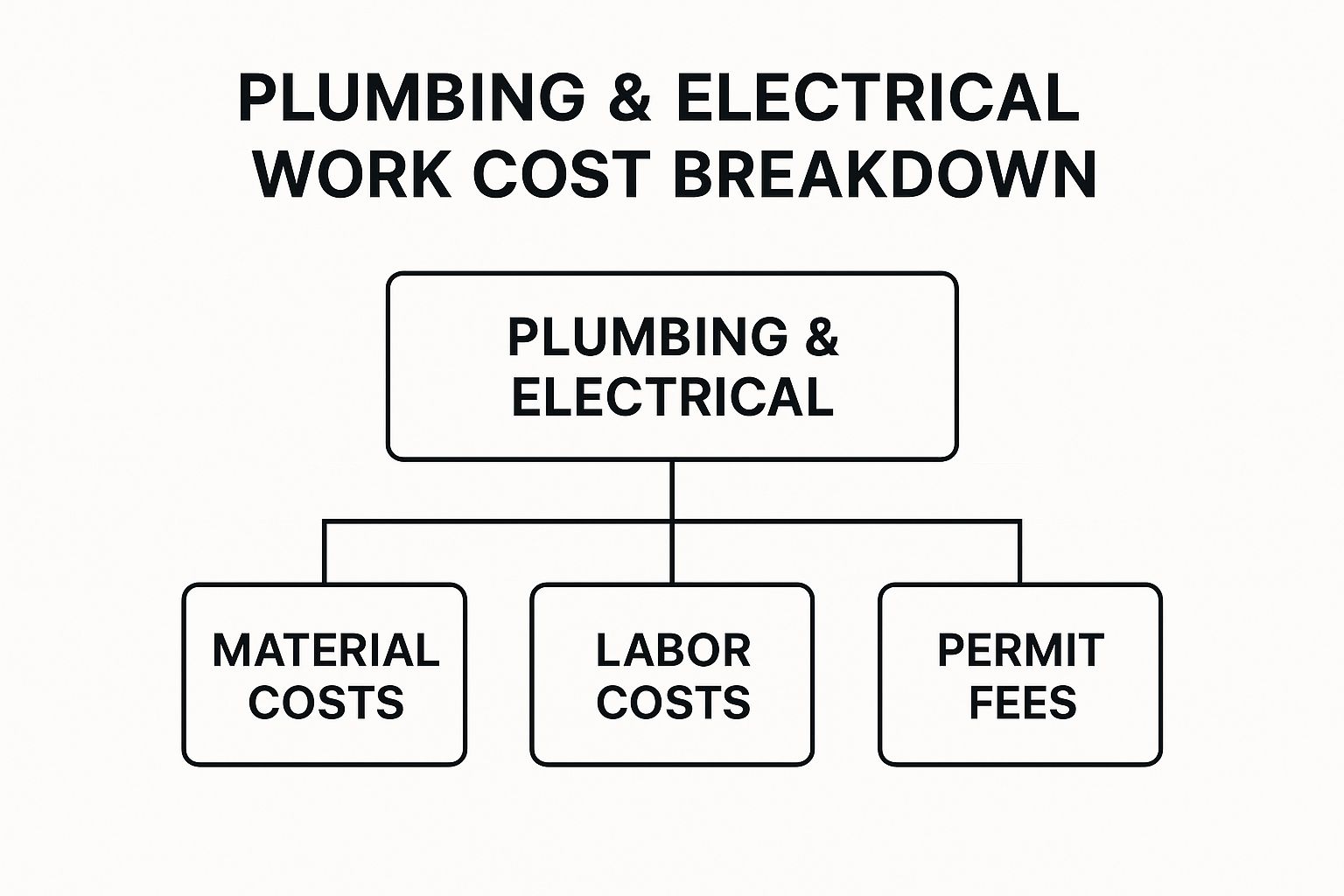
This image really drives the point home: beyond the shiny fixtures you see and touch every day, a huge chunk of your budget goes toward the foundational work. The labor, materials, and permits are the essential, unseen investments that make sure your beautiful new bathroom is also safe, functional, and built to last.
Budgeting for Surfaces: Floors, Walls, and Countertops
The surfaces in your bathroom—the floors, walls, and countertops—are what you see and touch every single day. They’re the skin of the room, setting the tone for its character, feel, and long-term durability. These choices are a massive part of your bathroom renovation cost breakdown, and it’s about more than just the price per square foot.
Think of it like this: the surfaces are the outfit your bathroom wears. A simple, clean look (like fresh paint) is affordable and timeless. On the other hand, an intricate, custom-tailored suit (think floor-to-ceiling marble) makes a huge statement but comes with a much higher price tag. The size and shape of your room play a big role here, too. A small, square powder room is far simpler and cheaper to dress up than a large primary bathroom with tricky angles and shower niches.
Decoding Bathroom Flooring Costs
Your bathroom floor is a true workhorse. It has to handle constant moisture, heavy foot traffic, and frequent cleanings, all while looking fantastic. This is a significant budget item for a good reason—it lays the aesthetic and functional groundwork for the entire space.
Globally, the bathroom remodeling market is a massive industry valued at roughly USD 398.1 billion, which tells you just how much homeowners are investing in these spaces. Flooring is a dominant player here, making up about 27.3% of all those expenses. That number really highlights how crucial this decision is. Innovations like waterproof vinyl and eco-friendly tiles are driving demand for durable, stylish options. You can explore more about these trends to see why flooring commands such a large part of the budget.
Here’s a quick look at popular flooring choices and what you can expect to pay for them, installed:
- Luxury Vinyl Plank (LVP): This is a fantastic, budget-friendly choice. LVP is 100% waterproof, tough as nails, and comes in tons of realistic wood and stone looks. Expect to pay between $7 and $12 per square foot installed.
- Ceramic & Porcelain Tile: The classic bathroom flooring for a reason. These tiles offer endless design possibilities and top-notch water resistance. Costs typically range from $10 to $25 per square foot installed, but intricate patterns or large-format tiles will push that price higher.
- Natural Stone: For that truly high-end, spa-like feel, materials like marble, travertine, or slate deliver unmatched beauty. Just know they require sealing and more maintenance. The cost reflects this luxury, running anywhere from $15 to $50+ per square foot installed.
Remember, the material cost is only one piece of the puzzle. Labor for tile installation, especially for complex patterns like herringbone or mosaics, can add a lot to the total price. A skilled tiler’s work is worth every penny to ensure proper waterproofing and a flawless finish that lasts.
Budgeting for Walls and Shower Surrounds
Bathroom walls can be as simple or as elaborate as you want them to be. While a fresh coat of moisture-resistant paint is easily the most affordable option, the real cost driver is the shower or tub surround, where waterproofing and durability are absolutely non-negotiable.
A simple painted wall might only cost $2 to $4 per square foot, including the labor. But once you move into the wet areas, the costs start to climb. A pre-fabricated acrylic or fiberglass shower surround is a practical, mid-range choice, usually costing $800 to $2,500 once it's installed.
For a more custom and upscale look, tiling the shower walls is the most popular way to go. Using the same tile as the floor can create a really cohesive, seamless design, but this is also your chance to introduce a cool accent tile. The cost for a fully tiled shower surround—including waterproofing, materials, and labor—generally falls between $2,000 and $7,000. The final number really depends on the tile you choose and the size of your shower.
Planning for Hidden Costs and Contingency Funds
No matter how carefully you map out your bathroom renovation cost breakdown, every project has its surprises. These are the infamous "hidden costs" that never show up on an initial quote but can absolutely wreck a budget if you aren't ready for them. In my experience, overlooking them is the single biggest mistake homeowners make.
Think of it like this: your initial budget is the map for a perfect road trip. The hidden costs? They're the unexpected detours, the flat tire in the middle of nowhere, the surprise toll road. Without a backup plan, these bumps can bring your entire journey to a grinding halt.
This is exactly why a contingency fund is non-negotiable.
Building Your Financial Safety Net
A contingency fund is simply a slice of your total budget—I always recommend 15% to 20%—that you set aside purely for the unexpected. It's your project's insurance policy. You hope you’ll never need it, but you'll be incredibly glad it's there when a contractor pulls back a wall and finds old, corroded pipes.
A contingency fund isn’t for splurging on upgraded tile mid-project. It’s a dedicated reserve to cover unforeseen structural, plumbing, or electrical issues that must be addressed to complete the renovation safely and correctly.
For a $20,000 mid-range remodel, that means having an extra $3,000 to $4,000 in the bank. This cushion turns a potential crisis, like finding extensive water damage, from a budget-breaking disaster into a manageable problem your team can solve without stopping work or sending you scrambling for cash.
Common Surprises to Anticipate
So, what kind of things are we talking about here? While it's impossible to see into the future, most of these hidden costs fall into a few common buckets. Just knowing what could happen helps you build a much more resilient budget from day one.
Here are some of the most frequent curveballs I've seen pop up during bathroom renovations:
- Unforeseen Water Damage: It's a classic. You pull up old tile and find a soft subfloor, rotted wall studs, or mold. This isn't optional—it has to be fixed for the health and safety of your home.
- Outdated Plumbing or Electrical: Especially in older homes, a contractor might discover the existing systems are nowhere near current building codes. Bringing everything up to standard is a mandatory expense.
- Permit and Inspection Fees: The cost of permits can vary wildly, and sometimes an inspector will require a follow-up visit, each with its own fee.
- Structural Issues: Sometimes, taking out a wall or a heavy old fixture reveals that things weren't properly supported to begin with. These issues have to be addressed before you can move forward.
- Debris Disposal Costs: Getting rid of old tubs, vanities, and drywall isn't always baked into the initial labor quote. Dumpster rentals or junk removal services can add a surprising amount to the final bill.
Smart Ways to Save on Your Renovation
Seeing the total cost of a bathroom renovation can be a bit of a shock, but this is exactly where you get to take back control. With the right strategy, you can shave a surprising amount off the final bill without skimping on quality. Think of yourself as the project manager of your own savings plan—making smart, calculated moves that can trim thousands from that final invoice.
The real key is knowing where you can cut back without touching the critical, long-lasting parts of your bathroom. It’s all about striking that perfect balance between hiring a pro and rolling up your sleeves.
Embrace Strategic DIY
One of the best ways to slash costs is by tackling certain jobs yourself. Let's call it strategic DIY. Now, this doesn't mean you should be binge-watching videos on how to solder copper pipes. Nope. Instead, focus on the labor-heavy tasks that don't carry a huge risk if you mess up.
- Demolition: Tearing out old tile, yanking out a vanity, and pulling up dated flooring can easily save you hundreds in labor costs alone.
- Painting: A pro paint job is nice, sure, but painting is a skill most homeowners can get good at for just the cost of supplies.
- Cleanup and Hauling: Simply managing the daily cleanup and hauling debris to the dump yourself can chip away at the billable hours on your contractor's invoice.
The golden rule of strategic DIY is simple: leave anything involving plumbing, electrical work, or waterproofing to the licensed pros. A mistake in one of these areas can cause catastrophic damage that will cost way more to fix than you ever saved.
Master the Art of Smart Sourcing
Materials are going to be a massive chunk of your budget, but you absolutely do not have to pay full retail for everything. With a little digging and good timing, you can find high-quality items for a steal. Even when you schedule your project matters. Contractors are usually swamped in the spring and fall; booking your renovation for their slow season, like late winter, can sometimes get you more competitive quotes on labor.
And when it comes to the materials themselves, get creative:
- Shop at Outlet Stores: Lots of suppliers have outlet stores where they sell overstock, discontinued models, or slightly imperfect items for a steep discount.
- Look for Floor Models: Showrooms are always cycling through their displays. You can often snag a floor model vanity, tub, or faucet at a fantastic price.
- Refinish Instead of Replace: If that old cast-iron tub is still structurally sound, why replace it? You can have it professionally reglazed for a few hundred bucks instead of spending thousands on a new one.
By mixing smart DIY with savvy shopping, you can wrestle back control over your bathroom renovation costs and still end up with a beautiful space you love—all on a much friendlier budget.
Wrapping Up: Your Final Questions Answered
Even after mapping out every cost, a few practical questions always pop up. It’s completely normal. Let's tackle the most common ones homeowners ask right before they're ready to dive in, so you can move forward with total confidence.
How Long Does a Bathroom Renovation Take?
This really depends on how deep you're going. A simple cosmetic refresh—think new paint, a faucet swap, and a new vanity—can be knocked out in about 5 to 10 days. It's quick, satisfying, and gives the space a whole new feel without major disruption.
But if you're planning a more typical mid-range remodel that involves ripping out old tile, the tub, and the floor, you'll need to be more patient. These projects usually take around 3 to 5 weeks. That extra time is for the serious stuff: demolition, potential plumbing and electrical tweaks, waterproofing (a step you can't rush!), tiling, and installing all your beautiful new fixtures.
For a full gut job where you're moving walls or completely changing the layout? Plan for 6 weeks or more. Good things take time.
Is Hiring an Interior Designer Worth the Cost?
For a lot of people, absolutely. While a designer's fee, typically 10% to 20% of the project cost, adds to your budget upfront, they can be a secret weapon for saving money and your sanity. They have access to trade-only discounts, know how to create a cohesive vision that actually works in your space, and manage the chaos to sidestep expensive mistakes.
A designer is especially valuable when the project gets complex, like rearranging the layout, or if you're aiming for that polished, high-end look. Their eye for detail ensures the final result isn't just pretty, but perfectly functional.
The real magic of a designer is their ability to see the finished room before a single tile is laid. They cut through the "analysis paralysis" of picking finishes and make sure every element, from the grout color to the light fixtures, works together seamlessly. It's the ultimate protection for your investment.
What Is the Return on Investment for a Bathroom Remodel?
A bathroom remodel is consistently one of the smartest places to put your money in a home. On paper, a mid-range renovation can recoup 60% to 70% of its cost when you sell your home. It's a solid financial decision.
But the numbers don't tell the whole story. The real return starts the moment the project is finished. It’s the improved flow of your morning routine and the simple joy of having a beautiful, modern space. That immediate boost to your quality of life is something you get to appreciate every single day.
Ready to transform your bathroom with stunning, high-quality cabinetry? The experts at Sinclair Cabinetry inc have over 35 years of experience crafting bespoke solutions that bring your vision to life. Start designing your dream bathroom with us today!