

Embarking on a kitchen remodel in Cape Coral isn't just another home improvement project; it's a real investment in the heart of your home. This guide is packed with practical advice designed specifically for Southwest Florida's unique coastal environment, so you can be sure your renovation will be both beautiful and built to last.
Why Remodel Your Kitchen in Cape Coral?
A kitchen remodel is a major undertaking, but the rewards go way beyond a fresh coat of paint and some shiny new appliances. For homeowners here in Cape Coral, renovating this central space is all about enhancing your lifestyle, boosting property value, and creating a hub for family and friends that truly fits our relaxed, waterfront culture. It’s your chance to fix outdated layouts, improve how the kitchen works for you, and bring in modern efficiencies.
The reasons for taking on a project like this are as diverse as the homeowners themselves. While many are driven by aesthetics, a huge number are focused on practical upgrades that make life easier.
Top Motivations for Cape Coral Kitchen Remodels
To give you a better idea of what drives local renovations, we've broken down the most common goals. This can help you clarify what's most important for your own project.
| Primary Goal | Percentage of Homeowners | Typical Project Scope |
|---|---|---|
| Improve Look and Feel | 40% | New countertops, backsplash, lighting, and paint. |
| Upgrade Functionality | 35% | Adding an island, better storage, new appliances. |
| Increase Home Value | 15% | High-ROI updates, open-concept layouts. |
| Repair Wear and Tear | 10% | Fixing warped cabinets, replacing flooring. |
As you can see, a successful remodel strikes a perfect balance between looking great and working great. This data really highlights that key insight: a beautiful kitchen that isn't functional won't bring you long-term satisfaction.
Defining Your Project Goals
Before you even think about looking at countertop samples or picking out cabinet hardware, you need to nail down what you truly want to achieve. Are you dreaming of an open-concept layout that’s perfect for entertaining? Or is your main goal to finally get enough storage and create a better workflow for your busy family?
Clearly identifying your "why" is the first step, and it will guide every single decision you make from here on out.
Think about these common objectives:
- Modernizing an Outdated Space: So many older homes in Cape Coral have those closed-off, cramped kitchens. A remodel can open up the floor plan, creating a seamless flow into your living areas.
- Improving Functionality: This could be anything from adding a center island for more prep space to installing smarter storage solutions or upgrading to energy-efficient appliances.
- Increasing Home Value: A well-planned kitchen remodel offers one of the highest returns on investment of any home improvement project. That’s a huge advantage in Cape Coral's competitive real estate market.
- Repairing Wear and Tear: Let's be honest, sometimes a remodel is just necessary. From cabinet doors warped by our Florida humidity to cracked floor tiles, years of use take their toll.
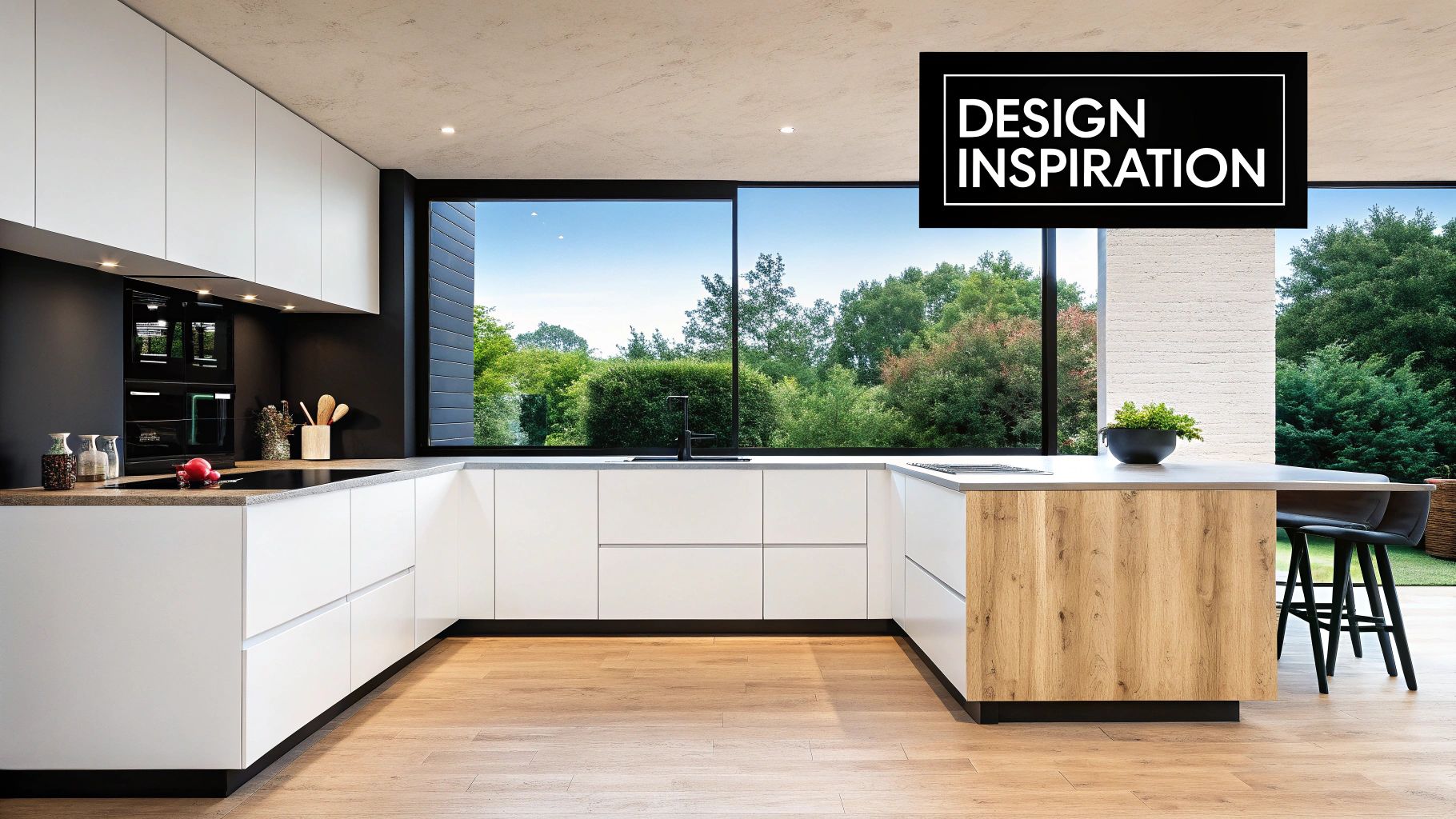
A great kitchen remodel isn't just about what's new; it's about what's better. Focusing on a layout that suits your lifestyle is the single most important factor for long-term satisfaction.
By pinpointing your main drivers, you create a focused plan that aligns with your budget and priorities. This clarity is absolutely essential, especially when you start exploring the world of custom cabinetry and all the design possibilities that come with it. For homeowners looking to truly elevate their space, understanding the authority of local cabinet builders in Southwest Florida can provide invaluable insight into true quality craftsmanship.
Budgeting for Your Remodel in Southwest Florida
Let's talk numbers. Before you get lost in tile samples and countertop materials, setting a realistic budget is the single most important step in any successful renovation. This is where your vision gets its first reality check. When it comes to a kitchen remodel in Cape Coral, forget the generic national averages you see on TV. We need to focus on what it actually costs to build in Southwest Florida.
Your final investment really boils down to three things: the scope of your project, the quality of materials you choose, and the sheer size of your kitchen.
Getting a handle on local market costs is your first move. The data shows that the average kitchen remodeling project in Cape Coral costs between $16,306 and $22,328. Of course, that's just an average. Projects can swing from as low as $7,274 for a light refresh to over $36,370 for a full-scale transformation.
If you’re planning simpler updates—like repainting, refinishing cabinets, or just upgrading the sink and tile—you’re likely looking at a budget in the $10,000 to $15,000 range.
Breaking Down Your Kitchen Remodel Budget
So, where does all that money go? Understanding how a typical mid-range kitchen remodel budget is sliced up helps you figure out where to splurge and where you might be able to save a little. It’s all about prioritizing what matters most to you.
Here’s a general look at how the costs are usually distributed:
- Cabinetry and Installation: This is almost always the biggest ticket item, eating up 30-35% of the total budget. Investing in custom or semi-custom cabinets built to handle Florida's humidity is a smart move that pays off in the long run.
- Labor and Installation: Count on professional labor taking about 15-20% of the budget. This covers everything from demolition and plumbing to electrical work and installing all your beautiful new features.
- Appliances and Ventilation: You should set aside 10-15% for a new suite of appliances. Don't forget a proper ventilation system—it's absolutely essential in our climate.
- Countertops: Depending on whether you go for laminate, quartz, or granite, countertops can claim 10-15% of your funds.
That leaves the remaining 20-30% to cover flooring, lighting, your backsplash, plumbing fixtures, paint, and all those other finishing touches that pull the room together.
The image below gives you a clear idea of how countertop material choices can impact your budget right here in Cape Coral.
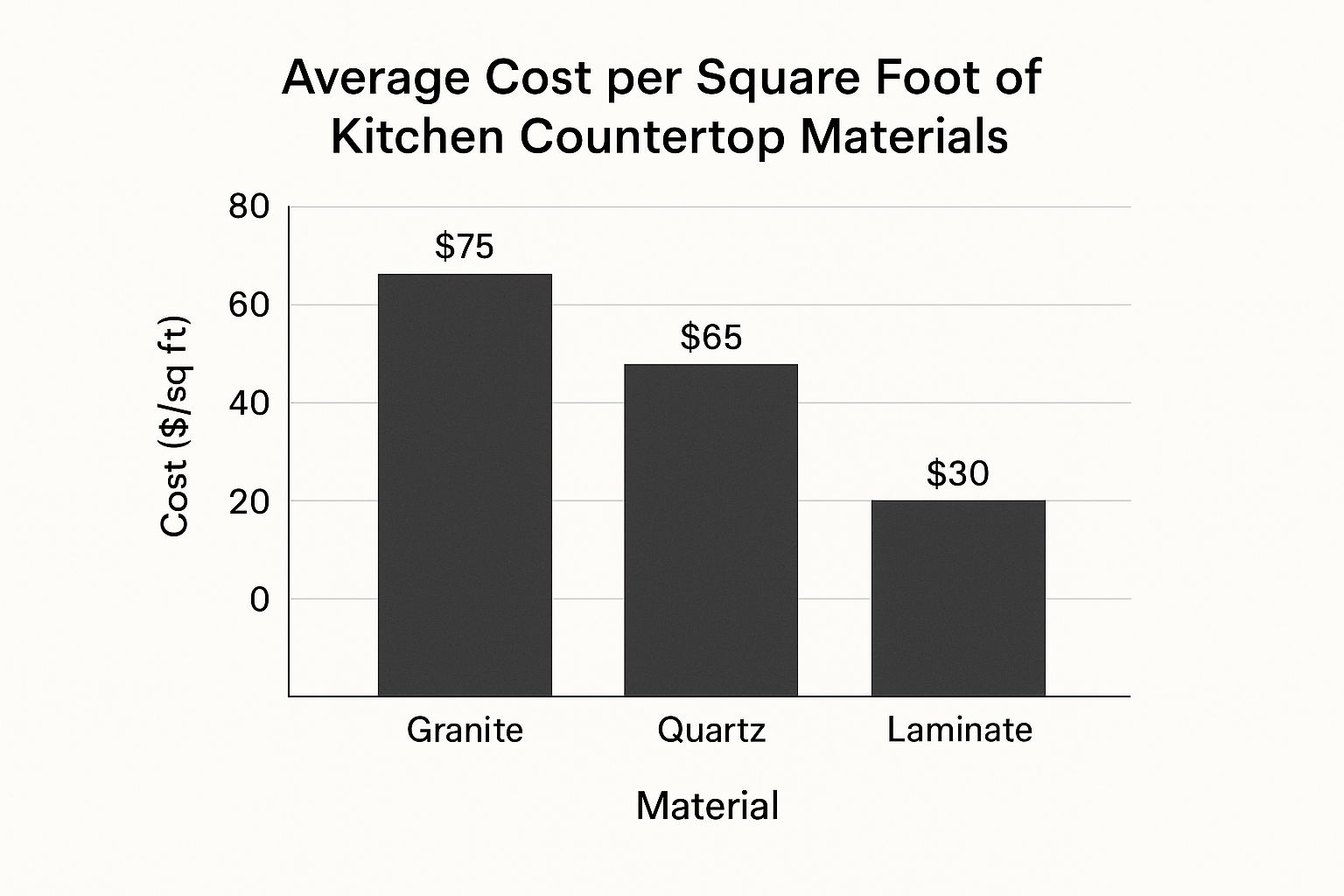
As you can see, laminate is a fantastic choice for budget-conscious updates. On the other hand, quartz and granite represent a bigger investment, but they deliver that high-end look and incredible durability that many homeowners are looking for.
Planning for the Unexpected
I’ve been doing this a long time, and I can tell you one thing for sure: no remodel ever goes exactly as planned. You might pull out old cabinets and discover hidden water damage, or you might simply change your mind on a design choice halfway through. It happens.
That’s why a contingency fund isn’t just a good idea—it's non-negotiable.
Expert Tip: Always, always set aside an additional 10-20% of your total project cost for a contingency fund. If your budget is $30,000, that means having an extra $3,000 to $6,000 ready for anything that pops up.
This little safety net is what keeps a surprise issue from derailing your entire project or forcing you to cut corners on quality. It’s the key to keeping your project on track and your stress levels down.
Real-World Cape Coral Budget Examples
To bring these numbers to life, let’s look at what different budget levels can get you in a typical Cape Coral home.
- The Simple Refresh ($10,000 – $18,000): This budget is perfect for a cosmetic facelift. Think professional cabinet refacing or painting, new laminate or an entry-level granite countertop, a fresh backsplash, and updated light fixtures. You’re almost certainly keeping your existing layout and appliances.
- The Mid-Range Overhaul ($20,000 – $40,000): This is the sweet spot for most projects. It usually covers a full cabinet replacement with great semi-custom options, new quartz or granite countertops, a full suite of mid-range appliances, new flooring, and maybe even minor layout tweaks that don't involve moving walls.
- The High-End Custom Kitchen ($45,000+): At this level, you’re talking about a full gut-and-rebuild. This means fully custom, real-wood cabinetry, premium stone countertops, professional-grade appliances, and even structural changes like taking down a wall to create that open-concept feel you’ve been dreaming of.
Want a more personalized estimate? Play around with our kitchen remodel cost calculator to see how your specific choices will shape the final price tag. It's a great tool for getting a preliminary budget that’s tailored to your actual vision.
Creating the Perfect Coastal Kitchen Design
This is where the fun really begins—turning your ideas into a tangible design. A kitchen remodel in Cape Coral is about more than just keeping up with the latest trends. It’s about bottling up that breezy, waterfront lifestyle and bringing it right into the heart of your home. The real goal is a space that feels bright, airy, and effortlessly connected to the gorgeous views outside.
A great coastal design all starts with the flow. Think about how you actually live in your kitchen. An open-concept plan that spills into your living area is a game-changer for entertaining, letting you be part of the conversation while you cook. But for day-to-day life, that classic work triangle—the path between your sink, stove, and fridge—is still the secret to an efficient kitchen.
So many older Cape Coral homes have those closed-off, boxy kitchens that just don't work for modern living. Knocking down a non-structural wall is often the single most dramatic change you can make. It instantly makes the whole area feel bigger and so much more welcoming.
Selecting Materials for the Florida Climate
Let’s talk materials. This is a big one. You need a kitchen that not only looks stunning but can also stand up to the unique challenges of our Southwest Florida climate. The heat and humidity here are no joke, so durability has to be just as important as style.
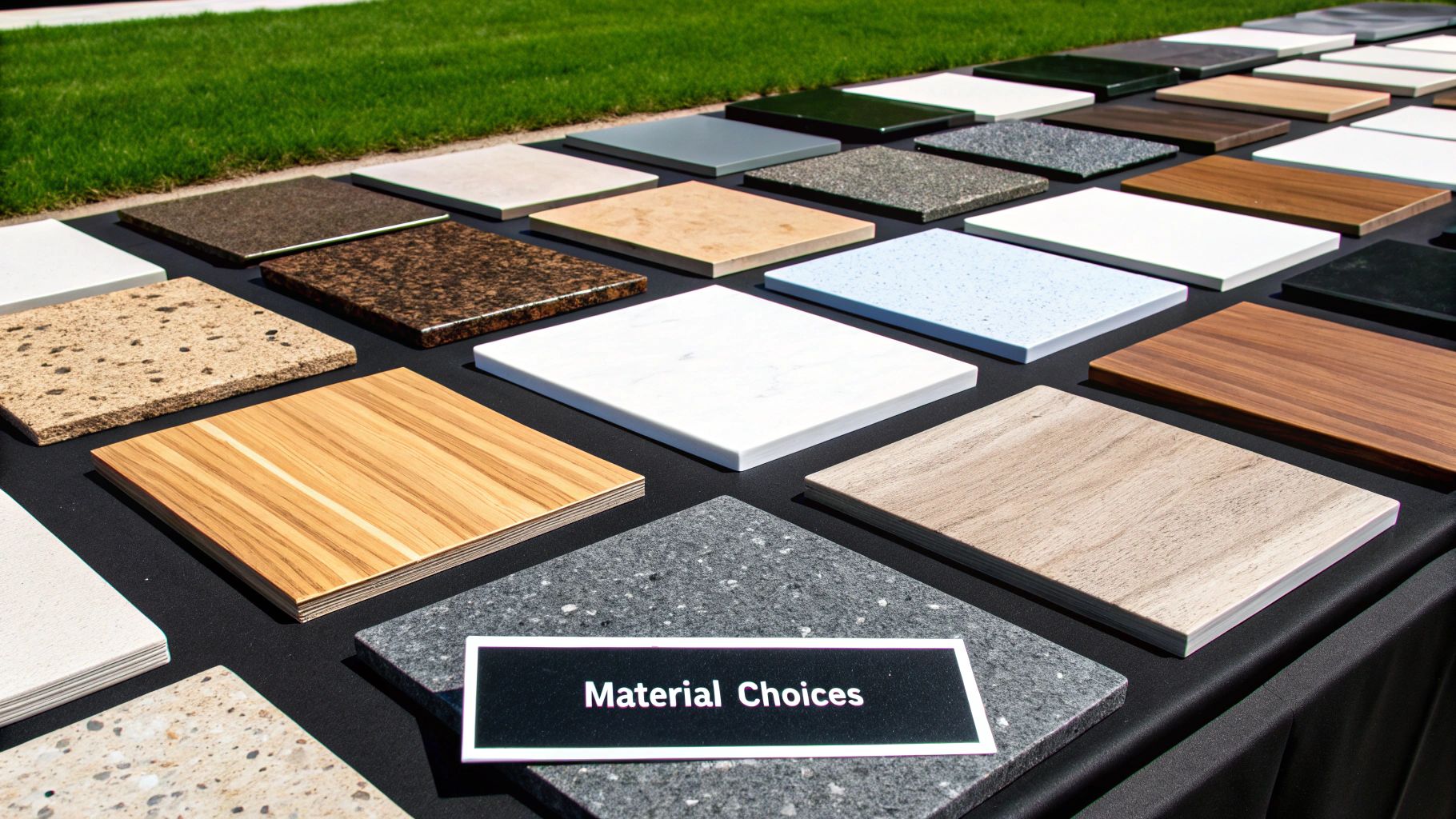
For countertops, you can't go wrong with non-porous surfaces. Quartz is incredibly popular for a reason: it fights off moisture, stains, and bacteria without any sealing. You get that high-end, natural stone look but with performance that’s built for our humid environment.
Cabinetry needs a little extra thought. Solid wood doors, as beautiful as they are, can sometimes warp over time with the constant humidity shifts. This is why high-quality plywood cabinet boxes paired with engineered wood or thermofoil doors are often a smarter, more stable option for our area. They deliver the look you want with the structural integrity you need.
A coastal kitchen should feel like a natural extension of the outdoors. Prioritize materials that are not only beautiful but also resilient enough to handle sandy feet, high humidity, and years of family gatherings. It’s about building for the life you live here.
The style of your cabinets sets the tone for the entire room. White Shaker cabinets are a timeless classic for that bright, coastal feel. But don’t be afraid to explore other options. For instance, choosing wooden kitchen cupboards can bring in a wonderful warmth and natural texture that really grounds the design.
Illuminating Your Space with Smart Lighting
Never underestimate the power of good lighting. It’s a designer’s secret weapon and can completely change the mood and function of a room. For a coastal kitchen, you want to amplify all that gorgeous natural light and then build upon it with a smart, layered plan.
Your lighting strategy should really have three distinct layers:
- Ambient Lighting: This is your room’s main light source. Think recessed ceiling lights or a beautiful central fixture that provides overall illumination.
- Task Lighting: This is the focused light you need for getting things done. Under-cabinet LED strips are a must-have for prepping on your counters, and pendant lights over an island are both functional and stylish.
- Accent Lighting: This is the fun part! It adds depth and personality. You could put small lights inside glass-front cabinets to show off your favorite dishes or highlight a piece of art.
When you combine these layers, you get a kitchen that’s perfectly practical for cooking a family meal but also has a beautiful, atmospheric glow for relaxing with a glass of wine.
Blending Indoor and Outdoor Living
One of the best things about living in Cape Coral is that seamless connection between our homes and the outdoors. Your kitchen design can take this to the next level by creating a direct bridge to your lanai, pool deck, or outdoor grilling station.
Installing large sliding glass doors or even a pass-through window with a continuous countertop to the patio is a fantastic move. It doesn't just flood your kitchen with sunlight; it makes outdoor dining and entertaining an absolute breeze. This is a design choice that truly embodies the Florida lifestyle, making your kitchen the hub for every gathering, inside and out. The right kitchen cabinet color combinations can really tie it all together, using light, natural tones to blur the lines between your home and that sun-drenched view.
Finding the Best Contractors in Cape Coral
You’ve got your design dialed in and a budget you can live with. Now for the make-or-break moment: finding the right team to pull it all together for your kitchen remodel in Cape Coral. Honestly, the success of your entire project hinges on the skill, reliability, and integrity of the contractor you bring on board.
Finding a true professional in Southwest Florida is about more than a quick Google search. It’s a careful vetting process to make sure you’re partnering with a licensed, insured expert who gets the local building codes and understands the unique challenges of our coastal environment.
Where to Start Your Search
The best place to begin is by asking around. Word-of-mouth referrals from friends, neighbors, or colleagues who have recently gone through a remodel are pure gold. They’ll give you the real, unfiltered story of their experience.
Beyond your personal network, here are a few other reliable spots:
- Local Supply Stores: Head to reputable tile, countertop, or cabinet showrooms in the Cape Coral area and ask for their recommendations. They work with the best local installers and contractors day in and day out.
- Professional Associations: Check out the local chapters of groups like the National Association of the Remodeling Industry (NARI) or the National Kitchen & Bath Association (NKBA). Their members are held to a higher standard.
- Online Reviews: Platforms like Google, Houzz, and the Better Business Bureau can be helpful for reading client reviews, but take them with a grain of salt. Look for detailed feedback and consistent themes, both good and bad.
Your goal should be to build a list of at least three to five potential contractors. This gives you enough variety to compare bids and personalities without getting completely overwhelmed.
The Vetting Process
Once you have your shortlist, the real homework begins. This is where you separate the seasoned pros from the rest. The very first step is simple but absolutely non-negotiable: verify their license and insurance.
You can—and should—confirm any contractor's license with Lee County. This is your proof that they are legally qualified to do the work. Just as critical is getting a certificate of insurance showing both general liability and workers' compensation coverage. This is what protects you from being on the hook financially if an accident happens or property gets damaged on your job site.
Never, ever hire a contractor who can't immediately show you proof of a current license and comprehensive insurance. A legitimate business will have this ready to go and will never hesitate to share it.
Next up, it’s time to check their references. Don't just accept a list of names; ask specifically for recent, local references for projects similar in scope to yours. Then, actually call those past clients and ask some pointed questions.
Questions to Ask Contractor References
- Did the project stay on schedule and on budget?
- How did they handle the inevitable curveballs or changes?
- Was communication clear and consistent from start to finish?
- Were you happy with the quality of the work and the crew’s professionalism?
- Would you hire them again in a heartbeat?
The feedback you get from these calls is one of the most powerful tools you have for making a smart decision.
Design-Build Firm vs. General Contractor
You're going to run into two main types of professionals: a design-build firm and an independent general contractor (GC). Knowing the difference is key to picking the right fit for your project.
| Feature | Design-Build Firm | General Contractor (GC) |
|---|---|---|
| Process | Manages everything from the initial design concept to the final nail, all under one roof and one contract. | Hired after you already have architectural plans; their job is to manage subcontractors and the construction phase. |
| Best For | Homeowners who want a single point of contact and a totally seamless, integrated process from start to finish. | Homeowners who have already hired a separate architect or designer and just need someone to build it. |
| Communication | Totally streamlined. The designer and builder are on the same team, often sitting in the same office. | You might find yourself playing mediator between your independent designer and the GC if issues arise. |
For a comprehensive kitchen remodel in Cape Coral, a design-build firm usually offers a much more cohesive and less stressful experience. It ensures the vision you fell in love with is the one that gets built.
Finally, when the bids start rolling in, don't just skip to the bottom-line number. A quality bid is incredibly detailed, itemizing the costs for materials, labor, permits, and allowances. A suspiciously low bid is a huge red flag—it almost always means corners are being cut or crucial items were left out, setting you up for expensive surprises down the road. Go with the contractor who gives you clear communication, transparent pricing, and has a proven track record of quality work right here in our community.
Navigating Permits and Construction
Alright, your design is locked in, and you've found the right contractor. Now the project shifts from paper to reality. This is the construction phase—the part where your vision finally starts taking shape. For many homeowners, it's also where a little anxiety can creep in.
Let's demystify the two biggest parts of this stage: handling the permit process with the City of Cape Coral and knowing what to expect during the actual build-out. A little knowledge here goes a long way toward a low-stress, successful remodel.
The word "permit" can sound intimidating, but it’s really your best friend on a project like this. Think of it as a system of checks and balances. Permits ensure all work meets safety standards and local building codes, protecting you, your family, and the future value of your home. Trying to skip this step is a huge risk that can bring fines, stop-work orders, and serious problems when you eventually sell.
When a Permit is Required in Cape Coral
So, when do you actually need one? Not every little update requires official sign-off. If you’re just painting cabinets, swapping out a faucet, or putting up a new backsplash, you’re typically in the clear.
But the moment your project gets more involved, you’ll need to go through the official channels. While your contractor will handle the heavy lifting of filing the paperwork, it’s good for you to know what triggers the requirement. For a kitchen remodel in Cape Coral, you'll almost certainly need a permit for any of these changes:
- Structural Changes: This is the big one. Anytime you're removing or even just altering a wall—even one that doesn't seem to be load-bearing—a permit is required to make sure your home's structural integrity isn't compromised.
- Moving Plumbing: Thinking of moving the sink to that new island? Or shifting the dishwasher to the other side of the kitchen? That requires a plumbing permit to ensure every connection is leak-free and up to code.
- Altering Electrical Systems: Adding new outlets for an appliance garage, installing recessed lighting, or running new wiring for that double oven all fall under the electrical permit umbrella.
- Changing the Layout: Any major reconfiguration of your kitchen’s footprint that involves the elements above will definitely trigger the need for a comprehensive building permit.
The permitting process is your project's insurance policy. It guarantees that all work is performed safely and correctly by licensed professionals, which is non-negotiable for a project of this scale and importance.
The Phases of Construction
The journey from old kitchen to new follows a pretty logical sequence. It starts with a bit of chaos and ends with a whole lot of magic. Knowing the general timeline helps you prepare for the temporary disruption and appreciate the progress, even when your house is covered in dust.
Here’s how a typical construction project flows:
- Demolition and Prep: Things get messy before they get better. Your old kitchen is carefully dismantled and hauled away, creating a blank slate for your new design.
- Rough-Ins: With the walls open, the new "bones" of your kitchen go in. Plumbers run new pipes for the sink and dishwasher, and electricians route wiring for lighting, outlets, and appliances.
- Inspections: This is a crucial checkpoint. Before any drywall goes up, a city inspector comes out to approve the rough electrical and plumbing work, ensuring everything is safe and to code.
- Drywall and Flooring: Once the inspections are passed, the walls are closed up, textured, and primed. Your beautiful new flooring is often installed around this time, too.
- Cabinet and Countertop Installation: This is a huge milestone! The new space really starts to feel like a kitchen again. Cabinets are installed first, followed by a precise laser template for your countertops, which are then fabricated and installed.
- Finishing Touches: Now for the fun stuff. The backsplash goes in, appliances are installed, and fixtures like the faucet, garbage disposal, and lighting are connected. A final coat of paint brings it all together.
- Final Inspection and Punch List: The city inspector makes one last visit for a final sign-off. After that, you'll do a final walkthrough with your contractor to create a "punch list"—a short list of any tiny adjustments needed before the job is officially complete.
Your Top Kitchen Remodeling Questions, Answered
Jumping into a kitchen remodel is exciting, but it naturally comes with a lot of questions. As you move from dreaming about your new space to actually planning it, you need real, straightforward answers. We've pulled together the most common questions we hear from homeowners right here in Cape Coral to help you feel confident moving forward.
How Long Does a Kitchen Remodel Take in Cape Coral?
This is usually the first thing everyone wants to know. Planning your life around a construction zone is tough, so having a realistic timeline is key. The honest answer? It really depends on how deep you're going with the renovation.
A simple cosmetic facelift—think refacing cabinets, swapping out countertops, and a fresh coat of paint—is the quickest. For a project like that, you're typically looking at two to four weeks of work.
If you're planning a more standard, full-gut remodel where everything comes out—old cabinets, flooring, appliances, lighting—the timeline gets a bit longer. From the first swing of the sledgehammer to the final walkthrough, these projects usually take between six and ten weeks.
Then there’s the major overhaul. Are you moving walls, relocating plumbing lines, or making significant electrical changes? You’ll need to budget more time. These complex projects can easily stretch to 12 weeks or more. It's also smart to build in a little buffer for things like permit approvals from the City of Cape Coral or supply chain delays for specialty items, which can happen in our busy market.
Which Upgrades Add the Most Home Value Here?
In a competitive real estate market like Cape Coral, some kitchen upgrades just pack a bigger punch when it comes to return on investment (ROI). Smart money goes toward creating a space that feels modern, works beautifully, and flows with the open-concept living that buyers are looking for.
Opening up the floor plan is a huge win. If you can take down a non-structural wall to connect the kitchen to your main living area, you instantly make your home more appealing. Buyers love that bright, connected feel.
Beyond the layout, materials really do matter. Here are a few upgrades that always catch a buyer's eye:
- High-Quality Countertops: Beautiful, durable surfaces like quartz are practically a requirement these days. They look fantastic and hold up to the demands of a busy family.
- Modern, Well-Made Cabinetry: Buyers can spot quality. They're looking for cabinets that are not only stylish but built to last. Smart storage features, like pull-out pantry shelves and deep pot-and-pan drawers, add serious functional value.
- Matching Appliance Suite: A cohesive set of energy-efficient, stainless steel appliances makes a powerful statement. It tells a buyer the kitchen is truly move-in ready.
The real secret to maximizing your return is to aim for timeless appeal instead of chasing short-lived trends. A classic, well-designed kitchen will attract the most buyers and add lasting value to your home.
What Materials Work Best in Florida's Humid Climate?
Our gorgeous Southwest Florida weather comes with one major challenge: humidity. All that moisture in the air means you have to choose materials that can stand up to it without warping, mildewing, or falling apart.
This is especially critical for your cabinetry. Solid wood is beautiful, but it can expand and contract with humidity swings, which might lead to warped doors over time. A smarter choice for our climate is often high-quality plywood for the cabinet boxes paired with stable engineered materials or thermofoil doors for a finish that lasts.
Your floors also need to be tough. For a Cape Coral kitchen, you want something waterproof and stable.
- Porcelain Tile: It’s basically indestructible, completely waterproof, and available in endless styles.
- Luxury Vinyl Plank (LVP): You get the look of real wood, but it's 100% waterproof and incredibly resistant to scratches and dents.
When it comes to countertops, non-porous is the way to go. Quartz is a fantastic, low-maintenance choice that won’t absorb moisture and resists stains—all without ever needing to be sealed. And don’t forget ventilation! A powerful, properly vented range hood is non-negotiable for managing steam, controlling odors, and keeping your home's air quality healthy.
What Are the Biggest Remodeling Mistakes to Avoid?
Sometimes, knowing what not to do is just as important as knowing what to do. Over the years, we’ve seen a few common missteps that can quickly turn a dream project into a nightmare. Steer clear of these, and you’ll save yourself a lot of time, money, and stress.
The number one mistake is starting demolition without a locked-in plan and a firm budget. Changing your mind halfway through is the fastest way to derail the schedule and blow up your costs. Finalize every single choice—from the cabinet pulls to the tile grout—before any work begins.
Another trap is picking a contractor based only on the lowest price. A bid that seems too good to be true usually is. It could be a red flag for cutting corners, being uninsured, or planning to hit you with "surprise" charges later. Always, always check a contractor's license, insurance, and recent local references before signing a contract.
Also, don't sacrifice function for looks. A kitchen can be stunning, but if the workflow is clunky, it’s a failure. Think about how you actually cook and move around the space, and design a layout that makes your daily life easier. Finally, never skip the permitting process. It might feel like a hassle, but it’s there to protect you and ensure the work is done safely. Unpermitted work can cause huge legal and financial problems, especially when you decide to sell your home.
Are you ready to transform your kitchen with the finest custom cabinetry in Southwest Florida? The expert team at Sinclair Cabinetry inc has over 35 years of experience crafting beautiful, durable, and functional spaces that stand the test of time. Let us bring your vision to life. https://sinclaircabinets.com