

A high-end kitchen remodel is so much more than a simple renovation. It’s about completely transforming your culinary space with premium materials, truly custom craftsmanship, and the kind of professional-grade appliances you see in magazines. The focus here is on creating a bespoke environment that perfectly marries flawless functionality with sophisticated design. Pulling it off requires a detailed vision, strategic budgeting, and a team of skilled pros to bring your dream kitchen to life.
Crafting Your Luxury Kitchen Vision
The journey to a truly high-end kitchen doesn't start with a sledgehammer. It starts with a bit of introspection. Before you fall in love with a specific countertop or a Sub-Zero fridge, you need to get crystal clear on how you actually live, cook, and entertain in your home. This foundational step ensures your new kitchen isn't just beautiful, but a perfect extension of your lifestyle.
A common mistake I see is people jumping straight to Pinterest without first creating a detailed design brief. Think of this document as your personal roadmap; it's where you capture all the little nuances of your daily routines. For a moment, forget aesthetics and focus on the practical. Are you an avid baker who needs a huge expanse of marble for rolling out dough? Do you host big family holidays that demand a seamless flow between the kitchen and dining areas?
Your brief should nail down the answers to questions like these:
- Your Cooking Style: Do you need a six-burner Wolf range and a pot filler, or is a sleek, minimalist induction cooktop more your speed?
- Storage, Storage, Storage: Are you a collector of small appliances that need a dedicated pantry or an appliance garage? Or do you prefer everything hidden behind seamless, handleless cabinetry?
- The Social Hub: Is the island a casual spot for morning coffee and homework, or is it purely a food prep station?
- The Daily Flow: How do you move through the space right now? Does the current layout create annoying bottlenecks when the whole family is home?
Answering these questions clarifies your real priorities. It helps you and your design team make decisions that will genuinely enhance your daily life. This is the difference between a kitchen that just looks good in photos and one that feels intuitively right every single time you use it.
Finding and Refining Your Inspiration
Okay, now it's time to build your visual mood board. With your functional needs clearly defined, you can start gathering inspiration—and I encourage you to look beyond the usual kitchen galleries.
Flip through architectural digests, look at boutique hotel designs, and even pay attention to the details in high-end restaurants. These places can offer incredible ideas for material combinations, lighting schemes, and custom touches you might not have considered.
For instance, the gorgeous layered lighting in a chic hotel bar could inspire a mix of ambient, task, and accent lighting in your kitchen. The rich wood and aged brass details of a historic library could translate into a warm, inviting palette for your cabinetry and hardware. The goal isn't to copy, but to collect images that evoke the feeling you want your kitchen to have.
This visual guide becomes an invaluable tool when you start talking to your architect or interior designer. It helps them understand your taste on a much deeper level, ensuring the final design is an authentic reflection of you. A well-curated mood board, paired with that detailed functional brief, sets the stage for a remodel that is both stunning and deeply personal. Plus, understanding the full scope of your vision early on really helps you appreciate the many benefits of a kitchen remodel, from better daily living to a serious boost in your home's value.
Prioritizing Your Investments
In a high-end kitchen remodel, every single element is an investment. It helps to know where the biggest chunks of your budget are likely to go. The chart below gives a great visual of a typical budget allocation for the three most significant components in a luxury project.
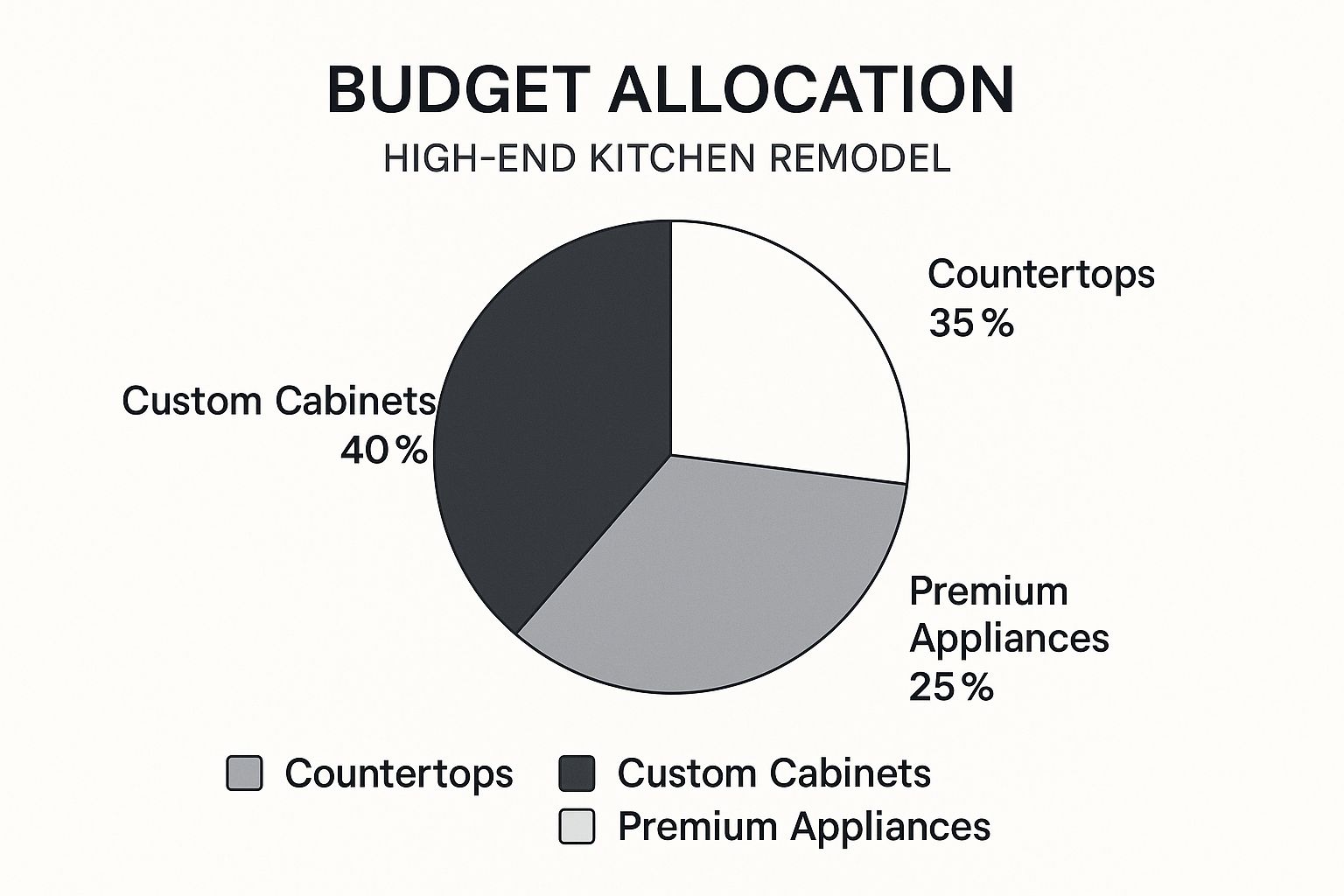
As you can see, custom cabinets often represent the largest single investment. This really highlights just how crucial they are in defining the kitchen's character, quality, and day-to-day functionality.
Budgeting for Your High End Remodel
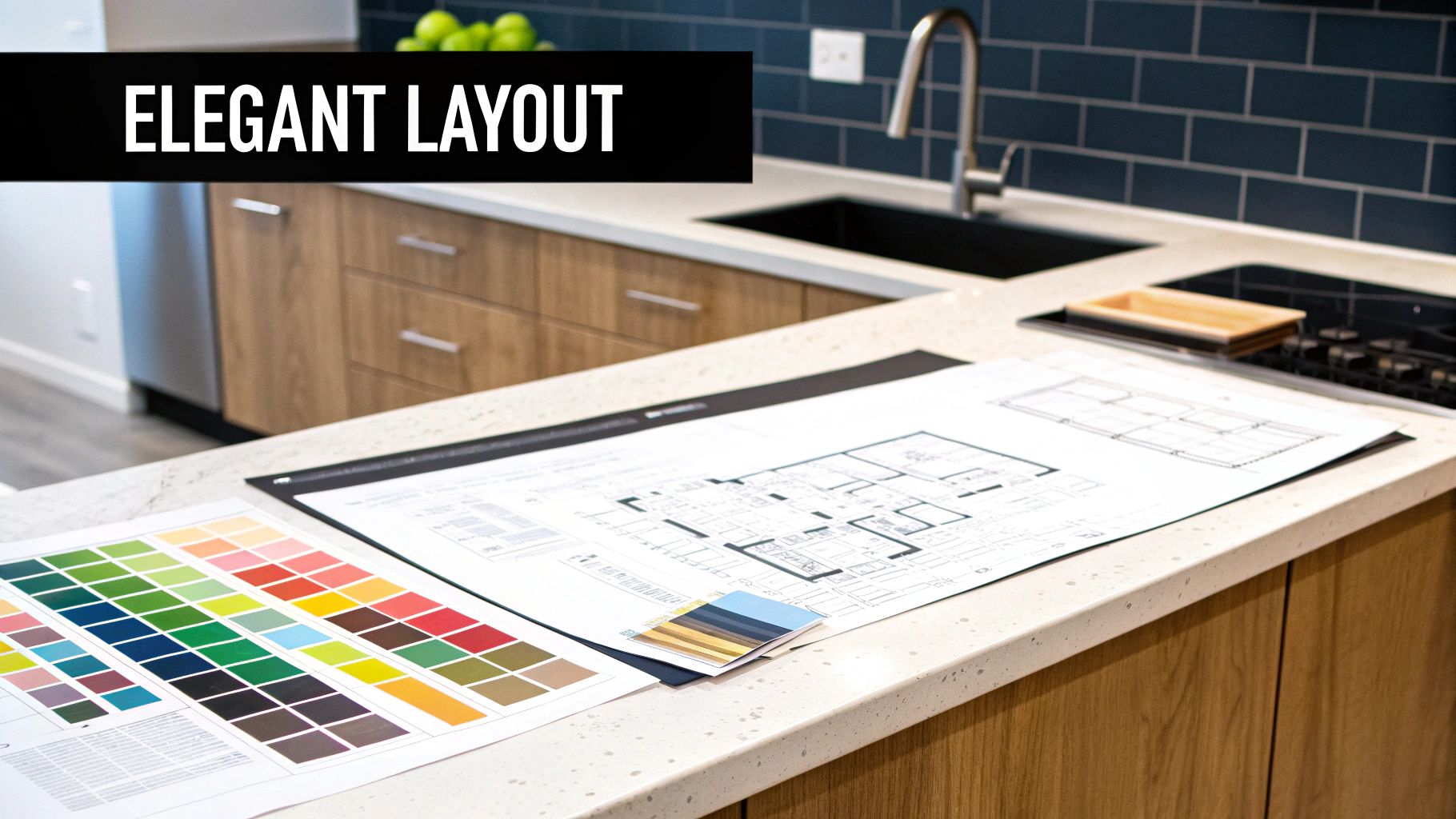
Let's talk numbers. Planning a high end kitchen remodel is a serious financial undertaking, and mapping out a clear, honest budget is probably the most critical move you'll make. This isn't just about arriving at a total cost; it's about knowing exactly where every dollar goes so you can make smart decisions that bring your vision to life.
A luxury kitchen has a lot of moving parts, and each one comes with a price tag. The final cost can swing wildly depending on the size of your kitchen, where you live, and, of course, the materials you fall in love with. For example, choosing a rare slab of Italian marble over a top-tier quartz for your countertops will make a huge difference in that line item alone.
Getting a handle on these variables early on saves you from sticker shock later. It allows you to be strategic, deciding where to splurge and where to save. Maybe your heart is set on a professional-grade range or truly bespoke cabinetry—a solid budget lets you prioritize what matters most to you.
Deconstructing the Costs of a Luxury Kitchen
When you're diving into a project of this scale, it helps to see where the money typically goes. It's not uncommon for high-end kitchen remodels to soar past $100,000, which reflects a major investment in premium materials, custom craftsmanship, and sophisticated design. While you can expect to recoup around 41% of that investment at resale, the focus should be on upgrades that make your life better now and add lasting value.
So, where does all that money go? The major expenses in a luxury remodel usually fall into a few key areas. Understanding the typical percentages helps you build a realistic starting point.
- Custom Cabinetry & Installation: This is almost always the biggest ticket item, taking up a significant chunk of the budget.
- Appliances: Think professional-grade, panel-ready appliances from brands like Wolf or Sub-Zero. They're a staple in high-end kitchens and a major investment.
- Countertops & Backsplash: Premium surfaces like quartzite, marble, or high-end granite—along with the cost of fabrication and installation—add up quickly.
- Labor & Professional Fees: This bucket includes your contractor, designer, architect, plumbers, and electricians. It's a cost that many people underestimate.
One of the most common mistakes I see is clients forgetting to budget for the "unseen" work. This is all the stuff behind the walls—plumbing upgrades to handle a new pot filler, new electrical lines for high-powered appliances, and maybe even small structural changes. These foundational pieces are essential for a successful project, but they're easy to overlook in the initial excitement.
Building a Realistic Budget Framework
A good budget is more than just a list of costs; it's a living document you'll use to manage the project from start to finish. I always recommend starting with a simple spreadsheet to track your estimated costs against your actual spending for every single item.
To give you a better idea of how this breaks down, we've put together a sample table illustrating a typical budget allocation. For a more exhaustive look at what to expect, check out our complete kitchen renovation cost breakdown guide.
Sample Budget Allocation for a High End Kitchen Remodel
This table gives you a ballpark idea of how a luxury kitchen budget is typically divided. Use these percentages as a starting point to plan your own investment.
| Expense Category | Average Percentage of Total Budget |
|---|---|
| Custom Cabinetry | 30-35% |
| Professional Appliances | 15-20% |
| Countertops & Backsplash | 10-15% |
| Labor & Installation | 15-20% |
| Plumbing & Electrical | 5-10% |
| Flooring | 3-5% |
| Lighting & Fixtures | 2-4% |
| Contingency Fund | 10-15% |
Notice that last line item? It's the most important—and the most frequently ignored.
The contingency fund is your project's safety net. Setting aside an extra 10-15% of your total estimated cost is non-negotiable. This is what covers the unexpected surprises, like discovering hidden water damage when the old cabinets come out or deciding you absolutely must have that upgraded faucet you just saw. Without it, one small hiccup can throw your entire timeline and budget into chaos.
Building Your Professional Design Team
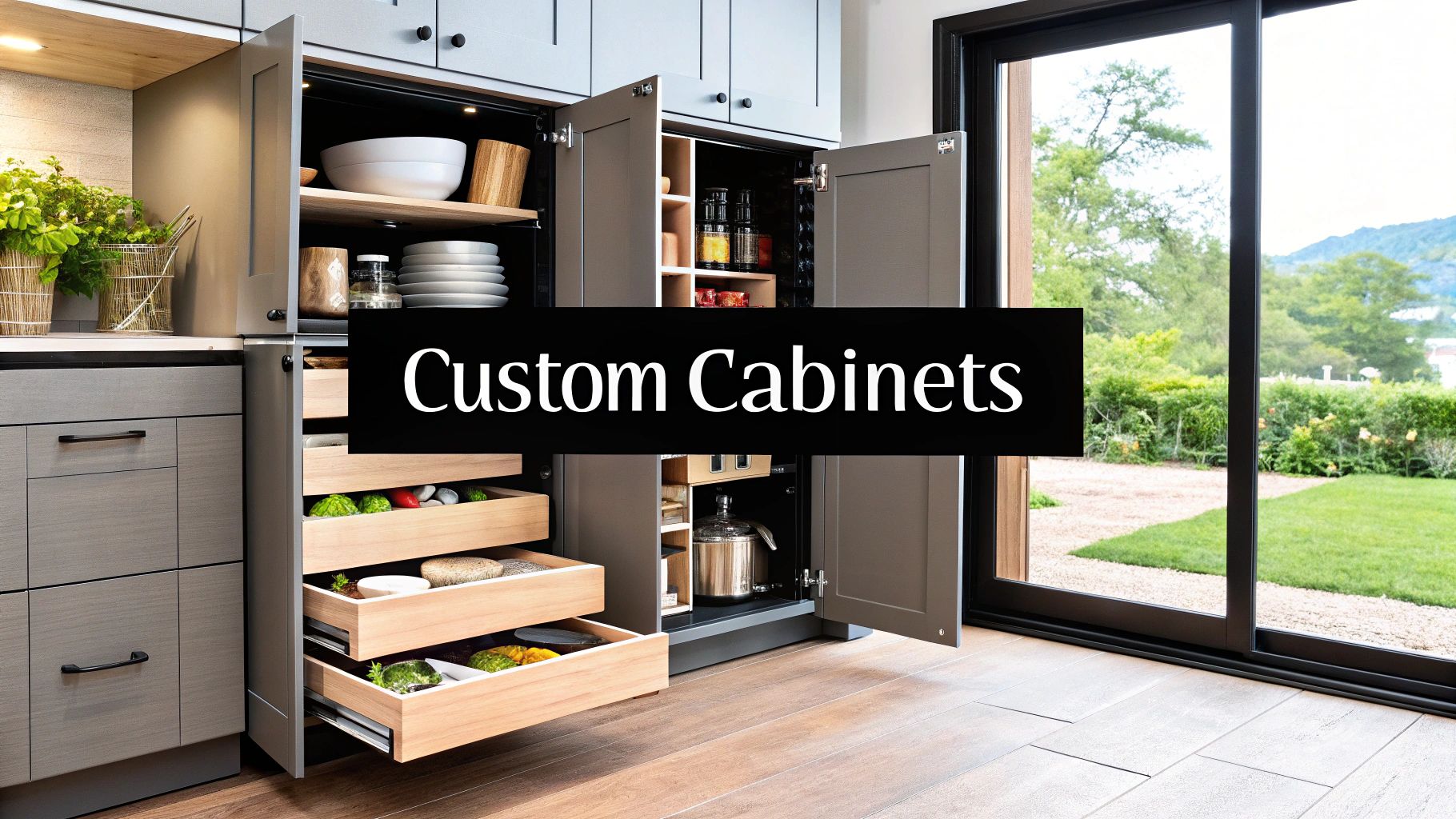
Let’s be honest: executing a flawless high end kitchen remodel isn’t a one-person show. It's a team sport, and you need a roster of seasoned pros. Trying to juggle everything yourself—from complex structural changes to the fine points of plumbing and electrical—is a surefire recipe for stress and costly mistakes.
I’ve seen it time and again: the single most important factor in a successful luxury renovation is assembling a team you trust completely.
These people are more than just contractors; they're your creative partners and project executors. They're the ones who will translate your vision into a stunning, functional reality. Each member plays a critical, interconnected role. When they work in harmony, the process feels seamless. When they don’t, it can quickly devolve into a frustrating mess of miscommunications and delays.
Who You Need on Your Team
Your core team for a high-end project really comes down to three key players. While a smaller-scale update might only call for a general contractor, a true luxury overhaul demands specialized expertise right from the get-go.
-
The Architect or Building Designer: This is your starting point for any remodel that involves moving walls, changing window placements, or completely reconfiguring the kitchen's footprint. Their job is to make sure the space is not only beautiful but also structurally sound, safe, and up to local building codes.
-
The Interior Designer: A great designer focuses on both the aesthetic and the functional flow of your new kitchen. They guide you through selecting everything from cabinet styles and countertop materials to light fixtures and hardware. Most importantly, they pull it all together into a cohesive plan where every finish, color, and texture works in harmony.
-
The General Contractor (GC): Think of the contractor as the project manager who brings the plans to life. They hire and manage all the subcontractors—plumbers, electricians, painters, and installers. They’re on-site, overseeing the day-to-day construction and making sure the project stays on schedule and on budget.
The magic happens when these three roles have great synergy. A good interior designer collaborates with the architect to ensure the layout supports the aesthetic vision, while a great contractor gives practical feedback on whether those design choices are feasible and what they'll cost.
Vetting Your Candidates
Finding the right professionals is about more than just scrolling through pretty portfolios. You need partners who understand the caliber of a high end kitchen remodel, communicate clearly, and have a proven track record of excellence.
When you start interviewing, dig deeper than their past projects. Get specific.
- How do you handle unexpected issues or changes during a project?
- Can you put me in touch with at least three recent clients whose projects were similar to mine?
- What’s your communication style? Do you prefer weekly check-ins, emails, or phone calls?
- How do you make sure a project stays on the agreed-upon budget and timeline?
A professional's answers here will tell you a lot about their working style and reliability. And, of course, always check their licenses and insurance. This is non-negotiable—it’s what protects you from liability.
I once worked with a client who hired a contractor based solely on a low bid. The communication was poor from day one, and the project quickly went over budget. Building a team based on trust, expertise, and proven communication skills—not just the lowest price—is the best investment you can make in your project's success.
Setting Expectations from the Start
Once you’ve picked your team, the last thing to do before the sledgehammers come out is get everything in writing. A detailed contract is essential. It should clearly outline the full scope of work, a payment schedule, a projected timeline with key milestones, and a clear process for handling change orders.
Fostering open communication from day one is just as important. Set up a regular meeting schedule to review progress and talk through any concerns. A team that collaborates effectively will not only deliver a stunning final product but also make the entire renovation journey a rewarding and enjoyable experience.
Choosing Premium Materials and Finishes
This is where the real magic of a high-end kitchen remodel happens—in the materials you see and touch every single day. The cool stone of the countertops, the solid feel of the custom cabinetry… these are the elements that elevate a purely functional space into something truly luxurious. It’s all about selecting components that not only look incredible but feel substantial and perform beautifully for years.
Of course, this is also where a significant part of your investment goes. While a minor kitchen refresh might average around $27,000, major remodels featuring the kind of high-end finishes we're talking about often land somewhere between $79,000 and $158,000. As you can see, those material choices are a massive factor in both the final budget and the overall feel of the room. HomeLight has some great insights into how project scope and even your location can influence these numbers.
Elevating Cabinetry from Standard to Statement
In any luxury kitchen, the cabinetry is much more than just storage; it’s the main architectural feature of the room. Honestly, the difference between a good kitchen and a great one often comes down to the subtle details in the cabinet construction and finish.
Stock cabinets have their place, but a high-end project almost always demands custom work. This is how you get perfect sizing, unique layouts, and a finish that’s simply flawless. For instance, instead of a standard Shaker door, you could go for a design with a slimmer frame or an inset style with a delicate step detail. It’s these small tweaks that add layers of sophistication.
A few key elements really define luxury cabinetry:
- Wood Species: Walnut brings deep, rich tones to the table, while rift-sawn white oak offers a clean, linear grain that feels both modern and organic.
- Construction: Inset cabinetry, where the doors sit perfectly flush inside the cabinet frame, is a hallmark of high-end design. It requires incredible precision and delivers a timeless, bespoke look.
- Finishes: A hand-painted or factory-sprayed finish creates a seamless, incredibly durable surface that is a world apart from a standard paint job.
Once you start exploring the world of custom cabinets, you’ll see just how many options there are to create a look that is entirely your own, from one-of-a-kind hardware to specialized interior fittings.
Selecting Countertops with Character
Your countertops are a huge visual anchor and your primary work surface, making them a make-or-break choice. While engineered quartz is a popular, hard-wearing option, nothing beats the unique character and movement of natural stones like marble and quartzite.
Marble, with its classic, elegant veining, is really a lifestyle choice. It’s a bit softer and can etch over time, but for many people, the beautiful patina it develops adds to its soul. If you love the look but need something tougher, quartzite is a fantastic compromise—it has a similar aesthetic to marble but with much greater durability.
A tip from my own experience: always view a natural stone slab in person and put your name on the exact one you want. Each one is a unique piece of art. A small sample in a showroom just can't capture the full sweep of the stone's veining and color.
The edge profile you choose also makes a surprisingly big impact. A simple squared edge feels clean and modern, while something like an ogee or bullnose edge lends a more traditional, classic feel. These little details really do matter.
Designing a Backsplash That Shines
The backsplash is your chance to inject some real personality and texture. It can either be a quiet, complementary backdrop or a show-stopping focal point. A popular trend in luxury design right now is to run the countertop material right up the wall for a seamless, dramatic slab backsplash. It’s a clean, powerful look.
On the other hand, handmade tiles bring subtle variations in color and texture that you just can't get from a machine-made product.
Backsplash Material Comparison
| Material | Key Feature | Best For |
|---|---|---|
| Slab (Marble/Quartzite) | Creates a seamless, dramatic look. | Modern, minimalist kitchens where the stone is the star. |
| Handmade Ceramic/Zellige | Offers organic texture and color variation. | Adding warmth and an artisanal feel to the design. |
| Glass Subway Tile | Provides a clean, reflective surface. | Brightening smaller spaces or creating a timeless look. |
The Foundation: Flooring and Lighting
Flooring and lighting are the foundational elements that pull the entire kitchen design together. For flooring, you can’t go wrong with wide-plank hardwood, especially white oak. It’s a classic for a reason—it brings warmth and integrates seamlessly with the rest of the home. Large-format porcelain tiles are another fantastic choice, offering incredible durability with a sleek, contemporary aesthetic.
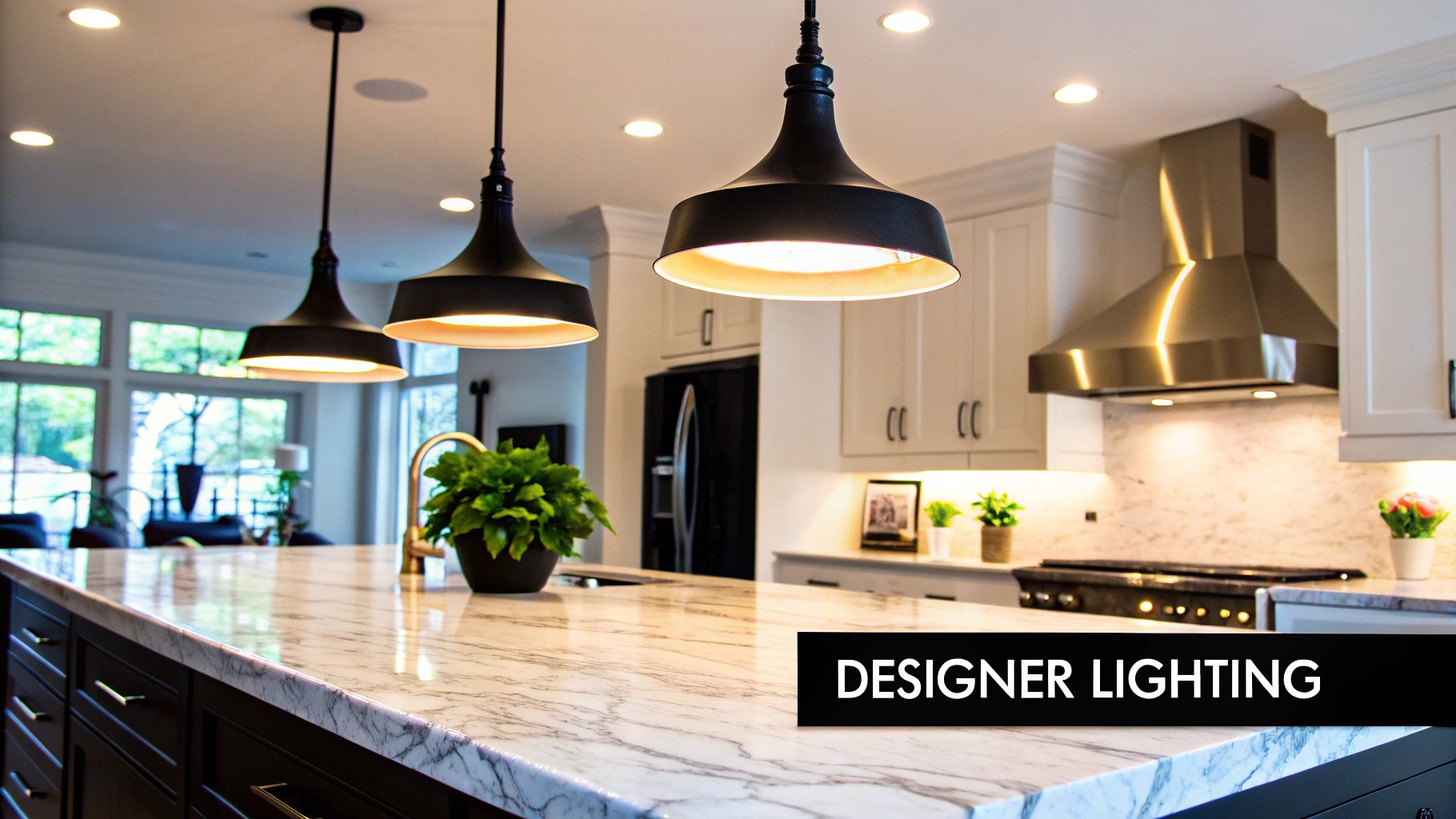
Finally, a layered lighting plan is absolutely non-negotiable in a high-end kitchen. You need to blend three different types of light to create a space that’s both perfectly functional and beautifully atmospheric.
- Ambient Lighting: This is your overall illumination, usually from recessed cans or a central fixture.
- Task Lighting: Under-cabinet LEDs are essential. They light up your countertops right where you’re prepping food.
- Accent Lighting: Think of this as the jewelry of the room. Pendants over an island or sconces flanking a window add a gorgeous, decorative glow.
When chosen with care, all these materials and finishes work in concert, creating a kitchen that isn’t just a place to cook, but a sophisticated and enduring part of your home.
Selecting Top Tier Appliances and Tech
Appliances are the heart of any kitchen, but for a high end kitchen remodel, they're the high-performance engine. This step isn't just about picking out a fridge and an oven. It’s about curating a suite of tools that deliver precision, last for decades, and look like they were born to be part of your custom cabinetry.
Today’s most coveted luxury kitchens are all about the seamless blend of raw culinary power and smart, intuitive convenience. Iconic brands like Sub-Zero, Wolf, and Miele have built their legacies on this very principle. They don’t just cook food; they embody specific design philosophies and performance standards that cater to those who are truly serious about cooking at home.
Embracing the Integrated Look
One of the defining trends in modern luxury kitchens is the move toward integrated, panel-ready appliances. This is where an appliance is specifically designed to be fitted with a custom cabinet panel, letting it completely disappear into the surrounding millwork. The result is a clean, uninterrupted wall of beautiful cabinetry—no stainless steel in sight unless you want it.
This approach creates an incredibly sophisticated and uncluttered look. A Sub-Zero refrigerator becomes indistinguishable from a tall pantry, and Miele dishwasher drawers can blend perfectly into an island. Of course, pulling this off requires meticulous planning between your designer and cabinet maker to ensure every last measurement is perfect.
The real beauty of integrated appliances is how they shift the focus. Instead of a kitchen dominated by stainless steel, the design highlights the richness of your cabinetry, the beauty of your countertops, and the overall architectural harmony of the space. It’s a subtle but powerful design choice.
Performance Beyond the Basics
While looks are crucial, the real value of high-end appliances is in what they can do. These aren’t just standard tools; they are specialized instruments engineered to elevate your cooking. Think about how these modern workhorses can completely transform your kitchen’s functionality.
- Steam and Combi-Steam Ovens: Brands like Wolf and Gaggenau offer steam ovens that can do it all. They'll bake bread with a perfectly crisp crust or gently steam fish and vegetables, preserving nutrients and flavor in ways a conventional oven simply can't match.
- Induction Cooktops: If you're after a sleek, modern aesthetic, nothing beats induction. These cooktops provide incredibly fast and precise temperature control. They're also safer, more energy-efficient, and a breeze to clean compared to traditional gas ranges.
- Column Refrigeration: Instead of one bulky unit, column refrigeration allows you to install separate, full-sized refrigerator and freezer towers anywhere you want. This offers unbelievable design flexibility and customized food storage—like adding a dedicated wine preservation column right next to your pantry.
Smart Tech That Adds Real Value
Technology in a luxury kitchen should be about making your life easier, not just showing off. The best smart integrations are the ones that simplify daily tasks and make the kitchen feel more intuitive. We're talking less about flashy gadgets and more about genuinely useful enhancements.
A voice-activated faucet from a company like Kohler or Moen is a game-changer when your hands are covered in dough. Likewise, a connected refrigerator from Sub-Zero that texts your phone if the door is ajar isn't a gimmick—it's a smart feature that protects your investment.
Ultimately, choosing the right appliance suite comes down to balancing three key things:
- Your Cooking Style: Be honest with yourself. A massive professional-style gas range is a beautiful statement piece, but if you rarely cook for a crowd, a high-performance induction cooktop might be a much better fit for your actual life.
- Design Integration: How will the appliances work with your cabinetry and the overall vision? You'll need to decide early on whether you prefer the bold, commercial look of stainless steel or the seamless elegance of panel-ready models.
- Long-Term Reliability: Let's face it, high-end appliances are a significant investment. Do your homework on brand reputations for longevity and customer service. You want to ensure your kitchen’s engine will perform beautifully for years to come.
Frequently Asked Questions
Taking on a high end kitchen remodel is a huge commitment, so it’s completely normal to have a ton of questions before you start. People always want to know about timelines, budgets, and how they’ll survive without a kitchen for months on end. Getting these answers upfront makes the entire process feel less daunting and a lot more exciting. We’ve pulled together the most common questions we get asked to give you some real-world insights.
How Long Does a High End Kitchen Remodel Take?
This is usually the first question on everyone's mind. The honest answer? It depends entirely on the scope of your project. For a full-scale, high-end remodel, a realistic timeline is anywhere from three to six months for the construction phase alone.
That timeframe doesn't even include the initial design and planning stage, which can easily take another two to four months to get right. It’s a marathon, not a sprint.
Several big-ticket items really drive the schedule:
- Custom Cabinetry Lead Times: This is almost always the longest pole in the tent. Truly bespoke cabinets are built from scratch, and the fabrication process can take anywhere from 8 to 16 weeks. You can't rush craftsmanship.
- Appliance and Material Availability: If you have your heart set on a specific professional-grade range or a unique slab of imported marble, you have to account for sourcing time. We always advise ordering these items the moment they’re selected.
- Scope of Work: Are you moving walls? Rerouting plumbing and electrical? Any structural changes will naturally add weeks, or even months, to the construction timeline.
The absolute best way to keep your project moving is to have every single decision finalized before the first hammer swings. Picking out hardware, tile, and even grout color ahead of time prevents those small delays that can snowball.
Maximizing Your Return on Investment
A luxury kitchen is a joy to live in, but it’s also a major financial investment. While it's rare to recoup 100% of the cost at resale, you can absolutely make smart choices that maximize its long-term value.
Focus on timeless design choices over fleeting trends. Classic elements like high-quality custom cabinetry, durable natural stone countertops, and a functional layout will appeal to future buyers far more than a niche design that might quickly feel dated.
The goal is to strike a balance between your personal taste and broad market appeal. Things like professional-grade appliances and clever, well-designed storage are features that add tangible, lasting value. While industry reports show the national average ROI for a major kitchen remodel is around 41%, the "wow" factor of a beautifully executed kitchen can make your home sell much faster in a competitive market.
How to Live Through the Renovation
Let's be real—surviving the renovation itself is a big concern for most homeowners. Losing the heart of your home for a few months is disruptive, but it’s definitely manageable with a little planning. Your number one priority should be setting up a temporary kitchen somewhere else in the house.
Your makeshift kitchen should include:
- A microwave and a versatile countertop appliance like a hot plate or air fryer.
- Your refrigerator, relocated to a convenient spot like the garage or dining room.
- A designated spot for washing dishes—a utility sink is ideal, but a simple basin can work in a pinch.
- A small stash of essential dishes, utensils, and, of course, the coffee maker.
Clear, consistent communication with your contractor is also non-negotiable. Before they start, agree on daily work hours, how they’ll access your home, and a solid plan for containing dust. Regular check-ins will keep you in the loop, manage your expectations, and make the journey to your dream kitchen a whole lot smoother.
Ready to transform your vision into a stunning reality with craftsmanship that lasts a lifetime? The team at Sinclair Cabinetry inc has over 35 years of experience creating bespoke cabinetry solutions for luxury homes. Explore our custom cabinet options and start your project today.