

The bathroom is no longer just a functional room; it's a personal sanctuary for relaxation and rejuvenation. Central to this transformation is the bathroom cabinet, a piece that marries style with essential storage. Moving beyond basic boxes, today's bathroom cabinet design ideas offer a fusion of aesthetics, innovation, and personality. Whether you're undertaking a full renovation or simply seeking an impactful upgrade, the right cabinetry can redefine the entire space.
This guide will explore 9 distinct and actionable design concepts that cater to various tastes and spatial needs. From space-saving floating vanities that create an airy feel to smart cabinets integrating the latest technology, we will provide the insights needed to select a design that is both beautiful and perfectly suited to your lifestyle. As you embark on reinventing your sanctuary, a pivotal decision involves choosing your best bathroom vanity countertop materials to achieve your desired aesthetic and functionality. We'll delve into specific materials, practical installation tips, and how custom solutions can bring your unique vision to life. Let’s explore the options that will elevate your bathroom from a simple necessity to a centerpiece of your home.
1. Floating Vanity Cabinets
Among the most impactful bathroom cabinet design ideas, the floating vanity stands out for its ability to instantly create a sense of spaciousness and modern elegance. These wall-mounted cabinets are anchored directly to the wall studs using heavy-duty brackets, creating an illusion of them "floating" above the ground. This design eliminates the visual bulk of a traditional vanity, making the bathroom floor appear larger and less cluttered.
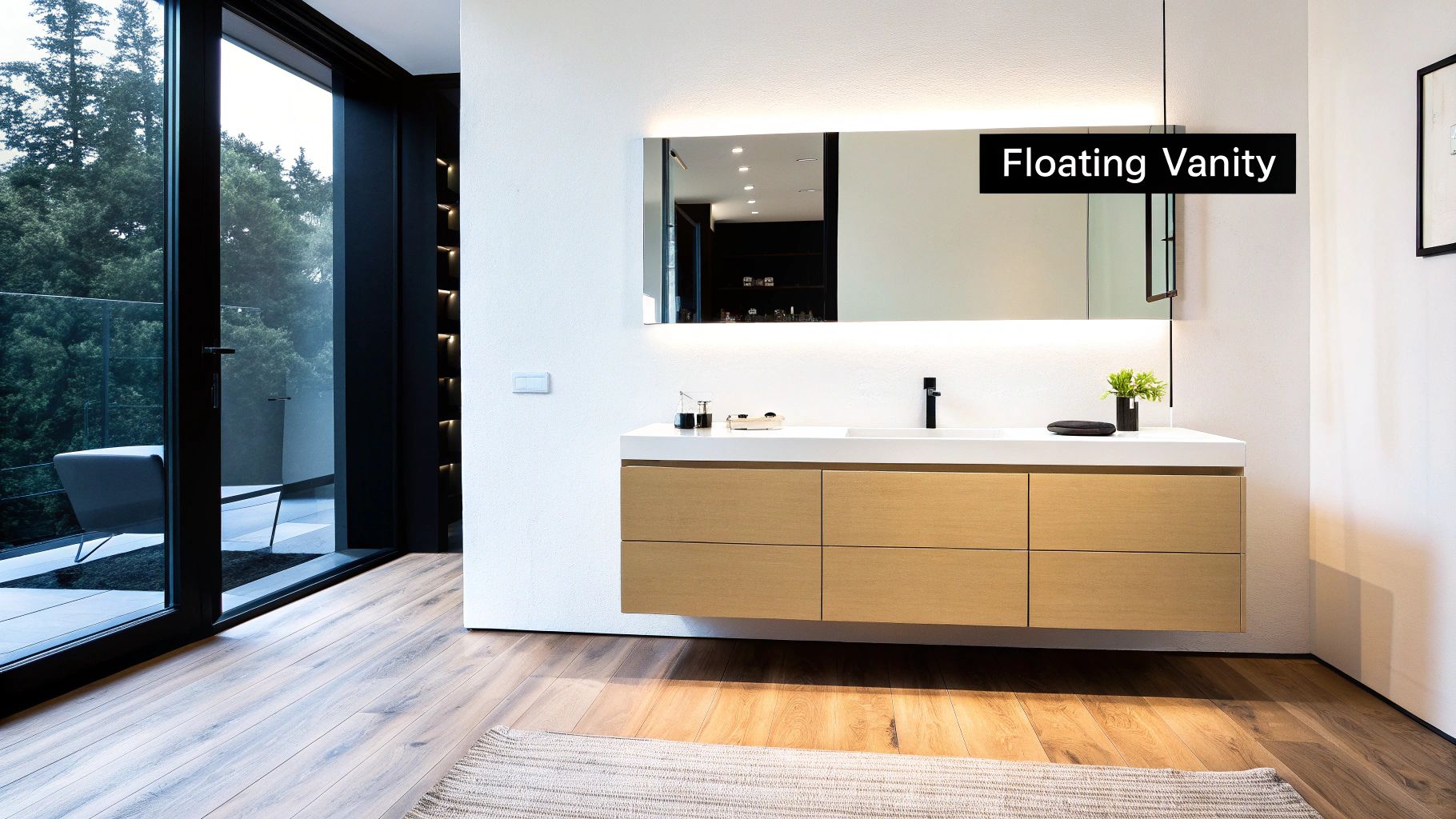
This style, popularized by minimalist Scandinavian design and brands like IKEA with their GODMORGON series, is perfect for small bathrooms, powder rooms, or any space aiming for a clean, contemporary aesthetic. The open area beneath not only adds visual lightness but also simplifies floor cleaning. High-end examples, like those found in W Hotels or designed by architects like John Pawson, often feature sleek lines, exotic wood veneers, and integrated sinks for a seamless look.
How to Implement a Floating Vanity
Successfully installing a floating vanity requires careful planning and structural consideration. Follow these essential tips for a secure and stylish result:
- Structural Support is Key: Before installation, ensure your wall has adequate blocking between studs to support the combined weight of the cabinet, countertop, sink, and any items stored inside. The wall must be able to handle at least two to three times the vanity's loaded weight.
- Create Ambient Lighting: Install a waterproof LED strip light underneath the cabinet. This creates a soft, ambient glow that enhances the floating effect and serves as a functional nightlight.
- Optimal Height and Spacing: For the best visual impact, maintain a gap of 8 to 12 inches between the bottom of the cabinet and the floor. The top of the vanity counter should typically sit between 34 to 36 inches from the floor for ergonomic use.
- Enhance the Effect: Pair the vanity with wall-mounted faucets and a frameless mirror to complete the minimalist, open-space feel. For a more detailed exploration of different vanity types, you can review this complete guide to bathroom vanity styles.
2. Medicine Cabinet Integration
A truly sophisticated approach to bathroom cabinet design ideas involves the seamless integration of medicine cabinets. This design moves beyond the basic surface-mounted box and instead incorporates storage directly into the wall or as a cohesive part of the larger vanity structure. By recessing the cabinet or mirroring its finish with surrounding cabinetry, you can maximize storage while maintaining clean sight lines and a polished, uncluttered aesthetic.
This method is a hallmark of high-end design, popularized by specialty brands like Robern with its M-Series and Kohler with its feature-rich Verdera line. The goal is to make essential storage appear intentional and elegantly hidden. You often see this meticulous integration in luxury hotels like the Ritz-Carlton, where every element contributes to a serene environment. This design is perfect for those who value both high functionality and a minimalist appearance, keeping countertops free of daily essentials.
How to Implement Medicine Cabinet Integration
Achieving a professional-grade integrated look requires precision and thoughtful planning. Follow these tips to ensure your medicine cabinet enhances your bathroom’s design:
- Plan for Recessed Installation: For a truly seamless, built-in appearance, install the medicine cabinet between wall studs. This allows the cabinet to sit flush with the wall, with only the mirrored door visible. Always check for plumbing and electrical lines before cutting into the drywall.
- Incorporate Smart Features: Select a cabinet with integrated electrical outlets and USB ports inside. This allows you to charge electric toothbrushes, razors, and other devices out of sight. Models with interior lighting and defogging pads add another layer of practical luxury.
- Use Mirrors to Expand Space: A mirrored front is standard, but choosing a model with mirrors on the inside of the door and the back of the cabinet enhances visibility and creates a more premium feel when opened.
- Coordinate with Your Vanity: Ensure the cabinet's width is no wider than the vanity below it to maintain visual balance. A common rule is to have the medicine cabinet be about 70-80% of the vanity's width for pleasing proportions.
3. Open Shelving with Closed Storage Hybrid
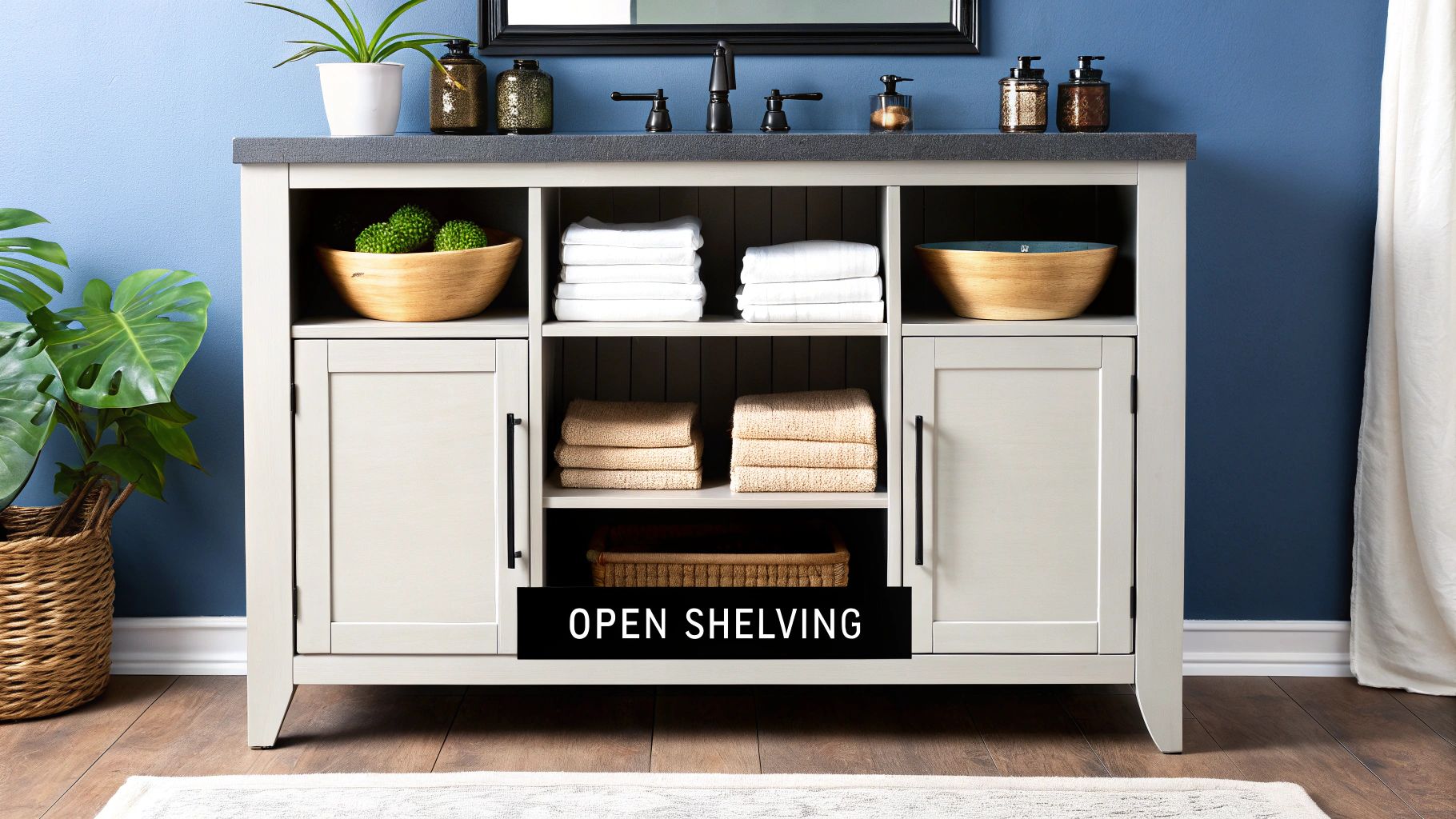
For those seeking the perfect balance between aesthetics and utility, the hybrid model of open shelving with closed storage is one of the most versatile bathroom cabinet design ideas. This approach combines the airy, decorative appeal of open shelves with the practical, clutter-concealing benefits of traditional cabinets. It allows you to display beautiful items like rolled towels, decorative bottles, and plants while neatly tucking away less sightly necessities like cleaning supplies and extra toiletries.
This design philosophy is expertly executed in pieces like the Pottery Barn Mason reclaimed wood vanities and the CB2 Suspend storage systems, which blend different materials and forms. It’s a signature look in the work of designers like Joanna Gaines and is frequently seen in boutique hotels and high-end spas, offering a curated yet functional atmosphere. The hybrid model prevents the bathroom from feeling either too sterile or too cluttered.
How to Implement a Hybrid Storage System
Creating a visually appealing and organized hybrid system requires a thoughtful approach to balance and composition.
- Follow the 70/30 Rule: A great guideline is to dedicate roughly 70% of your space to closed storage and 30% to open display. This ensures you have ample room to hide clutter while still creating visual interest.
- Use Baskets and Containers: Keep open shelves tidy and cohesive by using stylish baskets, trays, or glass jars to group smaller items. This technique adds texture and prevents the shelves from looking messy.
- Group Similar Items: On your display shelves, group items by color, material, or function. For example, place all your skincare products on one tray or dedicate a shelf to neatly folded, color-coordinated hand towels.
- Install Adjustable Shelving: Opt for adjustable open shelving to provide flexibility as your storage needs change. This allows you to accommodate taller items or reconfigure the look without a complete overhaul.
4. Double Vanity Cabinet Systems
For primary bathrooms or any space shared by two people, double vanity cabinet systems offer the ultimate in convenience and personal space. These coordinated designs feature either a single long cabinet with two sinks or two separate but matching cabinets, providing individual storage and prep areas while maintaining a cohesive aesthetic. This setup eliminates morning bottlenecks and allows each person to organize their own essentials.
This approach is a hallmark of luxury hotels and high-end residential design, popularized by brands like Restoration Hardware with their Hutton collection and James Martin Furniture's sophisticated Brookfield series. These systems are perfect for creating a functional, organized, and harmonious environment in a shared bathroom. They provide ample countertop space and storage, making them a practical and elegant choice for any master suite.
How to Implement a Double Vanity System
Designing an effective double vanity requires more than just placing two sinks side-by-side. Strategic planning ensures both functionality and visual balance.
- Ensure Adequate Space: A comfortable double vanity requires a minimum width of 60 inches, with 72 inches or more being ideal. This provides enough elbow room and counter space for both users without feeling cramped.
- Add a Central Storage Tower: Incorporate a narrow, vertical cabinet or open shelving between the two sinks. This shared storage is perfect for towels, toiletries, and decorative items, adding visual height and breaking up the long countertop.
- Plan for Individual Electrical Needs: Install separate electrical outlets and lighting controls for each side. This allows one person to use a hairdryer or an electric toothbrush without disrupting the other and provides personalized task lighting.
- Consider Custom Drawer Configurations: Tailor the storage to each user’s needs. One side might feature deep drawers for tall bottles and hair tools, while the other could have shallow, divided drawers for makeup and smaller items.
5. Built-in Linen Tower Integration
For homeowners seeking maximum storage without sacrificing a cohesive look, built-in linen tower integration is one of the most functional bathroom cabinet design ideas. This approach involves adding tall, narrow storage towers that are designed to seamlessly connect with the main vanity cabinet, creating a unified, custom-built appearance. This method maximizes vertical space, providing ample storage for towels, linens, and other bathroom essentials while maintaining a clean, uninterrupted design flow.
This style is a hallmark of semi-custom and custom cabinetry, with brands like Kraftmaid and Wellborn Cabinet offering modular systems that allow for perfect integration. It is also a key feature in IKEA’s popular HEMNES bathroom series, which brings the custom-built feel to a broader audience. The result is a highly practical and organized space that feels intentional and high-end, transforming a standard bathroom into a well-appointed suite.
How to Implement a Built-in Linen Tower
Successfully integrating a linen tower requires a focus on both function and form to ensure it blends perfectly with your vanity.
- Ensure Design Cohesion: Order the tower and vanity from the same manufacturer and product line to guarantee an exact match in color, finish, and door style. This is critical for achieving a seamless, built-in look.
- Incorporate Smart Storage: Enhance the tower’s functionality by including pull-out drawers in the lower half for easy access to toiletries and cleaning supplies. Use adjustable shelving in the upper sections to accommodate items of various heights.
- Add Interior Illumination: Install motion-activated or switch-operated LED lighting inside the tower. This small detail adds a touch of luxury and makes it easy to find items, even in dimly lit conditions.
- Plan for Power: If possible, integrate an electrical outlet inside the cabinet. This is perfect for discreetly charging electric toothbrushes, razors, or keeping a hairdryer plugged in and ready for use.
6. Vintage and Repurposed Furniture Cabinets
For those seeking truly one-of-a-kind bathroom cabinet design ideas, repurposing vintage furniture offers a unique blend of character, sustainability, and personal history. This creative approach involves converting antique dressers, sideboards, or even sewing machine tables into fully functional vanities. The result is a statement piece that infuses the bathroom with a story and charm that mass-produced cabinets simply cannot replicate.
This trend, popularized by DIY Network shows and artisans like Urban Wood Goods who specialize in reclaimed materials, is perfect for eclectic, farmhouse, or traditional design schemes. It allows homeowners to rescue a beautiful piece of furniture from obscurity and give it a new, practical life. From a grand Victorian washstand to a mid-century modern credenza, the possibilities are limited only by your imagination and the piece's dimensions.
How to Implement a Repurposed Vanity
Converting a vintage piece into a bathroom vanity requires thoughtful modification to ensure both beauty and longevity in a high-moisture environment.
- Seal All Surfaces Meticulously: Protect the wood from humidity and splashes by applying multiple coats of a marine-grade varnish or polyurethane. Pay special attention to the top surface, interior of drawers, and any new cuts made for plumbing.
- Plan Plumbing Modifications Carefully: You will need to cut holes in the top for the sink and faucet and in the back for the supply lines and drain. You may also need to modify or remove top drawers to accommodate the sink basin and P-trap.
- Reinforce for Countertop Weight: If adding a heavy stone countertop like marble or granite, ensure the furniture’s frame is structurally sound enough to support the weight. You may need to add internal bracing for extra support.
- Upgrade Hardware for Modern Function: While preserving the vintage aesthetic, consider upgrading drawer slides to modern soft-close mechanisms for improved functionality and a touch of luxury.
7. Minimalist Handle-free Designs
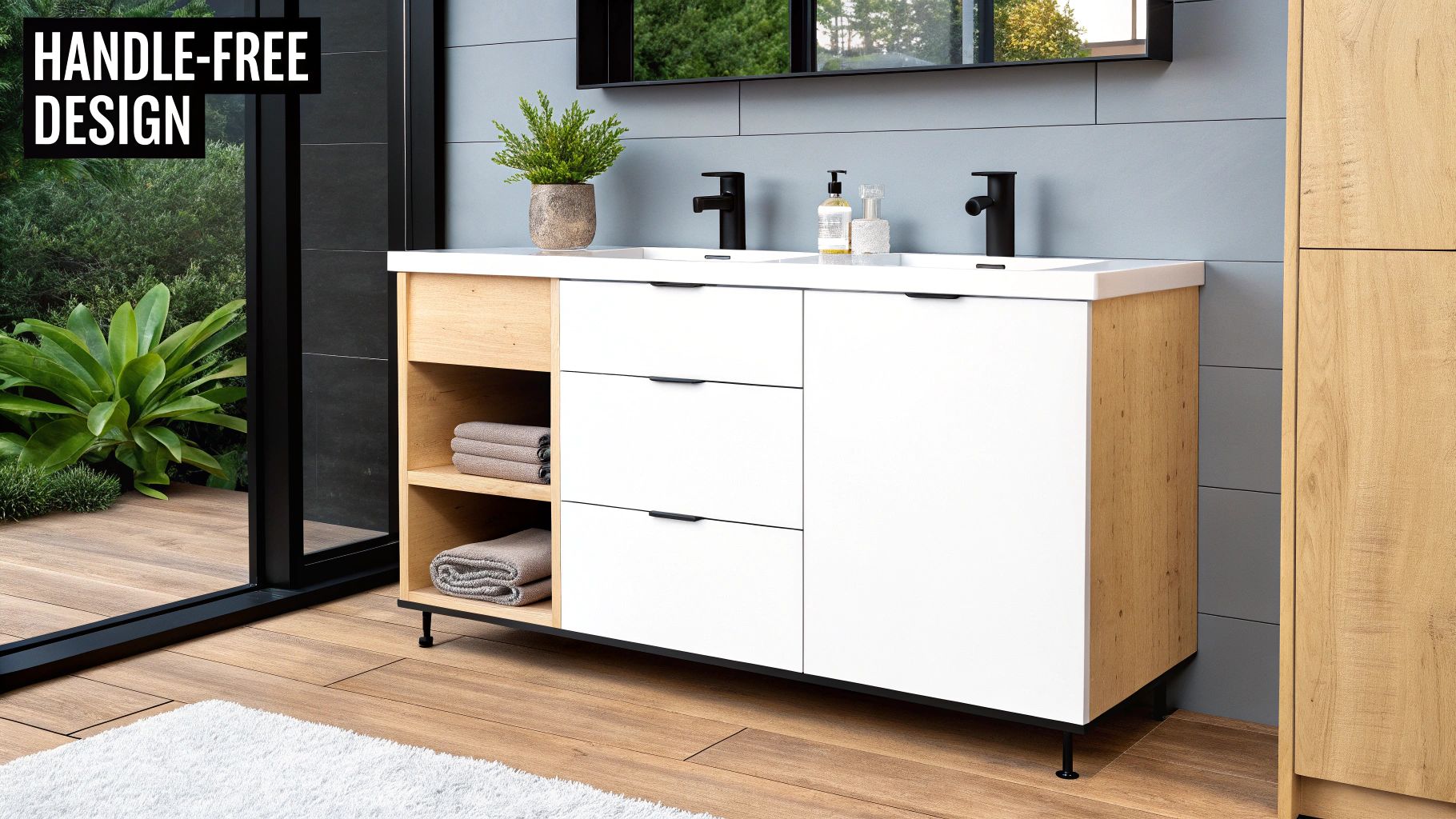
For those seeking the ultimate in sleek, modern aesthetics, minimalist handle-free designs offer an exceptionally clean look. These cabinet systems eliminate traditional hardware in favor of integrated mechanisms, creating smooth, uninterrupted surfaces that define contemporary bathroom spaces. By removing visual clutter, this approach highlights the cabinet’s material and form, making it a cornerstone of minimalist and modern design.
This design philosophy is heavily influenced by European manufacturers like Bulthaup and popularized by accessible brands such as IKEA with their VOXTORP series. It is ideal for bathrooms where a serene, uncluttered atmosphere is desired. The seamless fronts work beautifully in compact spaces by reducing physical protrusions and in larger bathrooms by creating a sophisticated, architectural statement. Cabinets feature integrated finger pulls, beveled edges, or push-to-open mechanisms.
How to Implement Handle-free Designs
Achieving a flawless handle-free look requires attention to both mechanical function and finish. Follow these tips for a durable and elegant result:
- Choose High-Quality Mechanisms: Invest in durable, high-quality push-to-open hardware from reputable brands like Blum or Grass. These mechanisms will withstand the high-use environment of a bathroom and provide reliable, smooth operation for years.
- Opt for Fingerprint-Resistant Finishes: Matte, super-matte, or textured finishes are excellent choices for handle-free cabinets as they are less likely to show fingerprints and smudges compared to high-gloss surfaces.
- Prioritize Soft-Close Hinges: Combine push-to-open systems with soft-close hinges. This pairing ensures drawers and doors open with a gentle touch and close silently, enhancing the feeling of luxury and refinement.
- Test for Practicality: Before finalizing your choice, test the opening mechanism with wet hands to ensure it’s still easy to operate in a real-world bathroom environment.
8. Corner and Angled Cabinet Solutions
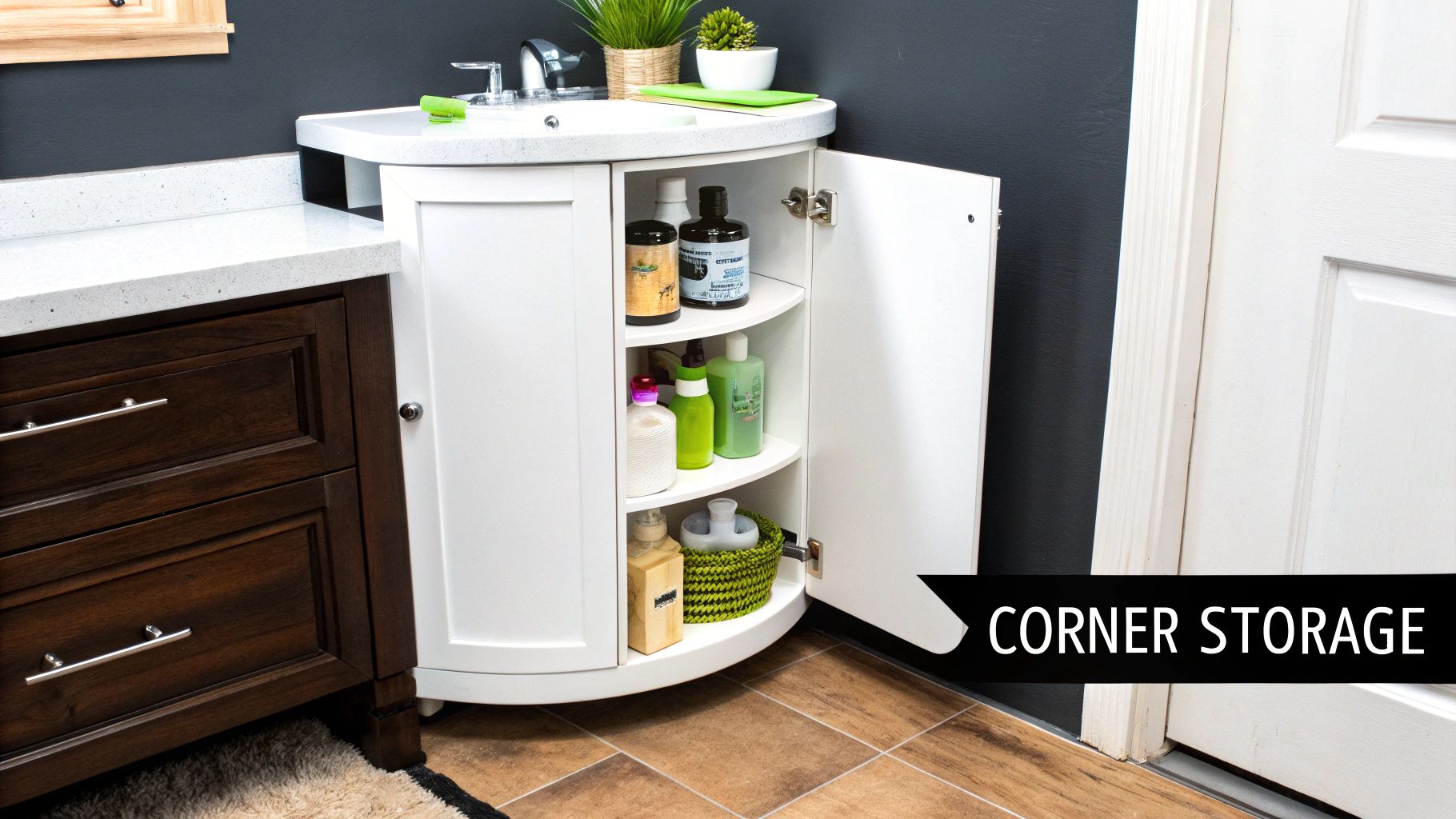
Often the most underutilized areas in a bathroom, corners present a unique opportunity for creative storage. Corner and angled cabinet solutions are specialized systems designed to reclaim these awkward spaces, transforming them into functional and accessible storage. These designs include custom-angled vanities, triangular wall cabinets, and clever pull-out systems that prevent items from getting lost in deep, hard-to-reach recesses.
This approach is essential for small bathrooms, L-shaped layouts, or any space with architectural quirks. Innovators like Rev-A-Shelf have perfected internal organizers, while custom millworkers can build vanities that fit perfectly into non-standard angles. The goal is to convert a design challenge into a seamless, integrated feature, proving that even the most difficult corners can be part of a cohesive and efficient bathroom cabinet design.
How to Implement Corner and Angled Cabinets
Maximizing corner space requires precision and smart hardware choices. Follow these tips to turn a difficult spot into a storage powerhouse:
- Create a Precise Template: Before ordering or building, create a cardboard or paper template of the corner to ensure the cabinet will fit perfectly, accounting for out-of-square walls and baseboards.
- Integrate Rotating Shelves: Install a lazy Susan or a similar rotating mechanism inside a corner base cabinet. This brings stored items to the front with a simple spin, providing easy access to the entire space.
- Plan for Door Clearance: Ensure the cabinet doors are designed to open without hitting adjacent fixtures like the toilet, shower door, or other cabinetry. Consider using bifold doors or specialized corner hinges.
- Illuminate the Interior: Deep corner cabinets can be dark. Install motion-activated interior LED lighting to improve visibility and make it easier to find what you need. For more ideas on tackling tricky spots, you can explore a variety of cabinet corner solutions.
9. Smart Storage Technology Integration
The intersection of technology and design has given rise to one of the most exciting bathroom cabinet design ideas: smart storage integration. This trend involves embedding technology directly into bathroom cabinetry to enhance functionality, convenience, and user experience. These systems transform standard cabinets into multifunctional hubs with features like integrated LED lighting that illuminates drawer interiors, built-in USB charging stations, and even heated compartments for towels.
This forward-thinking approach is championed by innovators like Robern, known for medicine cabinets with internal outlets and defoggers, and Kohler, whose Verdera series features voice-activated lighting and Alexa integration. These smart features are ideal for homeowners seeking a luxurious, high-tech, and ultra-organized bathroom environment. From medicine cabinets with refrigerated cosmetic storage to vanities with built-in Bluetooth speakers, the possibilities are designed to streamline daily routines and add a touch of modern sophistication.
How to Implement Smart Storage Technology
Integrating technology into a wet environment like a bathroom requires careful planning and professional execution. Use these tips to ensure a safe and effective installation:
- Plan Electrical Needs Early: Work with a qualified electrician during the initial design phase to map out all necessary wiring. Ensure all outlets, charging ports, and lighting are GFCI-protected and comply with local bathroom safety codes.
- Prioritize Smart Home Compatibility: If you have an existing smart home ecosystem (like Google Home or Amazon Alexa), choose cabinet systems and devices that integrate seamlessly with it for centralized control.
- Include Manual Overrides: Technology can fail, so ensure every smart feature has a manual override. This guarantees you can still use your lights, outlets, or other functions if the smart system goes offline.
- Consider Future Upgrades: Technology evolves quickly. Opt for modular systems or install extra conduit behind the walls to make future upgrades easier and more cost-effective. For more ways to maximize your cabinet's utility, you can explore these bathroom cabinet organization ideas.
Bathroom Cabinet Design Ideas Comparison
| Bathroom Cabinet Style | Implementation Complexity 🔄 | Resource Requirements ⚡ | Expected Outcomes 📊 | Ideal Use Cases 💡 | Key Advantages ⭐ |
|---|---|---|---|---|---|
| Floating Vanity Cabinets | High – requires wall studs & plumbing adjustments | Moderate to High – heavy-duty brackets, possible professional install | Modern, spacious look; easier floor cleaning | Small bathrooms needing modern aesthetic | Creates visual space, customizable height, modern look |
| Medicine Cabinet Integration | Moderate – recessed needs wall depth, surface-mounted less complex | Moderate – electrical outlets, lighting, shelving | Maximizes storage and privacy; dual-function mirror | Small to medium bathrooms needing organized storage | Combines mirror & storage, maximizes space in small bathrooms |
| Open Shelving with Closed Storage Hybrid | Moderate to High – design planning to balance open/closed | Moderate – variety of materials and configurations | Balanced display and concealed storage with visual depth | Bathrooms desiring both style and functionality | Visual interest, easy access, adaptable storage |
| Double Vanity Cabinet Systems | High – complex plumbing, electrical, large footprint | High – more materials, separate plumbing fixtures | Increased functionality for two users; luxurious feel | Spacious bathrooms shared by multiple users | Personalization, ample storage, reduces routine conflicts |
| Built-in Linen Tower Integration | High – requires ceiling height, complex install | Moderate to High – tall cabinetry, adjustable shelving | Maximizes vertical storage; unified built-in look | Bathrooms with vertical space needing linen storage | Optimizes vertical space, architectural interest |
| Vintage and Repurposed Furniture Cabinets | Variable – may need extensive modification | Low to Moderate – repurposed materials but requires restoration | Unique, personalized style with sustainability benefits | Eclectic or sustainable design enthusiasts | One-of-a-kind character, eco-friendly, affordable |
| Minimalist Handle-free Designs | Moderate – advanced mechanisms require precision | Moderate – quality push mechanisms and finishes | Ultra-clean, sleek modern appearance; easier cleaning | Contemporary and minimalist bathroom designs | Seamless look, easier to clean, eliminates hardware snags |
| Corner and Angled Cabinet Solutions | High – custom measurements & mechanisms | Moderate to High – specialty components | Maximizes awkward corner space; unique storage solutions | Small or irregularly shaped bathrooms | Efficient corner use, increased storage, design focal point |
| Smart Storage Technology Integration | High – complex electrical, tech integration | High – electronics, lighting, smart features | Enhanced convenience; luxury and connectivity | High-end, tech-savvy, luxury bathrooms | Smart features, improved organization, future-proofing |
Crafting Your Perfect Space: From Idea to Installation
Your journey through the diverse world of bathroom cabinet design ideas has likely sparked a wealth of inspiration. We've navigated a spectrum of concepts, from the sleek, space-enhancing allure of floating vanities and the seamless functionality of integrated medicine cabinets to the eclectic charm of repurposed vintage furniture. Each idea represents more than just a storage solution; it's a strategic choice that shapes the flow, feel, and efficiency of your personal sanctuary.
The key takeaway is that modern bathroom design is no longer about one-size-fits-all solutions. It’s about a personalized approach that balances aesthetics with practical daily needs. Whether you’re drawn to the clean lines of handle-free minimalism or require the robust organization of a double vanity with a built-in linen tower, the perfect design is one that is tailored specifically to you. Mastering these concepts means moving beyond trends and instead creating a space that is both timeless and deeply functional.
Turning Inspiration into Reality
The transition from a compelling idea to a beautifully installed cabinet is the most critical phase. This is where precision, material quality, and expert craftsmanship make all the difference. An off-the-shelf product might approximate your vision, but a custom-built solution brings it to life with unparalleled accuracy and durability.
To ensure your investment stands the test of time and perfectly fits your bathroom’s unique dimensions, consider the following actionable steps:
- Finalize Your Vision: Revisit the bathroom cabinet design ideas that resonated most with you. Pinpoint the non-negotiable features, such as smart storage integration or a specific material finish, that will define your project.
- Measure with Precision: Accurately measure your space, accounting for plumbing, electrical outlets, and door swings. This foundational step is crucial for custom designs, especially for complex layouts involving corner cabinets or built-in units.
- Consult a Professional: Partnering with a custom cabinet maker allows you to translate your ideas into a tangible plan. They can provide expert guidance on material selection, layout optimization, and navigating potential installation challenges, ensuring a flawless result.
Ultimately, the right bathroom cabinetry elevates your home by transforming a utilitarian area into a place of comfort and refined style. By thoughtfully selecting and implementing the right design, you create a space that not only organizes your life but also enhances your daily routine, adding lasting value and personal satisfaction.
Ready to bring your unique bathroom cabinet design ideas to life with unmatched quality and craftsmanship? The experts at Sinclair Cabinetry inc specialize in creating bespoke, real wood cabinetry tailored to your exact specifications. Visit them at Sinclair Cabinetry inc to explore their portfolio and start your custom design consultation today.