

If you’ve ever found yourself on your hands and knees, head halfway inside a dark cabinet, rummaging around for a specific pot lid or that long-lost bottle of olive oil, you know the frustration. It’s a universal kitchen struggle. Those deep, cavernous cabinets that seem to swallow everything you put in them are a daily annoyance.
End the Struggle with Deep Cabinets for Good
So, what’s the fix? Pull-out cabinet shelves. These are custom-fit sliding drawers that you can install right inside your existing kitchen or bathroom cabinets. Think of them as shelves that come to you, rather than you having to go to them.
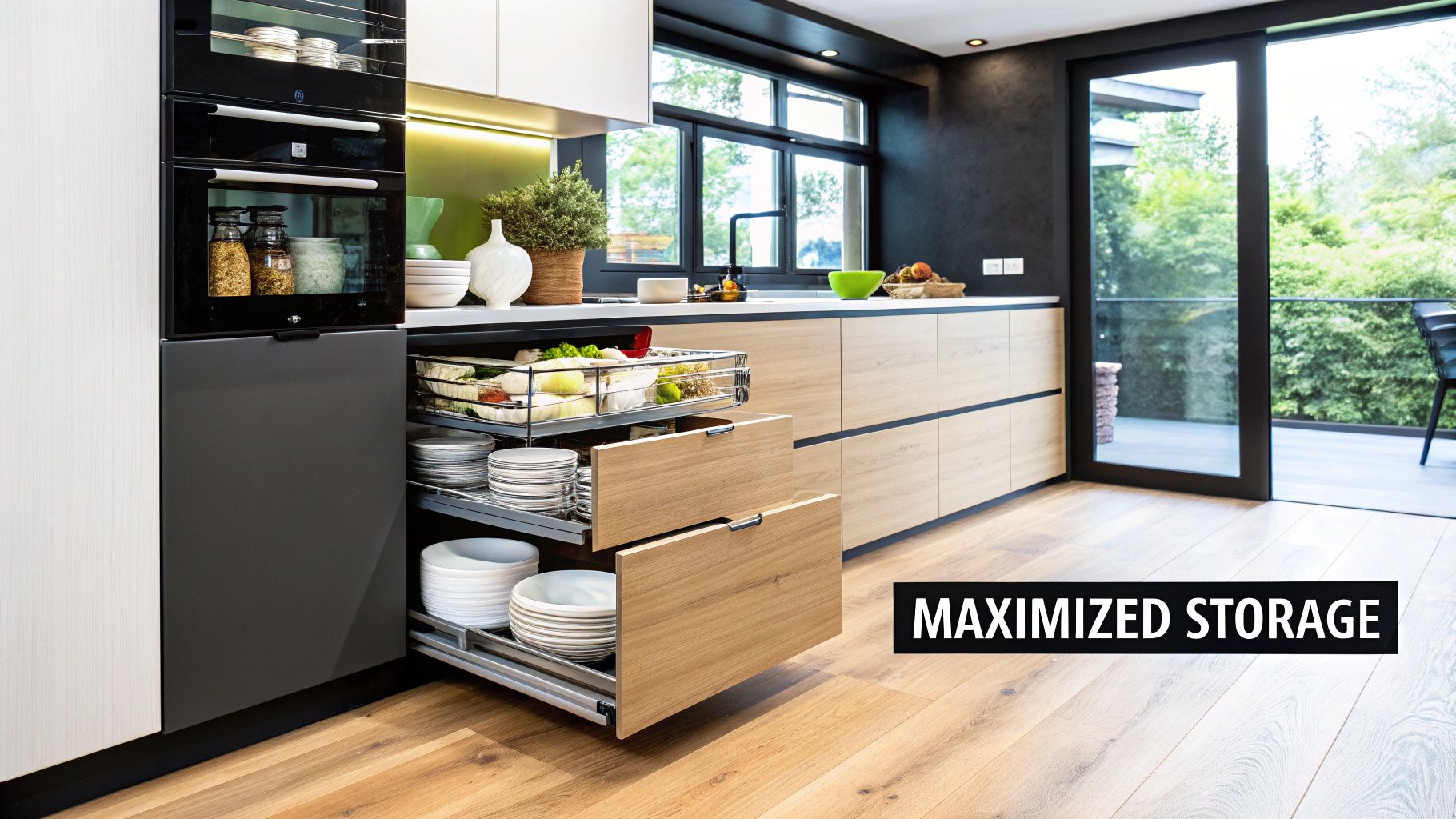
With a gentle tug, the entire contents of a deep cabinet glide forward, making every single item—even those tucked away in the very back—completely visible and easy to grab. This simple upgrade is designed to end the frustrating dig-through once and for all.
Why Pull-Out Shelves Change Everything
This is about more than just a little convenience. It’s a fundamental shift in how you use your kitchen or bathroom, making your daily routines feel smoother and far less stressful. These shelves take a clunky, inefficient cabinet and turn it into a powerhouse of organization.
Here’s what you can really expect:
- Total Accessibility: Suddenly, the items in the back are just as easy to reach as those in the front. No more forgotten cans of soup or buying a second jar of paprika because you couldn't find the first.
- Smarter Organization: You can create logical zones for everything. Group all your baking supplies on one shelf, your cleaning products on another. Everything has a place, and you can see it all at a glance.
- An Ergonomic Lifesaver: Forget deep bending, awkward reaching, and straining your back. This is a game-changer, especially for anyone with limited mobility or back pain.
This simple upgrade is one of the most impactful changes you can make to your kitchen's day-to-day usability without tearing down a single wall. It tackles a daily point of friction head-on, turning a frustrating space into one that just works.
Ultimately, installing pull-out shelves is the first step toward a kitchen that’s not just organized, but effortlessly functional. To take it even further, check out our guide on how to maximize cabinet space for more strategies to make every inch count. This is how you reclaim lost territory and turn cluttered cabinets into models of pure efficiency.
The Real-World Benefits of Sliding Shelves
Sure, they help you get organized, but pull out cabinet shelves do so much more—they completely change the way you use your kitchen or bathroom. They tackle the biggest headaches of old-school fixed shelving, offering real, practical benefits you'll notice every single day. Just imagine never having to get on your hands and knees again to find that one pot lid hiding in the back of a cabinet. That's the simple, powerful promise of this upgrade.
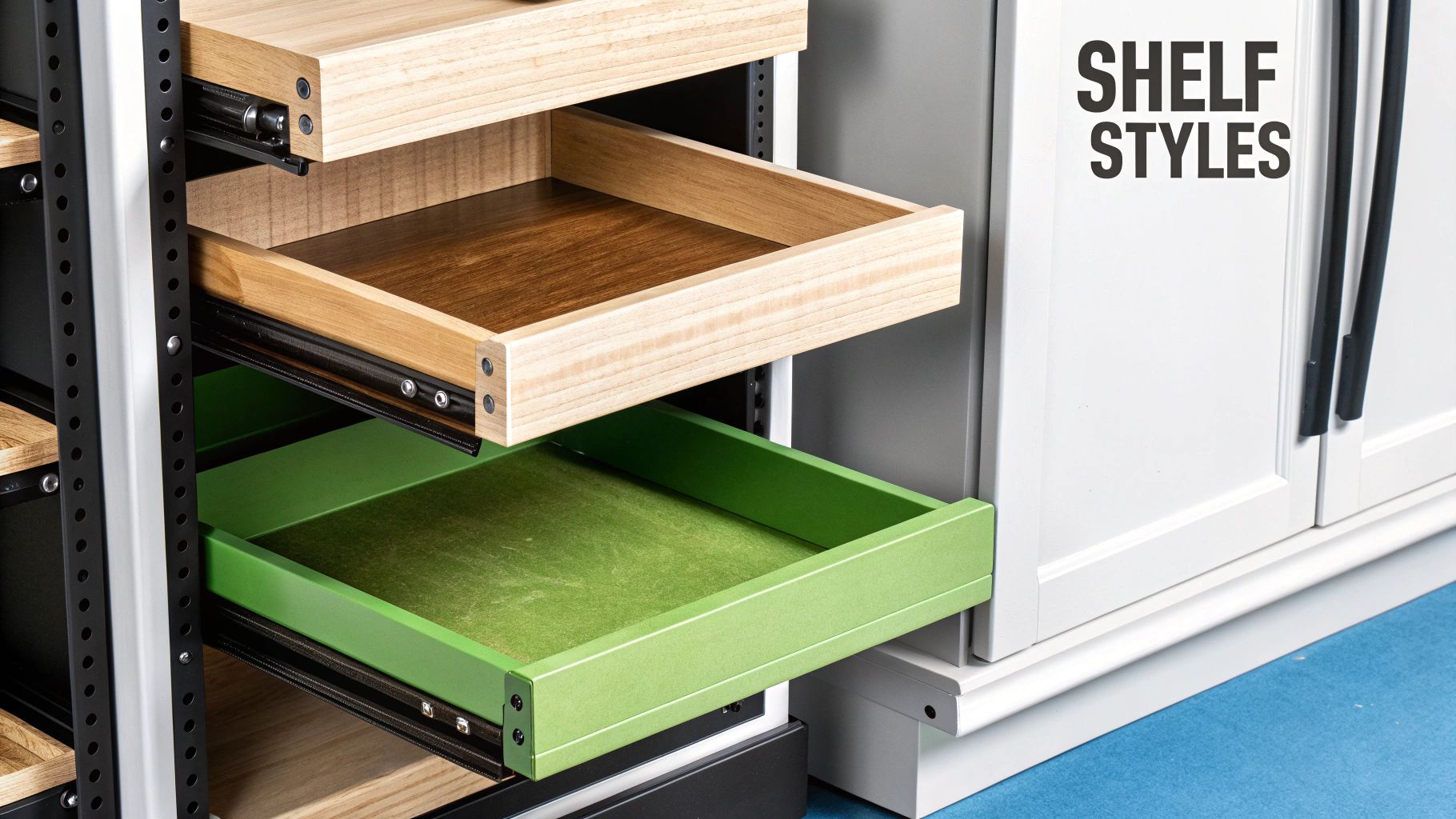
This shift from static shelves to dynamic, sliding ones has a ripple effect. It makes things easier on your body, unlocks hidden storage space, and can even add to the value of your home, making it a surprisingly smart investment.
Save Your Back with Ergonomic Access
Let’s be honest, standard lower cabinets can be a real pain—literally. All that deep bending, kneeling on a hard floor, and awkward twisting just to grab something heavy like a stand mixer or a stack of plates takes a toll on your back and joints.
Pull-out shelves completely eliminate that physical struggle. The shelf glides out to meet you, bringing everything within easy reach while you’re standing comfortably. It’s a simple change that makes your kitchen a safer, more accessible space for everyone, no matter their age or mobility.
Maximize Every Inch of Storage
Deep cabinets are famous for being inefficient. That back third of the shelf often becomes a black hole where items get pushed and forgotten, leading to wasted space and buying things you already own. Sliding shelves are the perfect solution to reclaim this lost territory.
By making the entire depth of the cabinet accessible, you can effectively increase your usable storage capacity by up to 30% without changing your cabinet layout.
Suddenly, that chaotic pantry or jumbled under-the-counter cabinet becomes a model of efficiency. You can finally store more in the same footprint, all while keeping everything in sight and perfectly organized.
Streamline Your Daily Routines
When your space is organized, life just feels easier. Finding what you need without a frustrating search makes your daily tasks quicker and a lot less stressful.
- Faster Meal Prep: Grab the exact spice jar or mixing bowl you need in seconds. No more rummaging.
- Easier Cleanup: Putting away pots, pans, and cleaning supplies becomes a smooth, one-motion task.
- Simplified Inventory: A quick glance tells you what you have, making grocery lists a breeze and cutting down on food waste.
This improved workflow smooths out the daily friction, giving you back precious time and energy. Plus, a highly functional and well-organized kitchen is a huge selling point. Smart upgrades like pull-out shelves signal to potential buyers that a home has been thoughtfully cared for, boosting its overall appeal and market value.
Choosing the Right Material for Your Shelves
The material you choose for your pull out cabinet shelves is the foundation of their performance. It dictates everything from how much weight they can handle to how they’ll look inside your kitchen cabinets. Think of it like picking the right tires for a car—the choice has to match how you plan to use them.
You wouldn't use racing slicks for an off-road adventure, and you wouldn't choose a delicate material for your heavy cast iron pans. Getting this right ensures your shelves will function flawlessly for years to come.
The decision usually boils down to four popular options: solid wood, wire, polymer, and melamine. Each brings something different to the table, and knowing the pros and cons is key. This is a big deal, as the market for these clever storage solutions is growing fast. The vertical pull-out cabinet sector was valued at USD 1.2 billion and is expected to hit USD 1.8 billion by 2033.
Solid Wood for Timeless Strength
Solid wood, usually maple or birch, is the classic for a reason. It offers incredible strength and a warm, high-end look that blends beautifully with existing cabinetry. Wood shelves are tough and can easily hold heavy items like stand mixers, pots, and pans without a hint of bowing. Plus, their solid surface means smaller items won't tip over or fall through the cracks.
If you're aiming to match your shelves to existing high-end cabinets, it helps to understand the best materials for kitchen cabinets overall. Wood is always a premium choice that signals quality and durability.
Wire Shelves for Visibility and Airflow
Wire shelves, typically made from steel with a chrome or epoxy coating, have a more modern, utilitarian vibe. Their biggest advantage is visibility—you can see what's stored at a glance, even from the side. This open design also promotes airflow, making them perfect for pantries where you might store produce like onions or potatoes.
They are quite strong, but they aren't the best for small, wobbly items like spice jars, which can get unsteady on the grid. For canned goods, cleaning supplies, and boxed foods, however, their practical design is tough to beat.
This image shows how a shelf's depth is directly related to its weight capacity, which is a critical factor in making your decision.
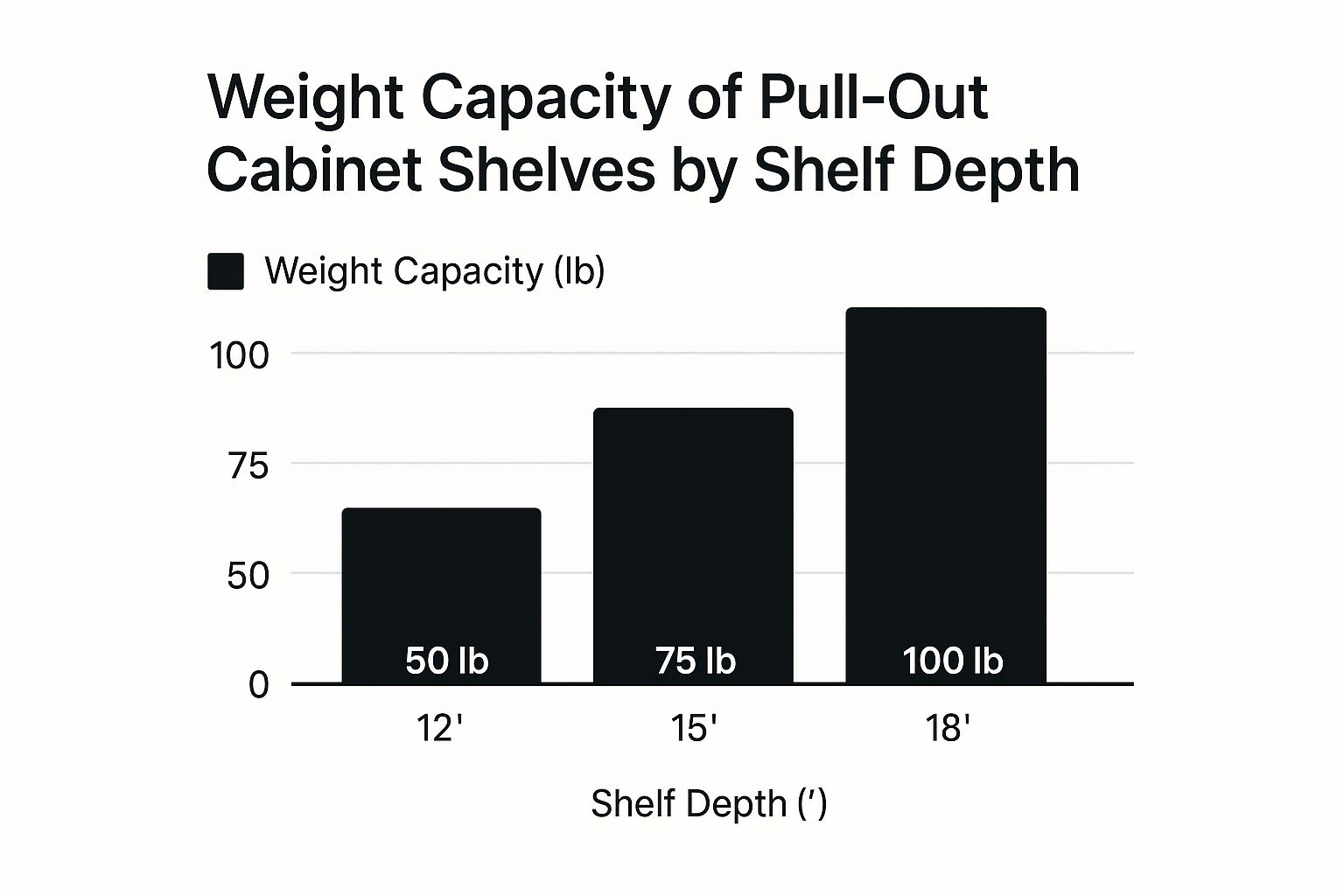
As you can see, deeper shelves are built to support significantly heavier loads, making them ideal for those bulky kitchen items.
Polymer and Melamine for Modern Durability
Polymer (a tough, high-grade plastic) and melamine (a durable laminate fused to a particleboard core) are the modern workhorses of kitchen organization. Both materials offer a smooth, non-porous surface that is ridiculously easy to clean. Spills just wipe right off. They usually come in clean white or gray finishes that can really brighten up the inside of a dark cabinet.
These materials are fantastic for under-sink cabinets or in bathrooms because they are resistant to moisture. They won't warp, stain, or get damaged from the inevitable minor leak or spill.
While we're talking about home kitchens, it can be interesting to see what the pros use. A quick look at commercial kitchen shelving materials and types can give you a new perspective on durability and design.
To make the choice a little clearer, here’s a quick comparison of the most common materials.
Comparison of Pull Out Shelf Materials
This table breaks down the key features of each material to help you zero in on the perfect fit for your home.
| Material | Pros | Cons | Best For |
|---|---|---|---|
| Solid Wood | Extremely strong and durable, high-end aesthetic, solid surface prevents tipping. | More expensive, can be susceptible to moisture if not sealed properly. | Heavy pots, pans, small appliances, and creating a seamless look with wood cabinetry. |
| Wire | Excellent visibility and airflow, budget-friendly, lightweight. | Small items can be unstable or fall through, may not match traditional decor. | Pantries (especially for produce), cleaning supplies, and canned goods. |
| Polymer | Moisture-resistant, very easy to clean, smooth surface, brightens cabinets. | Can feel less premium than wood, potential for scratching with heavy use. | Under-sink cabinets, bathrooms, and storing liquids or potential spill hazards. |
| Melamine | Budget-friendly, durable and scratch-resistant surface, easy to clean, uniform look. | Particleboard core can be damaged by excessive moisture, less robust than solid wood. | General pantry storage, dishes, and light-duty organization on a budget. |
Ultimately, the best material for your pull out shelves comes down to what you need to store, your budget, and the style you're going for. By weighing these options, you can find a solution that makes your life easier and your cabinets a joy to open.
How to Measure for a Perfect Fit
Let's be honest, nothing kills the excitement of a kitchen upgrade faster than parts that don't fit. Ordering pull out cabinet shelves that are off by even a fraction of an inch can bring your entire project to a screeching halt. That's why taking the time to measure correctly is the single most important thing you can do to guarantee a smooth, frustration-free installation.
Think of it as drawing a blueprint for your cabinet's interior. You're not just measuring the empty box; you're accounting for every little obstacle that could get in the way. A few extra minutes now will save you a massive headache later.
Nailing the Three Key Dimensions
To get that perfect, glove-like fit, you need to lock down three critical measurements from inside your cabinet. Grab a reliable tape measure and jot down your numbers to the nearest 1/16 of an inch—precision is your best friend here. If you want a deeper dive, our guide on how to measure kitchen cabinets has some great extra tips.
- Clear Opening Width: Measure the space from the far left to the far right, just inside the cabinet frame. Take this measurement at the front of the cabinet and again at the back. Always use the smallest of the two numbers. This ensures the shelf will actually clear the opening without getting stuck.
- Usable Depth: Run your tape from the inside edge of the front cabinet frame all the way to the back wall. Now, subtract at least one inch from that number. This little bit of buffer space is essential for the slide hardware and ensures your cabinet door will close without a problem.
- Available Height: Measure from the floor of the cabinet up to the lowest point of any obstruction above it, whether that's a fixed half-shelf or the bottom of a drawer. This tells you the maximum height of the items you'll be able to store.
Accounting for Tricky Obstructions
Cabinets are rarely the simple, empty boxes we wish they were. More often than not, it's the hidden obstacles that trip people up and lead to measurement mistakes.
Before you finalize any numbers, do a thorough check for anything that juts into the cabinet's open space. Look for bulky door hinges, plumbing pipes under the sink, or even an electrical outlet mounted on the back wall.
Measure how much space these intruders take up and subtract that from your initial width or depth measurements. For instance, if a hinge sticks out one inch into the opening, your usable width is suddenly one inch smaller. Ignoring these little details is a surefire way to end up with a shelf that won't slide.
Understanding Weight Capacity
Finally, think about what you plan on storing. The muscle behind pull out cabinet shelves comes from their slide hardware, and you need to match the strength to the job.
It breaks down pretty simply:
- Standard-Duty Slides (75 lbs): These are your workhorses, perfect for everyday items like stacks of plates, canned goods, or other pantry staples.
- Heavy-Duty Slides (100+ lbs): When you need serious strength, this is the way to go. They're built to handle weighty things like a stand mixer, cast-iron pans, or other small appliances.
Choosing the right slides for the load is non-negotiable for long-term performance. If you overload a standard-duty shelf, it's going to sag, stick, and become a nuisance. By matching the capacity to the contents from the start, you're making sure your new shelves will glide smoothly for years to come.
Exploring Different Shelf Styles and Mechanisms
Not all pull-out cabinet shelves are created equal. Once you get past the basic idea of a sliding platform, you’ll discover a whole world of specialized designs built to conquer every unique storage headache in your home. Choosing the right style is like picking the perfect tool for a job—it turns a frustrating task into a surprisingly simple one.
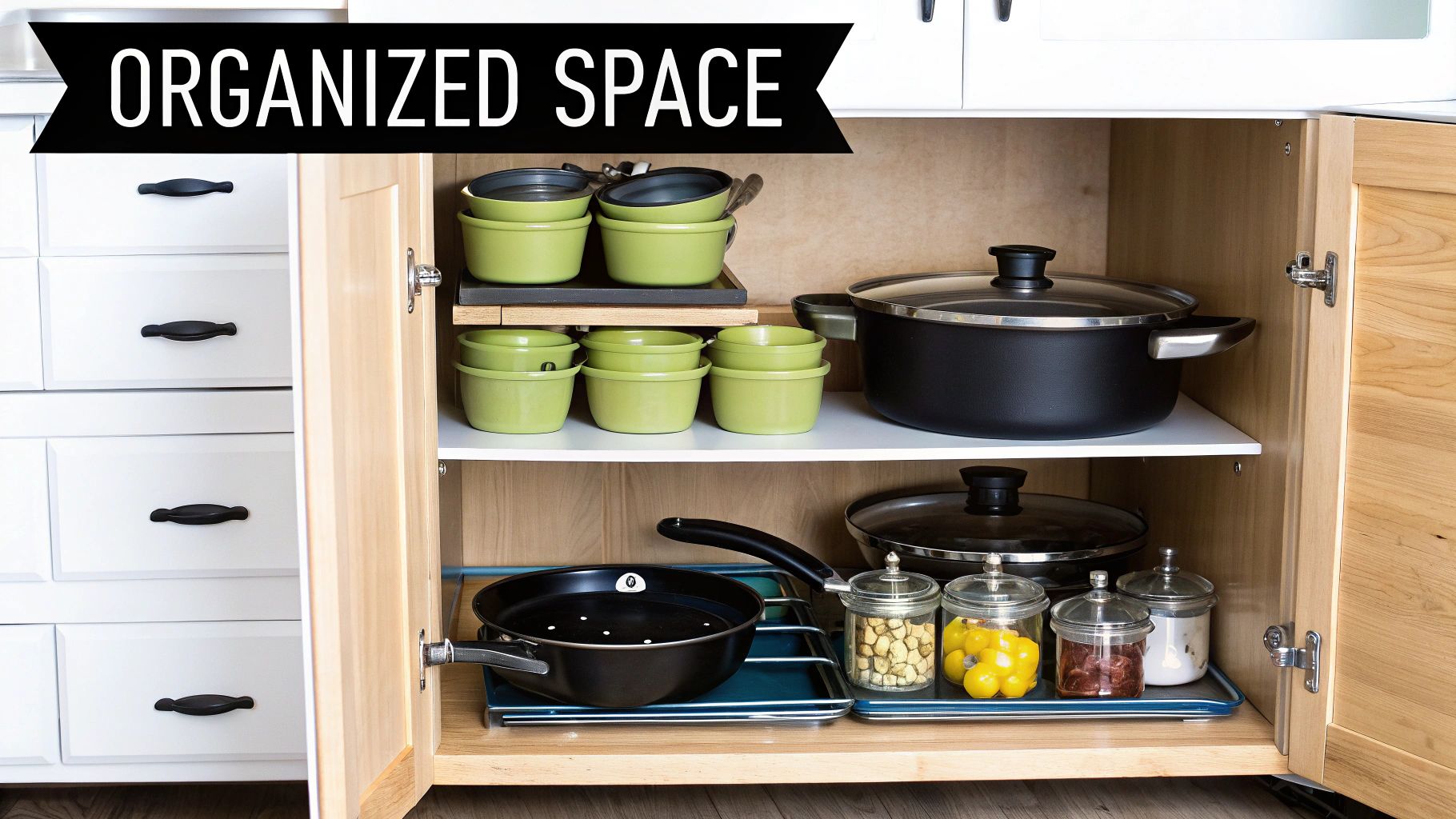
Whether you're dealing with a standard pantry or one of those awkward, hard-to-reach corners, there’s a pull-out solution engineered to squeeze every inch of utility out of your space. The real trick is matching the shelf’s design and mechanism to both the cabinet’s shape and what you actually plan to store inside it.
Common Shelf Styles for Every Need
The one you’ve probably seen most often is the single-tier shelf. It’s a simple sliding drawer, but it’s an absolute lifesaver for adding easy access to lower cabinets where you keep pots, pans, or small appliances. For taller pantry cabinets, multi-tier units are a total game-changer, letting you organize and see multiple levels of groceries with just a single pull.
But that's just the start. Some of the more specialized styles are where the real magic happens:
- Blind Corner Optimizers: These are just brilliant. They use clever articulating shelves that swing and slide right out, transforming that dreaded "black hole" of an L-shaped corner cabinet into completely usable space.
- Slim Pull-Outs: Got one of those weird, narrow gaps next to your stove or sink? These are designed specifically for that. They're perfect for organizing spice bottles, baking sheets, or cutting boards vertically, turning wasted space into a storage powerhouse.
This smarter, more targeted approach to storage is really catching on, especially as more people look for ways to make smaller living spaces work better. In fact, the global market for vertical pull-out storage is expected to hit $360.1 million, all driven by the demand for space-saving efficiency. You can discover more insights about this growing market trend and how it’s shaping modern home design.
Understanding the Slide Mechanisms
Think of the slide mechanism as the engine that powers your pull-out shelves. Its features will directly impact how you use them every single day. The most important thing to understand is the slide extension. Full-extension slides let the shelf pull completely clear of the cabinet, giving you 100% access to every last item on it. On the other hand, 3/4 extension slides leave the back quarter of the shelf inside the cabinet. They’re a more budget-friendly choice that still makes a massive improvement in accessibility.
Another feature you’ll definitely want to look for is a soft-close mechanism. Just like the drawers in modern kitchens, these slides use a small hydraulic damper to gently and silently guide the shelf back into place. No more slamming. It protects your cabinetry, your items, and adds a little touch of quiet luxury that prevents wear and tear over time.
Getting Your Shelves Installed and Keeping Them Maintained
Once you've picked out your new pull-out cabinet shelves, the last step is getting them installed and ready to go. The good news is that the process is surprisingly simple, but a little bit of prep work now will ensure they glide smoothly for years. Whether you're a seasoned DIYer or plan on calling a pro, it helps to know what’s involved.
For most installations, you'll only need a few common tools: a power drill, a tape measure, and a pencil are the big three. Many of the best kits even include a paper template to take the guesswork out of lining up the hardware, which makes the job far easier than it sounds.
A successful installation really boils down to one thing: precision. Taking an extra minute to get the glides perfectly level and parallel will pay you back with a smooth, effortless slide every time.
This attention to detail is what prevents sticking, scraping, and long-term damage to the entire mechanism.
Simple Steps for a DIY Installation
While every kit has its own quirks, the basic process is pretty much the same across the board and can usually be wrapped up in an afternoon. Most people find it's a very doable weekend project.
- Prep the Cabinet: First things first, empty the cabinet and give it a good cleaning. This gives you a clear, clean space to work in.
- Mount the Glides: Use the template that came with your kit to mark the screw holes on the cabinet floor or sides. Drill some pilot holes, then secure the slide hardware, triple-checking that it's perfectly level.
- Secure the Shelf: Most shelves are designed to just click right into place on the mounted hardware. You should hear a solid "click" confirming it’s locked in. Give it a few test slides to make sure it moves smoothly without any wobble.
Keeping Your Shelves Running Smoothly
The long-term care for pull-out cabinet shelves is incredibly low-maintenance. A quick wipe-down with a damp cloth is all it takes for materials like wood, polymer, or melamine. Just be sure to avoid harsh, abrasive cleaners that could mess up the finish or the slide mechanism.
Every six months or so, it’s a good idea to check that the mounting screws are still tight. The vibrations from daily use can sometimes loosen them over time. If a slide ever feels stiff or makes noise, a quick check for crumbs or debris in the track is usually all it needs. A simple cleaning is often enough to restore that brand-new glide.
Got Questions About Pull Out Shelves? We’ve Got Answers.
When you're thinking about an upgrade for your home, it's smart to have a few questions. Getting straight answers is what gives you the confidence to start a project that’ll actually make your day-to-day life better. Let's dig into some of the most common things people ask about pull out cabinet shelves.
One of the first questions we always hear is: "Can I even put these in my existing cabinets?" The answer is a big yes. In fact, that's exactly what they're designed for. These shelves are made to be a retrofit solution, turning those deep, dark, hard-to-reach shelves you're fighting with now into smooth, fully accessible gliding drawers.
Another big one is about the value—are they really worth the cost? Absolutely. The payoff isn't just about being a little more organized; it's about reclaiming all that wasted space and making your kitchen or bathroom easier to use. No more kneeling on the floor to find a pot lid! This kind of upgrade makes your home more functional, which directly adds to its usability and appeal. It's no surprise that the home organization market is booming, with kitchen storage alone projected to hit USD 18.56 billion by 2033. You can read more about these market trends to see just how much homeowners are investing in making their spaces work better.
What About Those Awkward Cabinet Door Hinges?
This is a common sticking point for a lot of people. Those bulky door hinges stick out into the cabinet opening, and if you don't account for them, your brand-new shelf is going to get stuck on its way out.
The secret is to measure the clear cabinet opening. That means you measure the usable width between the hinges or any other blockage, not the full width of the cabinet frame.
Here’s how you get around them:
- Measure the Right Spot: Always measure at the narrowest point of your cabinet opening. If your hinges poke out an inch on one side, your maximum shelf width just became one inch smaller than the frame-to-frame measurement.
- Use Spacers: If you need a little extra room, you can mount the drawer glides on small wood blocks or spacers. This pushes the whole mechanism away from the cabinet wall, giving the shelf the clearance it needs to slide right past the hinge without a hitch.
Once you have these common issues sorted out, you can move forward and plan your project with total confidence.
Ready to transform your kitchen with custom, high-quality solutions? The experts at Sinclair Cabinetry inc are here to help you design and install the perfect pull out cabinet shelves for your home.