

Tired of looking at your dated kitchen but shudder at the thought of a full-blown, gut-wrenching renovation? There’s a smarter way to get that fresh, modern look without the cost and chaos of tearing everything out. Thermofoil cabinet refacing lets you transform your kitchen in just a few days by giving your existing cabinet boxes a brand-new, durable "skin."
What Exactly Is Thermofoil Cabinet Refacing?
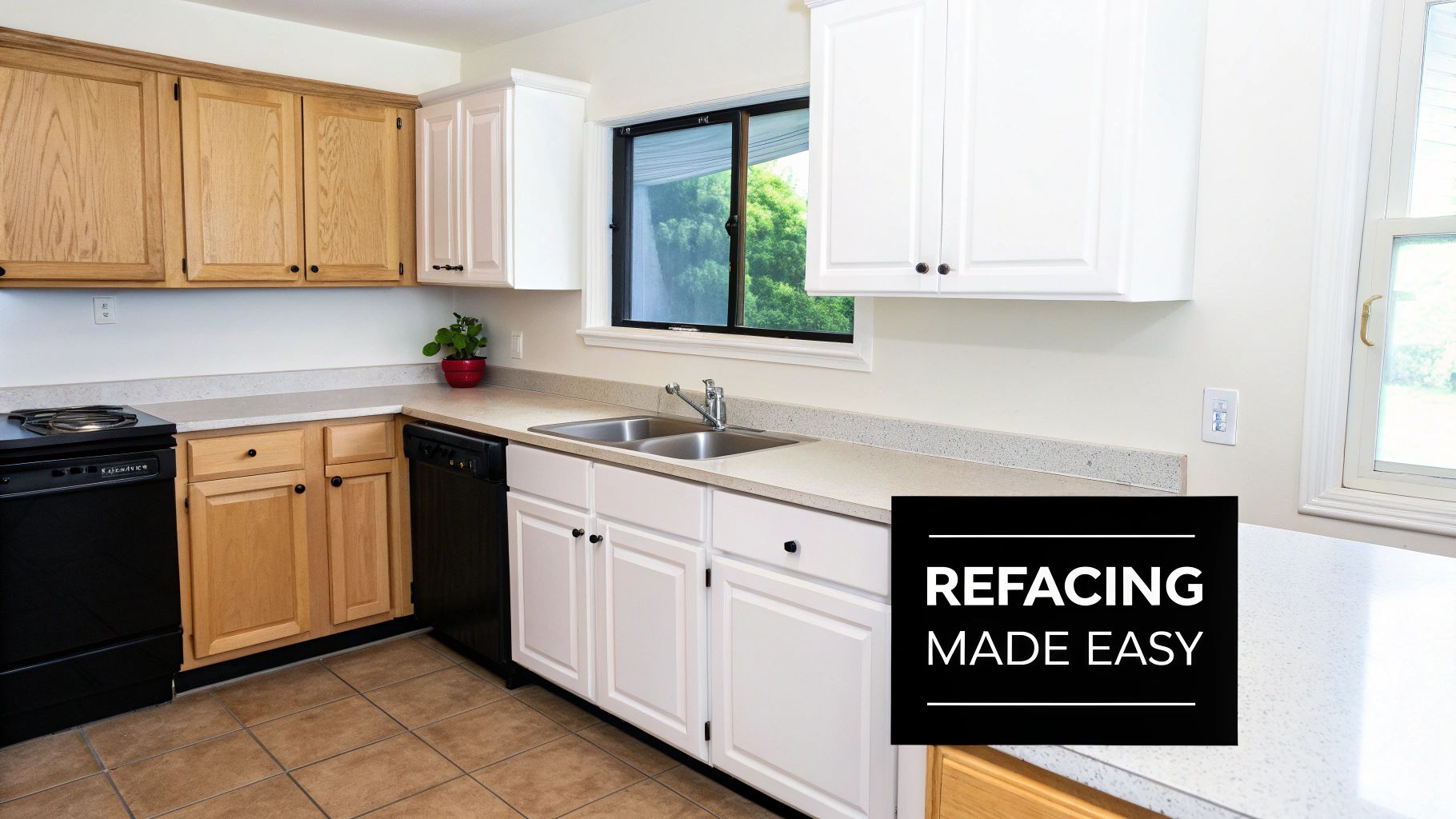
If your kitchen layout works just fine but the style feels stuck in the past, a complete overhaul isn't your only path forward. Thermofoil cabinet refacing is that perfect middle ground between a simple paint job and a dusty, disruptive, and expensive demolition. The process keeps the structural "bones" of your cabinetry right where they are while completely changing how they look and feel.
Think of it this way: your cabinet boxes are the foundation of your kitchen. As long as they're solid and in good shape, there's no need to tear them down. Refacing simply involves replacing the old doors and drawer fronts with brand-new ones and then applying a matching thermofoil finish to the visible exterior of the boxes.
Why Is This Method So Popular?
The appeal of refacing comes down to two things: efficiency and value. More and more, homeowners are looking for renovation options that cause minimal disruption but deliver maximum impact. Thermofoil is a home run in this department, offering a clean, modern aesthetic without turning your home into a construction zone for weeks on end.
This isn't just a niche trend; it's a booming industry.
The global cabinet refacing market was valued at USD 36,542.34 million in 2023 and is expected to climb to USD 59,222.23 million by 2031. That’s a compound annual growth rate of 6.22%, which shows just how much confidence homeowners have in this approach. You can learn more about these market trends to see the data for yourself.
In this guide, we’ll walk you through everything you need to know. We'll cover:
- What thermofoil material really is (and what it isn’t)
- The major pros and the potential cons to watch out for
- What to expect in terms of cost and how long it'll last
- When it makes more sense to just replace everything
By the time you're done reading, you'll have a solid grasp on whether thermofoil cabinet refacing is the right move for your project, so you can make a decision you feel great about.
What Is Thermofoil and How Does It Work?
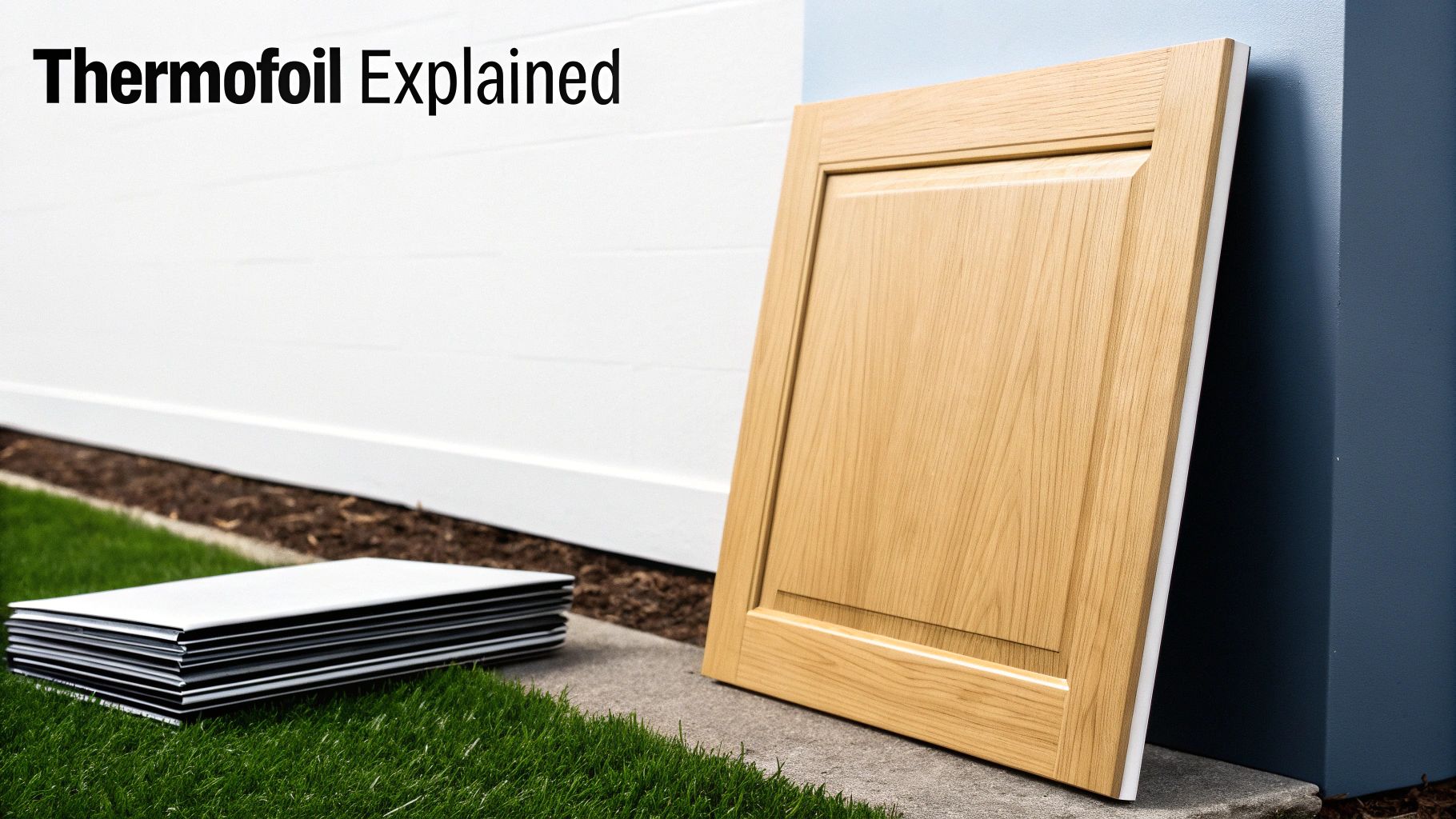
The first time you hear the word “thermofoil,” you might picture something like kitchen aluminum foil. It’s a common misconception, but in the world of cabinetry, the name is a bit misleading. Thermofoil isn't metal at all—it’s actually a tough, flexible vinyl finish.
This vinyl material, technically a type of PVC, is the secret behind the smooth, seamless look that makes this refacing method so popular. It’s engineered to deliver a perfectly consistent color and finish that’s incredibly difficult to match with traditional paint.
The real magic, though, is in how this vinyl layer is applied. It’s a far more advanced process than just slapping a laminate sheet onto a board.
The Science Behind a Seamless Finish
Creating a thermofoil door is a pretty slick process that combines heat, pressure, and precision. It all starts with a core of medium-density fiberboard (MDF), an engineered wood product chosen for its perfectly smooth, stable surface. MDF is the ideal canvas because it can be routed into all sorts of designs, from clean, flat panels to more traditional raised-panel styles.
The whole thing comes together in a few key steps:
- Shaping the Core: A large sheet of MDF is cut and routed into the exact door style you want—maybe a classic Shaker look or a sleek, contemporary slab.
- Applying the Vinyl: A sheet of the colored PVC vinyl is laid over the freshly shaped MDF.
- Heat and Vacuum Sealing: The MDF panel and vinyl go into a high-tech chamber where they’re hit with intense heat and powerful vacuum pressure.
This blast of heat and suction fuses the vinyl layer directly onto the MDF. The best way to picture it is like a sophisticated shrink-wrap, where the vinyl perfectly molds itself to every single curve, corner, and detail of the door. It essentially becomes one solid piece.
The result is a completely seamless surface. Unlike painted wood doors, there are no joints, cracks, or edge banding where grime and moisture can sneak in. This is a huge reason why thermofoil is known for being so easy to clean and maintain.
How This Applies to Cabinet Refacing
Once you understand how these doors are made, it’s easy to see why thermofoil cabinet refacing is such a smart and effective option. You’re not ripping out your entire kitchen. The "refacing" part means you get to keep the sturdy cabinet boxes—the structural "bones"—that are already fixed to your walls.
The real transformation happens on the outside. A professional team will:
- Remove and get rid of your old, dated cabinet doors and drawer fronts.
- Prep the visible surfaces of your cabinet boxes, like the face frames and side panels.
- Apply a perfectly matching thermofoil or laminate finish to those exterior surfaces.
- Install brand-new, factory-made thermofoil doors and drawer fronts, complete with fresh, modern hinges and hardware.
This is what makes the project so incredibly efficient. You sidestep the cost, mess, and weeks of disruption that come with a full gut renovation. You’re left with the look and feel of a brand-new kitchen without the headache of a complete overhaul.
If you want to go a bit deeper, our related guide offers a detailed breakdown of what thermofoil cabinets are and their core characteristics. It's the best way to get a high-impact upgrade with minimal downtime.
Weighing the Pros and Cons of Thermofoil
Every home improvement project has its trade-offs, and refacing your cabinets with thermofoil is no exception. It’s a fantastic way to get a clean, modern look on a budget and a timeline that won’t turn your life upside down. But to make sure you’ll love your new kitchen for years, it’s important to understand both sides of the coin.
Knowing where thermofoil shines—and where it has its limits—is the key. This helps you match the material’s strengths to your family’s lifestyle, your budget, and what you expect from your new kitchen or bathroom.
The Clear Advantages of Choosing Thermofoil
One of the biggest reasons people fall in love with thermofoil is its killer combination of looks and practicality. You get that high-end, seamless appearance without the premium price tag or the fussy maintenance routine, which is a huge win for busy households. The finish is also perfectly consistent from one door to the next, so you get a flawless match in color and sheen—something that can be a real challenge with natural wood.
Here’s what you can expect on the plus side:
- Serious Cost Savings: This is often the deal-maker. A thermofoil refacing project typically costs 45-75% less than tearing everything out and starting from scratch with new cabinets. You get the visual punch of a brand-new kitchen for a fraction of the cost.
- A Super-Fast Transformation: Forget about a gut renovation that drags on for weeks. A professional thermofoil refacing job is usually wrapped up in just two to five days. That means way less disruption to your daily routine.
- Maintenance That’s Actually Easy: The non-porous vinyl surface is a dream to clean. A quick wipe-down with a soft cloth and a little mild soap is all it takes to handle daily smudges and spills. No special cleaners required.
- Tons of Style Options: Whether your heart is set on a sleek, matte white for a minimalist vibe or a surprisingly convincing wood grain for a more traditional feel, thermofoil has you covered. It comes in a huge range of colors and textures.
Potential Drawbacks to Consider
Of course, no material is perfect, and it’s only fair to talk about thermofoil’s weak spots. The biggest issues are tied to high heat and the way the material is made. While it’s tough in many ways, that vinyl coating has its limits, and knowing what they are ahead of time will help you protect your investment.
Here’s a transparent look at the cons:
- Vulnerability to High Heat: This is the big one. The adhesive that bonds the vinyl to the MDF core can get soft and fail when exposed to sustained, high temperatures. It's absolutely crucial to have heat shields installed on any cabinets right next to your oven or even a toaster oven to stop the thermofoil from peeling or bubbling.
- Repairs Can Be Tricky: If a thermofoil door gets a deep scratch, a nasty gouge, or starts to peel, you can't just patch it up. Unlike solid wood that can be sanded and refinished, a damaged thermofoil door almost always needs to be completely replaced to get that seamless look back.
- Risk of Delamination: Over many years, or if you end up with a lower-quality product, the vinyl layer can start to separate from the MDF core. You'll usually see this happen first along the edges or in areas that get a lot of moisture. Going with a reputable installer who uses high-grade materials makes this much less likely.
Thermofoil Cabinet Refacing At A Glance
To put it all in perspective, here's a simple breakdown of the trade-offs. This table helps you see the pros and cons side-by-side.
| Attribute | Pros (Advantages) | Cons (Disadvantages) |
|---|---|---|
| Cost | Significantly more affordable than a full cabinet replacement. | Lower long-term resale value compared to solid wood. |
| Installation | Quick and minimally disruptive, often completed in days. | Requires professional installation for best, long-lasting results. |
| Maintenance | Very easy to clean with a non-porous, wipeable surface. | Cannot be sanded or refinished; damage requires replacement. |
| Durability | Resists stains and moisture well on its surface. | Susceptible to peeling or warping from high heat exposure. |
| Appearance | Provides a smooth, seamless, and consistent color finish. | Can sometimes look less natural than genuine wood grain. |
When it's all said and done, thermofoil has absolutely earned its spot as a top choice in the cabinet world. Modern manufacturing has made today’s thermofoil a tough competitor to traditional wood, which is why it's seeing such a surge in popularity.
In fact, one industry report predicts thermofoil will see an annual growth of 6% from 2024 to 2029, mainly because it holds up so well against moisture at a much lower cost. You can discover more insights on cabinet material trends and see how it's shaking up the market. For many homeowners, the blend of style, speed, and savings makes thermofoil the perfect fit for a stunning kitchen makeover.
Budgeting for Your Thermofoil Cabinet Project
Let’s talk numbers. One of the biggest reasons homeowners get excited about thermofoil cabinet refacing is the incredible value it delivers. You get the fresh, dramatic look of a brand-new kitchen without the sticker shock of a full tear-out and replacement. It’s not just an expense; it’s a smart, practical investment in your home.
The cost savings are, without a doubt, the main event here. Refacing typically slashes the total project cost by 45-75% compared to a complete cabinet replacement. We’re talking about an average project cost between $5,000 and $15,000, a far cry from the $25,000 to $50,000 (or more!) you might spend on all-new cabinets.
Of course, that price range is a starting point. Your final quote will boil down to the specific details of your kitchen.
Key Factors That Influence Your Final Cost
Several variables will shape the final price tag for your project. The size of your kitchen is the big one—more cabinets mean more material and labor. But other details are just as important.
Think of it this way: a small, simple galley kitchen with a straight run of cabinets will land on the lower end of the cost spectrum. On the other hand, a large U-shaped kitchen with a big center island, decorative crown molding, and dozens of doors and drawers will naturally require a larger investment.
Here are the key elements that a contractor will factor in:
- Kitchen Size and Layout: The total linear feet of your cabinetry is the number one cost driver. The more surface area there is to cover, the higher the cost.
- Door Style and Finish: A simple, flat-panel (slab) door is usually the most budget-friendly option. More intricate designs, like a classic Shaker or a detailed raised-panel style, cost a bit more to manufacture.
- Hardware Selection: New knobs and pulls are the jewelry of your kitchen. You can find great-looking, affordable options, but high-end designer hardware can easily add several hundred dollars to the bottom line.
- Project Complexity: Want to add some special touches? Features like glass door inserts, soft-close hinges, or decorative trim will add to the cost but can seriously elevate the final look.
For a more detailed financial breakdown, our complete guide digs into the average cabinet refacing cost with more specific examples.
Understanding the Lifespan and Return on Investment
A kitchen that looks great today but doesn't last is no bargain. The good news is that when professionally installed with high-quality materials, refaced thermofoil cabinets are built to go the distance. With the right care, you can expect your new kitchen to look fantastic for 12 to 20 years.
This impressive durability makes thermofoil cabinet refacing a fantastic way to get a high return on your renovation investment. It gives you an immediate and powerful visual upgrade that boosts your home’s appeal without the massive price tag of custom cabinetry.
The secret to getting the most out of that lifespan is proper maintenance. Thermofoil is famously easy to care for, but a few simple habits will keep it looking pristine for years, protecting your investment.
To maximize the life of your refaced cabinets, it’s all about preventative care. The non-porous vinyl surface is a champ when it comes to resisting stains and spills, making daily cleanup a breeze. Its only real weakness is prolonged, direct exposure to high heat, which can cause the vinyl layer to peel or delaminate over time.
Here are a few simple maintenance tips:
- Use Heat Shields: This is a non-negotiable. Always install protective heat shields on cabinets right next to your oven, range, or other high-heat appliances like toasters or air fryers.
- Clean Gently: A soft, damp cloth and a mild, non-abrasive cleaner are all you need. Steer clear of harsh chemicals, scouring pads, or anything with ammonia.
- Wipe Spills Promptly: While the surface is water-resistant, it’s always a good idea to wipe up spills quickly. This prevents any moisture from finding its way to the underlying MDF core at seams or edges.
When Custom Wood Cabinets Are the Better Choice
While thermofoil cabinet refacing is a fantastic option for giving many kitchens and bathrooms a fresh new look, it’s not always the right call. Sometimes, knowing when to switch gears and go for custom wood cabinets is just as crucial as understanding the benefits of refacing. The decision really boils down to two things: the condition of your existing cabinets and what you ultimately want for the space.
Think of your current cabinet boxes like the foundation of a house. You wouldn't build on top of a foundation that's cracked, crumbling, or just not up to the task. It's the same logic with cabinets. If your boxes are suffering from water damage, warping, or are just structurally weak, refacing isn't the solution. You’d just be putting a pretty face on a failing structure, which is a headache waiting to happen.
Also, remember that thermofoil refacing works with the kitchen layout you already have. If your dream remodel involves moving the dishwasher, adding a big island, or totally reconfiguring how the kitchen flows, you'll need a full replacement. Only custom cabinets can bring that kind of fundamental change to life.
The Unmatched Advantages of Solid Wood
When your project needs more than a cosmetic touch-up, that’s when custom wood cabinetry steps into the spotlight. It brings a whole different set of benefits to the table—ones that thermofoil simply can't offer. The biggest advantage? Longevity and the ability to adapt as your style changes over the years.
Unlike thermofoil, which has to be replaced when it gets damaged, solid wood is incredibly forgiving. A deep gouge or scratch in a wood door can be sanded, filled, and refinished until it looks brand new again. And if you decide on a different color scheme a decade from now? No problem. Wood cabinets can be stripped and repainted or re-stained, giving you endless options for future updates. This repairability gives them a lifespan that can easily stretch 50 years or more.
The real magic of custom wood is that it's truly bespoke. These cabinets are built to the exact measurements of your room, squeezing out every last inch of storage potential and creating a seamless, high-end look that you just can't get with stock or refaced options.
Identifying When a Full Replacement Is Necessary
Trying to decide between refacing and a full replacement can feel overwhelming, but there are a few tell-tale signs that point toward needing new, custom cabinets. If you find yourself nodding along to more than one of the points below, it’s a good sign that a full replacement is the smarter long-term investment.
Here are the key times when custom wood is the way to go:
- Structural Failure: Your current cabinet boxes are weak, have water damage, or are made from cheap particleboard that’s starting to give out.
- Major Layout Changes: You're planning to change the kitchen's footprint, like moving the sink or stove, or adding new cabinets where there weren't any before.
- Desire for Ultimate Customization: You want specific sizes, clever storage solutions like an appliance garage, or a particular wood species and grain that you love.
- Focus on Maximum Resale Value: In the real estate market, high-end, solid wood cabinetry is a major selling point and often provides a better return on investment down the road.
This decision tree can help you quickly map out whether your project is a better fit for refacing or a full replacement based on things like your kitchen's size and your style goals.
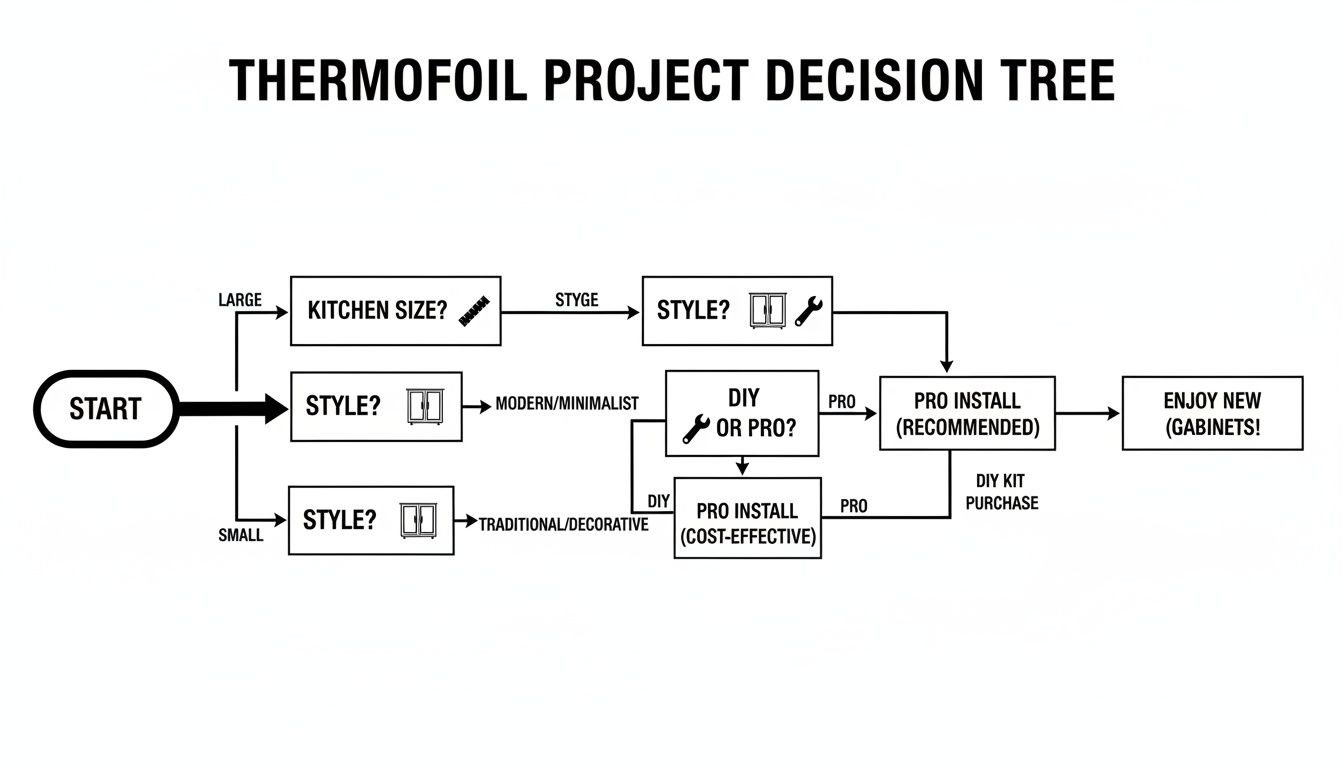
As the flowchart shows, refacing is perfect for cosmetic upgrades, but projects that involve changing the layout or call for premium materials usually lead to custom work. When you're thinking about a kitchen update, it’s smart to look at all your angles. For anyone considering going beyond a simple reface, this guide on how to choose kitchen cabinets provides some great insights into different materials and styles.
At the end of the day, opting for custom wood is about more than just getting new cabinets. It's an investment in quality craftsmanship, timeless style, and a kitchen that is perfectly tailored to your home and how you live in it. To get a better feel for the specifics, exploring the differences between custom vs. stock cabinets can really help clear things up.
How Refacing Impacts Your Home's Value and Footprint
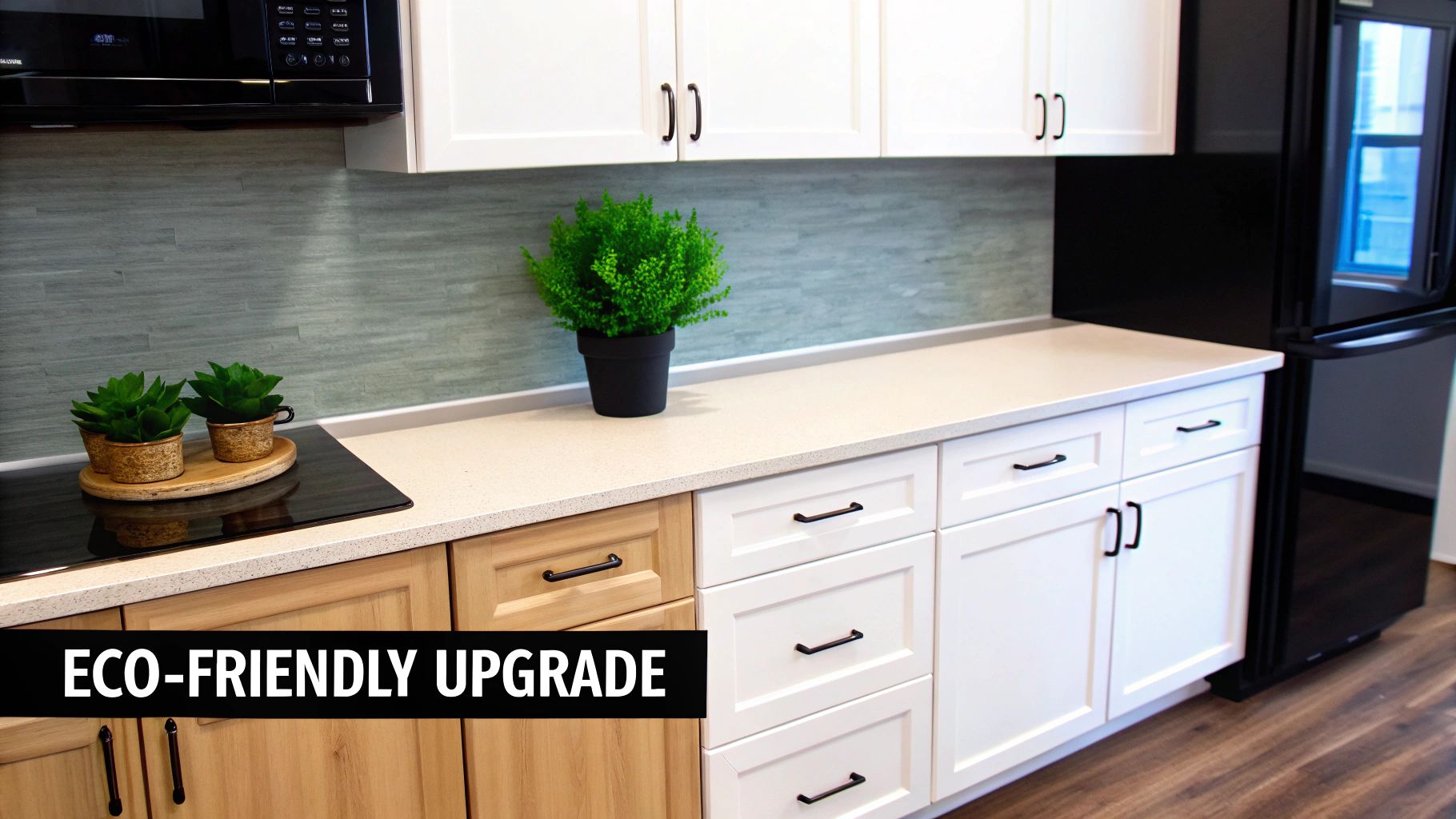
Any smart home upgrade today has to do more than just look good—it needs to be a financially savvy and responsible choice. When you're looking at thermofoil cabinet refacing, you’re hitting on two of the biggest concerns for modern homeowners: your return on investment and your environmental footprint. This isn't just a quick cosmetic fix; it’s a strategic decision that adds real value to your home, your life, and even the planet.
At its core, the choice to reface is a sustainable one. A full kitchen gut-and-remodel creates a staggering amount of waste. Old cabinet boxes, countertops, and fixtures almost always end up in a landfill. By simply keeping your existing cabinet framework, you're making a pretty powerful eco-friendly statement.
That single decision prevents hundreds of pounds of perfectly good wood, particleboard, and other materials from being tossed out. It’s a renovation that aligns with a greener way of thinking by reducing consumption without sacrificing that dramatic "after" photo.
Boosting Your Home's Financial and Aesthetic Appeal
From a real estate perspective, the kitchen is still the undisputed heart of a home's value. A bright, clean, and updated kitchen is one of the most compelling selling points you can have. It sends an immediate signal to buyers that a home is well-maintained and move-in ready, which can seriously speed up a sale and bring in better offers.
While high-end custom wood cabinets might give you a slightly higher long-term equity bump, thermofoil cabinet refacing delivers an incredible and immediate return on investment (ROI). You get the visual impact of a brand-new kitchen for a fraction of the price, making it one of the smartest pre-sale upgrades out there. The clean lines and flawless finish create a powerful first impression that sticks.
By updating the most visible part of your kitchen, you’re not just improving your daily life; you're directly enhancing your home's marketability. It’s an investment in both your present enjoyment and your future financial return.
The Environmental and Economic Benefits Summarized
When you put refacing head-to-head with a full replacement, a clear winner emerges for both sustainability and immediate value. The benefits really do speak for themselves.
- Waste Reduction: You dramatically cut down on landfill contributions by reusing your structurally sound cabinet boxes. This is the single biggest environmental win of refacing.
- Resource Conservation: Fewer new materials are needed, which means a lower demand for lumber and all the resources that go into manufacturing.
- Cost-Effective Value: You get a high-impact visual upgrade that buyers love, often recouping a huge portion of your investment when you sell.
- Faster Turnaround: The quicker project time means less disruption to your life and lower labor costs, adding to the overall financial efficiency.
Digging into general interior design trends and advice can also help you see how different styles and finishes can transform your living space. Ultimately, choosing thermofoil refacing is a win-win. You get a beautiful, modern kitchen that feels completely new, all while making a conscious choice that's both easy on your wallet and kind to the environment. It's a renovation that truly pays you back in more ways than one.
Common Questions About Thermofoil Refacing
Even with a good grasp of the process, it's totally normal to have a few more questions rattling around. Getting clear, straightforward answers is the best way to feel confident you're making the right call for your kitchen or bathroom.
Let's dig into some of the most common questions homeowners have about the practical, day-to-day realities of living with thermofoil cabinets.
Can You Fix Thermofoil Cabinets if They Start to Peel?
Yes, but honestly, it’s a job best left to the pros. When a thermofoil door starts peeling, the entire vinyl layer has to be carefully heated and stripped off the MDF core. Once the core is cleaned up and prepped, you could repaint it or apply a new veneer.
But for a single damaged door? The most practical and time-saving solution is almost always to just order a matching replacement. This way, you get a perfect, factory-grade finish that blends right in with your other cabinets, and you get to skip the headache of a tricky repair job.
Is Thermofoil a Waterproof Material?
Thermofoil is highly water-resistant, but it isn't completely waterproof. That seamless vinyl surface does a fantastic job of repelling everyday splashes, spills, and moisture, which is exactly why it’s so popular in kitchens and bathrooms.
The real risk comes if that vinyl layer gets compromised. A deep scratch or a peeling edge can create a tiny opening for water to seep in and reach the MDF core underneath, which could cause swelling over time. As long as you take normal care and wipe up big spills, this is rarely an issue.
How Does Thermofoil Compare to Laminate?
Both are great, low-maintenance choices for cabinet refacing, but they're built differently and excel in different areas. The easiest way to think about it is that thermofoil is a flexible, moldable vinyl, while laminate is a hard, rigid sheet.
- Thermofoil: This material is vacuum-sealed with heat over an MDF core. Its flexibility is its superpower, allowing manufacturers to create doors with seamless, detailed profiles like classic raised panels or popular Shaker styles.
- Laminate: A much harder, more rigid material that gets glued onto a substrate. It's incredibly durable and stands up well to scratches and dings, but it’s really only suited for simple, flat-panel (or "slab-style") doors.
Bottom line: Choose thermofoil when you want intricate designs and more style flexibility. Go with laminate when you need maximum durability for a simple, flat-surface cabinet.