

When you hear designers and cabinetmakers talk about full overlay cabinets, they're describing a specific style where the cabinet door and drawer fronts are made larger than the actual cabinet opening. This design choice allows them to cover almost the entire cabinet face frame, leaving very little of the cabinet box visible.
The result? A sleek, seamless look that's become a hallmark of modern and transitional kitchens. It's the go-to style for anyone wanting a clean, high-end feel without the gaps and visible frames of more traditional cabinet types.
Understanding Full Overlay Cabinets
Think of it like laying tiles perfectly edge-to-edge on a floor. With full overlay, the cabinet doors and drawers are the tiles, and they’re arranged to create a smooth, continuous surface. The gaps between each door and drawer are incredibly tight—typically just 1/8 to 1/4 inch—which is just enough room for them to open without rubbing against each other.
This approach creates an uninterrupted plane of cabinetry that feels incredibly polished and intentional. By hiding most of the face frame, you get rid of the busy vertical and horizontal lines you see with other styles. This is a big reason why full overlay has exploded in popularity, especially with the rise of clean, European-inspired home design.
The Defining Features
So, what are the tell-tale signs of a full overlay cabinet? Once you know what to look for, they’re easy to spot.
- Maximum Coverage: The doors and drawers are intentionally oversized to cover nearly the entire cabinet box.
- Minimal Reveals: "Reveal" is the cabinetmaker’s term for the gap. With full overlay, the reveals are extremely tight and consistent.
- Hidden Hinges: This style almost always requires concealed hinges mounted inside the cabinet. There’s simply no place for an external hinge to go!
- Hardware Is a Must: Because the door covers the frame, there's no edge to grab. You'll need knobs or pulls to open everything.
For a quick reference, here are the key traits that define the full overlay style.
Full Overlay at a Glance Key Characteristics
| Feature | Description |
|---|---|
| Door/Drawer Fit | Sized larger than the cabinet opening to cover the face frame. |
| Visual Appearance | Sleek, modern, and seamless with a flat, continuous surface. |
| Gaps (Reveals) | Very narrow and consistent, typically 1/8" to 1/4". |
| Hardware | Requires external hardware (knobs or pulls) for opening. |
| Hinges | Uses concealed or "European-style" hinges mounted inside the cabinet. |
| Best For | Modern, contemporary, and transitional kitchen and bath designs. |
These characteristics work together to create a look that is both sophisticated and minimalist.
The seamless aesthetic of full overlay cabinets really took off in the late 1990s as homeowners started embracing the cleaner lines popular in European design. It marked a shift away from more traditional, detailed looks toward minimalism. You can dig deeper into these cabinetry market trends and their influences at MarketDataForecast.com.
When you’re remodeling a kitchen or bathroom, the style of your cabinets is one of the biggest decisions you’ll make. It sets the tone for the entire room, guiding everything from your hardware choices to the overall vibe of the space. The three main players in the cabinet world—full overlay, partial overlay, and inset—each bring a completely different look and feel to the table.
Getting a handle on these differences is the key to choosing with confidence. People often start by looking into full overlay cabinets because of their clean, modern appearance, but putting them side-by-side with the other styles reveals the subtle trade-offs in cost, installation, and even storage.
This diagram gives you a quick visual of how each style interacts with the cabinet frame.
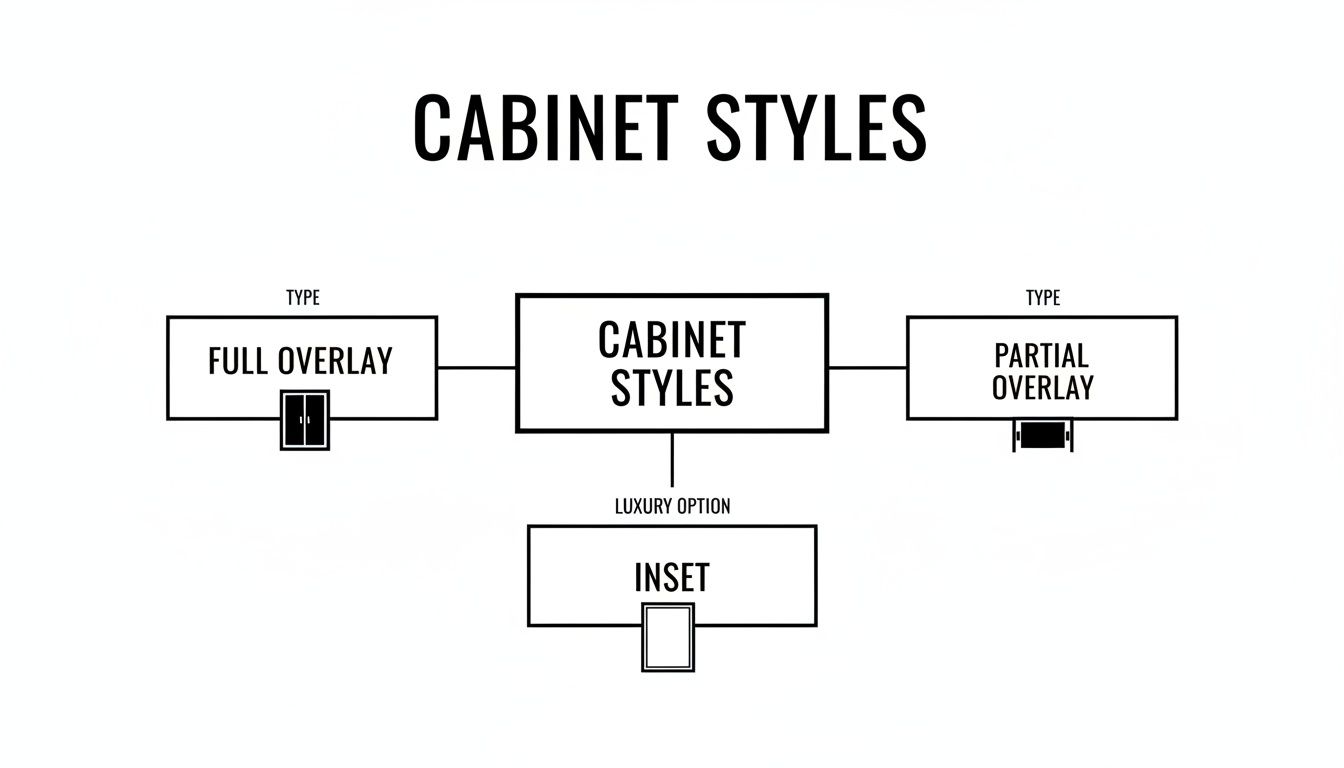
You can immediately see the seamless coverage of full overlay, the traditional framed look of partial overlay, and the crisp, flush fit of inset doors.
Cabinet Style Showdown: Full Overlay vs Partial Overlay vs Inset
To make the choice a little clearer, we've broken down the key differences between these three popular styles. This table compares them across the board, from how they look to how much they cost.
| Attribute | Full Overlay | Partial Overlay | Inset |
|---|---|---|---|
| Aesthetics | Modern, seamless, continuous surface | Traditional, classic, framed look | High-end, custom, flush-fit elegance |
| Cost | Mid-range | Most budget-friendly | Highest cost |
| Storage Space | Maximum interior space | Good interior space | Slightly reduced interior space |
| Hardware | Knobs or pulls required for opening | Can sometimes be opened without hardware | Knobs or pulls required; hinges can be exposed or concealed |
Each style has its place, depending on your design goals, budget, and how you need your kitchen or bathroom to function. Now, let's dig a little deeper into the specific matchups.
Full Overlay vs Partial Overlay
For most homeowners, the choice really boils down to full versus partial overlay. As we’ve covered, full overlay doors cover almost the entire cabinet frame, creating a smooth, uninterrupted surface with very tight gaps. It’s a clean, high-end look that’s become the go-to for modern and transitional designs.
Partial overlay, on the other hand, is the more traditional and budget-friendly route. You might also hear it called "standard overlay." The doors are smaller, leaving a good chunk of the face frame—usually 1 to 1.5 inches—visible between them.
- Aesthetics: Full overlay is all about that sleek, uniform appearance. Partial overlay gives you a more classic, segmented look where the frame itself becomes part of the design.
- Cost: Because they use less material for doors and require simpler hardware, partial overlay cabinets are typically the more cost-effective option.
- Hardware: You’ll always need knobs or pulls to open full overlay cabinets. With partial overlay, the exposed edge of the door sometimes lets you open them without any hardware.
If you’re aiming for a contemporary, furniture-like feel, full overlay is the easy winner. But if your budget is tight and you prefer a traditional look, partial overlay is still a fantastic, reliable choice. For a more detailed comparison, check out our guide on full overlay vs. partial overlay cabinets.
Full Overlay vs Inset
When you compare full overlay to inset, you’re stepping into a conversation about fine craftsmanship and historical style. Inset cabinets are the gold standard of traditional cabinetmaking. The doors and drawers don’t sit on top of the frame; they sit perfectly inside it, completely flush with the face.
This level of precision is what sets inset cabinetry apart. The gaps around the door, known as reveals, have to be perfectly consistent, often just a paper-thin 1/16 to 1/8 inch. This meticulous fit is what gives inset its timeless, custom-built character, making it a favorite in luxury homes and period-style designs.
Here’s a look at how they stack up against full overlay:
- Appearance: Full overlay gives you modern seamlessness, while inset delivers classic, flush-fit elegance. The visible frame and delicate lines of inset cabinets are a distinct design statement.
- Cost and Craftsmanship: Inset is almost always the most expensive option. The labor required for that perfect fit just costs more. Full overlay sits at a more moderate price point.
- Space: Because the doors sit inside the frame, you do lose a bit of interior storage and clearance compared to full overlay, where the doors are mounted on the outside.
- Climate Considerations: Wood naturally expands and contracts with humidity, and inset doors are more likely to rub or stick as a result. This is much less of an issue with overlay styles.
Ultimately, the right choice comes down to your vision. Full overlay offers a clean canvas perfect for modern living, while inset cabinetry is a beautiful nod to classic, bespoke furniture design.
The Real Pros and Cons of Full Overlay Cabinets
Choosing full overlay cabinets is a big decision that shifts the entire look and feel of your space. But it's not just about looks—this style has a real impact on storage, your budget, and even the installation process. Knowing the trade-offs is the key to choosing with confidence.
The biggest draw, hands down, is the clean, seamless appearance. Full overlay doors cover almost the entire cabinet frame, creating a smooth, uninterrupted wall of cabinetry. It’s a high-end, furniture-like look that makes a kitchen or bathroom feel more polished and custom-built. This style is the go-to for modern, minimalist, and transitional designs where crisp lines are everything.
The Upside: More Space and Style
Besides looking sharp, a huge functional win is maximized storage. Since the doors and drawer fronts sit on the outside of the frame, the cabinet openings themselves can be wider. That means more accessible space inside. This simple design trick can actually increase your usable storage by 12-20% compared to older, partial overlay styles.
Don't mistake its clean look for being a one-trick pony, either. Full overlay is surprisingly versatile. Sure, it shines in contemporary kitchens, but it's not stuck there. A full overlay cabinet with a classic Shaker door, for example, looks right at home in a modern farmhouse or a cozy transitional kitchen. It proves you can have clean lines without going ultra-modern.
In the kitchen cabinet market, which was valued at a whopping USD 80.72 billion in 2023, semi-custom full overlay options are a major player, holding a dominant share of over 30%. Their popularity comes from giving homeowners that high-end, custom look everyone is after. You can find more insights on cabinet market trends from Mordor Intelligence.
The Downside: Precision and Price
Now for the other side of the coin. That sleek, seamless style comes with a few non-negotiables. The main one is the need for precise, professional installation. With only tiny gaps between doors, even the slightest misalignment sticks out like a sore thumb. Worse, it can cause doors to rub, bind, or not close properly. There's virtually zero room for error, which makes a DIY installation a real challenge for most people.
Another thing to remember is that hardware isn't optional—it's mandatory. You can't open a full overlay door without a knob or pull because there’s no exposed frame to grab onto. This adds another line item to your budget and becomes a critical design choice you have to get right.
Finally, let's talk cost. Full overlay cabinets usually land somewhere between partial overlay and inset styles in terms of price. Here’s why:
- Higher Material Cost: The larger doors and drawer fronts simply require more wood or other materials.
- Complex Hardware: They need more sophisticated (and often pricier) hidden hinges to work correctly.
- Skilled Labor: The precision required for a perfect installation often means higher labor costs.
The long-term durability is also tied to what the cabinets are made of. Your choice between solid wood and plywood will affect both the cost and how well they hold up over the years. For a deeper dive, our guide explains the differences between solid wood vs. plywood cabinets and will help you figure out the best fit for your project.
Ultimately, investing in full overlay cabinetry pays you back with incredible aesthetics and smarter storage, but it definitely requires careful planning and budgeting from the get-go.
Choosing Between Framed and Frameless Construction
Once you've decided on the sleek, modern look of full overlay doors, your next big decision is what’s going on underneath them. You have two main choices for the cabinet’s core structure: framed or frameless construction.
This isn’t just a minor detail—it’s like choosing the chassis for a car. Both can get you where you're going, but they fundamentally change the ride, the interior space, and the overall performance. This choice will directly impact everything from durability and storage space to how your installer approaches the job.
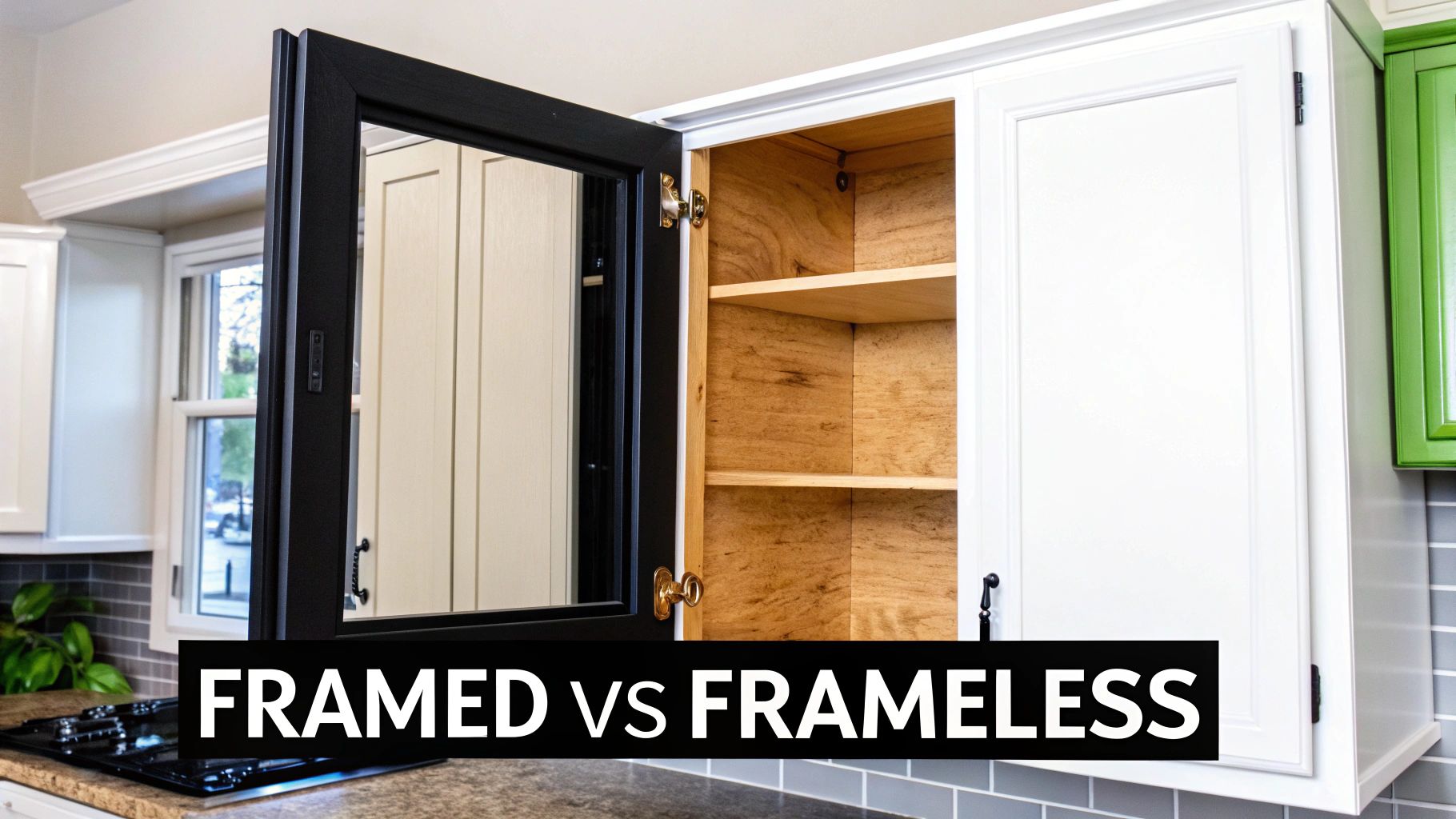
Let's break down the differences so you can figure out which one is the right fit for your project.
Framed Full Overlay Cabinets
Framed construction is the classic, time-tested American style of building cabinets. It all starts with a sturdy cabinet box. A solid wood "face frame," typically about 1.5 inches wide, is then attached to the front of this box. Your full overlay doors are then mounted directly onto this solid frame.
Think of the face frame as a built-in skeleton. It adds a ton of rigidity and strength to the whole cabinet, making it incredibly tough.
- Rock-Solid Structure: That face frame provides serious sturdiness. It's a huge plus if you’re planning on installing heavy countertops like granite or quartz, as it helps distribute the weight evenly.
- Secure Door Mounting: Hinges are screwed into the solid wood frame, creating a super-secure connection that can handle years of opening and closing without budging.
- Traditional Craftsmanship: Even though the frame is almost completely hidden behind the full overlay doors, it’s built with classic cabinet-making techniques that ensure a long-lasting, robust foundation.
This style gives you the best of both worlds: the clean, contemporary look of full overlay doors combined with the unmatched strength of traditional cabinet building.
Frameless Full Overlay Cabinets
Often called "European-style" or "full-access" cabinets, the frameless method is all about modern efficiency. Just like the name says, there’s no face frame. Instead, the full overlay doors mount directly onto the side panels of the cabinet box itself. We dive deeper into this popular style in our guide explaining what frameless cabinets are.
This approach is engineered to maximize every last inch of space and deliver the cleanest visual lines possible. Because there’s no frame creating a "lip" around the opening, you get complete, unobstructed access to everything inside.
The global cabinet market is projected to hit USD 141 billion by 2025, and frameless full overlay construction is a massive driver of that growth. This trend is particularly strong in Europe and Asia, where modern design and the need for space-efficient solutions in urban homes are fueling its popularity. You can read more about these global kitchen cabinet market trends on FortuneBusinessInsights.com.
Here’s why so many people are going frameless:
- Maximum Accessibility: No more wrestling with a large serving platter or trying to squeeze a bulky stand mixer past a frame. The opening is wide and clear.
- More Interior Space: It might seem small, but eliminating the frame adds valuable storage room to every cabinet. In a smaller kitchen, that extra space really adds up.
- The Ultimate Sleek Look: Without a frame, the gaps between doors and drawers are minimal, creating the most seamless, uninterrupted, and minimalist look you can achieve.
So, how do you choose? It really boils down to what you value most. If your top priority is traditional, bomb-proof sturdiness, framed construction is a fantastic choice. But if you’re after maximum storage, easy access, and a perfectly clean, modern aesthetic, frameless is the way to go.
Where Full Overlay Cabinets Work Best in Your Home
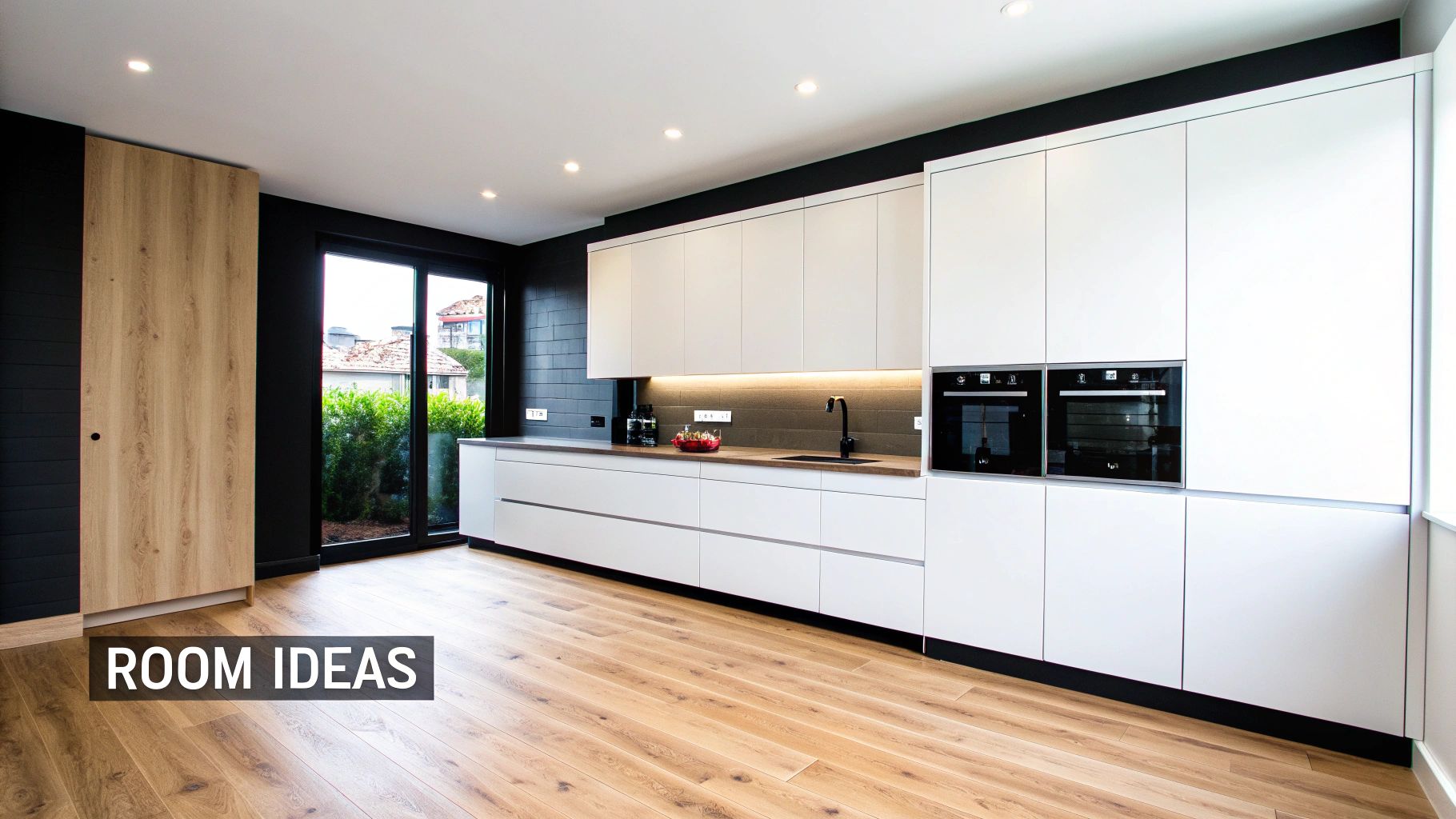
Full overlay cabinets may have made their name in the kitchen, but their clean, adaptable design is a secret weapon for elevating spaces all over the house. This style’s seamless, furniture-like quality lets you create cohesive, high-end looks in rooms that are often an afterthought. It’s less about simple storage and more about creating integrated, architectural features.
Just think beyond the kitchen for a moment. Picture a wall of custom closets in your primary suite. With full overlay doors, you get an uninterrupted, floor-to-ceiling facade that makes the room feel bigger and calmer. By eliminating visible frames and distracting gaps, bulky storage transforms into a sleek, intentional design element.
In the Bathroom
The bathroom is another area where full overlay truly shines. A floating vanity with full overlay drawers is a ticket to a spa-like, minimalist atmosphere. Since bathrooms are often tight on space, the continuous lines and uncluttered face of this cabinet style create a feeling of spaciousness and serenity.
For a seriously contemporary bathroom, try pairing flat-panel full overlay doors with minimalist hardware. The whole setup feels less like a collection of boxes and more like a single, cohesive unit—incredibly clean and sophisticated.
This style is a chameleon, fitting perfectly into different design themes:
- Minimalist: Go for flat-panel doors in a neutral color to create an ultra-clean, serene space.
- Transitional: A Shaker-style door with a full overlay is the perfect bridge between classic character and modern sleekness.
- Modern Farmhouse: Combine a simple door style with matte black hardware on full overlay cabinets for a fresh, updated take on a beloved classic.
Beyond the Basics in Living Rooms and Offices
The versatility of what is a full overlay cabinet extends beautifully into living areas and home offices. A built-in entertainment center or a wall of custom bookshelves constructed this way looks polished and completely integrated with the room's architecture. Those minimal reveals ensure the focus stays on your books and decor, not on how the cabinetry was built.
In a home office, full overlay cabinets deliver maximum storage without the visual noise, helping you create a productive and organized workspace. The ability to tuck printers, files, and supplies behind a seamless wall of doors keeps the room feeling professional and tidy. Ultimately, this cabinet style gives you a consistent design language you can use to tie your entire home together with a clean, modern thread.
Installation and Upkeep You Need to Know
Getting that flawless, uninterrupted look with full overlay cabinets is all about precision. Think of it like hanging a gallery wall—if one frame is off by even a fraction of an inch, the whole thing looks wrong. Because the doors and drawers are set so close together, there's practically no room for error during installation.
Even a tiny misalignment is immediately noticeable and can cause the doors to bump, rub, or bind against each other. It’s a job that demands a steady hand and a keen eye. For this reason, we always recommend a professional installation to get every single piece perfectly plumb and level. It's the only way to achieve that high-end, seamless finish the style is famous for.
Simple Maintenance for a Lasting Look
The good news? Once your cabinets are installed correctly, keeping them looking great is surprisingly simple. Your main task is keeping an eye on the hinges. Homes naturally settle over time, which can cause subtle shifts. If you notice a door starting to sag or a gap looking a little wider than it should, a quick adjustment is all it takes.
Most concealed hinges can be fine-tuned with just a Phillips screwdriver. A few simple turns will bring everything back into perfect alignment.
Regular check-ins are your best defense against wear and tear. We suggest checking your hinges twice a year—maybe when you change your clocks in the spring and fall. This helps you catch minor shifts before they become bigger issues.
For day-to-day cleaning, just use a soft, damp cloth and a gentle, non-abrasive cleaner. Wipe everything down and dry it immediately to prevent streaks or water spots. Stick to these simple steps, and your full overlay cabinets will look just as stunning years from now as they did on day one.
A Few Common Questions About Full Overlay Cabinets
After exploring the style, construction, and applications of full overlay cabinets, a few practical questions usually pop up. Here are some straightforward answers to what homeowners are thinking about when making their final decision.
Are Full Overlay Cabinets More Expensive?
Generally, yes. Full overlay cabinets typically cost a bit more than partial overlay styles but often come in at a lower price point than high-end inset cabinets.
There are two main reasons for the higher cost: they require more material to create the larger doors and drawer fronts, and they need a more complex (and more expensive) concealed hinge system to work.
While the initial investment is higher than standard overlay options, the return is a premium, seamless look that can completely transform a room’s feel. Of course, the final price tag will always depend on your choice of materials, finish, and whether you go with framed or frameless construction.
Do You Need Hardware on Full Overlay Cabinets?
Yes, for almost all full overlay cabinets, hardware is a must-have. Because the doors and drawers cover the entire frame, there’s no lip or edge to grab onto for opening. You'll need knobs or pulls to get them open.
But this isn't a drawback—it's a key design opportunity. Your hardware choice becomes a crucial element that defines the overall style, whether you’re aiming for something minimalist and modern or a classic transitional look. While fancy touch-to-open mechanisms exist, they are a much costlier and less common feature.
Think of hardware as the jewelry that completes the outfit. The right pulls or knobs not only provide function but also inject personality into the clean canvas created by full overlay doors, tying the entire design together.
Is This Cabinet Style Timeless or a Trend?
Full overlay cabinets have been a major player in kitchen and bath design for decades, which solidifies their status as a timeless choice rather than just a fleeting trend. Their design roots are in clean, European modernism, but their real strength is how well they adapt to evolving styles.
Their seamless appearance provides a sophisticated foundation that works equally well in ultra-modern, transitional, and even updated traditional spaces. This adaptability, combined with their strong association with high-end, custom-built cabinetry, ensures they will remain a durable and sought-after style for years to come.
Ready to transform your home with the timeless elegance of custom full overlay cabinets? The experts at Sinclair Cabinetry have over 35 years of experience crafting bespoke solutions that bring your vision to life. Explore our custom cabinetry options today.