

A butler's pantry is more than just extra storage; it's a hardworking transitional space, a stylish link between your kitchen and dining areas. Think of it as the ultimate backstage for your home—the perfect spot to stage meals, mix drinks, and store your best dinnerware away from the main kitchen's hustle. It’s a smart, elegant solution for organized, seamless hosting.
The Modern Butler Pantry Explained
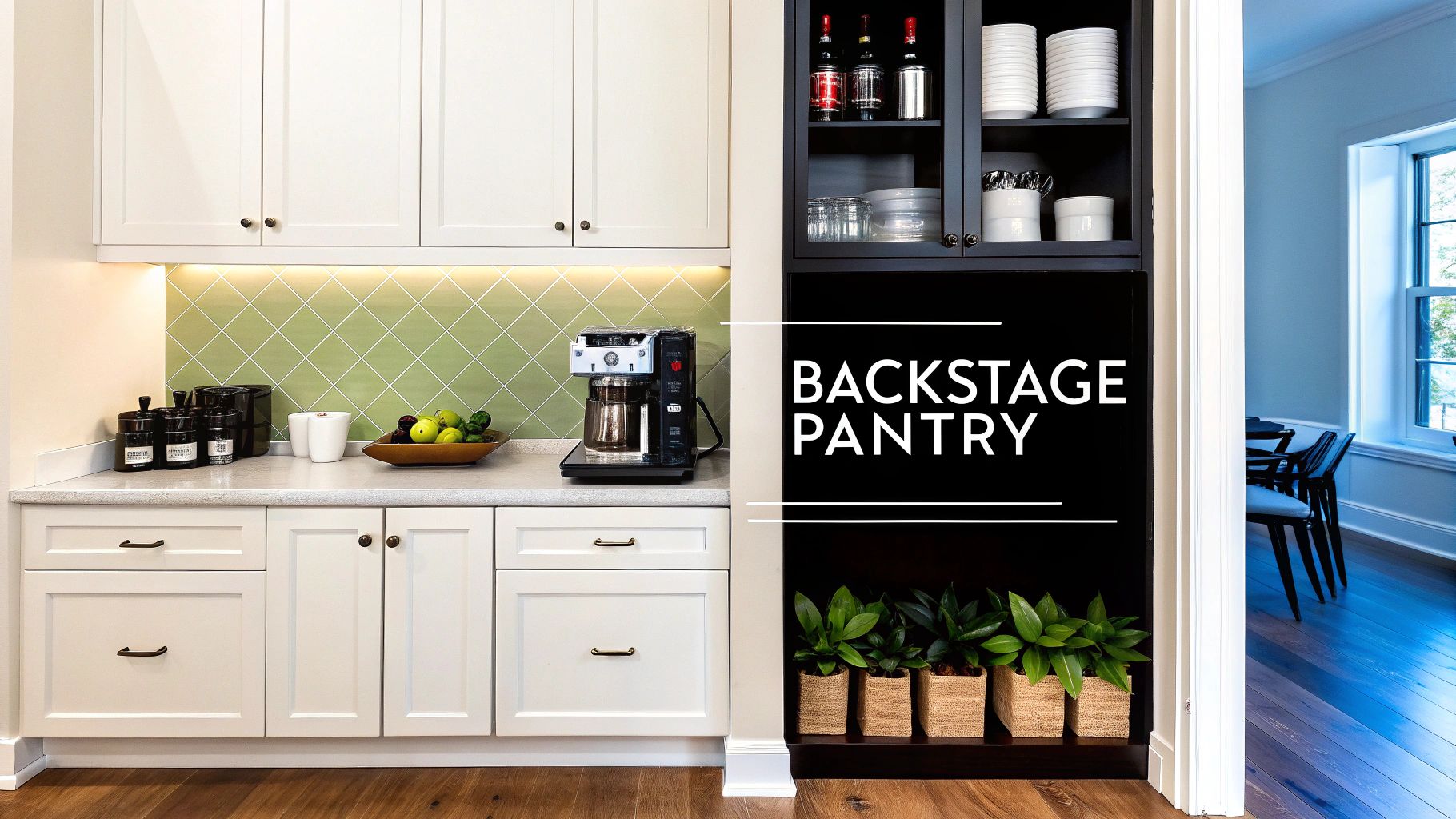
While the name might bring to mind historic estates, the modern butler’s pantry has been completely reinvented for today’s lifestyles. It’s no longer just a storage closet but a highly functional zone that bridges the gap between a busy kitchen and a serene dining or living area. This is a game-changer in open-concept homes, where hiding clutter is a constant challenge.
The main job of a butler's pantry is to support entertaining and daily organization. It acts as a staging ground where you can plate dishes, pour wine, or set up a coffee bar without disrupting the kitchen's workflow. This separation keeps your primary kitchen clean and presentable, even in the middle of a large gathering.
To break it down, here are the core functions that define today's butler's pantry.
A Modern Butler Pantry at a Glance
| Feature | Primary Purpose |
|---|---|
| Custom Cabinetry & Countertops | Staging meals, drink prep, and small appliance storage. |
| A Secondary Sink | Rinsing glassware or handling small clean-up tasks separately. |
| Specialized Storage | Protecting fine china, glassware, and linens from daily wear. |
| Appliance Integration | Housing a wine fridge, coffee maker, or microwave. |
| Transitional Location | Creating a buffer between the kitchen and dining/living areas. |
This combination of features is what transforms a simple pass-through into a true functional hub for your home.
A Resurgence in Popularity
The butler’s pantry has seen a remarkable comeback in recent years. This isn’t just a fleeting trend; it’s a direct response to a clear need for better home organization and dedicated entertaining spaces. Its revival reflects a broader shift toward homes that are both beautiful and exceptionally functional.
A butler's pantry solves a modern problem: how to maintain an open, inviting kitchen while concealing the inevitable mess of cooking and hosting. It’s the secret to a perpetually tidy-looking home.
The numbers back this up. The National Association of Realtors (NAR) reported in 2023 that 12% of new high-end homes now feature a butler's pantry, a significant jump from just 7% a decade earlier. This growth highlights its perceived value in today’s real estate market, where functional luxury is a key selling point. You can dig into the full report on tucked-away kitchens for more details.
Ultimately, a butler's pantry is a smart, stylish solution for modern living. It provides:
- Clutter Control: Keeps small appliances, extra dishes, and serving platters tucked neatly out of sight.
- Entertaining Efficiency: Creates a dedicated zone for drink prep, appetizer staging, and dessert presentation.
- Enhanced Organization: Offers specialized storage for fine china, glassware, and linens, protecting them from the chaos of the main kitchen.
A Glimpse into the History of the Butler Pantry
To really get why the butler pantry is making such a huge comeback, we need to rewind the clock a bit. This isn't some new trend born from a need for more kitchen space. It’s rooted in the formal, highly structured world of grand 19th-century estates, where it served as the command center for the household's finest possessions and was absolutely essential for high-society entertaining.
Think of it as the original "backstage" for a formal dinner. The butler pantry was a dedicated, secure room where the head of the household staff—the butler—managed every detail needed for a flawless meal. This was the spot for meticulously polishing the family silver, taking inventory of fine china, and staging serving platters, all while keeping the clatter and chaos of a busy kitchen far away from the refined dining room.
The Original Command Center
The location was always strategic, almost always tucked between the kitchen and the formal dining room. This placement created a brilliant buffer zone, stopping cooking smells, steam, and the noise of pots and pans from ever reaching the guests. It was all about preserving an elegant, undisturbed dining experience.
Inside this room, the butler held immense responsibility. In many ways, the pantry was a vault for the family's portable wealth.
A butler pantry was more than just a room; it was a status symbol and a testament to a household's dedication to formal service. It guarded the family's treasures and ensured every meal was served with precision and grace.
This space was so critical that it often had features we might not expect today. The butler's pantry originated in the 19th century as a specialized prep and storage area in wealthy homes with formal waitstaff. Many had their own ice boxes to preserve food and even small ovens. It was the butler's job to lock it up every night—and sometimes, they would even sleep inside to guard the valuable contents. You can learn more about the [historical role of the butler pantry](https://www.masterclass.com/articles/butler- pantry-guide) to see just how much its function has evolved.
From Service Wing to Modern Luxury
The original purpose of this space highlights principles that feel surprisingly relevant today. The core ideas of organization, preparation, and creating a seamless transition between work and leisure are exactly why the butler pantry is enjoying a modern renaissance.
The key functions from its origins were straightforward and brilliant:
- Security: Safeguarding valuable silver, china, and crystal.
- Preparation: Plating food and organizing serving trays before they entered the dining room.
- Organization: Storing and inventorying everything needed for formal dining.
- Discretion: Shielding guests from the functional mess of the kitchen.
Understanding this rich heritage makes it clear that the butler pantry was never just a closet. It was a purpose-built workspace designed for efficiency and elegance—a legacy that lives on in today's custom designs. Its founding principles of order and preparation are what make it such a coveted feature in modern homes.
Anatomy of a Modern Butler Pantry
While history gave us the blueprint, modern life has completely reimagined what a butler's pantry can be. Today’s designs are less about formal service and much more about practical, everyday luxury. It’s best to think of them not as a single room, but as a combination of key components all working together to create a super-efficient hub for your home.
The anatomy of a modern butler's pantry really boils down to two things: its layout and its features. The layout dictates the flow, while the features determine what you can do with it. Get these two right, and you'll have a space that’s perfectly suited to your home's unique rhythm.
Common Layouts and Configurations
The shape and size of a butler's pantry are incredibly flexible, often taking their cues from the home's existing architecture. While custom designs can take any form you can dream up, they typically fall into two popular configurations.
- Galley-Style: This is the classic pass-through design, often tucked into a hallway connecting the kitchen and dining room. It’s an incredibly efficient use of space, creating a functional corridor with countertops and cabinetry lining one or both sides.
- Walk-In Design: For homes with a bit more square footage to spare, a walk-in layout offers a much more immersive experience. This small-room setup allows for more extensive storage, L-shaped or U-shaped counters, and the capacity for more specialized appliances.
No matter the layout, the core principle remains the same: a butler's pantry should provide a dedicated zone for prep and storage that keeps the main kitchen blissfully free from clutter.
Essential Features for Functionality
Beyond the floor plan, the specific features you include are what truly bring your butler's pantry to life. While the possibilities are nearly endless, a few non-negotiable elements form the foundation of a truly hardworking space.
First and foremost is generous counter space. This is your primary staging area for plating food before a dinner party, mixing drinks for guests, or just setting up the morning coffee bar. Materials like quartz or granite are popular choices not just for their elegant look, but for their ability to stand up to daily use.
Next up is smart, purpose-built cabinetry. This is where a butler's pantry truly shines. Unlike a standard kitchen, the cabinetry here is designed to hold specific items, making organization a breeze. For a deep dive into what’s possible, explore our guide to custom pantry cabinet ideas and see how tailored solutions can transform a space.
Common features often include:
- Glass-front cabinets to display fine china, crystal, or your favorite glassware.
- Deep drawers perfect for storing table linens and large serving platters.
- Vertical dividers that keep baking sheets, trays, and cutting boards perfectly organized and easy to grab.
Finally, task-oriented additions are what elevate the space from simple storage to a true work zone. A small prep sink is invaluable for rinsing glassware or filling a coffee carafe without trekking back to the kitchen. Integrating appliances like a wine fridge, beverage cooler, built-in espresso machine, or microwave further enhances its utility, turning it into a self-sufficient station for both entertaining and daily routines.
How a Butler Pantry Improves Your Home Life
A butler’s pantry is so much more than just extra storage—it’s a game-changer for how your home actually works, bringing a quiet sense of order to the daily hustle. Think of it as your kitchen’s behind-the-scenes powerhouse. It’s the perfect spot to tuck away the coffee maker, extra dishes, and all those bulk pantry items that would otherwise clutter your main countertops.
This simple separation means your kitchen stays clean, calm, and guest-ready at a moment's notice.
If you love to host, this space becomes your command center. You can mix drinks, plate appetizers, or put the finishing touches on dessert without adding to the chaos of the main kitchen. It’s all about entertaining with grace, keeping the mess out of sight while your friends and family enjoy a relaxed, clutter-free home.
The Buffer Zone for Modern Living
In today's popular open-concept homes, a butler's pantry is the unsung hero. It creates a subtle but essential transition between the high-energy kitchen and the laid-back dining or living areas. All the operational clutter of hosting is neatly contained, so it never spills over into your social spaces.
This concept map breaks down how all the pieces work together.
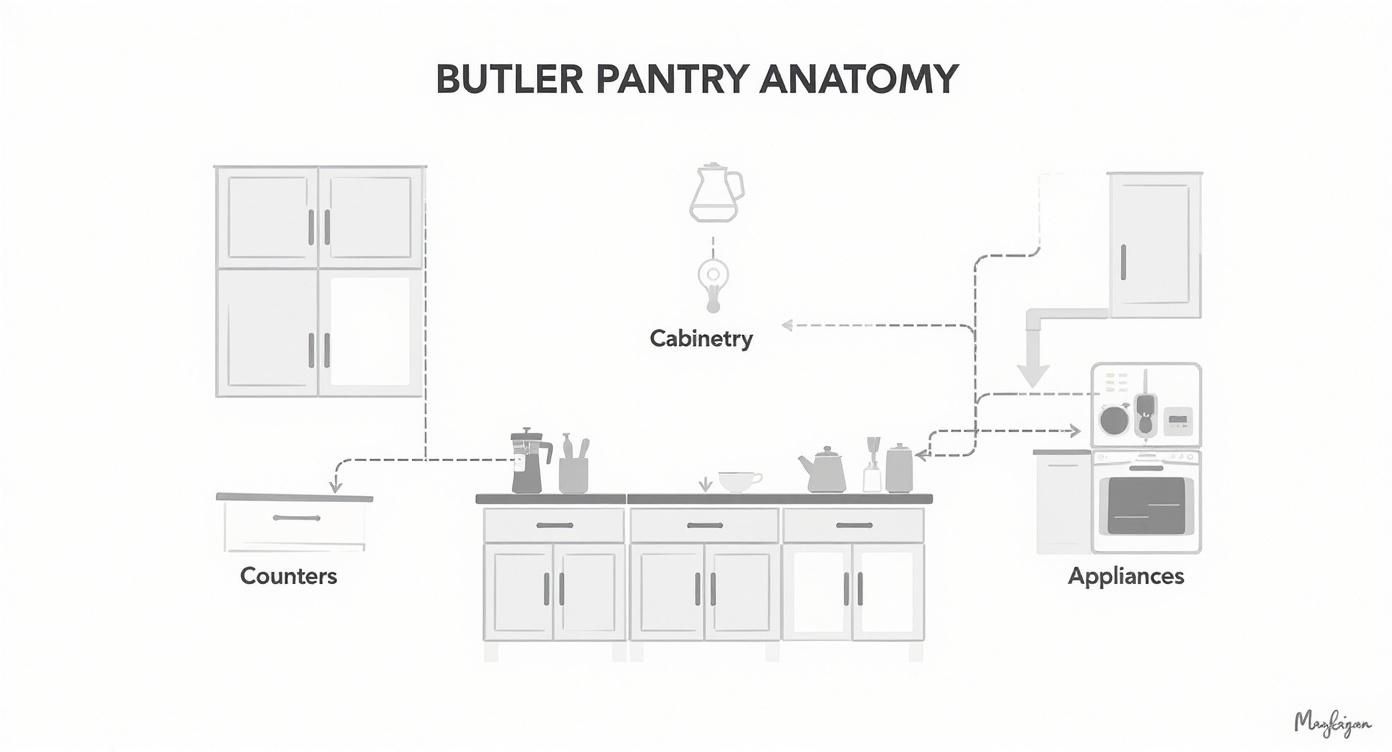
As you can see, the cabinetry, countertops, and appliances create a self-contained hub. Each element is designed to support the next, streamlining everything from your morning routine to your evening get-togethers.
Bringing Order and Value
The perks go well beyond day-to-day convenience. A well-designed butler’s pantry can seriously boost your home’s appeal and its bottom line. In fact, a thoughtfully planned space is a key part of maximizing home value with kitchen upgrades, making it one of the smartest investments you can make.
Here’s how this upgrade makes life better in very real ways:
- Morning Coffee Station: Keep your coffee maker, grinders, mugs, and supplies all in one spot for a smooth start to the day. No more countertop clutter.
- Effortless Entertaining: Stage drinks and appetizers here, letting guests serve themselves without getting under your feet in the main cooking zone.
- Pristine Presentation: Your primary kitchen remains a beautiful, clean backdrop for socializing, completely free from the mess of prep work.
A butler’s pantry isn’t just about having more space; it’s about having smarter space. It introduces a layer of organization that simplifies hosting, declutters daily life, and adds a touch of practical luxury.
By creating dedicated zones for specific tasks, you build a far more efficient household. This kind of thoughtful organization is the core of effective kitchen storage planning, ensuring every last item has a logical place. It’s a strategic addition that pays off immediately in function and for years to come in value.
Designing Your Ideal Butler Pantry Space
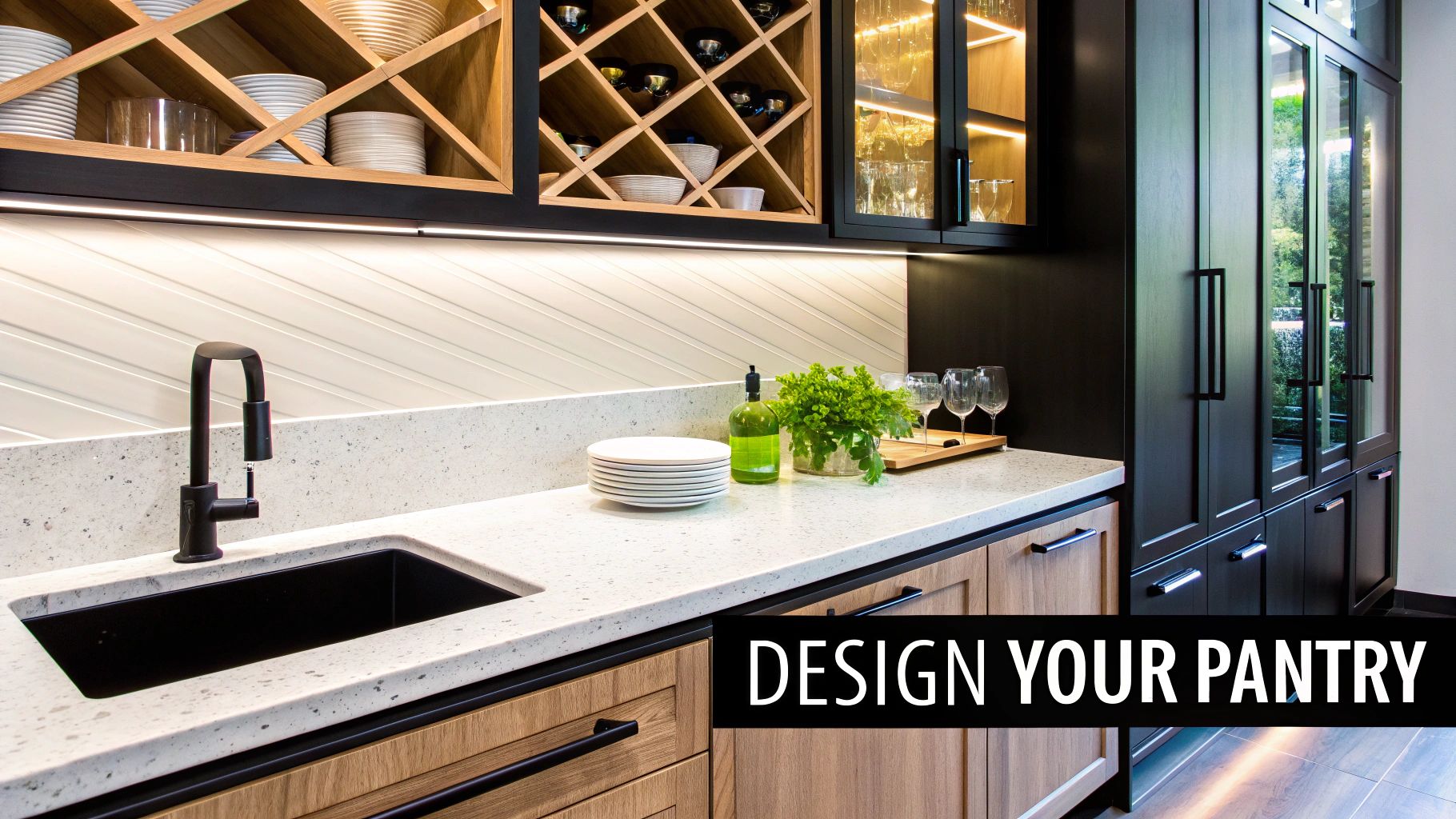
This is where the magic really happens—where function meets your personal style. Designing a butler pantry is an exciting chance to create a space that’s built just for you. It’s all about making smart choices that blend seamless utility with your home’s aesthetic, turning a simple storage area into a stunning, hardworking feature.
The whole journey starts with the foundation of the space: the cabinetry. Since butler pantries often tuck into compact or unconventional areas, custom cabinetry is essential for making the most of every last inch. It lets you create solutions that off-the-shelf cabinets just can’t, ensuring no space goes to waste.
Maximizing Storage with Custom Cabinetry
A truly organized and efficient butler pantry comes down to thoughtful cabinet design. Forget generic shelving. Instead, think about tailored inserts and specialized compartments designed specifically for what you need to store. This isn't just about storage; it's about creating a true organizational system.
Some of the most effective custom solutions include:
- Vertical Dividers: These are a game-changer for keeping awkward items like platters, serving trays, and baking sheets upright and easy to grab. No more clattering stacks.
- Custom-Fitted Drawers: Deep drawers with built-in dividers are perfect for organizing everything from table linens and silverware to serving utensils, keeping them neat and protected.
- Pull-Out Shelving: Finally, you can easily reach items stored in the back of deep cabinets. Nothing gets lost or forgotten in the dark corners.
- Glass-Front Cabinets: A beautiful way to display your favorite glassware, fine china, or decorative serving pieces while keeping them dust-free.
These tailored features make sure everything has its own designated home. For a little more inspiration, take a look at different butler pantry design ideas to see what's possible with custom solutions.
Selecting Materials and Finishes
Once you've nailed down the layout and storage, it’s time to choose the materials that will set the mood. The goal is to create a design that feels connected to your main kitchen and dining areas but still gives the pantry its own unique character.
A durable countertop is a must for a space built for prep work. Quartz is a popular choice because it's incredibly resistant to stains and scratches and offers a clean, elegant look. When it comes to the cabinetry, the finish is just as crucial as the construction. You might go for a classic painted finish that matches your kitchen or choose a rich wood grain to add a bit of warmth and contrast.
Your design choices should turn the butler pantry into a visual delight, not just a utilitarian closet. Elegant hardware, stylish backsplashes, and thoughtful finishes elevate the entire room.
And don't forget the lighting—it plays a massive role. Good lighting is functional, but great lighting can completely transform the space.
- Under-Cabinet LEDs: These are non-negotiable for task lighting. They illuminate your countertops so you can safely and easily prep food or mix drinks.
- Statement Fixtures: A beautiful pendant light or some elegant sconces can inject personality and create a warm, inviting atmosphere.
To help you get your vision just right, you can find more tips on creating an effortlessly stylish and functional kitchen. By carefully thinking through each of these elements, you’ll end up with a butler pantry that’s as beautiful as it is practical.
Butler Pantry vs. Walk-In Pantry: What's the Difference?
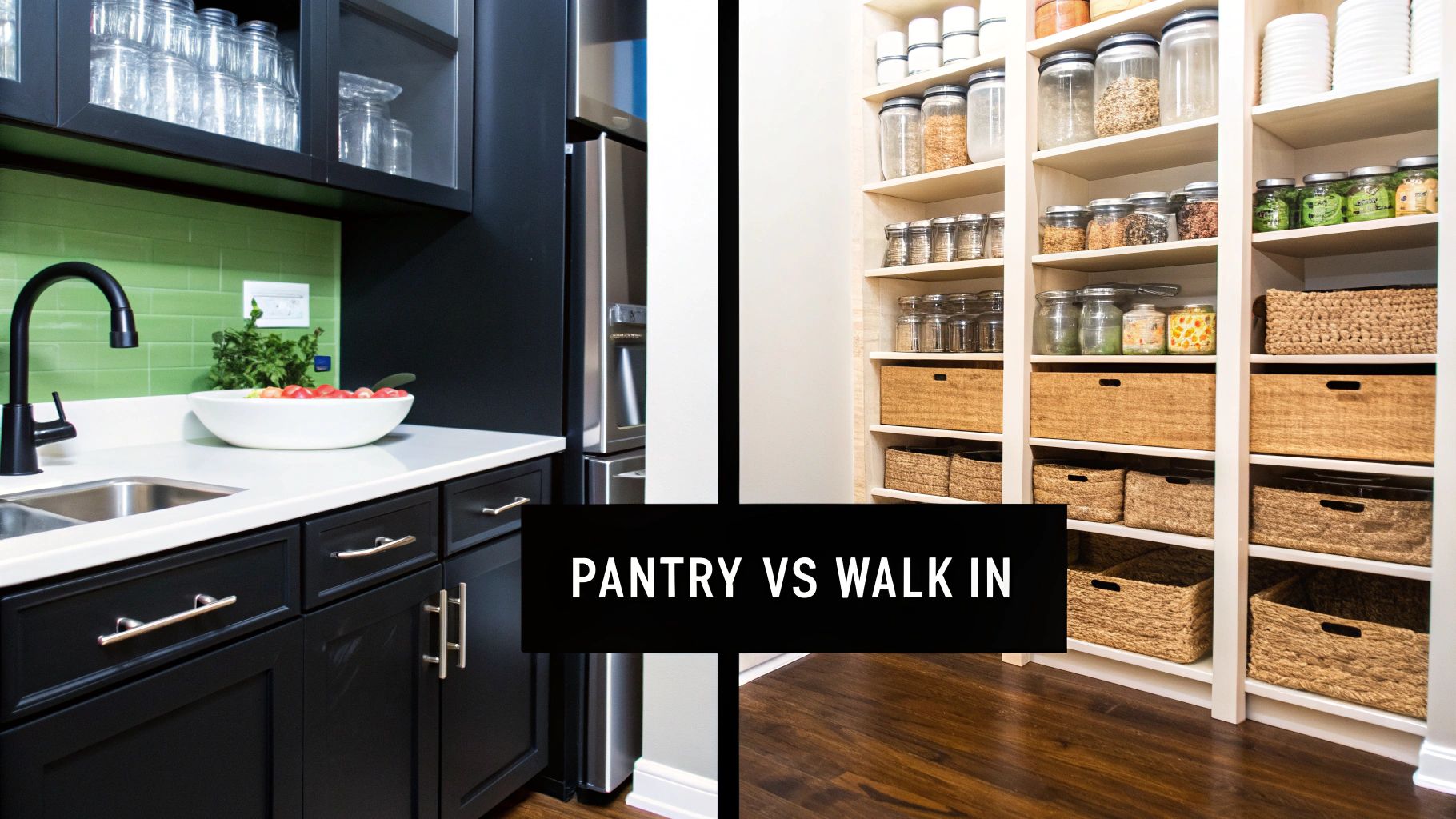
While the terms are often tossed around interchangeably, a butler’s pantry and a walk-in pantry are two completely different beasts. Getting them mixed up can leave you with a space that just doesn’t work for how you live. The difference really boils down to one simple question: is it for storage or for service?
A walk-in pantry is, at its heart, a storage closet for food. Think of it as a modern-day larder. Its primary job is to hold your dry goods, bulk buys from Costco, and maybe a few of those kitchen gadgets you only pull out twice a year. It’s a passive space, built for organization and inventory management, helping you keep the main kitchen looking streamlined.
A butler’s pantry, on the other hand, is an active workspace. It’s a functional, transitional zone designed for preparation and presentation. This is the spot where you stage meals before they head to the dining room, mix drinks for guests, or set up the perfect morning coffee bar. It’s less about storing a 50-pound bag of flour and more about having a dedicated area to support the art of entertaining.
Function Defines Form
The purpose of each space directly shapes its design. A walk-in pantry might be perfectly functional with just deep, sturdy shelving. A butler’s pantry, however, is a hub of utility. It almost always includes countertops for prep work and specialized cabinetry for your fine china, glassware, and serving pieces.
A walk-in pantry is a library for your food; you go in, find what you need, and leave. A butler’s pantry is a workshop; it's a place where you do things.
This distinction becomes crystal clear when you look at their common features:
- Location: A walk-in pantry is usually tucked inside or right next to the kitchen for easy access. A butler's pantry is strategically placed between the kitchen and the dining room to create a seamless serving route.
- Amenities: Butler’s pantries often boast features like a small prep sink, a wine fridge, or a built-in espresso machine. You’d almost never find these in a standard walk-in.
- Finishes: Because it’s a more public-facing space, a butler’s pantry is typically dressed to impress. Think high-end finishes like custom cabinetry, stone countertops, and elegant lighting that complements the home’s overall aesthetic.
To really break it down, here’s a head-to-head comparison.
Butler Pantry vs Walk-In Pantry Head to Head
| Feature | Butler Pantry | Walk-In Pantry |
|---|---|---|
| Primary Purpose | Staging, prepping, and serving | Bulk food and supply storage |
| Common Location | Between kitchen and dining room | In or directly off the kitchen |
| Key Components | Countertops, sink, specialized cabinetry | Deep shelving, organizational systems |
| Typical Amenities | Wine fridge, espresso machine, wet bar | None; purely for storage |
| Design Focus | High-end finishes, aesthetics, workflow | Durability, capacity, accessibility |
| Best For | Homeowners who love to entertain | Families needing mass food storage |
Ultimately, knowing the difference is key. If your main goal is to stockpile groceries and keep your kitchen counters clear, a walk-in pantry is the perfect fit. But if you dream of a sophisticated, dedicated hub for hosting with elegance and efficiency, then a beautifully crafted butler’s pantry is exactly what your home needs.
Common Questions About Butler Pantries
As you start dreaming up this elegant and hard-working space for your own home, it's natural for a few practical questions to pop up. Getting some clear, straightforward answers can help you plan with confidence and make sure the final design is exactly what you need. Let's tackle some of the most common things homeowners ask when they're thinking about a butler pantry.
What Is the Ideal Size for a Butler Pantry?
There really is no one-size-fits-all answer here, since the perfect dimensions are completely tied to your home’s layout and how you see yourself using the space. A compact, galley-style pantry can be as narrow as five feet wide and still be incredibly useful.
For a more versatile area with plenty of counter space and storage, however, a width of 7–10 feet and a depth of 5–7 feet is a more common target. The single most important measurement to get right is the clearance between opposing cabinets—you’ll want at least 36–42 inches to move around comfortably without feeling squeezed.
Does a Butler Pantry Need a Window?
A window is a lovely bonus, but it's definitely not a must-have. Because a butler pantry is first and foremost a functional, transitional zone, many homeowners actually prefer to skip the window. This frees up maximum wall space for what matters most: cabinetry and storage.
Excellent artificial lighting is far more critical than natural light in a butler pantry. A smart combination of under-cabinet LEDs for task lighting and a stylish ceiling fixture will ensure the space is always bright, inviting, and ready for work.
Can I Add a Butler Pantry to My Existing Home?
Absolutely! Adding a butler pantry during a renovation is an incredibly popular project. You'd be surprised at the clever ways homeowners find to repurpose underused areas to create one.
Some of the most common spaces we see converted include:
- A large, underutilized closet.
- An unused stretch of hallway between the kitchen and dining room.
- An awkward nook or forgotten corner of a large kitchen.
Working with a design expert can help you seamlessly weave a new butler pantry into your existing floor plan. The goal is always to make it feel like it was a part of your home's original charm all along.
Ready to create a butler pantry that blends timeless elegance with modern functionality? The experts at Sinclair Cabinetry inc can design and build a custom solution tailored to your home. Explore our custom cabinetry services today!