

When you're picking out new kitchen cabinets, the doors are the first thing everyone will see. Think of them like the cover of a book—they set the tone for the entire space. The style you choose, whether it’s a classic Shaker, a sleek slab, or a detailed raised panel, will define your kitchen's entire personality.
Beyond the look, the way the door fits onto the cabinet box, known as the overlay style, is just as important. It’s a decision that steers your design from modern minimalist to timeless traditional, and it’s one of the biggest calls you’ll make in a renovation.
What Defines Different Cabinet Doors
So, what really separates one door style from another? It's more than just the surface finish. It boils down to the door's fundamental construction and how it sits on the cabinet frame.
This relationship between the door and the frame is where the design magic happens. For example, a full overlay door covers the entire cabinet frame, giving you that seamless, contemporary look. On the flip side, an inset door sits perfectly inside the frame, showing off the joinery and creating a classic, custom-furniture vibe.
Core Factors to Consider
Before you get lost in all the different styles, it helps to break your decision down into three key pillars. These elements all work together to create the final look, feel, and function of your kitchen.
- Style: This is all about the door's profile. Are you drawn to the clean, simple lines of a Shaker door or the totally flat, unadorned surface of a slab door?
- Material: Your choice between solid wood, MDF, or thermofoil will impact everything from durability and maintenance to how a coat of paint or a rich stain will look.
- Finish: This is the final touch that pulls it all together. Whether you go for a natural wood stain, a bold paint color, or a high-gloss lacquer, the finish protects the door and locks in your kitchen's aesthetic.
This visual breaks down how the major cabinet door types are usually grouped into framed, frameless, and specialty designs.
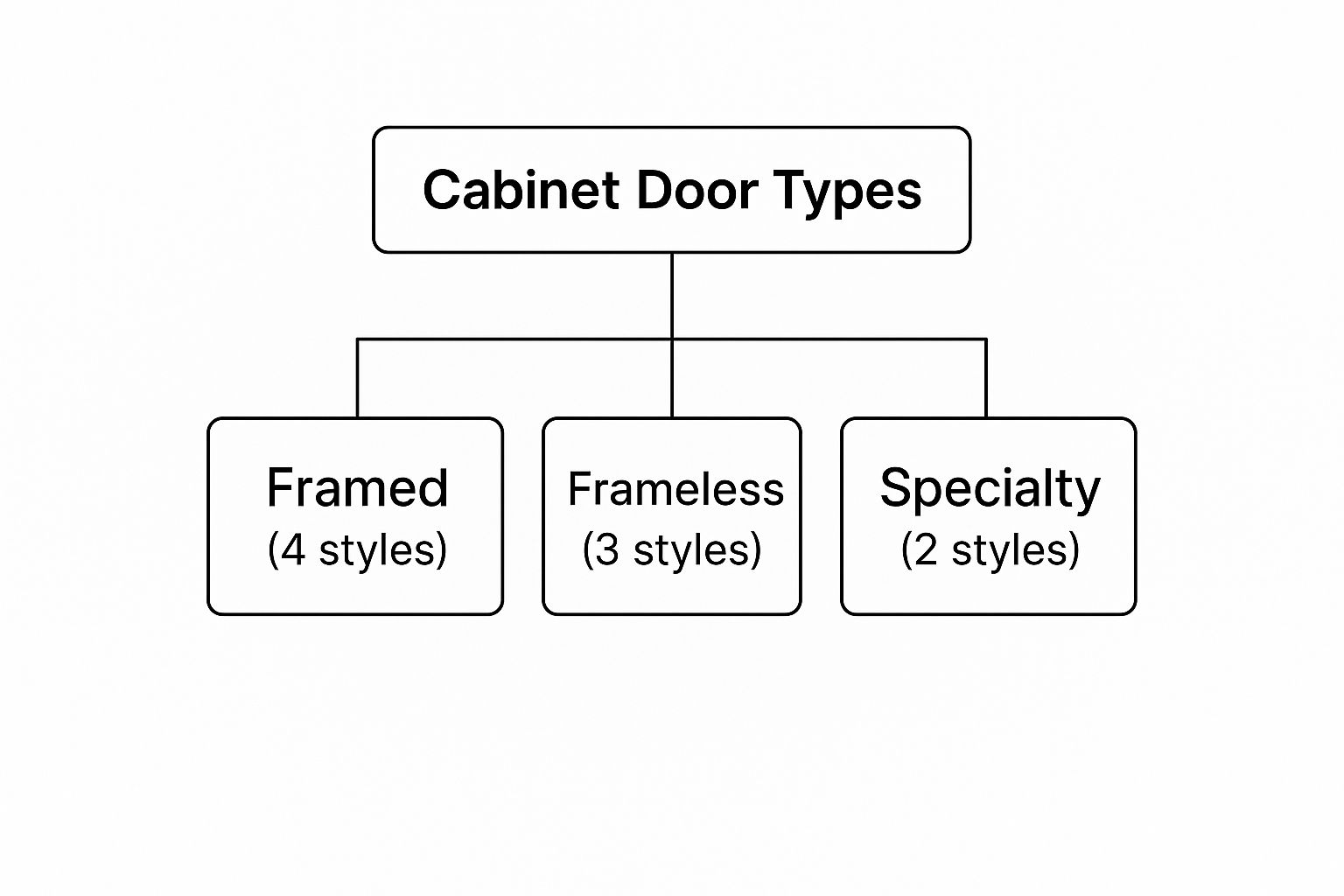
As the infographic shows, traditional framed styles offer the most variety, which explains why they remain so popular in home design. These fundamental choices are big business, too. The global kitchen cabinet doors market was valued at an impressive $14 billion in 2022 and is expected to climb to $22 billion by 2030, mostly thanks to the boom in home renovations.
If you want a broader look at how to pick the right options, this guide to storage cabinet door types and materials is a really helpful resource.
Exploring Timeless and Classic Door Styles
Some designs just never go out of style. They have a staying power that outlasts fleeting trends, anchoring a kitchen with a sense of history and permanence. These classic kitchen cabinet door types feel both familiar and sophisticated, giving you a solid foundation that works with a huge range of decorative styles. They're the trusted choices you can count on to deliver character and value.
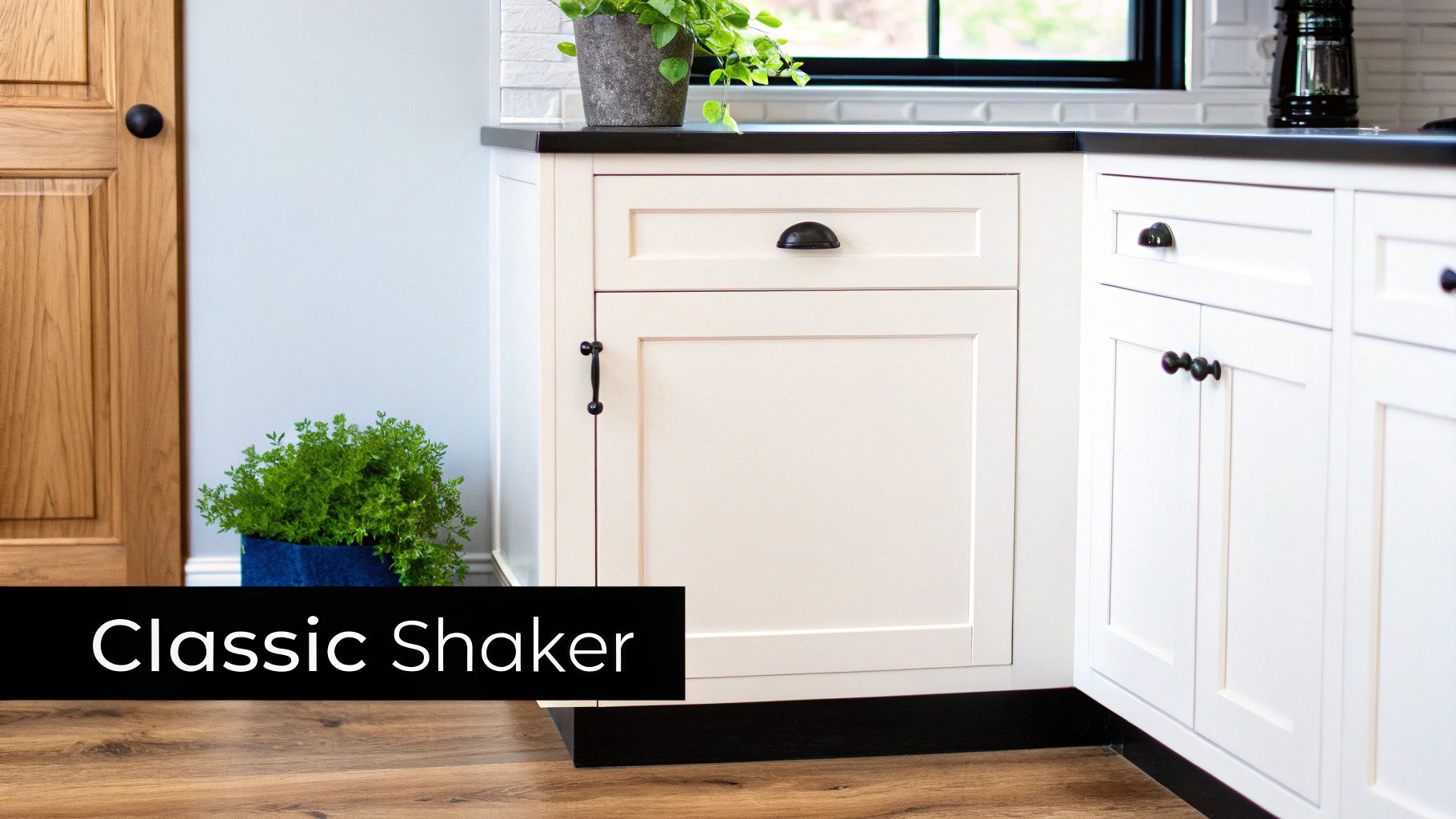
Among these classics, Shaker and raised-panel doors are the undisputed champions. While both fall under the "traditional" umbrella, they get to their classic look in very different ways. Getting to know their unique construction is the key to figuring out which one will best suit your home’s architecture and your own personal taste.
The Versatile Shaker Door
If there’s one cabinet door that can do it all, it’s the Shaker. It’s the ultimate design chameleon. The construction is refreshingly simple yet elegant, built with a five-piece frame that surrounds a flat, recessed center panel. This clean, no-fuss profile is why it can blend so effortlessly into almost any kitchen, from a cozy modern farmhouse to a sleek, transitional space.
Think of it as the perfect pair of jeans in your design wardrobe—it can be dressed up or down depending on what you pair it with.
- In a Farmhouse Kitchen: Match it with soapstone countertops and some vintage-style hardware, and suddenly the Shaker doors feel incredibly warm and inviting.
- In a Modern Kitchen: Paint them a bold color, add minimalist hardware, and they look crisp, clean, and totally contemporary.
This incredible adaptability is exactly why Shaker doors are consistently one of the most popular choices for homeowners year after year. The straightforward design puts the focus on quality craftsmanship without ever overwhelming the room.
The real beauty of the Shaker door is in its honesty. The five-piece construction—two stiles, two rails, and a central panel—is simple, strong, and functional, perfectly reflecting the core principles of Shaker design itself.
The Elegant Raised-Panel Door
If you're aiming for a more formal and traditionally grand look, the raised-panel door is an absolute showstopper. Unlike the flat panel you see on a Shaker door, its center panel is raised up, usually with a profiled or beveled edge. This simple detail makes a world of difference, creating dimension and casting subtle shadows that add a ton of depth and visual interest to your cabinetry.
This style is perfect for creating that sense of grandeur and timeless elegance. Picture a stately traditional kitchen with rich cherry wood cabinets, granite countertops, and ornate hardware—the raised-panel door is the undisputed star of that show. That contoured center panel catches the light beautifully, giving the cabinetry a rich, furniture-like quality.
Ultimately, choosing between these timeless options comes down to the vibe you want to create in your kitchen. Shaker doors offer a clean, understated versatility, while raised-panel doors bring a touch of formal elegance. For a deeper look into these and other options, you can explore a comprehensive guide on various kitchen cabinet door styles to find your perfect match. Either way, you're choosing a look that will stay stylish for decades to come.
The Clean Appeal of Modern and Minimalist Cabinet Doors
For those of us who live by the "less is more" philosophy, modern and minimalist cabinet doors are a breath of fresh air. This style is all about stripping away the extra fluff—the intricate trim, the beveled edges—to celebrate clean lines, simple forms, and pure function. It's the perfect approach for crafting a kitchen that feels open, intentional, and refreshingly calm.
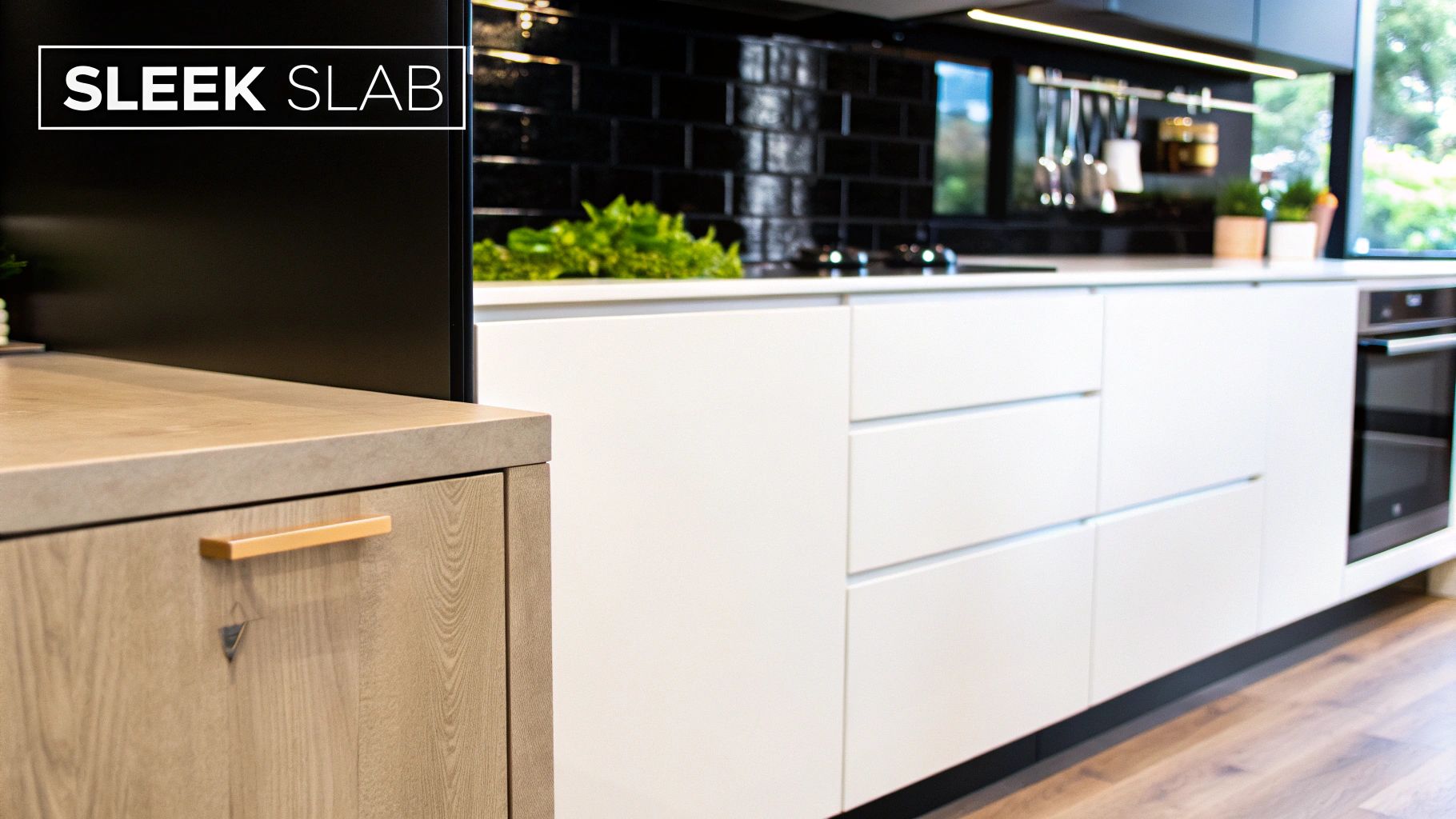
The hero of this entire aesthetic is the flat-panel, or slab door. Just think of it as a beautiful blank slate. There are no frames or decorative details, so all the visual power comes from its clean, unadorned surface. This single piece of material creates an unbroken line of sight, which works wonders to make a kitchen feel larger and more streamlined.
The Power of the Slab Door
There's a good reason the slab door is the undisputed champion of modern kitchens. Its simple construction lets the material and finish do all the talking. You can go for a high-gloss acrylic that bounces light around the room for a touch of glamour, or you could choose a warm, vertically grained walnut to bring in some organic texture. Either way, the slab door lets the material itself be the star.
And let's not forget the practical side. Because the design is so straightforward, slab doors are incredibly easy to clean. No nooks, crannies, or grooves for dust and grime to get trapped in. A quick wipe-down is all it takes to keep them looking pristine, making them a fantastic choice for a busy home.
Going All-In on Minimalism with Handleless Designs
To take that minimalist look to the next level, a lot of modern designs get rid of external hardware completely. This is how you get that ultimate seamless look where the cabinets almost blend into the wall as a single architectural feature. It's a slick look, and it's achieved in a couple of clever ways.
- Integrated Channels: A continuous channel is cut right into the top or side edge of the cabinet box itself. This creates a small gap, just enough for you to slip your fingers in and pull the door open. It’s subtle and super effective.
- Push-to-Open Hardware: This is a cool bit of engineering. You install a mechanical or magnetic device inside the cabinet that lets you open the door with a gentle press. Push the door in slightly, and a spring mechanism pops it open. No handles or knobs needed.
The whole point of a handleless design is to eliminate any visual clutter. By integrating the opening mechanism, the focus stays squarely on the clean lines and beautiful finish of the cabinetry, creating a pure, uninterrupted flow.
Pulling off this look is all about pairing these sleek doors with the right supporting elements. Imagine high-gloss white slab doors paired with a waterfall quartz countertop—it’s a dramatic, contemporary statement. Or, for a warmer vibe, think about walnut slab doors combined with matte black fixtures and a concrete backsplash for a sophisticated, organic modern feel. That's the real beauty of minimalism: it’s simple, but it’s powerful.
Adding Personality with Decorative Door Styles
While the classics are great for building a solid foundation, sometimes a kitchen just begs for a little extra personality. This is where decorative cabinet door styles come in. They're designed specifically to add texture, unique details, and a bit of flair, turning your cabinetry from simple storage into a genuine design statement.
Think of these doors as the accent pieces in your kitchen's wardrobe. You might not use them everywhere, but when you place them strategically, they can completely define the look and feel of the room. They're perfect for breaking up a long run of solid doors and injecting some much-needed character.
From the charming lines of beadboard to the airy feel of glass, these options are all about elevating your kitchen's visual appeal.
The Charming Beadboard Door
If you're dreaming of a cozy cottage or coastal vibe, look no further than the beadboard door. This style is instantly recognizable by its center panel made of vertical planks, or "beads," which create that distinctive grooved texture. It’s a simple detail that adds a ton of warmth and a touch of rustic charm.
Beadboard is fantastic for creating a relaxed, informal atmosphere. It works beautifully in farmhouse kitchens, especially when painted in soft whites or muted pastels, and can make even a brand-new space feel lived-in and welcoming from day one. It's a surefire way to add a bit of handcrafted character.
The Airy Louvered Door
Louvered doors bring a unique architectural element right into the kitchen with their horizontal wooden slats. They look a lot like traditional window shutters, and that design isn't just for show—it also provides ventilation, making them a practical and stylish choice for certain cabinets.
Here are a few spots where they really shine:
- Pantry Doors: The slats allow air to circulate, which is perfect for keeping dry goods like onions and potatoes fresh.
- Appliance Garages: They can help dissipate heat from small appliances like toasters or coffee makers that you want to keep hidden away.
- Drying Cabinets: In a laundry room or near a sink, they offer an attractive way to air-dry dishes or linens behind closed doors.
Beyond the practical perks, the crisp, clean lines of louvered doors are a perfect match for coastal, traditional, or country-inspired designs.
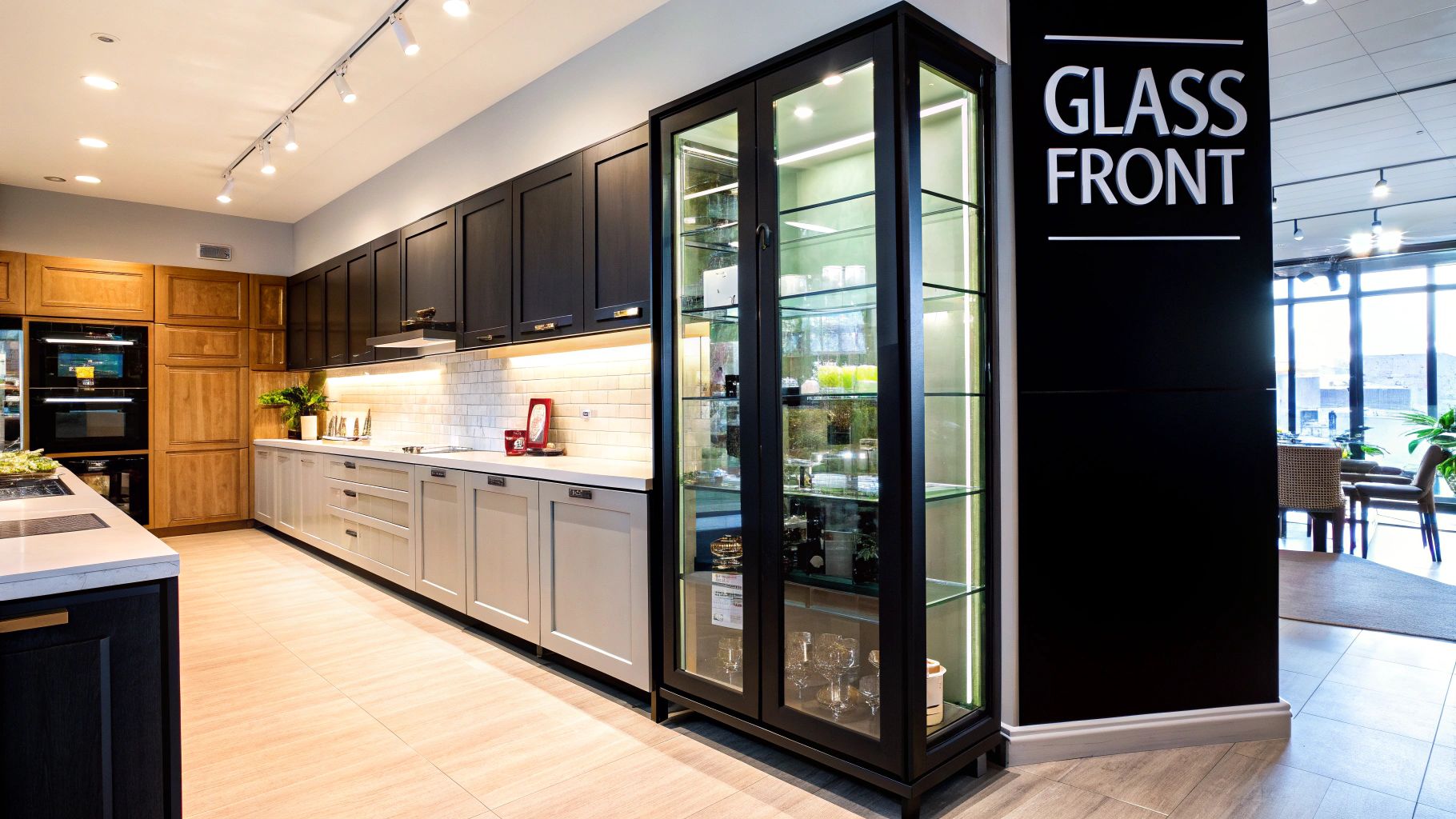
When you want to lighten the visual weight of your cabinetry, glass-front doors are the perfect solution. They break up solid runs of wood or paint, creating focal points and adding a sense of depth and openness to the entire kitchen.
The Elegant Glass-Front Door
Glass-front doors, which sometimes feature decorative grids called mullions, essentially turn your cabinets into display cases. They're an open invitation to showcase your favorite dinnerware, beautiful glassware, or treasured decor, transforming everyday storage into a curated feature.
Even using them on just a few upper cabinets can keep a whole wall of cabinetry from feeling too heavy or imposing. If you really want to take it to the next level, add some interior cabinet lighting. This creates a warm, ambient glow that highlights your collection and adds a layer of sophistication. It’s a classic move for making any kitchen feel more spacious, personal, and bright.
Comparing Cabinet Materials and Finishes
Picking a door style is a huge first step, but the material you choose is every bit as important. Think of it this way: the door style is the car's body style, but the material is the engine and chassis. It’s what determines how your cabinets will perform, how long they'll last, and how they’ll hold up to the beautiful chaos of daily life.
The material really does dictate everything, from the final look to how you'll clean up spills. Solid wood gives you that timeless, classic beauty, while some of the newer engineered options can provide a flawless, glass-smooth surface for paint. Let’s walk through the most popular choices so you can find the perfect fit for your home and your lifestyle.
The Enduring Appeal of Solid Wood
There's a reason solid wood is the classic, go-to choice for cabinetry. Woods like oak, maple, and cherry bring a natural warmth, texture, and character that you just can't fake. Each piece has its own unique grain pattern, which means no two cabinet doors will ever be perfectly identical—and that's part of their charm.
The beauty of solid wood really comes to life with a stained finish. The stain soaks right into the wood, highlighting the natural grain and creating a rich, deep color that feels alive. Oak, for example, has a very prominent, open grain that gives it a traditional, textured appearance. Maple, on the other hand, has a much finer, more subtle grain, which results in a smooth, clean finish that works just as well in contemporary designs as it does in classic ones.
The one thing to keep in mind with solid wood is its nature: it expands and contracts with changes in humidity. It’s a completely natural process, but this movement can sometimes lead to tiny, hairline cracks in a painted finish, usually right at the joints of a five-piece door.
The Smooth Perfection of Engineered Wood
For anyone dreaming of that perfect, buttery-smooth painted finish, Medium-Density Fiberboard (MDF) is almost always the better choice. MDF is an engineered product made by breaking down wood fibers and fusing them with wax and resin under intense heat and pressure.
Because it's a single, stable panel without any joints or grain, MDF creates the perfect canvas for paint. It doesn't expand or contract like solid wood, so you never have to worry about those pesky joint cracks showing up down the road. This incredible stability is why most high-end cabinet makers, including us, use MDF for painted doors—it guarantees a durable, flawless finish that will look pristine for years.
Choosing between solid wood and MDF isn't about which is "better" in general, but which is better for your specific finish. If you want a rich, natural stain that celebrates the wood's grain, solid wood is the way to go. For a flawless, durable painted surface, MDF is the professional's choice.
Cabinet Door Material Comparison
To help you visualize the differences, here’s a quick breakdown of the most common materials used for cabinet doors. This table compares them across key factors like cost, durability, and what they’re best suited for.
| Material | Average Cost | Durability | Maintenance | Best For |
|---|---|---|---|---|
| Solid Wood | High | Very High | Regular cleaning; can be refinished. | Stained finishes, traditional designs, and longevity. |
| MDF | Moderate | High | Easy to clean; difficult to repair if scratched or dented. | Flawless painted finishes, modern and transitional styles. |
| Thermofoil | Low-Moderate | Moderate | Very easy to clean; susceptible to heat damage. | Sleek, modern looks, rentals, and budget-conscious projects. |
| Laminate (HPL) | Moderate | Very High | Extremely easy to clean; highly resistant to scratches and stains. | High-traffic areas, contemporary kitchens, and commercial applications. |
This comparison should give you a clearer picture of how these materials stack up. Each one has its place, and the right choice really comes down to balancing your aesthetic goals with the practical demands of your household.
Modern Alternatives: Thermofoil and Laminate
Moving beyond traditional wood and MDF, there are a couple of modern materials that offer fantastic durability and a huge range of styles, often at a more approachable price point.
-
Thermofoil: Don’t let the name fool you—there’s no metal here. Thermofoil doors are made with an MDF core that gets wrapped in a vinyl-like material. The two are then heat-fused together to create a seamless, tough surface. They are incredibly easy to clean, non-porous, and come in a massive array of solid colors and even convincing wood-grain patterns. Thermofoil is a great pick for a sleek, modern look, especially if you love a high-gloss finish.
-
Laminate: Similar to thermofoil, laminate doors are made by bonding a layer of laminate to a substrate, which is usually MDF or particleboard. High-Pressure Laminate (HPL) is the real workhorse here—it's exceptionally tough and resistant to scratches, stains, and even heat. It offers one of the widest varieties of colors and patterns available, making it a super versatile and practical choice for busy family kitchens.
Ultimately, the right material is the one that balances your design vision with your budget and lifestyle. To really get into the weeds on these options, check out our guide on selecting the best material for kitchen cabinets.
Your Guide to Making the Final Decision
Alright, you've seen the styles, considered the materials, and now you're facing the final showdown: picking the perfect cabinet doors. It can feel like a huge decision, but you're not alone. The key is to take a step-by-step approach to make sure your final choice is practical, beautiful, and feels right at home in your space. This is where we move from all that inspiration to a confident, clear-cut plan.
First things first, what’s the core vibe of your kitchen? Are you aiming for a modern farmhouse feel, a sleek minimalist haven, or something more timeless and traditional? Nailing this down will instantly help you narrow the field. From there, you need to set a realistic budget. And remember, it’s not just about the doors themselves—factor in new hardware, installation costs, and any special finishes you might be eyeing.
Creating Your Selection Framework
With your style and budget locked in, it's time to get down to the nitty-gritty details that ensure you’ll love your cabinets for years to come. This is where you connect how they look with how you live.
Here’s a simple checklist to guide you:
- Lifestyle & Material Match: If you have a busy household with kids, you’ll want something tough and easy to clean, like a high-quality painted MDF or durable laminate. On the other hand, if you appreciate natural beauty and are meticulous with your space, solid wood could be the perfect fit.
- Order Samples: This is a non-negotiable step. Never, ever make a final decision based on what you see on a screen. Get physical samples of your top choices and see how they look in your kitchen's unique light throughout the day.
- Assess Construction Quality: Get hands-on with the samples. Look for solid joints and a flawless finish. A well-made door feels substantial in your hands and operates smoothly—that’s the sign of quality that will stand the test of time.
A great cabinet door doesn't just look good by itself; it has to play well with others. Hold your samples up against your countertops, backsplash, flooring, and even your appliances. This is the only way to ensure the colors and textures work together as a team.
Finalizing Your Choice with Confidence
Last but not least, think about the entire ecosystem of your kitchen. That stunning charcoal gray Shaker door you saw online might look incredible, but how does it pair with your warm-toned granite countertops? By evaluating samples in your actual space, you can catch potential clashes before they become costly mistakes. It ensures everything comes together in a way that feels cohesive and intentional.
This structured approach turns what could be an overwhelming decision into a series of simple, manageable steps. If you want to dig even deeper into the entire cabinet selection process, our detailed guide on how to choose kitchen cabinets has everything you need to make the perfect choice for your home.
Still Have Questions About Cabinet Doors? Let's Clear a Few Things Up.
Diving into the world of cabinet doors can feel a little overwhelming, and it's totally normal to have questions. To help you feel confident in your choices, I've put together some quick answers to the questions we hear most often.
What's the Most Durable Cabinet Door I Can Get?
Honestly, it really comes down to the finish you're after.
If you love the classic, warm look of stained wood, you can't beat solid hardwood. Something dense like maple or oak is going to stand up to daily life—dings, dents, you name it. They're incredibly tough, and the great thing is they can always be sanded and refinished down the road if they start showing their age.
But if you've got your heart set on a sleek, painted finish, you'll actually want to go with a high-quality MDF (Medium-Density Fiberboard) door. Why? Because it's one solid, stable piece. It doesn't expand and contract with humidity changes like solid wood does, which means no ugly hairline cracks in your beautiful paint job. For a flawless painted look that lasts, MDF is the pro's choice.
How Much Should I Expect to Budget for New Doors?
Cabinet door costs are all over the map, depending entirely on the style and what they're made of. To give you a ballpark idea:
- Entry-Level: A simple thermofoil slab door might run you about $20 to $40 per door.
- Mid-Range: The ever-popular painted MDF Shaker door usually falls somewhere in the $50 to $90 range.
- High-End: For something like a custom solid cherry raised-panel door, you could easily be looking at $100 to $200 or more.
Just remember that your final cost will depend on the material, style, finish, and of course, how many doors you need. Don't forget to factor in the cost of new hardware and professional installation, too!
Deciding between a painted or stained finish is one of the first big forks in the road. It really shapes the look and long-term care of your kitchen, so think about your lifestyle and the aesthetic you're aiming for.
Should I Go with Painted or Stained Cabinet Doors?
This one is a classic head-scratcher, boiling down to aesthetics versus maintenance.
Stained doors are all about celebrating the natural beauty of the wood. They bring a warmth and organic texture to a space that's hard to replicate, and they’re a breeze to touch up. A minor scratch can usually be hidden with a quick swipe of a stain pen.
Painted doors, on the other hand, deliver a clean, crisp, and uniform look. They open up a world of color possibilities, making them perfect for modern and transitional kitchens. The trade-off is that they can be more prone to chipping, and if you go with solid wood, you might see tiny hairline cracks at the joints over time as the wood naturally breathes.
Ready to bring your vision to life with custom cabinetry that combines timeless style and unmatched quality? At Sinclair Cabinetry inc, our experts are here to guide you through every step. Explore our custom cabinet solutions and start your project today!