
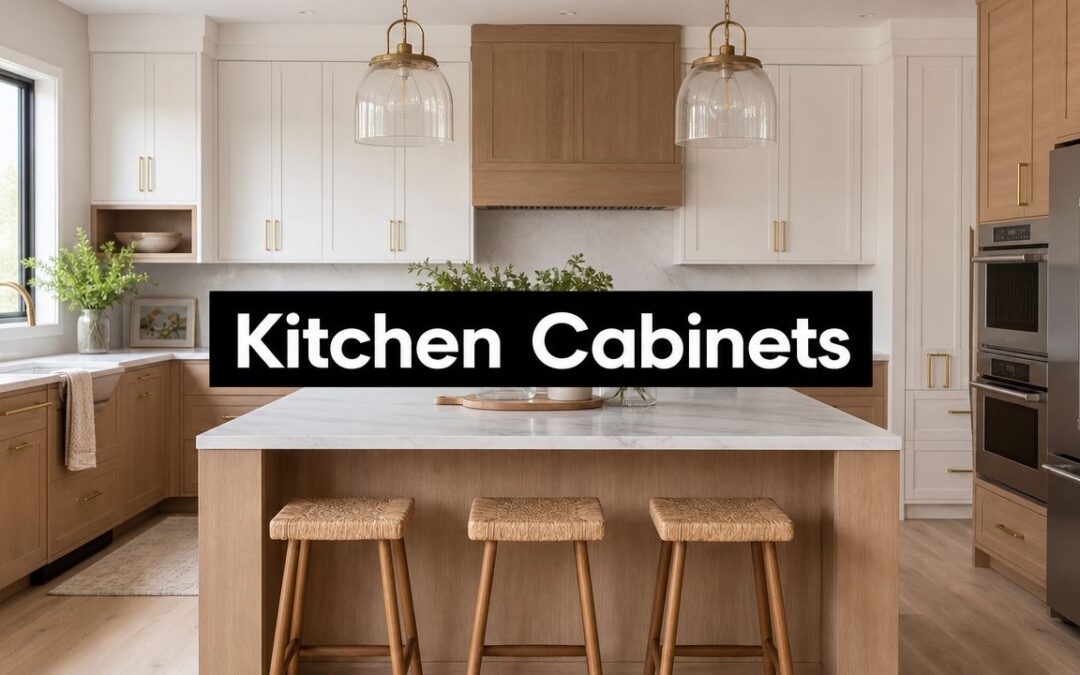
Planning a kitchen renovation is exciting right up until the cabinet decisions start multiplying. Door style, finish, wood species, hardware, storage inserts, island color, appliance panels. Most homeowners start by saving photos and end up realizing those photos don't explain what will hold up, what will date quickly, or what will make the kitchen easier to use every day.
Cabinets are the foundation of the room. They take up the most visual space, they shape workflow, and they often determine whether the finished kitchen feels custom or pieced together. In the U.S. kitchen furniture market, cabinets accounted for 59.42% of revenue in 2025, while wood represented 60.88% of the market by material. That lines up with what shows up on real projects. Cabinet layout and material choices usually matter more than decorative extras.
The best kitchen cabinet design ideas don't just look good in a showroom. They solve for cleaning, access, durability, and proportion. They also need to fit how you cook, what you store, and how long you plan to stay in the home. A young family, frequent entertainers, empty nesters, and aging-in-place homeowners won't all need the same cabinet plan.
The ideas below are meant to help you narrow the field quickly. Each one includes practical trade-offs, budget impact, material guidance, and notes on how to work with a custom cabinet maker so the final result feels intentional, not generic.
1. Shaker Style Cabinets The Timeless Workhorse

Shaker cabinets stay relevant because they don't fight the room. The recessed panel is simple enough for a modern kitchen, but it still has enough shadow line to add warmth in a traditional or transitional space. If you want one of the safest long-term kitchen cabinet design ideas, this is usually where I start.
That broad appeal isn't just anecdotal. In updated kitchens, Shaker remains the leading door style at 58% of renovating homeowners. There's a reason for that. It works with painted finishes, stained wood, inset or overlay construction, and almost any hardware direction.
What works best
Shaker doors look strongest when the proportions are right. Narrow stiles can feel more contemporary. Slightly wider frames lean more classic. On large pantry doors, that detail matters because oversized rails can make the whole kitchen feel heavy.
For materials, painted maple gives a smooth finish. White oak adds grain and softness. Walnut turns a basic Shaker profile into something far richer.
- Budget impact: Usually moderate. Simpler than heavily ornamented doors, but custom sizing, premium finishes, and better joinery still move the price.
- Best material pairing: Maple for paint, white oak for a warm stained finish, walnut for upscale focal areas.
- Custom maker tip: Ask to compare rail and stile widths on a full-size sample door, not a tiny chip.
Practical rule: Simple door styles need better execution, not less. Poor reveals, cheap hinges, and thin paint stand out faster on Shaker than on a busier door.
A good way to refine the look is with better hardware. Brushed brass warms it up. Matte black sharpens it. If you're weighing profiles, overlay types, and visual differences in detail, this breakdown of Shaker vs raised panel cabinets is useful before you commit.
2. Flat-Panel Slab Cabinets The Modern Minimalist

Slab cabinets make a kitchen feel calm because they remove visual interruption. No frame detail, no center panel, no ornament. Just long, clean lines. In smaller kitchens, that restraint can make the room feel less crowded even when storage is dense.
They are not forgiving, though. Every reveal, seam, and appliance alignment is visible. If the installer is off, the style looks cheaper than it should.
Where slab cabinets earn their keep
This is a strong choice for contemporary homes, condos, open-plan remodels, and kitchens with a lot of integrated appliances. Matte finishes usually age better than high gloss in family kitchens because they hide fingerprints and minor wear more gracefully.
For construction, I prefer stable cabinet boxes and quality substrates under the finish. Thin, low-grade materials can telegraph flaws fast. Fingerprint-resistant surfaces and durable matte laminates are worth considering if you have kids or cook often.
- Budget impact: Moderate to high. The door profile is simple, but premium finishes and precision installation often increase total cost.
- Best material pairing: High-quality veneer, durable matte laminate, or painted MDF door fronts over a well-built plywood cabinet box.
- Custom maker tip: Request a mockup showing appliance panels, filler widths, and handle strategy before production begins.
Push-to-open hardware looks clean in photos, but it isn't always the best answer for every cabinet. On lower drawers that get constant use, integrated channels or edge pulls can be more reliable and less fussy. A slab kitchen should feel effortless, not precious.
3. Two-Tone Cabinets The Personality Play
A homeowner likes the depth of navy and the brightness of white, then freezes at the sample stage because both can go wrong fast. Two-tone cabinetry solves that problem when the split is deliberate and the materials are chosen with the whole room in mind. It gives a kitchen character without committing every cabinet to one heavy finish.
The strongest two-tone kitchens use contrast with a clear purpose. Dark base cabinets can hide scuffs and daily wear better than pale paint. Light uppers keep the room from feeling top-heavy. A stained wood island can add warmth and texture in a painted kitchen, but it needs to relate to the floor, hood, or shelving so it looks intentional.
Placement matters as much as color.
Upper and lower is a straightforward split. Island and perimeter is another one. Once the finish changes start hopping from wall to wall, the room usually reads as indecisive rather than layered. I also advise homeowners to test both colors under daylight, under-cabinet lighting, and evening fixtures before signing off. A combination that looks balanced on a sample board can feel flat or harsh after installation.
- Budget impact: Moderate. Cabinet construction may stay the same, but custom color matching, stain sampling, and finish coordination add design time and shop work.
- Best material pairing: Painted MDF or hardwood doors for the perimeter, paired with a rift-cut white oak or walnut island if you want natural contrast that will still look current in ten years.
- Custom maker tip: Ask your cabinet maker to produce large finish samples and review them beside your countertop, flooring, backsplash, and hardware at the same time. That is the point where undertones show up.
Two-tone cabinetry also works well for selective customization. Homeowners who want a custom look without pricing every cabinet in premium wood often put the budget where it will be seen most, such as the island or a tall hutch wall, and keep the rest painted. That approach usually gives better long-term value than spreading expensive materials thinly across the whole kitchen.
For homeowners narrowing options, these kitchen cabinet color combinations are a useful starting point. Bring two or three serious combinations to your cabinet maker, not ten. Shops such as Sinclair Cabinetry can refine those ideas around light, door style, finish durability, and the way your kitchen will be used.
4. Glass-Front Cabinets The Curated Display

Glass-front cabinets break up solid runs of cabinetry and add depth to the room. That's especially useful in kitchens with tall uppers or darker finishes, where too many opaque doors can make the wall feel dense.
The biggest mistake is treating them like ordinary storage. They aren't. Clear glass turns whatever is inside into part of the design.
Best use cases
Glass fronts work well near a dining area, around a range hood, or on a short focal wall where you want relief from solid doors. They're ideal for dishes, glassware, serving pieces, and a few objects with shape or color. They're poor places for food containers, mismatched mugs, or bulk pantry overflow.
If you like the lighter look but don't want everything visible, use reeded, seeded, or frosted glass. That gives you texture and softness while relaxing the need for perfect order.
- Budget impact: Moderate. Glass inserts, specialty frames, and cabinet lighting increase cost.
- Best material pairing: Painted frames for crisp contrast, or stained wood frames for a furniture feel.
- Custom maker tip: Have your cabinet maker plan interior lighting and shelf thickness before doors are built.
Display cabinets should earn their place. If you don't have anything worth showing, use a solid door and put the budget into better drawers instead.
Interior lighting makes the difference between a nice cabinet and a finished feature. A warm LED strip or discreet puck light can turn glass-front uppers into evening ambient lighting, which is especially effective in open-concept kitchens.
5. Natural Wood Cabinets The Organic Revival
A kitchen can be technically new and still feel cold. Natural wood fixes that fast. It brings warmth, variation, and a sense of craftsmanship that painted cabinets often cannot match, especially in homes that need the kitchen to connect visually with adjacent living spaces.
Wood cabinetry has also become a practical middle ground between stark modern kitchens and heavily detailed traditional ones. White oak, walnut, and cherry all add character, but they do it in different ways. White oak keeps the room light and architectural. Walnut adds depth and reads more refined. Cherry suits classic homes and develops a richer tone over time.
The difference between an average wood kitchen and a strong one usually comes down to selection and finish control. Species matters, but cut matters too. Rift or quarter-sawn oak gives a calmer, more consistent grain than plain-sawn boards, which is often worth the added cost in a contemporary kitchen. Finish color matters just as much. A stain sample that looks balanced on maple can turn muddy on cherry or too yellow on oak.
Custom work earns its value here. Grain matching across drawers, end panels, and tall pantry doors takes planning at the shop level, not just at installation. On better projects, the cabinet maker sequences veneer or solid stock so long runs feel intentional instead of random. That level of control is one reason homeowners exploring luxury kitchen cabinet design often choose custom fabrication over stock boxes with a wood-look upgrade.
- Budget impact: Moderate to high. White oak is often the most flexible starting point. Walnut raises cost quickly, especially on full kitchens rather than a single island or hutch.
- Best material pairing: White oak with honed quartz or soapstone for a clean, warm look. Walnut with lighter counters to keep the room from feeling heavy. Cherry with painted perimeter cabinets in more traditional layouts.
- Custom maker tip: Ask for a large finished door sample, not a small chip. Confirm grain direction on wide drawers, veneer matching on panel-ready appliances, and how exposed ends will be finished.
Restraint usually produces the best result. Quiet counters, a simple backsplash, and hardware with modest scale let the wood carry the room. If every surface competes for attention, the cabinets lose the calm, grounded presence that makes this approach work.
6. Handleless Designs The Sleek Integration
Handleless cabinetry can look impressive because it turns the kitchen into a set of uninterrupted planes. That effect works best in modern architecture and in open spaces where the kitchen is always visible from living areas.
But the mechanism matters as much as the style. A kitchen that's hard to open, constantly smudged, or fussy to maintain gets old quickly.
Choose the right system for the right location
There are several ways to go handleless. Integrated J-pulls and channel systems are the most dependable for high-use drawers. Push-to-open can work well on upper cabinets or occasional-use storage. Fully electronic systems are specialized and should be used only when the project budget and service expectations support them.
The weak point is often lower storage. People kick channels, bump toe spaces, and overuse push latches on heavy drawers. A mixed approach often works better than forcing one solution everywhere.
- Budget impact: High. Hardware systems, precision fabrication, and installation tolerance all matter.
- Best material pairing: Slab fronts in matte laminate, wood veneer, or painted finishes with durable edge detailing.
- Custom maker tip: Ask who supplies the opening system and how replacement parts are handled years later.
The cleaner the look, the less margin for error. Handleless kitchens demand precise planning from design through installation.
If you're considering this direction for a more upscale remodel, examples of luxury kitchen cabinet design can help you compare integrated hardware approaches and see where this style fits best.
7. Sustainable Materials The Eco-Conscious Choice
Sustainable cabinetry isn't one aesthetic. It's a set of material and finish decisions. You can build a traditional kitchen responsibly, or a modern one. What matters is what the boxes, doors, veneers, adhesives, and finishes are made from.
A lot of homeowners focus only on visible wood species. The less visible choices often matter just as much. Cabinet box material, formaldehyde content, and finish chemistry affect both durability and indoor air quality.
What to ask for
Look for responsibly sourced wood, formaldehyde-conscious panel products, and water-based or low-VOC finishes when available. If reclaimed lumber is part of the design, decide early whether you want a refined reclaimed look or a more character-heavy finish with saw marks and variation left visible.
Sustainability also overlaps with longevity. A cabinet that holds up for years is a better investment than a cheaper product that needs replacement sooner.
- Budget impact: Moderate to high. Some eco-conscious materials and finishes carry a premium, especially in custom work.
- Best material pairing: FSC-certified hardwoods, quality plywood boxes, reclaimed accent areas, and low-VOC finishes.
- Custom maker tip: Ask how the shop sources wood and what finish system it sprays in-house.
For homeowners who want greener options without guessing, this guide on choosing eco-friendly kitchen cabinets for sustainable homes gives a practical starting point for the questions to bring into a design meeting.
8. The Contrasting Island The Kitchen's Centerpiece

A contrasting island is one of the safest ways to introduce drama into a kitchen. If you're nervous about dark cabinetry, a stained wood island or painted statement island lets you add depth in a controlled way. It reads more like furniture and less like a full-room commitment.
This strategy also works well in open-concept homes because the island often needs to carry more visual weight. It has to relate to the living and dining areas, not just the perimeter cabinets.
Where homeowners get it wrong
The island can't feel dropped in from another house. Its finish should connect back to something else in the room, such as hardware, flooring tone, vent hood trim, bar stools, or shelving. The color contrast should feel deliberate, not isolated.
Function matters too. Islands attract storage requests, seating, prep tasks, charging stations, microwave placement, and trash pullouts. Once all of that is packed in, proportions can get clumsy fast. A beautiful island still needs comfortable clearances around it.
- Budget impact: Moderate to high, depending on size, finish change, and countertop upgrade.
- Best material pairing: Painted island with painted perimeter, or stained wood island paired with lighter perimeter cabinetry.
- Custom maker tip: Review elevation drawings carefully so decorative panels, seating overhangs, and outlet placement all work together.
A contrasting island is often where it's worth stepping up to a better finish or a more expressive wood species, because the visual payoff is concentrated in one place.
9. Integrated Appliances The Seamless Look
Integrated appliances make a kitchen feel architectural. The refrigerator disappears into a wall of cabinetry. The dishwasher blends into the run. Pantry storage can sit beside appliance panels without visual breaks. When done well, the room feels quieter and more expensive because there are fewer competing surfaces.
This is one of the most detail-heavy kitchen cabinet design ideas on the list. It only works when cabinetry and appliance selections are planned together from the beginning.
Planning sequence matters
Appliance specs drive panel sizes, venting requirements, hinge clearances, and filler needs. Change a refrigerator model late and you may force design revisions across an entire wall. That's why custom cabinet work and appliance planning should happen in parallel, not one after the other.
Panel weight is another issue. A heavy wood panel on a large refrigerator door needs the right hardware system. Veneered or engineered panel construction is often smarter than solid wood for stability and long-term performance.
- Budget impact: High. Panel-ready appliances, custom fabrication, and installation complexity add cost.
- Best material pairing: Stable panel constructions with matched veneer or painted finishes coordinated to surrounding doors.
- Custom maker tip: Finalize exact appliance models before shop drawings are approved.
Integrated appliances are most convincing in slab kitchens, minimalist spaces, and warm wood kitchens where visual clutter would weaken the design. They can also be useful in transitional kitchens when the goal is a calmer perimeter.
10. Transitional Style The Best of Both Worlds
Transitional cabinetry is what many homeowners want, even if they don't call it that. They want warmth without heaviness, cleaner lines without a cold showroom feel, and a kitchen that still looks good years from now. Transitional design does that by mixing classic cabinet language with edited modern details.
A Shaker door in a warm painted tone, paired with simpler hardware and restrained stone, is transitional. So is a lightly detailed painted cabinet mixed with a cleaner hood design and modern pendants.
Why this style lasts
It doesn't rely on one extreme. Fully traditional kitchens can feel formal. Ultra-modern kitchens can feel too sparse for some homes. Transitional kitchens leave room for both comfort and restraint.
This approach also works well if you're balancing competing tastes in one household. One person wants warmth. The other wants simplicity. Transitional cabinetry is often the compromise that doesn't feel like a compromise.
- Budget impact: Moderate to high, depending on finish quality, construction method, and mix of details.
- Best material pairing: Painted maple, stained white oak accents, or mixed painted-and-wood combinations.
- Custom maker tip: Keep the door style simple and let hardware, lighting, and finish do the fine-tuning.
One area where transitional kitchens often outperform trend-driven designs is flexibility. Hardware can be changed later. Lighting can be updated. Wall color can evolve. The cabinet foundation stays useful.
Top 10 Kitchen Cabinet Design Comparison
A cabinet style can look right in a photo and still be the wrong choice for the way a kitchen is built, used, and maintained. This comparison is meant to help narrow the field with the practical questions homeowners should ask before they commit: What does it cost to execute well? Which materials hold up best? Where does custom work add real value?
| Style | 🔄 Implementation Complexity | ⚡ Resource Requirements | 📊 Expected Outcomes | Ideal Use Cases | ⭐ Advantages / 💡 Tips |
|---|---|---|---|---|---|
| Shaker Style Cabinets: The Timeless Workhorse | Moderate. Five-piece construction is familiar to skilled shops, but proportions and finish quality matter. | Moderate. Maple, oak, and paint-grade hardwoods are common choices. | Durable, flexible cabinetry that works across many architectural styles. | Transitional, traditional, and updated family kitchens | ⭐ Dependable long-term choice. 💡 Ask your cabinet maker to refine rail and stile width so the doors fit the scale of the room. |
| Flat-Panel (Slab) Cabinets: The Modern Minimalist | Low to moderate. Door construction is simple, but reveals must be precise. | High. Stable MDF or plywood cores, durable veneer or lacquer, and careful finishing are important. | Uninterrupted, ultra-clean modern look | Contemporary and minimalist kitchens | ⭐ Strong visual restraint. 💡 Use fingerprint-resistant finishes and confirm substrate quality before approving samples. |
| Two‑Tone Cabinets: The Personality Play | Moderate. Success depends on disciplined color balance and clean transitions. | Moderate. Two finishes increase coordination and finishing labor. | More depth, better zoning, and a kitchen that feels less one-note. | Kitchens with islands, tall pantry walls, or rooms that need visual structure | ⭐ Adds character without changing door style. 💡 Limit the second finish to one clear zone so the design stays intentional. |
| Glass‑Front Cabinets: The Curated Display | Moderate. Glass installation, interior finishing, and optional lighting add detail work. | Moderate. Glass type, mullion design, and lighting all affect cost. | Lighter visual weight and a place to display select pieces. | Upper cabinets, serving areas, and kitchens with attractive dishware storage | ⭐ Breaks up heavy wall cabinetry. 💡 Use it sparingly, and choose reeded or frosted glass if you want a softer, less maintenance-heavy look. |
| Natural Wood Cabinets: The Organic Revival | Moderate to high. Grain selection, panel matching, and finish consistency take skill. | High. White oak, walnut, and other premium species raise material cost. | Warmth, depth, and a finish that develops character over time. | High-end kitchens where material quality is part of the design statement | ⭐ Strong long-term value when executed well. 💡 Review full-size finish samples in the room's lighting, not just small stain chips. |
| Handleless Designs: The Sleek Integration | High. Tight alignment is required, and hardware systems must be installed accurately. | High. Channel profiles or push-to-open hardware from quality suppliers add cost. | Fully integrated, uninterrupted cabinetry surfaces | Ultra-modern kitchens prioritizing minimalism | ⭐ Cleanest possible cabinet face. 💡 Test the opening system in person. Some homeowners prefer channels over push latches for daily use. |
| Sustainable Materials: The Eco‑Conscious Choice | Moderate. Material sourcing takes more verification and sometimes longer lead times. | Variable. Certified products and low-emission finishes can be competitively priced or premium, depending on selection. | Lower environmental impact and healthier indoor material choices. | Eco-conscious remodels and projects focused on indoor air quality | ⭐ Better material transparency. 💡 Ask for documentation on FSC certification, formaldehyde standards, and low-VOC finish options before production starts. |
| The Contrasting Island: The Kitchen's Centerpiece | Low to moderate. The design work is straightforward, but color and proportion need discipline. | Moderate. A second finish or wood species adds cost, though not usually dramatically. | A defined focal point that gives the room structure. | Open-concept kitchens and layouts where the island is heavily used | ⭐ Strong visual payoff for a modest design move. 💡 Repeat the island finish in stools, shelving, or trim so it feels connected to the room. |
| Integrated Appliances: The Seamless Look | High. Appliance panels require exact dimensions, hinge planning, and model-specific fabrication. | High. Custom panels, specialty hardware, and experienced installation are required. | Hidden appliances and cabinetry walls with a more uniform appearance | Luxury or bespoke kitchens where visual cohesion matters | ⭐ Refined built-in effect. 💡 Finalize appliance selections before shop drawings begin. A model change late in the process can force expensive revisions. |
| Transitional Style: The Best of Both Worlds | Moderate. The challenge is restraint, not complexity. | Moderate. Painted finishes, wood accents, and mixed details are common. | Broad appeal and a balanced look that tends to age well. | Homes that need warmth, simplicity, and flexibility | ⭐ Reliable middle ground for long-term satisfaction. 💡 Keep the door profile quiet and let finish, hardware, and lighting carry the style. |
For homeowners working with a custom shop such as Sinclair Cabinetry, the best use of this chart is early decision-making. Bring two or three styles you respond to, then compare them against budget, maintenance tolerance, and the level of precision each one demands. That process usually leads to better cabinetry than choosing a trend first and asking the layout to catch up later.
Bringing Your Vision to Life with Custom Cabinetry
A kitchen often starts to frustrate people in the same places. The mixer has no real home, the charging station takes over the counter, sheet pans end up in a hard-to-reach corner, and the cabinet style they liked online does not solve any of it. Good custom cabinetry fixes those problems before anyone talks about paint colors or hardware.
The strongest cabinet plan usually combines several ideas from this list, then adjusts them to fit the room, the budget, and the way the household cooks. A homeowner might want the warmth of natural wood on the island, slab-style lowers for a cleaner line, and a transitional perimeter that suits the architecture of the home. Those combinations can work well, but only if proportions, reveals, finish choices, and storage details are resolved as one system.
That is the practical value of custom work. Cabinet dimensions do not have to follow stock increments. Appliance panels can be built to the exact model. Drawer depths can match the cookware you own. Finish samples can be tested in the room's actual light. Those decisions cost more upfront than off-the-shelf substitutions, but they usually produce better daily function and fewer compromises that homeowners regret later.
Storage planning deserves the same discipline. Specialty inserts and accessories help, but they are not automatically worth the price. In many projects, I would rather put money into wider drawer bases, a well-planned trash pullout, vertical tray storage, and a small appliance garage than fill every cabinet with accessories that look impressive in a showroom and go unused after move-in.
Corners are a good example. Adding a corner mechanism is not always the smartest answer. Some accessories improve access, but still require awkward reaching and give up usable space. This discussion of when corner cabinets aren't the best answer reflects a point good cabinet makers already know. Sometimes closing off part of a corner produces a stronger drawer run, a cleaner cook zone, or better landing space beside an appliance.
Future use matters too. Many homeowners now ask for more drawers, fewer hard-to-see base cabinets, hidden charging areas, and contained zones for coffee or prep. This design commentary on future-proof cabinet planning with drawers and hidden work zones gets at why those choices keep showing up in better remodels. They make the kitchen easier to use now, and they adapt better as routines change.
Working with a custom shop such as Sinclair Cabinetry inc means those trade-offs can be priced, drawn, and built with precision. Homeowners can compare where the budget should go, whether that means better door construction, a more durable finish, upgraded drawer hardware, or cabinetry built to solve a specific storage problem. The company is based in Cape Coral, Florida, and brings over 35 years of cabinetry experience to kitchens and other parts of the home. Their process includes detailed design planning, custom material and finish selections, and real wood cabinet construction built around the project rather than forced into stock sizes.
Start with function, then match the style to it. That approach usually leads to cabinetry that looks intentional, wears better, and delivers stronger long-term value than chasing a trend and forcing the layout to fit afterward.
If you're ready to turn these kitchen cabinet design ideas into a buildable plan, Sinclair Cabinetry inc can help you evaluate layouts, materials, finishes, storage options, and custom dimensions for your remodel.